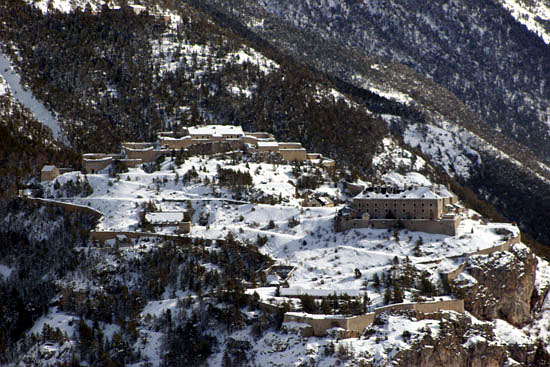
Briançon Fortress
Briançon Fortress is a remarkable example of 17th-century military architecture designed by the eminent French military engineer Sébastien Le Prestre de Vauban. Situated in the town of Briançon in southeastern France, this fortress complex was constructed primarily in 1692 to secure the region against incursions from the neighboring Duchy of Savoy and the Austrian Habsburgs. The strategic location of Briançon, lying at the foot of the descent from the Col de Montgenèvre, provided a critical gateway leading to Turin and southern Europe, necessitating a robust defensive system.
Historical context and strategic importance
During the late 17th century, the Franco-Savoyard conflicts prompted the French crown to strengthen its alpine frontier. The Savoyards launched two raids into French territory in 1691 and 1692, exposing the vulnerability of existing defenses. In response, Vauban was dispatched to inspect the frontier fortifications. His assessment revealed that the defenses were inadequate against contemporary siege warfare tactics.
Vauban's involvement began after local engineer Monsieur d'Angrogne initiated fortification work in 1692, which attempted to adapt the medieval walls of Briançon. However, the terrain imposed severe constraints, resulting in short flanks on the bastioned trace. Vauban, known for his innovative and pragmatic approach, abandoned his conventional bastioned designs for this site in favor of a layered defense system that integrated a Spanish-style false bray on the Embrun front. This approach was unusual for Vauban and incorporated a tenaille trace in certain sections, enhancing the fortress's ability to absorb and repel attacks.
Architectural design and fortification features
The town defenses and bastioned fronts
The fortress's defenses are divided primarily into two fronts: the Embrun front to the east and the Pignerol front to the west. The Embrun front's layered defense with a false bray and tenaille trace represented an adaptation to the challenging alpine terrain and the need for a flexible defense line. In contrast, the Pignerol front employed a more conventional bastioned trace featuring demi-lunes (ravelins) and a covered way, typical of Vauban's fortification style.
Citadel and natural defenses
Dominating the town is the citadel, perched high above and surrounded by steep cliffs. This natural topography rendered the citadel nearly impregnable on most sides, obviating the need for elaborate bastioned walls. The citadel's walls, combined with the sheer cliffs, formed a formidable barrier against any assault, serving as the fortress's last line of defense.
Supplementary fortifications around Briançon
To strengthen the overall defensive network, several additional forts were constructed on the surrounding heights throughout the 18th and 19th centuries. These include:
- Fort des Salettes: Originally built in 1700, this fort underwent significant enlargement during the 18th and 19th centuries to bolster the eastern approaches.
- Fort des Têtes: A massive fortification larger than the town itself, conceived by Vauban but constructed posthumously, it played a crucial role in controlling the high ground.
- Fort du Dauphin, Fort Randouillet, and Fort d'Anjou: These forts formed a network of outposts that enhanced the fortress's layered defense strategy, guarding key routes and vantage points.
Vauban's legacy and UNESCO recognition
Sébastien Le Prestre de Vauban is widely regarded as one of the greatest military engineers in history, and Briançon Fortress exemplifies his adaptive design philosophy. His willingness to depart from standardized fortification models to accommodate the unique alpine terrain demonstrates his ingenuity.
In recognition of its outstanding military architecture and historical significance, Briançon's fortifications were inscribed as part of the UNESCO World Heritage Site group titled the Fortifications of Vauban in 2008. This designation highlights the fortress's importance as a cultural and historical landmark, preserving Vauban's innovative contributions to fortification design.
Architectural challenges and terrain adaptation
The steep and narrow streets of Briançon's historic center reflect the fortress's integration with the natural landscape. The mountainous terrain imposed significant challenges, limiting the space for traditional bastioned layouts and necessitating creative solutions such as the tenaille trace and false bray.
The fortress's layered defenses allowed for multiple lines of resistance, enhancing its resilience against artillery and infantry assaults. The use of natural cliffs as defensive walls for the citadel exemplifies the strategic use of geography in fortification design.
Visiting Briançon fortress today
Today, Briançon Fortress remains a well-preserved example of Renaissance military architecture adapted to alpine conditions. Visitors can explore the steep, picturesque streets of the fortified town, examine the bastioned walls, and visit the imposing citadel. The surrounding forts, such as Fort des Têtes and Fort des Salettes, add depth to the historical experience, illustrating the evolution of military engineering over centuries.
The fortress's designation as a UNESCO World Heritage Site has helped ensure its preservation and accessibility, making it a significant destination for those interested in military history, architecture, and alpine heritage.
Frequently asked questions (FAQ)
- How do I get to Briançon Fortress?
- You can reach Briançon Fortress by taking public transportation to Briançon town and then following the signs to the fortress. There is also parking available nearby for those traveling by car. The fortress is located on a hilltop, so be prepared for a short uphill walk.
- What is the historical significance of Briançon Fortress?
- Briançon Fortress is a UNESCO World Heritage site and is part of the "Fortifications of Vauban." Built in the 17th century, it played a crucial role in defending the region against invasions and is a testament to the military architecture of the time.
- When was Briançon Fortress constructed?
- Construction of Briançon Fortress began in the late 17th century, specifically in 1692, and was completed in the early 18th century. It was designed by the famous military engineer Vauban, who was known for his innovative fortification designs across France.
- Can I visit Briançon Fortress year-round?
- Yes, Briançon Fortress is open for visitors year-round, although certain areas may be restricted during winter months due to weather conditions. It’s advisable to check the official website for any seasonal opening hours and potential closures.
- Why is Briançon Fortress a popular tourist attraction?
- Briançon Fortress attracts visitors due to its rich history, stunning architecture, and breathtaking views of the surrounding Alps. The fortress offers a unique glimpse into military history and is a great spot for hiking and photography.
- Is it possible to take guided tours of Briançon Fortress?
- Yes, guided tours of Briançon Fortress are available and provide an in-depth look at its history and architecture. These tours are typically led by knowledgeable guides who can share fascinating insights about the fortress and its role in French military history.
- What are the opening hours for Briançon Fortress?
- The opening hours for Briançon Fortress vary by season. Generally, it opens from 10 AM to 6 PM during the summer months and has reduced hours in the winter. It’s best to check the fortress's official website for the most current information on opening times.
- What are the ticket prices for visiting Briançon Fortress?
- Ticket prices for Briançon Fortress are generally affordable, with discounts available for students, seniors, and families. Entrance fees can vary based on guided tour options, so it’s recommended to check the official site or contact the visitor center for the latest pricing information.
- What are some nearby attractions to visit while in Briançon?
- While visiting Briançon, you can explore the picturesque old town, the Basilica of Notre-Dame du Château, and enjoy outdoor activities in the surrounding mountains. Additionally, the Serre Chevalier ski resort is nearby for winter sports enthusiasts.
Information
Loading map...
Visitor reviews
No reviews yet. Been here? Write the first review and help other travelers!
Write the first reviewVisited this castle? Share your experience
Your review helps other travelers and adds first-hand knowledge to our encyclopedia.