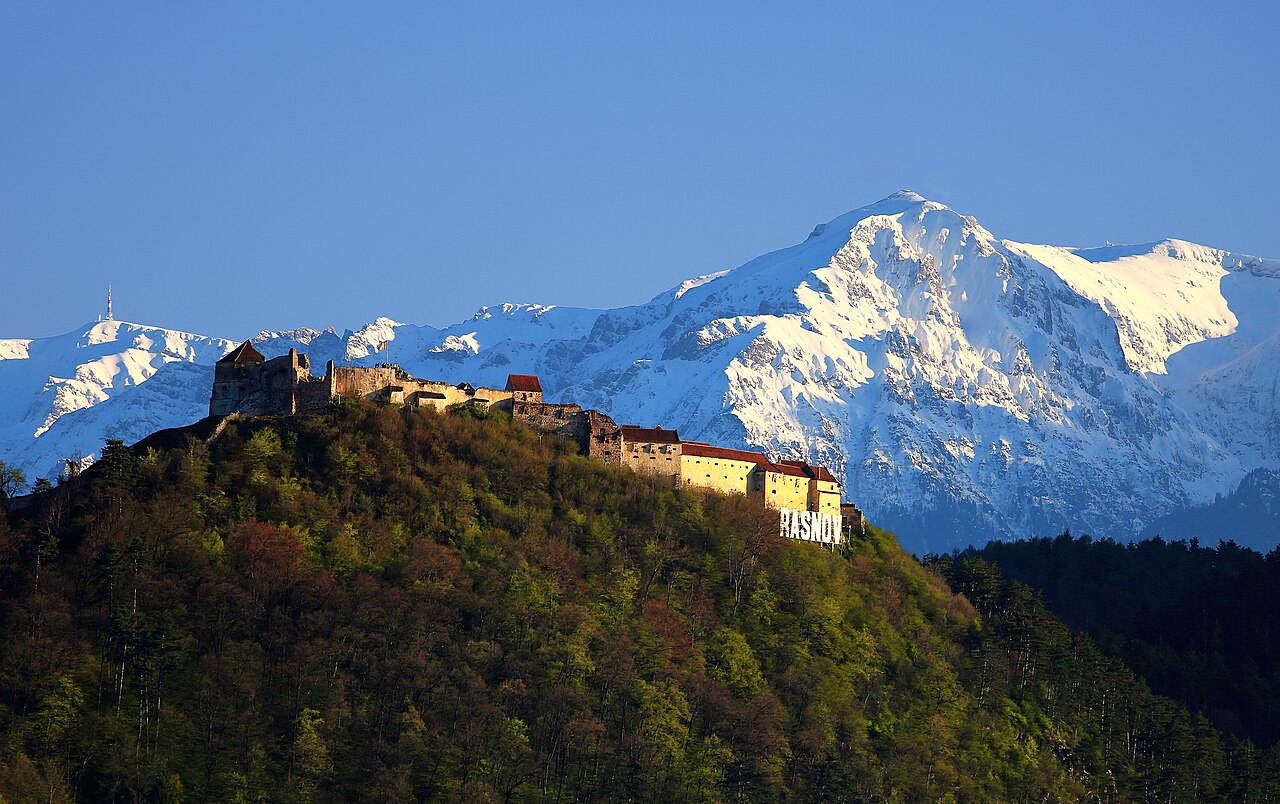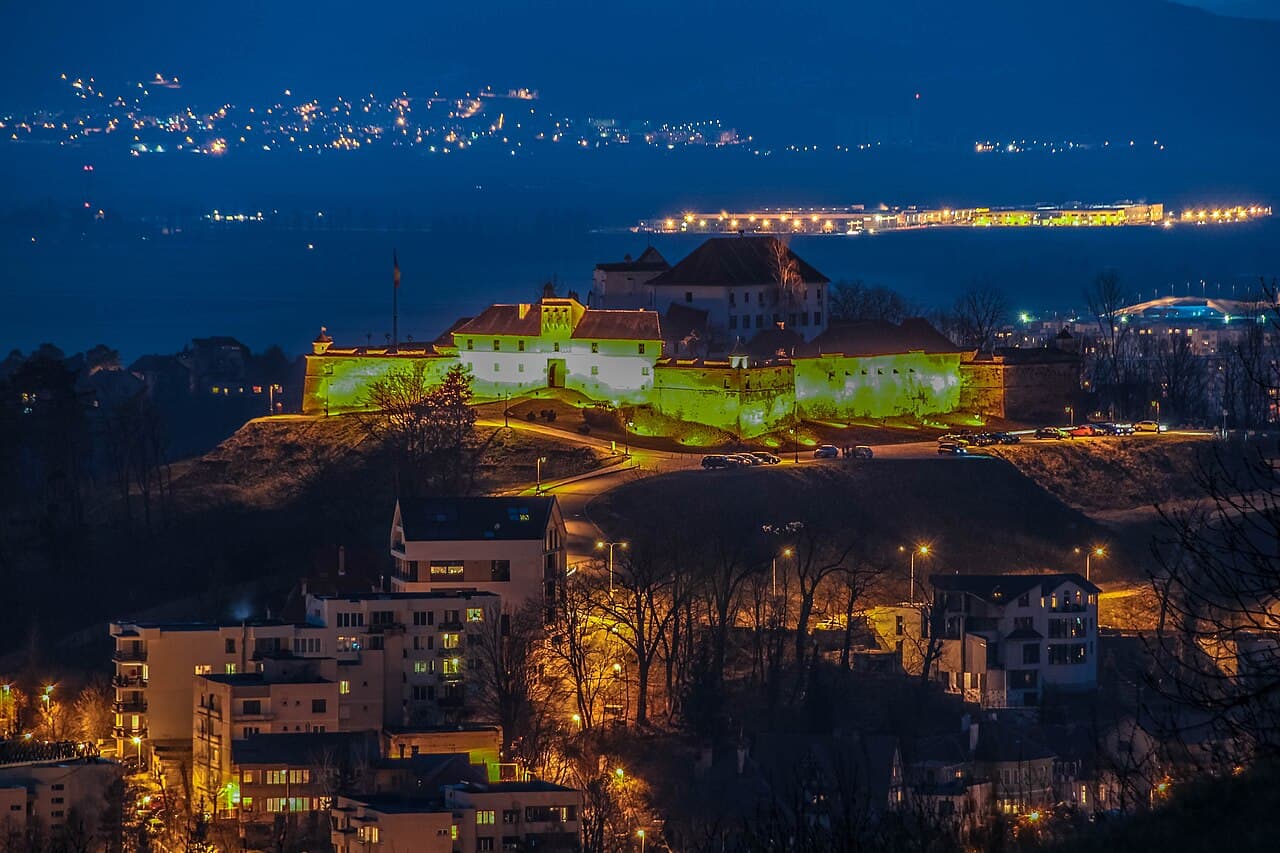
Brașov Fortress
Brašov fortress, located in the historic city of Brašov, Romania, is a remarkable example of a Renaissance bastioned fortress built in the 16th century. This fortress was constructed as a strategic military stronghold to protect the city and its surrounding region against invading forces during a period of frequent conflicts in Eastern Europe.
The fortress exhibits hallmark features of Renaissance military architecture, characterized by its angular bastions designed to withstand artillery attacks, thick defensive walls, and a complex system of fortifications. Its design reflects the evolution of fortress construction in response to the increasing use of gunpowder and cannon warfare, which necessitated more resilient and strategically shaped defenses than the medieval castles of earlier centuries.
Historical context and strategic importance
During the 16th century, the region of Transylvania, where Brașov is situated, was a contested area among the Ottoman Empire, the Habsburg Monarchy, and local rulers. The fortress was integral to the city's defense system, serving as a military garrison and a refuge for the local population during sieges and invasions.
The construction of Brașov fortress coincided with a broader trend across Europe where many cities upgraded their medieval fortifications to bastioned designs. This was part of a military revolution that transformed defensive architecture to meet the challenges posed by new offensive technologies.
Architectural features and fortifications
Bastions and walls
The fortress is defined by its star-shaped bastions which project outward from the main walls, allowing defenders to cover all approaches with overlapping fields of fire. These bastions are connected by thick curtain walls, constructed from local stone and reinforced to absorb and deflect cannon fire.
Gates and access points
Access to the fortress was controlled through heavily fortified gates, often equipped with drawbridges and portcullises. These gates were designed to be choke points for attackers, making any assault costly and difficult.
Internal structures
Within the fortress walls, there were barracks, armories, and storage facilities to support a sustained defense. The layout was planned to facilitate the movement of troops and supplies during times of conflict.
Later history and preservation
Over the centuries, Brașov fortress witnessed numerous military engagements and underwent various modifications to adapt to changing military technologies and political circumstances. Despite partial damage in some periods, the fortress remains largely intact and is considered a well-preserved example of 16th-century bastioned fortifications.
Today, the fortress is a significant cultural and historical landmark in Brașov, attracting visitors interested in military history and Renaissance architecture. It stands as a testament to the strategic importance of the city in the early modern period and the architectural innovations that shaped fortress design in Eastern Europe.
Visiting Brașov fortress
Visitors to the fortress can explore the robust defensive walls, bastions, and gates, gaining insight into the military engineering of the Renaissance era. The site often hosts guided tours and educational programs that highlight its historical role and architectural significance.
The fortress's location provides panoramic views of the surrounding city and Carpathian Mountains, enhancing its appeal as both a historical site and a scenic destination.
Frequently asked questions (FAQ)
- How do I get to Brașov Fortress?
- Brașov Fortress is located just outside of the city of Brașov, Romania. You can reach it by taking a short hike from the city center or by driving, as there is parking available nearby. Public transport options may also be available, so check local bus schedules for convenience.
- What is the historical significance of Brașov Fortress?
- Brașov Fortress, built in the 13th century, served as a defensive stronghold for the city against various invasions. It played a crucial role in the protection of the region's trade routes and has witnessed significant historical events throughout the centuries. Today, it stands as a testament to the medieval architecture and military history of Romania.
- When was Brașov Fortress constructed?
- The construction of Brașov Fortress began in the 13th century, specifically around 1211, when the Teutonic Knights were granted the right to build fortifications in the area. Over the years, it was expanded and modified, reflecting various architectural styles and the needs of its inhabitants. The fortress has been preserved and restored, allowing visitors to explore its rich history.
- Can I enter Brașov Fortress?
- Yes, visitors can enter Brașov Fortress to explore its historical grounds and learn about its significance. Guided tours are often available, providing insights into the architecture and the fortress's role in local history. Be sure to check for any special events or exhibitions that may be taking place during your visit.
- Why is Brașov Fortress a popular tourist attraction?
- Brașov Fortress is popular due to its stunning panoramic views of the surrounding mountains and the city below. Its well-preserved architecture and rich historical context attract history enthusiasts and casual visitors alike. The fortress also offers a unique glimpse into the medieval era of Romania, making it a valuable educational experience.
- Is it possible to visit Brașov Fortress year-round?
- Yes, Brașov Fortress is open to visitors year-round, although hours may vary by season. It's advisable to check the official website for the most current opening hours and any potential seasonal closures. Visiting in the off-peak seasons can provide a quieter experience with fewer crowds.
- What are the ticket prices for Brașov Fortress?
- Ticket prices for Brașov Fortress are generally affordable, making it accessible for most visitors. Discounts may be available for students, seniors, or groups, so be sure to inquire at the entrance. Prices are subject to change, so it's best to check the official site for the latest information before your visit.
- What is the best time to visit Brașov Fortress?
- The best time to visit Brașov Fortress is during the spring and early autumn when the weather is mild and the surrounding scenery is at its most beautiful. Summer can be busy with tourists, while winter offers a unique atmosphere with possible snow. Consider visiting during weekdays for a more peaceful experience.
- Are there any nearby attractions to Brașov Fortress?
- Yes, several nearby attractions include the Black Church, the Council Square, and Tampa Mountain, which offers hiking trails and stunning views of Brașov. The city is rich in history and culture, making it easy to fill your itinerary with interesting sites. Plan to spend some time exploring the charming streets of Brașov after your visit to the fortress.
Photo gallery

Information
Loading map...
Visitor reviews
No reviews yet. Been here? Write the first review and help other travelers!
Write the first reviewVisited this castle? Share your experience
Your review helps other travelers and adds first-hand knowledge to our encyclopedia.