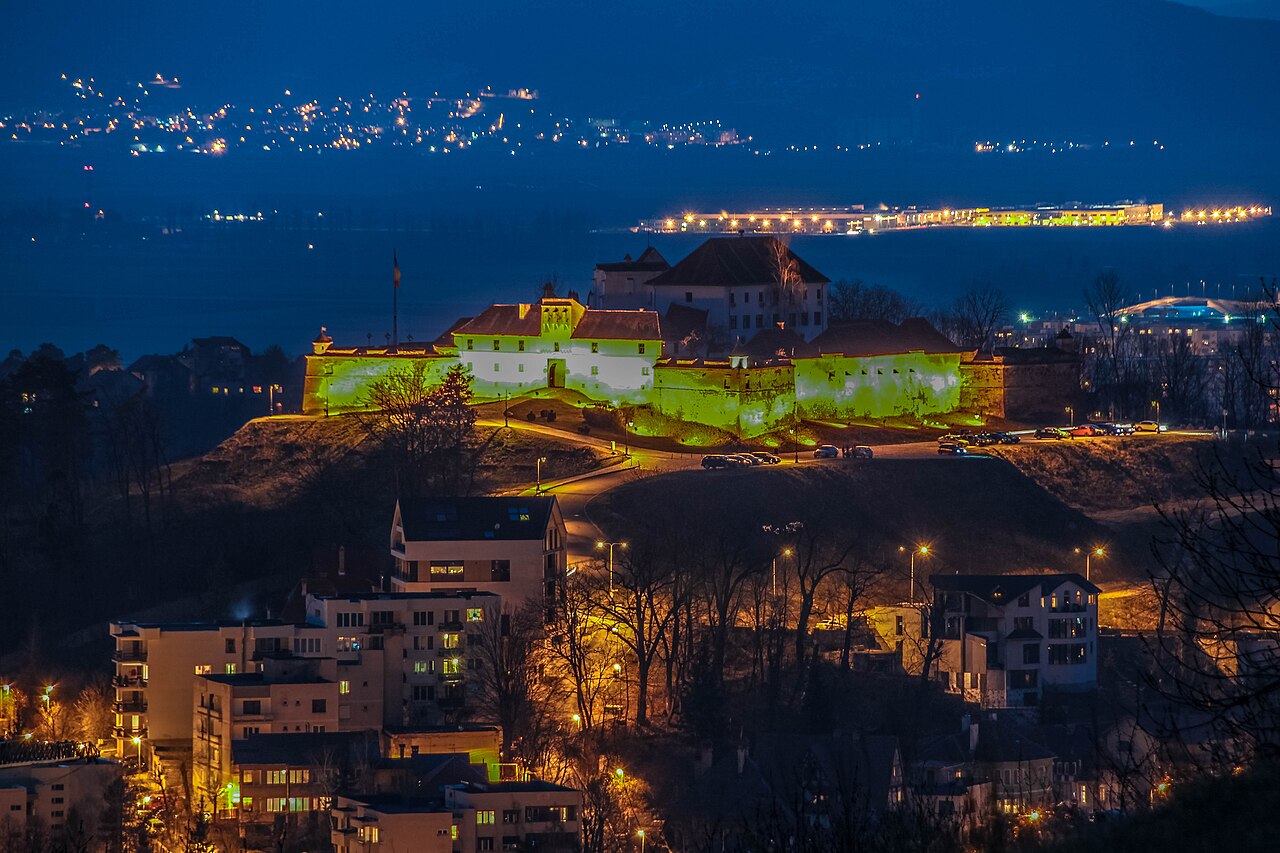
Ghimbav
Ghimbav fortified church in Romania stands as a remarkable example of medieval defensive architecture integrated with religious structures. Located in the village of Ghimbav, in the region of Transylvania, this fortified church complex reflects the turbulent history of the area, marked by invasions and local conflicts. Its origins date back to the 13th century with significant developments through the 14th and 15th centuries, making it an important monument of High Medieval architecture in the region.
Historical background and early development
The first documented mention of Ghimbav village appears in 1351. Situated on the banks of the Ghimbășel River, the settlement was originally named "Weidenbach" by Saxon settlers, meaning "village by the willow tree." The presence of a masonry church in Ghimbav is recorded during the 13th century, coinciding with the period of Tatar invasions in Transylvania. The church's earliest form was early Gothic, constructed during the 14th century. A bell tower was added to the western part of the nave, serving both religious and defensive functions.
Fortification and architectural features
Around 1420, the church was extensively fortified to protect the local population from frequent raids. A polygonal defensive wall with a thickness of approximately 2 meters was erected around the church. This wall was reinforced by seven towers, strategically placed for surveillance and defense. In front of this main wall, a lower secondary wall was constructed, accompanied by a water-filled moat enhancing the fortress's defensive capabilities.
The main entrance was located on the southeast side, accessible via a drawbridge spanning the moat and protected by a barbican. Inside the fortifications, rooms along the walls served as storage spaces and provided shelter for villagers during attacks. This design reflects the typical fortified church model prevalent in Saxon Transylvania, combining religious, residential, and defensive functions within a single complex.
Structural details and interior modifications
The church's interior underwent several modifications over the centuries. After the destructive events of the 17th century, including the Turkish occupation in 1658, the side naves were rebuilt. The main nave received a baroque-style vaulted ceiling in 1775, adding an element of stylistic evolution to the originally Gothic structure. Inside, visitors can still admire significant furnishings such as the altar, pulpit, organ, and elaborate stucco decorations that reflect the church's artistic heritage.
Historical events and impact
During the campaign for control over Transylvania in 1658, the fortified church was captured by the Ottoman Turks. The inhabitants of Ghimbav were promised clemency if they surrendered; however, the Turks broke their promise, killing many of the 909 residents, burning the church, and taking others into captivity. This tragic event significantly impacted the community and led to subsequent rebuilding efforts.
Later changes and current condition
In the late 19th century, specifically in 1876, parts of the fortifications were demolished. A municipal town hall was constructed on the site of one of the towers that originally housed the entrance. Further dismantling occurred in 1940 when some of the storage rooms were removed. Today, five of the original towers and the surrounding defensive wall remain intact, offering a glimpse into the medieval fortification system.
While the church itself is relatively well preserved, the interior has suffered from neglect and does not present the same grandeur as other fortified churches in the Brasov area. Nonetheless, it retains many important architectural and artistic elements that testify to its historical significance and cultural heritage.
Architectural significance and cultural heritage
The Ghimbav fortified church exemplifies the multi-functional design of Saxon fortified churches in Transylvania, combining religious worship with community defense. Its polygonal walls, multiple towers, and moat illustrate advanced medieval military architecture adapted to local needs. The evolution of the church's interior from Gothic to Baroque styles further highlights the continuous use and adaptation of the building through centuries.
As a well-preserved example of High Medieval fortifications, the Ghimbav church complex is a valuable cultural landmark in Romania, reflecting the region's complex history of settlement, conflict, and architectural innovation.
Frequently asked questions (FAQ)
- How do I get to Ghimbav Castle?
- You can reach Ghimbav Castle by car or public transport from nearby cities like Brașov. The castle is conveniently located just a short drive from the city center, and there are local buses that service the area regularly.
- What is the historical significance of Ghimbav Castle?
- Ghimbav Castle, built in the late medieval period, is an important landmark that reflects the architectural style of the time and the region's tumultuous history. It served as a defensive structure and a noble residence, showcasing the cultural heritage of the area.
- When was Ghimbav Castle constructed?
- The construction of Ghimbav Castle dates back to the 14th century, making it a significant historical site in Romania. Over the centuries, it has undergone various renovations, preserving its historical essence while adapting to modern visitor needs.
- Can I take guided tours of Ghimbav Castle?
- Yes, guided tours are available at Ghimbav Castle, offering visitors an in-depth look at its history and architecture. These tours are led by knowledgeable guides who can provide fascinating insights into the castle's past and its significance in Romanian history.
- Why is Ghimbav Castle a popular tourist destination?
- Ghimbav Castle attracts visitors due to its stunning architecture, rich history, and picturesque surroundings. Its proximity to Brașov adds to its appeal, as tourists can easily combine their visit with exploring other local attractions.
- Is it possible to visit Ghimbav Castle year-round?
- Yes, Ghimbav Castle is open to visitors throughout the year, although specific opening hours may vary by season. It’s advisable to check the official website for the latest information on visiting hours and any seasonal events.
- What are the ticket prices for Ghimbav Castle?
- Ticket prices for Ghimbav Castle are generally affordable, with discounts available for students and seniors. It's best to check the official site for the most current pricing and any available promotions before your visit.
- When is the best time to visit Ghimbav Castle?
- The best time to visit Ghimbav Castle is during the spring and early autumn when the weather is pleasant, and the surrounding landscape is particularly beautiful. These seasons also tend to have fewer tourists compared to the summer months, allowing for a more enjoyable experience.
- Are there any nearby attractions to see while visiting Ghimbav Castle?
- Yes, there are several nearby attractions, including the historic city of Brașov, the Black Church, and the breathtaking Piatra Mare Mountains. These sites provide additional opportunities for exploration and enhance your visit to the region.
Information
Loading map...
Visitor reviews
No reviews yet. Been here? Write the first review and help other travelers!
Write the first reviewVisited this castle? Share your experience
Your review helps other travelers and adds first-hand knowledge to our encyclopedia.