Bossonnens Castle Ruins — Switzerland castle

Bossonnens Castle Ruins

Bossonnens castle ruins
Bossonnens, Switzerland
High Medieval (11th–13th c.)
Ruins

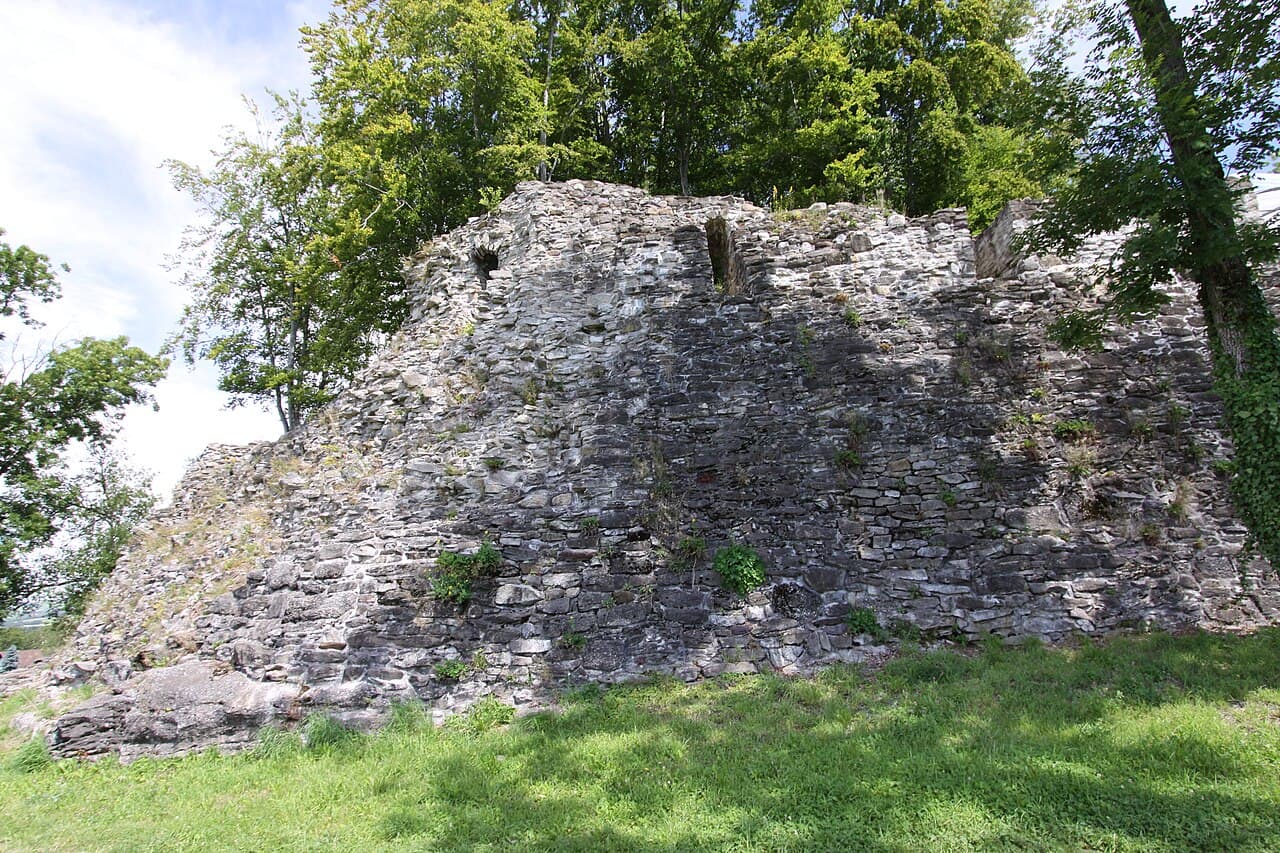
Bossonnens Castle is a notable medieval fortress located in the municipality of Bossonnens in the Canton of Fribourg, Switzerland. Constructed in the 12th century, this castle played a significant role in the region's feudal history before its destruction in the late 15th century. Today, the site is recognized as a Swiss heritage site of national significance, attracting visitors interested in medieval architecture and Swiss history.

Historical background and significance

The castle was originally built during the High Medieval period, a time characterized by the construction of many fortifications across Europe to assert feudal control and defend territories. Bossonnens Castle was strategically placed to oversee and protect the surrounding lands in the Fribourg region. It was part of a network of castles that helped the local nobility maintain influence and control over trade routes and agricultural areas.

In 1475, Bossonnens Castle suffered a devastating fire that led to its abandonment. The reasons behind the fire are not extensively documented, but it marked the end of the castle's active use as a defensive stronghold. Following the fire, the castle fell into ruin, leaving behind remnants that provide valuable insights into medieval military architecture.

Architectural features and layout

The ruins of Bossonnens Castle include distinct elements characteristic of Savoyard military architecture, particularly visible in its towers. The site contains both a square tower and a round tower, with the round tower dating approximately to 1260. This combination of tower shapes is typical of castles influenced by the House of Savoy, known for their innovative defensive designs during the 13th century.

The square tower likely served as the main keep or donjon, providing a strong defensive position and a residence for the lord or castellan. The round tower offered advantages in defense, as its shape better deflected projectiles and resisted undermining attempts, a common siege tactic of the period. The coexistence of these towers reflects evolving military architectural trends during the castle's active use.

Although much of the castle's walls and other buildings have not survived intact, archaeological studies have revealed the castle's layout, including its defensive walls and internal courtyards. The ruins sit on a hilltop, which provided natural defensive benefits, enhancing the castle's strategic position.

Cultural heritage and preservation

Bossonnens Castle is officially designated as a Swiss heritage site of national significance. This status underscores the cultural and historical importance of the ruins within Switzerland's rich medieval heritage. Preservation efforts focus on maintaining the structural remains and facilitating public access to the site for educational and tourism purposes.

Visitors to the castle ruins can explore the remains of the towers and gain an understanding of medieval fortification techniques. Interpretive signage and guided tours often highlight the castle's history, architectural features, and its role within the broader context of Swiss medieval fortifications.

Visiting bossonnens castle ruins

The castle ruins are accessible to the public and offer a glimpse into medieval life and military architecture. The site is suitable for visitors interested in history, archaeology, and scenic views of the Fribourg countryside. While the ruins are stable, visitors should exercise caution as the remains are partially preserved and some areas may be uneven or fragile.

Nearby, the municipality of Bossonnens provides additional cultural attractions and amenities, making a visit to the castle part of a broader exploration of the region's heritage. The best time to visit is during the warmer months when the weather allows for comfortable outdoor exploration.

Frequently asked questions (FAQ)

How do I get to Bossonnens Castle Ruins?
Bossonnens Castle Ruins is easily accessible by car and public transport. If traveling by train, the nearest station is in the village of Bossonnens, from where you can enjoy a scenic walk to the ruins.
What is the historical significance of Bossonnens Castle Ruins?
Bossonnens Castle, originally built in the 12th century, played a crucial role in the defense strategies of the region. Its ruins offer insight into the medieval architecture and the historical events that shaped the area.
When was Bossonnens Castle constructed?
The construction of Bossonnens Castle began in the early 12th century and it underwent various renovations and expansions over the centuries. The ruins we see today are remnants of its storied past, reflecting the architectural styles of different periods.
Can I visit Bossonnens Castle Ruins year-round?
Yes, the castle ruins are open to visitors year-round, allowing you to explore its historical significance at your own pace. However, it's advisable to check local weather conditions, as the paths may be less accessible during winter.
Why is Bossonnens Castle Ruins a popular tourist attraction?
Bossonnens Castle Ruins is popular for its stunning panoramic views of the surrounding countryside and its rich history. Visitors are drawn to the site's picturesque setting, making it a perfect spot for photography and exploration.
Is it possible to take guided tours of the castle ruins?
Currently, Bossonnens Castle Ruins does not offer formal guided tours, but visitors can enjoy the site at their leisure. Informational signs are placed around the ruins to provide context and historical details during your visit.
What are the opening hours for Bossonnens Castle Ruins?
The ruins are accessible at all times, providing flexibility for visitors to explore when it suits them best. However, it's recommended to visit during daylight hours for safety and to fully appreciate the views.
Are there any nearby attractions to visit while in Bossonnens?
Yes, nearby attractions include the charming village of Bossonnens, where you can explore local shops and cafes. Additionally, the scenic Lake Geneva is just a short drive away, offering beautiful landscapes and recreational opportunities.
What are the ticket prices for visiting Bossonnens Castle Ruins?
There are no entrance fees for Bossonnens Castle Ruins, making it a budget-friendly destination for history enthusiasts and casual visitors alike. Donations to support the preservation of the site are appreciated but not required.

Photo gallery

Bossonnens Castle Ruins
Click to view

Photo by WWHenderson20•CC BY-SA 3.0

1 photo • Click any image to view in full screen

Information

Archaeological Site / Ruins

Loading map...

Visitor reviews

No reviews yet. Been here? Write the first review and help other travelers!

Write the first review

Visited this castle? Share your experience

Your review helps other travelers and adds first-hand knowledge to our encyclopedia.

Write a review

(5/5)

0/2000 characters

Your review will be visible after admin approval

Nearby castles

1.4 km

Attalens Castle

Attalens, Switzerland

Attalens Castle is a historic fortress located in the municipality of Attalens in the canton of Fribourg, Switzerland. Originally constructed in the 12th century during the High Medieval period, the castle was built as a defensive stronghold to control the surrounding region and assert the authority of local nobility. Its strategic position allowed it to oversee important routes and protect the nearby settlements. Medieval origins and architectural features The castle's initial construction reflects typical High Medieval military architecture, characterized by robust stone walls, a fortified keep, and defensive elements such as battlements and narrow windows designed for archers. Though detailed records of the original layout are limited, the castle likely included a central courtyard, living quarters, and ancillary buildings necessary for sustaining its garrison. Destruction during the Burgundian wars In the late 15th century, Attalens Castle suffered significant damage during the Burgundian Wars (1474–1477), a conflict involving the Swiss Confederation and the Duchy of Burgundy. The castle was destroyed as part of the military campaigns that reshaped the political landscape of the region. This destruction marked a turning point for the castle, leading to a period of decline. Reconstruction and later uses After its destruction, the castle was rebuilt, though the exact timeline and extent of reconstruction are not extensively documented. The restored structure transitioned from a purely military fortress to a more residential function over the centuries. Since 1969, Attalens Castle has been adapted for modern use, serving as private residences as well as a venue for concerts and cultural events, blending its historical ambiance with contemporary functions. Architectural evolution and preservation The castle's architecture today reflects a mix of its medieval origins and later alterations. While much of the original defensive character has been softened by residential modifications, key features such as thick stone walls and elements of the original layout remain visible. The castle stands as a well-preserved example of medieval fortifications adapted for modern use. Cultural significance and visitor experience Attalens Castle holds cultural importance in the region, representing the medieval heritage of the canton of Fribourg. Its use as a concert venue allows visitors to experience the castle's historic atmosphere in a vibrant, communal setting. Though it is privately owned, public access during events provides an opportunity to appreciate its architecture and history firsthand.

High Medieval (11th–13th c.)
Details
6.1 km
Oron Castle — Switzerland castle

Oron Castle

Oron-le-Châtel, Switzerland

Oron Castle stands as a remarkable example of a high medieval hill castle in the municipality of Oron-le-Châtel, Switzerland. Constructed originally in the 13th century, it has witnessed centuries of architectural evolution, political change, and cultural enrichment. The castle’s strategic location on a hill spur between the Le Flon stream and an ancient Roman road made it a vital stronghold in the region from its earliest days. Today, it is celebrated not only for its well-preserved medieval fortifications but also for housing one of Europe’s most significant private collections of 18th-century French literature. Early history and medieval significance The origins of Oron Castle date back to the late 12th or early 13th century, built as the center of the seigneurie of Oron. It first appears in historical records in 1261, serving as the residence of the noble d’Oron family. This family held the castle as castellans under the Counts of Geneva and later the Counts of Savoy, reflecting the shifting feudal allegiances of the period. The d’Oron family’s influence extended over multiple lordships, and they maintained joint land ownership with the Abbey of Saint-Maurice until the 16th century. Following the extinction of the d’Oron male line in 1388, the castle passed through several hands, including the Counts of Gruyère. In 1557, the castle and its lordship came under the control of the city of Bern, which transformed Oron into the seat of a third-class bailiwick. This administrative district was governed by bailiffs, forty-three of whom resided in the castle until the political upheavals of 1798. Architectural evolution and defensive features Oron Castle underwent significant reconstruction in the late 15th century, between 1475 and 1485. This renovation modernized its defenses and living quarters, adapting the castle to the military and residential needs of the time. Further renovations took place during the 17th century, reflecting changing tastes and functions. The castle’s layout is an elongated oval shape, conforming to the hill’s contours. The core of the complex is a 13th-century bergfried on the eastern side, a tall central tower topped with a conical roof that served as the main defensive lookout. Surrounding this tower are residential wings on the eastern and western sides, punctuated by several towers and turrets. Among the defensive elements are distinctive pepperpot turrets, small rounded towers with narrow keyhole and slit windows designed for archers. Some turrets have round bases, while others are square with machicolations—openings in the floors for dropping objects on attackers. The south-east corner features a notable gatehouse with a right-angled entrance, a stone bearing a coat of arms, and slender defensive slits, accessed by a wooden staircase. The castle’s outer bailey was once protected by a zwinger, a narrow passage between walls intended to trap attackers. Access to the bailey is via a stone arch bridge that replaced an earlier drawbridge spanning a moat or ditch. Part of the ditch was later converted into gardens, illustrating the shift from military to residential and aesthetic functions. The defensive perimeter originally included seven towers and turrets, several of which remain intact. The south-west corner is marked by a latrine tower with a distinctive three-sided pyramidal roof, likely a later addition. Residential and interior features The castle’s residential wings display multiple rows of windows that vary by floor. The ground floor includes small slit windows and cross-shaped arrow slits for defense, while upper floors feature larger segmental-arched windows. Decorative brick friezes adorn parts of the northern palace (palas), indicating artistic enhancements from later periods. Inside, the castle preserves a late Gothic coffered ceiling in the former knights’ hall, which today houses the Potocki library. This library contains approximately 18,000 volumes, primarily French novels published between 1775 and 1825, including unique editions. The interiors also feature 18th-century stoves decorated with thematic motifs, reflecting refined tastes of the castle’s later inhabitants. Cultural significance and modern use In 1801, following its use as a prison after the end of Bernese bailiwick rule, the castle was acquired by the Roberti family of Moudon. Later, in 1870, it was purchased by Adolphe Gaiffe, who began assembling the extensive library collection in 1880. This collection, known as the Potocki Collection, is one of the largest private libraries dedicated to 18th-century French literature in Europe. To preserve the castle, the Association pour la Conservation du château d’Oron was founded in 1934 and bought the property in 1936. The castle is recognized as a cultural property of national significance in Switzerland and has undergone careful restoration to maintain its historical integrity. Today, the castle hosts various cultural events such as banquets, weddings, and themed evenings like "Murder & Mystery" nights, allowing visitors to experience its rich history and ambiance. The courtyard has been fitted with a glass roof to facilitate these events while preserving the castle’s original spatial qualities. Location and strategic importance Oron Castle is strategically perched on a hill spur overlooking the surrounding landscape. Its position between the Le Flon stream and a former Roman road connecting Vevey and Avenches highlights its historical role in controlling important transit routes. The castle’s polygonal layout and natural defenses made it a formidable fortress during the medieval period. Architectural style and preservation status The castle’s architecture is primarily high medieval with elements of late Gothic style visible in interior details such as the coffered ceiling. The structure has been well preserved through successive restorations, maintaining much of its original defensive and residential character. The castle’s combination of military fortifications and refined living spaces exemplifies the evolution of medieval castles into multifunctional estates. Oron Castle remains a significant heritage site, offering insights into medieval fortification techniques, noble residence life, and the cultural history of the region. Its extensive library collection adds a unique dimension, linking architectural heritage with literary and intellectual history.

High Medieval (11th–13th c.)
Details
6.5 km

Blonay Castle

Blonay, Switzerland

Blonay Castle stands as a remarkable example of a high medieval fortress in the Swiss region of Blonay. Constructed around 1175 on the site of an earlier fortified building dating back to the 11th century, the castle was originally established by the noble Blonay family, who were vassals of the powerful Counts of Savoy. This strategic location highlights the castle's role in regional defense and control during the medieval period. Early history and construction The initial fortification on the site likely served as a defensive outpost in the 11th century, reflecting the turbulent political landscape of medieval Europe. The Blonay family, prominent local nobles, built the existing castle structure in the late 12th century, around 1175. Their allegiance to the Counts of Savoy positioned the castle as part of a broader network of fortifications securing Savoyard influence in the region. Architectural features and layout Blonay Castle features typical medieval defensive elements including thick stone walls, a central keep, and fortified gatehouses designed to withstand sieges. The castle's layout is adapted to the natural terrain, maximizing defensive advantages. Over the centuries, the castle underwent modifications reflecting evolving military architecture, yet many original elements remain intact. Ownership and historical significance The castle remained under the control of the Blonay family for nearly six centuries, until 1752. At that time, the property was sold to the Graffenried family, who continue to own the castle today. This continuity of ownership is notable, as it has helped preserve the castle's historical integrity and condition. Role in regional politics During its long history, Blonay Castle served as a symbol of feudal authority and local governance. Its occupants were influential in regional affairs, leveraging their connection to the Counts of Savoy. The castle's defensive capabilities also played a role in local conflicts and power struggles throughout the medieval and early modern periods. Preservation and current status Today, Blonay Castle is well preserved, retaining much of its medieval character. The castle remains a private residence of the Graffenried family, which has contributed to its maintenance and conservation. While not widely open to the public, the castle's exterior and surroundings attract interest for their historical and architectural value. Architectural style and influences The castle's design reflects high medieval architectural styles, with robust stone construction and defensive features typical of the period. Elements such as battlements, arrow slits, and a fortified gatehouse illustrate the military priorities of the time. The castle also exhibits adaptations to the local Swiss landscape, integrating natural defensive advantages. Visiting information and cultural importance Although Blonay Castle is privately owned and not regularly open for tours, it remains an important cultural landmark in the region. Its enduring presence offers insight into medieval noble life and feudal structures in Switzerland. Visitors to the area can appreciate the castle's exterior architecture and its picturesque setting within the Swiss countryside.

High Medieval (11th–13th c.)
Details