Blonay Castle

Blonay Castle: medieval stronghold in Switzerland
Blonay, Switzerland
High Medieval (11th–13th c.)

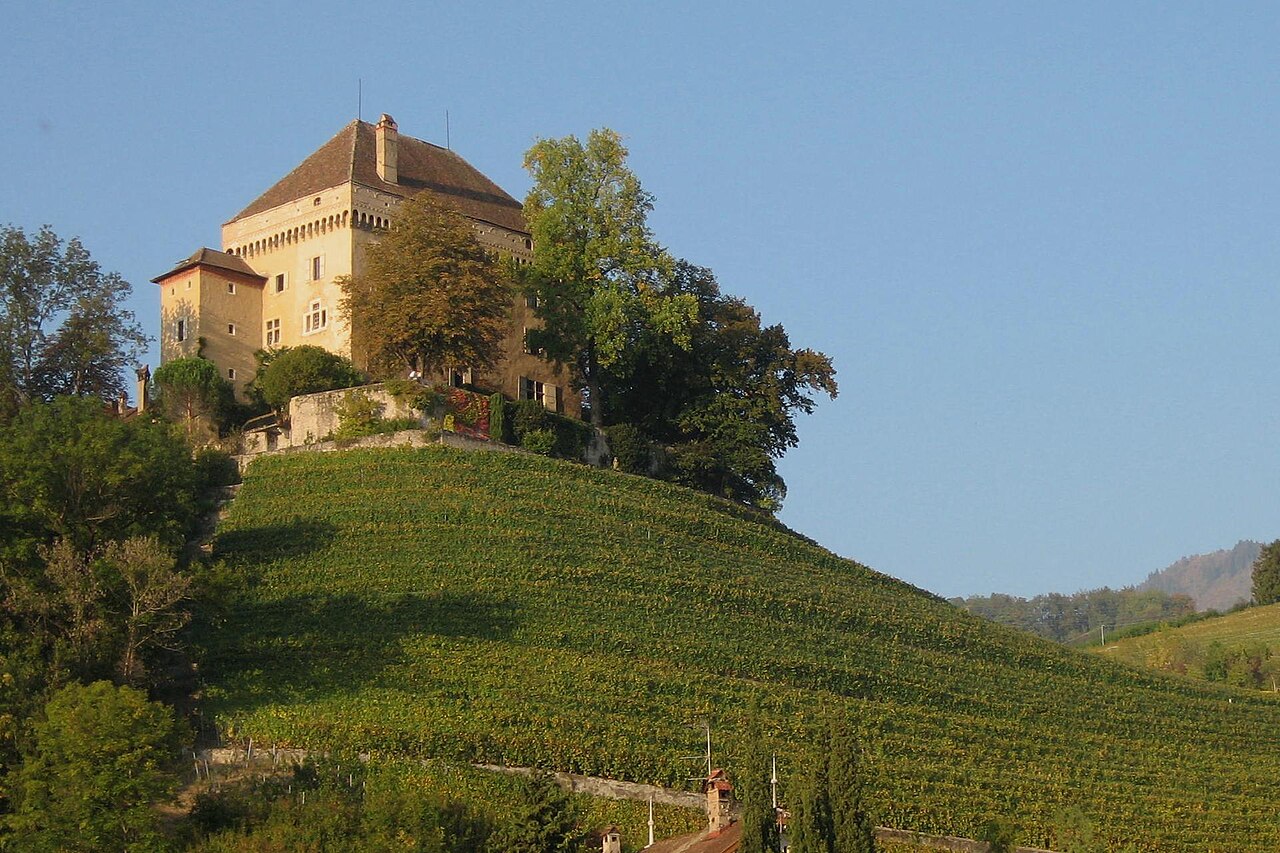
Blonay Castle stands as a remarkable example of a high medieval fortress in the Swiss region of Blonay. Constructed around 1175 on the site of an earlier fortified building dating back to the 11th century, the castle was originally established by the noble Blonay family, who were vassals of the powerful Counts of Savoy. This strategic location highlights the castle's role in regional defense and control during the medieval period.

Early history and construction

The initial fortification on the site likely served as a defensive outpost in the 11th century, reflecting the turbulent political landscape of medieval Europe. The Blonay family, prominent local nobles, built the existing castle structure in the late 12th century, around 1175. Their allegiance to the Counts of Savoy positioned the castle as part of a broader network of fortifications securing Savoyard influence in the region.

Architectural features and layout

Blonay Castle features typical medieval defensive elements including thick stone walls, a central keep, and fortified gatehouses designed to withstand sieges. The castle's layout is adapted to the natural terrain, maximizing defensive advantages. Over the centuries, the castle underwent modifications reflecting evolving military architecture, yet many original elements remain intact.

Ownership and historical significance

The castle remained under the control of the Blonay family for nearly six centuries, until 1752. At that time, the property was sold to the Graffenried family, who continue to own the castle today. This continuity of ownership is notable, as it has helped preserve the castle's historical integrity and condition.

Role in regional politics

During its long history, Blonay Castle served as a symbol of feudal authority and local governance. Its occupants were influential in regional affairs, leveraging their connection to the Counts of Savoy. The castle's defensive capabilities also played a role in local conflicts and power struggles throughout the medieval and early modern periods.

Preservation and current status

Today, Blonay Castle is well preserved, retaining much of its medieval character. The castle remains a private residence of the Graffenried family, which has contributed to its maintenance and conservation. While not widely open to the public, the castle's exterior and surroundings attract interest for their historical and architectural value.

Architectural style and influences

The castle's design reflects high medieval architectural styles, with robust stone construction and defensive features typical of the period. Elements such as battlements, arrow slits, and a fortified gatehouse illustrate the military priorities of the time. The castle also exhibits adaptations to the local Swiss landscape, integrating natural defensive advantages.

Visiting information and cultural importance

Although Blonay Castle is privately owned and not regularly open for tours, it remains an important cultural landmark in the region. Its enduring presence offers insight into medieval noble life and feudal structures in Switzerland. Visitors to the area can appreciate the castle's exterior architecture and its picturesque setting within the Swiss countryside.

Frequently asked questions (FAQ)

How do I get to Blonay Castle?
Blonay Castle is easily accessible by public transport. You can take a train to Blonay station, followed by a short walk to the castle, which offers stunning views of Lake Geneva and the surrounding mountains.
What is the historical significance of Blonay Castle?
Blonay Castle dates back to the 13th century and has served as a strategic fortification over the centuries. It played a vital role in the region's defense and showcases the architectural evolution of medieval castles in Switzerland.
When was Blonay Castle built?
Construction of Blonay Castle began in the early 13th century, with various modifications made over the years. Its history reflects the changing political and social landscape of the region throughout the Middle Ages.
Can I visit Blonay Castle during the winter?
Yes, Blonay Castle is open for visits year-round, but accessibility may vary in winter due to weather conditions. It’s advisable to check the castle's official website for any seasonal closures or specific winter visiting hours.
Why is Blonay Castle an important architectural site?
Blonay Castle is an excellent example of medieval military architecture, featuring thick walls and strategic positioning. Its well-preserved structure provides insight into the construction techniques and defensive strategies of the time.
Is it possible to take guided tours of Blonay Castle?
Yes, guided tours of Blonay Castle are available, offering visitors a deeper understanding of its history and architecture. These tours are conducted by knowledgeable guides who share fascinating stories about the castle's past.
What are the opening hours for Blonay Castle?
Blonay Castle is generally open to visitors from 10 AM to 6 PM during the summer months and from 10 AM to 4 PM in the winter. It's recommended to verify the timings on the official website before your visit, as they may vary seasonally.
What are the ticket prices for visiting Blonay Castle?
Ticket prices for Blonay Castle are reasonable, with discounts available for students and seniors. Children under a certain age may enter for free, making it an affordable outing for families.
What are some nearby attractions to visit while in Blonay?
While visiting Blonay Castle, consider exploring the beautiful landscapes of the surrounding region. Nearby attractions include the picturesque village of Blonay and the stunning views from the nearby Rochers-de-Naye, which is accessible by cogwheel train.

Loading map...

Visitor reviews

No reviews yet. Been here? Write the first review and help other travelers!

Write the first review

Visited this castle? Share your experience

Your review helps other travelers and adds first-hand knowledge to our encyclopedia.
Write a review

(5/5)

0/2000 characters

Your review will be visible after admin approval

Nearby castles

2.6 km
Châtelard Castle — Switzerland castle

Châtelard Castle

Clarens, Switzerland

Châtelard Castle is a medieval hill castle situated in the municipality of Clarens, near Montreux in the Canton of Vaud, Switzerland. The castle occupies a strategic position on a hillside overlooking the Lake Geneva region, providing commanding views of the surrounding landscape. It is recognized as a Swiss heritage site of national significance due to its historical and architectural importance. The origins and early construction The site of Châtelard Castle first hosted a wooden fortification built by the Burgundians around the year 1000. This early structure was likely a wooden tower or small fortress designed to control the vital routes along the lake and protect the local population. The wooden castle was eventually replaced by a more durable stone structure in the 13th century, reflecting the typical transition during the High Medieval period from wooden motte-and-bailey castles to stone fortifications. The stone castle was constructed in phases throughout the 13th and 14th centuries, incorporating defensive architectural features typical of the era. These included thick curtain walls, towers for surveillance and defense, and a gatehouse controlling access. The castle's elevated position on a hill made it a formidable defensive site against invaders and local conflicts. Architectural features and layout Châtelard Castle is classified as a hill castle, built to take advantage of natural elevation for defense. The castle complex includes remnants of a keep or main tower, defensive battlements, and a courtyard enclosed by stone walls. The original moat or ditch that enhanced the castle's defenses may still be traceable in the landscape. The castle's design reflects the High Medieval architectural style, with functional and robust construction prioritizing defense over comfort. The use of local stone materials and the castle's integration into the hillside demonstrate medieval building techniques adapted to the terrain. Historical significance and conflicts Châtelard Castle played a role in the turbulent history of the region, particularly during the wars of Burgundy in the late 15th century. In 1476, the castle was looted and partially burned during these conflicts, which involved the Duchy of Burgundy and the Swiss Confederacy among other powers. This event marked a significant moment in the castle's history, leading to damage that affected its structure and use. Despite this, the castle remained an important local stronghold and symbol of feudal power in the Vaud region. Over subsequent centuries, the castle's military importance declined as political and military changes rendered such fortifications less critical. Preservation and cultural heritage Today, Châtelard Castle stands as a partially preserved ruin, with sections of its walls and towers still visible to visitors. It is protected as a cultural monument under Swiss heritage laws, reflecting its value as a historical site and tourist attraction. The castle's location near Montreux makes it accessible for visitors interested in medieval architecture and Swiss history. Interpretive signage and guided tours provide insights into the castle's construction, historical context, and the role it played in regional conflicts. Visitor experience and access Visitors to Châtelard Castle can explore the ruins and enjoy panoramic views of Lake Geneva and the surrounding mountains. The site offers a tangible connection to medieval life and the strategic importance of hill castles in Switzerland. While the castle is in a ruinous state, its remains evoke the atmosphere of the High Medieval period and the legacy of the Burgundian wars. Architectural legacy Châtelard Castle exemplifies the evolution of medieval fortifications in the Swiss Plateau, showcasing the transition from wooden to stone castles and the adaptation to local geography. Its surviving elements provide valuable information for historians and archaeologists studying medieval military architecture in Switzerland. Overall, Châtelard Castle remains a significant historical and architectural landmark in the Canton of Vaud, offering insight into the region's medieval past and the broader European conflicts of the Middle Ages.

High Medieval (11th–13th c.)
Details
3.3 km

Swiss Museum of Games

La Tour-de-Peilz, Switzerland

The castle of La Tour-de-Peilz stands majestically on the eastern shore of Lake Geneva, framed by the breathtaking backdrop of the Swiss Alps. This picturesque two-towered medieval fortress, encircled by a moat filled with lake water, is a remarkable example of 13th-century military architecture in the region. Originally constructed as a defensive stronghold, the castle has evolved through centuries of change, reflecting the shifting tides of history and the cultural heritage of the canton of Vaud. Since 1987, the castle has been home to the Swiss Museum of Games (Musée Suisse du Jeu), Switzerland's first and only museum dedicated to the history and diversity of games played worldwide. This unique institution enriches the castle's significance, blending its medieval past with a vibrant cultural present. Visitors to the castle enjoy not only the stunning views over the lake and mountains but also an extraordinary collection of games spanning centuries and continents. Historical origins and medieval fortifications The earliest records of the site date back to 1160, when Philippe de La Tour de Vevey was noted as the lord of a fortress centered on a principal tower. This initial structure served both as a residence for the local nobility and as a refuge during times of conflict. By the early 13th century, the castle underwent significant expansion with the construction of a large hall, or aula, which now comprises much of the main residential building. Ownership transferred to the Counts of Savoy around the mid-13th century, who undertook substantial fortification works in the 1280s. They added two imposing circular towers flanking the curtain walls, enhancing the castle's defensive capabilities. These towers, with their rounded design, were strategically built to provide overlapping fields of fire and to better deflect projectiles, a common innovation in medieval military architecture. Alongside these towers, the Savoyards extended the aula to include private chambers for the lord (camera domini) and constructed an adjacent chapel, reflecting the intertwined nature of secular and religious life at the castle. The outer defenses were also strengthened with the addition of a second, lower wall called the braies, creating a protected walkway known as the lices. The moat was widened and flooded with water from Lake Geneva, effectively transforming the castle into an island fortress. Access was controlled by a bridge on the northern side, spanning the moat at its widest point. The castle's role through conflict and change The castle played a strategic role in regional conflicts, notably suffering damage during the Burgundian Wars in the late 15th century. Historical accounts suggest that the fortress was set on fire in 1476, which led to significant destruction. Following the conquest of the region by Bernese forces in 1536, the castle's military importance waned. It ceased to function primarily as a noble residence and was repurposed for administrative and judicial uses. One of the circular towers was converted into a prison, and a nearby building served as a courtroom, marking a shift from military to civil functions. 18th-century transformations and private ownership In 1749, the castle entered a new chapter when Jean Grésier, a French royal fortifications inspector, acquired the property. He transformed the medieval fortress into a comfortable private residence. This renovation included the installation of classical-style windows in the main dwelling, the partial filling of the moat, and the conversion of defensive terraces facing the lake into leisure spaces. Significant changes included the demolition of the large quadrangular tower to allow more sunlight into the courtyard and the adaptation of interiors to suit residential needs. Despite these alterations, the castle retained visible medieval features, especially when viewed from the town side, where the moat, walls, and circular towers remain prominent. Architectural features and layout Medieval core and fortifications The castle's layout is a complex blend of medieval military architecture and later residential modifications. At its heart is the oldest surviving section: the lower part of the main tower, measuring approximately 16.5 by 11.5 meters at its base and rising to an estimated height between 16 and 22 meters. This tower served dual purposes as both a defensive stronghold and the lord's living quarters. The 13th-century large hall or aula expanded the residential space significantly. It was later extended to include the lord's private chambers and a chapel, highlighting the castle's evolution from a fortress to a noble residence accommodating religious functions. The two circular towers added in the 1280s are key defensive elements, designed to provide comprehensive coverage along the curtain wall. The addition of the braies wall and the flooded moat created multiple layers of defense, a typical feature of high medieval fortifications aimed at deterring attackers and controlling access. 18th-century residential adaptations During the 18th-century renovation, the defensive moat was partially filled in and transformed into a more ornamental water feature. The lakeside terraces replaced former military platforms, reflecting a shift towards leisure and aesthetic appeal. The introduction of classical architectural details, such as larger windows and refined masonry, softened the fortress's austere appearance. Inside, some medieval features survive, particularly on the ground floor, including original wood panelling and ceramic stoves. These elements now serve decorative and functional roles within the museum's reception areas. Upper floors and attic spaces have been adapted for museum use, balancing preservation with modern functionality. The Swiss Museum of Games: a cultural treasure Since its inauguration in 1987, the Swiss Museum of Games has transformed the castle into a vibrant cultural institution. The museum's extensive collection showcases games from diverse cultures and historical periods, illustrating the universal human fascination with play and strategy. Visitors can explore traditional games such as mahjong from China, oware from Africa, and pachisi from India, alongside more unusual exhibits like Cold War-era spy-themed table games and vintage slot machines. This eclectic collection offers insights into social, cultural, and technological developments through the lens of games. The museum occupies the first and second floors of the castle, while the ground floor halls are available for public events, further integrating the site into the community's cultural life. Preservation and heritage status The castle's defensive structures—including the two circular towers, curtain walls, ramparts, and moat—are protected as historical monuments, a designation granted in 1973. This status recognizes the site's architectural and historical significance within the Swiss cultural landscape. Acquired by the municipality of La Tour-de-Peilz in 1979 following a public vote, the castle is also listed in the Swiss Inventory of Cultural Property of Regional Significance. These protections ensure the preservation of the castle's unique blend of medieval fortification and 18th-century residential architecture for future generations. Visitor experience and significance The castle offers visitors a rare opportunity to experience a well-preserved medieval fortress that has been thoughtfully adapted for modern use. The combination of historical architecture, stunning natural surroundings, and the engaging Swiss Museum of Games creates a multifaceted cultural destination. Visitors can appreciate the castle's robust defensive features, explore the rich history of the region, and enjoy interactive exhibits that celebrate the diversity and evolution of games globally. The site exemplifies how historical preservation can coexist with contemporary cultural engagement, making it a noteworthy attraction on Lake Geneva's shores.

High Medieval (11th–13th c.)
Details
3.8 km

Aile Castle

Vevey, Switzerland

Aile Castle, located in Vevey, Switzerland, stands as a remarkable example of 19th-century neo-Gothic architecture, embodying the romantic revival of medieval styles that swept across Europe during the Modern period. Constructed between 1840 and 1846, this castle was built to replace an earlier 17th-century structure, reflecting the changing tastes and cultural aspirations of its new owners. The transformation of the old castle into a neo-Gothic monument was heavily influenced by English architectural trends of the time, which sought to revive and reinterpret the grandeur and mystique of medieval castles.The architectural transformation and styleThe redesign of Aile Castle during the mid-19th century was characterized by the adoption of the neo-Gothic style, a movement that emphasized pointed arches, decorative tracery, and intricate stonework reminiscent of medieval Gothic architecture. This style was popular among the European aristocracy and bourgeoisie who desired to evoke a sense of history, nobility, and romanticism in their residences.The castle features typical neo-Gothic elements such as turrets, battlements, and ornate windows with pointed arches. The use of these architectural features not only enhanced the castle’s aesthetic appeal but also symbolized a connection to the medieval past, despite its relatively recent construction date. The influence of English Gothic Revival architecture is evident in the castle’s design, reflecting the widespread admiration for British medieval heritage during the 19th century.Historical context and ownershipThe original 17th-century castle that stood on the site was replaced as part of a broader trend during the 19th century, where many older fortifications and manor houses were either rebuilt or extensively remodeled to suit contemporary tastes and functions. The owners of Aile Castle sought to create a residence that was both a statement of prestige and a comfortable home, blending historical motifs with modern amenities of the time.Today, Aile Castle is recognized as a Swiss heritage site of national significance, underscoring its importance not only as an architectural landmark but also as a cultural emblem reflecting Switzerland’s historical evolution and artistic heritage.Location and surroundingsSituated in the picturesque town of Vevey on the northern shore of Lac Léman (Lake Geneva), Aile Castle benefits from a stunning natural setting. The castle’s elevated position offers panoramic views of the lake and the surrounding Alps, enhancing its romantic and majestic aura. The location has historically been strategic, providing both defense and scenic beauty, which continues to attract visitors and historians alike.Preservation and current statusAile Castle today is well preserved, maintaining much of its original neo-Gothic character and architectural integrity. Its status as a heritage site ensures ongoing conservation efforts to protect its unique features and historical significance. The castle serves as a tangible link to the 19th-century revivalist movements and the cultural milieu of that era in Switzerland.Visitors to Vevey can appreciate Aile Castle not only for its architectural beauty but also for its embodiment of the romantic ideals that shaped much of Europe’s historic preservation and architectural trends in the 1800s. The castle stands as a testament to the enduring appeal of medieval-inspired design and the cultural aspirations of its creators.

Modern (19th–20th c.)
Details

