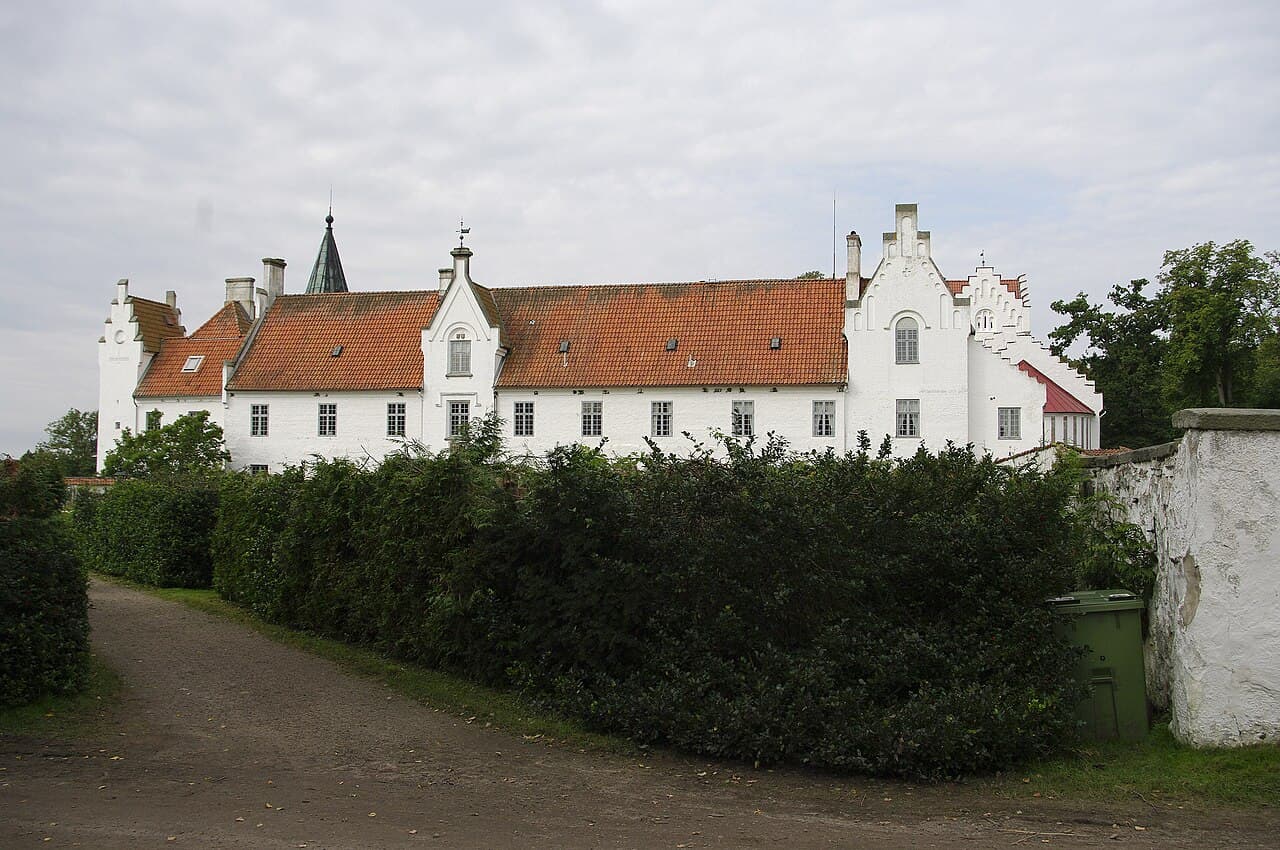
Bosjökloster
Bosjökloster stands as a remarkable testament to medieval monastic life and noble heritage in Sweden. Located in the municipality of Höör, this historic estate was originally established around 1080 by the Benedictine order on an island within Lake Ringsjön. The setting provided natural isolation and security, ideal for a contemplative religious community. Over the centuries, Bosjökloster evolved from a monastic complex into a noble residence, reflecting the region's shifting political and religious landscape.
The earliest surviving mention of Bosjökloster appears in a papal letter from Pope Lucius III dated 1181 or 1182. This document confirmed the abbey's privileges and placed it under the Pope's direct protection, underscoring its ecclesiastical importance. The monastery was endowed by Tord Thott, "the Bearded", a notable Viking leader and nobleman from the Scanian region. His generous donation included 31 farms and half the fishing rights in the lake, with the remainder designated for transfer after his death. Governance of the abbey was managed by a prioress named Julian and a prior named Petrus, a monk from the nearby Allhelgonaklostret monastery in Lund.
Growth and prominence in the middle ages
Throughout the Middle Ages, Bosjökloster grew into one of the wealthiest religious houses in the region. By 1525, its holdings included as many as 216 farms, alongside various tax exemptions that underscored its economic power. The nunnery attracted women from prominent noble families such as the Galen, Rosensparre, and Thott clans, reflecting its high social status and influence.
The impact of the danish reformation and subsequent ownership changes
The Danish Reformation in the 16th century brought profound changes to Bosjökloster. In 1536 or 1537, the abbey was dissolved, and its assets became crown property. The estate was granted to Torbern Bille, the former Catholic archbishop of Lund who had been deposed. Although he was tasked with overseeing the remaining nuns, the monastic community effectively ceased to exist. In 1560, King Frederick II transferred ownership to Thale Ulfstand, a widowed noblewoman who undertook extensive renovations. She enhanced the estate and church, converting parts into a family mausoleum and marking her influence with the initials and date 1569 on the grand oak entrance doors.
Ownership of Bosjökloster passed through several noble families over the following centuries. The Beck family acquired it in 1628 but lost it due to financial troubles. It was then sold to Corfitz Ulfeldt, a Danish nobleman infamous for his betrayal of both Denmark and Sweden. After the Swedish crown confiscated the estate from Ulfeldt, it was restored to the Beck family in 1735. The Beck-Friis family maintained possession for nearly 280 years until 1908, when Count Philip Bonde purchased the estate. His family continues to own Bosjökloster today.
Architectural features and medieval remains
The architectural remains of Bosjökloster reveal its origins as a Benedictine monastery centered around a Romanesque church. The church's layout includes a distinctive apse, a relatively small choir, a tall nave, and a western tower. The apse, dating from the mid-1100s, is built from sandstone and decorated with vertical pilasters and a low external niche. Its design closely resembles that of the nearby Fulltofta church, indicating regional stylistic influences.
The current western tower was not part of the original medieval construction but was added during 19th-century restorations led by architect Carl Georg Brunius. These renovations also included replacing four small windows on the south side of the nave with larger windows on both the south and north walls. Previously, the church bells hung separately in a bell tower located elsewhere in the churchyard.
A unique feature related to the nuns' participation in services is a bricked-up entrance high on the southern nave wall. This door once connected the second floor of the now-lost western cloister wing to the church, leading to a wooden balcony where the nuns listened to mass. The western gable's walls contain numerous embedded sound pots—earthenware vessels designed to amplify and enhance the acoustics of the nuns' singing. This is unusual, as sound pots are typically found in other parts of churches, supporting the idea that the nuns sang from this balcony.
Inside the choir, the north side of the triumphal arch features a well-preserved 15th-century fresco of Saint Apollonia, depicted holding large pincers clenching a tooth, symbolizing her role as the patron saint of dentists.
Monastic layout and later modifications
The original monastery comprised a four-wing structure arranged around a courtyard. Over time, much of this layout was altered or lost: the western wing disappeared by the 17th century, and the monks' wing was demolished in the 18th century. The eastern and southern wings retain fragments of medieval walls characterized by thick masonry, sealed doorways, and cellars.
The estate's large oak entrance doors bear the initials and date 1569, marking the period when Thale Ulfstand carried out significant repairs and expansions. These likely included heightening the eastern wing and remodeling parts of the complex. The church's interior also contains some of the oldest and best-preserved pews in the Scanian region, dating to 1606. Several Renaissance epitaphs and gravestones honor noble families such as the Ulfstand and Laxmand clans. Notably, a gravestone commemorates Holger Laxmand, a boy who drowned in Ringsjön in 1562 at age twelve.
Churchyard and cemetery features
The churchyard north of the church served as a cemetery for the nuns and features graves in the Gothic style. These include recumbent stones and stone chests topped with carved gables, many marked with crosses and dates that provide historical clues about those buried there.
19th-century renovations and present-day estate
In the 19th century, architect Helgo Zettervall conducted extensive renovations of the eastern and southern wings. He introduced historicist features such as corner towers, dormer windows, and Gothic battlements, significantly altering the castle's medieval appearance. These changes blended original medieval elements with 19th-century stylistic sensibilities.
Today, the Bosjökloster estate encompasses a central courtyard, terraced and rosary gardens, a herb garden, and one of Sweden's oldest oak trees. The estate remains privately owned by the Bonde family, preserving its rich cultural and architectural heritage as a living monument to Sweden's medieval and noble past.
Adding a cultural footnote to its history, the composer Hilding Rosenberg, born in 1892, grew up on the estate grounds in the gardener's residence near the church tower, linking Bosjökloster to Sweden's artistic heritage.
Frequently asked questions (FAQ)
- How do I visit Bosjökloster and what are the opening hours?
- Bosjökloster is generally open to visitors during daylight hours. It is best to check local listings or the estate's official website for specific opening times and any special events.
- What is the historical significance of Bosjökloster?
- Bosjökloster is a former Benedictine monastery founded around 1080, which grew into a wealthy religious house before becoming a noble estate. It reflects important aspects of medieval monastic life and regional history in Skåne.
- Can I see the original medieval architectural features at Bosjökloster?
- Yes, visitors can observe the Romanesque church with its sandstone apse, the bricked-up entrance for nuns, 15th-century frescoes, and remnants of the original four-wing monastery layout.
- Is Bosjökloster accessible for visitors with mobility issues?
- While the estate grounds are generally accessible, some older structures and uneven terrain may present challenges. Visitors with mobility concerns should inquire in advance for detailed accessibility information.
- Are there guided tours available at Bosjökloster?
- Guided tours may be available during special events or by arrangement. Checking with the estate's visitor information is recommended to confirm availability and schedules.
Photo gallery

Information
Opening hours
Typically open during daylight hours; check local listings
Ticket prices
Varies by event; generally free to visit grounds
Website
Visit websiteSources & official resources
Verify the information above using these authoritative references.
Loading map...
Visitor reviews
No reviews yet. Been here? Write the first review and help other travelers!
Write the first reviewVisited this castle? Share your experience
Your review helps other travelers and adds first-hand knowledge to our encyclopedia.



