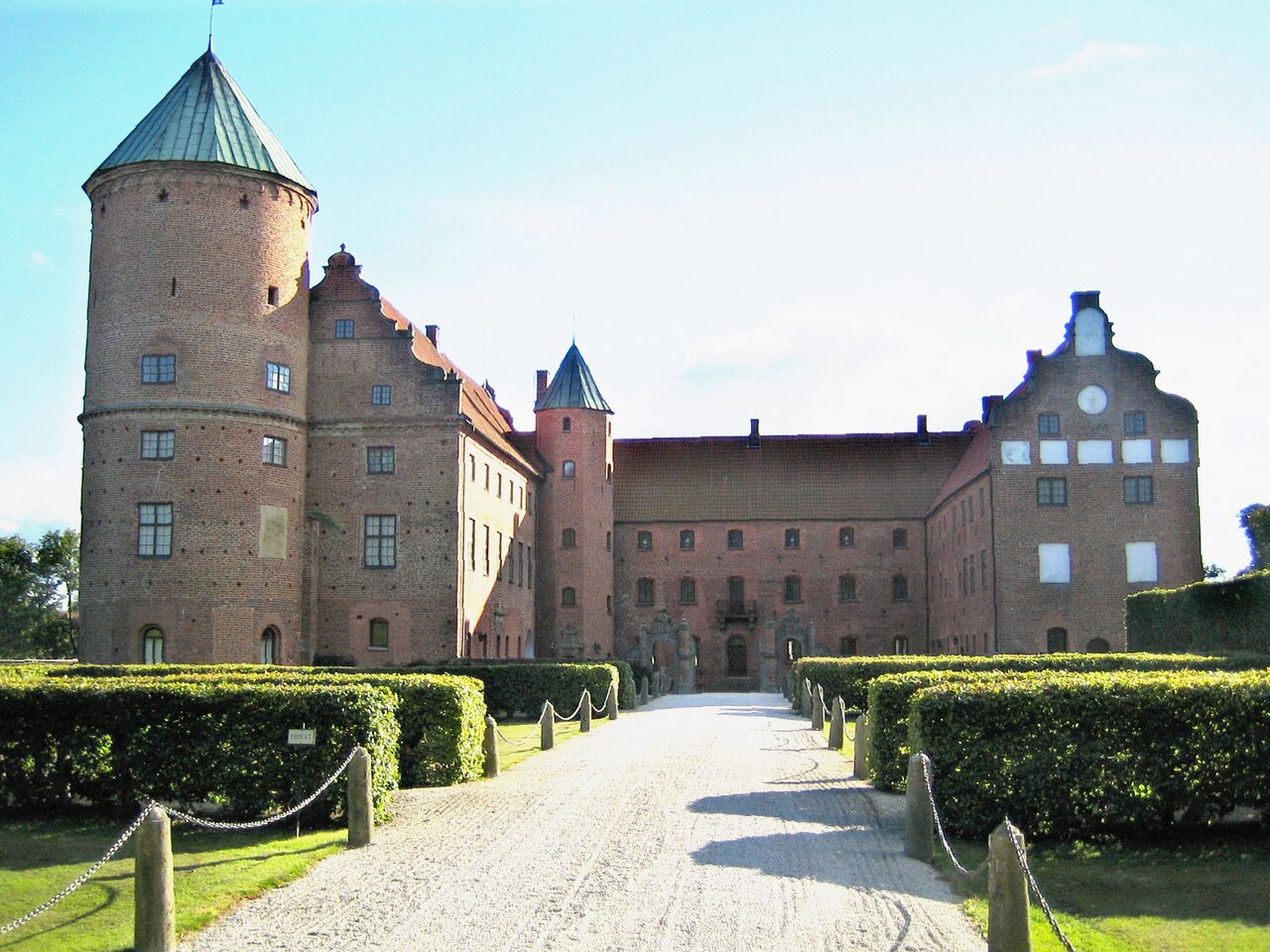
Löberöd Castle

Löberöd Castle: historic manor in Skåne, Sweden
Löberöd, Sweden
Post-Renaissance (17th–18th c.)
Restored

Löberöd Castle is a historic manor located in Löberöd, Sweden, with origins dating back to the early 17th century. Although the precise early history of the estate remains unclear, the oldest surviving sections of the manor were constructed in the 1620s during the ownership of Anna Brahe. This period marks the beginning of the estate's documented architectural development, reflecting the styles and building practices of early modern Sweden.

Ownership and historical transitions

Following Anna Brahe's tenure, the estate passed to her nephew, a member of the Ramel family, upon her death in 1635. The Ramel family retained possession of Löberöd Castle for over 150 years, maintaining and expanding the manor through successive generations. In 1798-1799, significant construction work took place, including the addition of the northern wing and a distinctive eight-sided turret, which are key architectural features visible today.

About two decades later, the estate underwent further enhancements with the addition of an orangery and the creation of an English park. These developments reflected the landscaping trends of the late 18th and early 19th centuries, emphasizing ornamental gardens and leisure spaces. The surrounding marshes were drained during this period, resulting in the formation of a small lake that added to the manor's picturesque setting.

In 1863, the manor returned to the Ramel family when a descendant repurchased the property, holding it until 1917. The estate changed hands again in the 20th century but was reacquired by the Ramel family in 1997, marking the third period of their stewardship.

Architectural features and style

The manor's architectural style is primarily post-Renaissance, reflecting the late 18th-century modifications that shaped its current appearance. The northern wing and the eight-sided turret are notable for their design and craftsmanship, characteristic of Swedish manor houses of that era. The orangery added around 1820 represents the period's interest in horticulture and exotic plants, serving both practical and aesthetic purposes.

Damage and restoration

In 1982, Löberöd Castle suffered a severe fire that destroyed the roof and caused significant damage to the main building. A comprehensive renovation was undertaken between 1999 and 2000, restoring the manor to its former condition while preserving its historical architectural elements. The restoration work ensured the survival of the castle's key features and maintained its status as a cultural heritage site.

Current status and access

Today, Löberöd Castle remains a private estate and is not open to the public. The manor and its grounds are preserved as a family residence, continuing the legacy of the Ramel family's long association with the property. While visitors cannot access the interior or gardens, the castle's exterior and surrounding landscape contribute to the historical fabric of the region.

Frequently asked questions (FAQ)

How do I get to Löberöd Castle?
Löberöd Castle is located in Löberöd, Sweden, and is easily accessible by car or public transport. If you're driving, there are parking facilities nearby. For public transport, check local bus schedules that connect to Löberöd from major cities like Malmö and Lund.
What is the historical significance of Löberöd Castle?
Löberöd Castle dates back to the 14th century and has played a pivotal role in Swedish history. Originally constructed as a defensive fortress, it has witnessed many historical events, including conflicts and royal visits. Today, it serves as a reminder of the architectural styles and historical narratives of its time.
When was Löberöd Castle built?
Löberöd Castle was built in the 14th century, making it one of the oldest castles in Sweden. The exact date of construction is not precisely documented, but it has undergone several renovations and expansions over the centuries, reflecting various architectural influences.
Can I take guided tours of Löberöd Castle?
Yes, guided tours are available at Löberöd Castle, offering visitors insights into its rich history and architectural features. Tours are conducted by knowledgeable guides who can share fascinating stories about the castle and its former inhabitants. It's recommended to check the official website for tour availability and scheduling.
Why is Löberöd Castle unique in its architecture?
Löberöd Castle showcases a blend of medieval and Renaissance architectural styles, featuring distinctive stonework and fortifications. Its design includes elements that reflect its original purpose as a fortress, while later renovations introduced more refined details typical of the Renaissance period. This unique combination makes it a fascinating subject for architecture enthusiasts.
Is it possible to host events at Löberöd Castle?
Yes, Löberöd Castle offers facilities for hosting various events, including weddings, conferences, and private gatherings. The picturesque setting and historical ambiance provide a memorable backdrop for any occasion. Interested parties should contact the castle's management for more information on availability and services.
What are the opening hours for Löberöd Castle?
Löberöd Castle is open to visitors from April to October, with specific opening hours varying by season. Typically, the castle is open from 10 AM to 5 PM on weekdays and weekends. It’s advisable to check the official website for the most current information regarding hours and any seasonal changes.
What are the ticket prices for visiting Löberöd Castle?
Ticket prices for Löberöd Castle are generally affordable, with discounts available for children, students, and seniors. Admission typically allows access to the castle grounds and guided tours. For the latest pricing details and any special offers, please refer to the official website before your visit.
What is the best time to visit Löberöd Castle?
The best time to visit Löberöd Castle is during the late spring and early summer months, from May to June, when the weather is pleasant and the gardens are in full bloom. Additionally, during these months, the castle hosts various events and activities that enhance the visitor experience. Early autumn is also a lovely time for a visit, as the foliage changes color.
Are there any nearby attractions to visit along with Löberöd Castle?
Yes, there are several nearby attractions to complement your visit to Löberöd Castle. Just a short drive away, you can explore the beautiful natural reserves and charming towns in the region, including the historic town of Lund and the scenic Söderåsen National Park. Each location offers unique experiences, from cultural sites to outdoor activities.

Information

Lowland Castle

Loading map...

Visitor reviews

No reviews yet. Been here? Write the first review and help other travelers!

Write the first review

Visited this castle? Share your experience

Your review helps other travelers and adds first-hand knowledge to our encyclopedia.

Write a review

(5/5)

0/2000 characters

Your review will be visible after admin approval

Nearby castles

6.4 km

Hjularöd Castle

Eslöv, Sweden

Hjularöd Castle is a notable example of neo-medieval architecture located in Eslöv, Sweden. Although the estate was first mentioned in historical records in 1391, the present castle structure was constructed between 1894 and 1897. The castle was commissioned by chamberlain Hans Gustaf Toll, a prominent figure who sought to create a residence that reflected the romanticized ideals of medieval European castles. Architectural inspiration and design The design of Hjularöd Castle was heavily influenced by French medieval castles, with particular inspiration drawn from the château de Pierrefonds, a 19th-century restoration of a medieval fortress under the direction of architect Eugène Viollet-le-Duc. This influence is evident in the castle's towers, battlements, and ornate stonework, which evoke the grandeur and defensive features of a medieval fortress, yet adapted to a residential mansion. The architects responsible for Hjularöd Castle were Isak Gustaf Clason and Lars Israel Wahlman, both respected Swedish architects known for their work in historicist and national romantic styles. Their collaboration resulted in a building that skillfully blends medieval motifs with the comforts and aesthetics of the late 19th century. Historical context and ownership While the estate itself dates back to the late 14th century, the current castle reflects the modern period of Swedish architecture, specifically the late 19th century. After its completion, the castle remained a private residence. Since 1926, it has been owned by the Bergengren family, who continue to maintain the property. Hjularöd Castle is not open to the public, preserving its private status and historical integrity. Cultural significance and media appearances Hjularöd Castle has also found a place in Swedish popular culture. Notably, its courtyard was used as an outdoor filming location for the 1996 television series "Mysteriet på Greveholm" (The mystery at Greveholm), a beloved children's show in Sweden. This connection has added to the castle's recognition beyond architectural and historical circles. Architectural features and estate layout The castle's layout includes traditional elements such as a central courtyard, defensive-style walls, and multiple towers that emphasize verticality and medieval aesthetics. The stone construction, steeply pitched roofs, and decorative details highlight the historicist approach favored by the architects, aiming to evoke the romantic spirit of the Middle Ages while accommodating modern living standards of the time. Materials and craftsmanship The use of local stone and detailed masonry work demonstrate the high level of craftsmanship involved in the castle's construction. The facades exhibit intricate carvings and sculptural elements that contribute to the castle's imposing yet elegant appearance. Interior design and function Though not open to the public, the interior of Hjularöd Castle is known to reflect the tastes and lifestyle of Swedish nobility at the turn of the 20th century, with richly decorated rooms, grand halls, and period furnishings consistent with the castle's exterior style.

Modern (19th–20th c.)
Details
7.8 km
Skarhult Castle — Sweden castle

Skarhult Castle

Eslöv, Sweden

Skarhult Castle is a prominent Renaissance-era hill castle located in Eslöv Municipality, in the historic region of Scania in southern Sweden. Constructed primarily in the 1560s by the Danish noble Sten Rosensparre, the castle incorporates elements from an earlier medieval fortification, reflecting its long-standing strategic and residential significance. Historical origins and early ownership The estate originally known as Skarholta or Skarolt is documented as far back as the 14th century. During the mid-1300s, the property was owned by the Danish judge John Nielsen, indicating the site's importance well before the Renaissance reconstruction. The castle remained under the control of the Rosensparre family, who also used the name Skarholt, until 1624. Subsequently, ownership passed through the Ruud and Trolle families, both notable noble houses in the region. Renaissance construction and architectural features The current main structure of Skarhult Castle was erected in the 1560s during the Renaissance period under the direction of Sten Rosensparre, a member of the Danish riksråd (council). The castle exemplifies Renaissance architectural principles adapted to a defensive hilltop site, combining residential comfort with fortification elements. While the castle’s Renaissance style is dominant, some parts of the building predate this era, preserving medieval construction techniques and materials. The castle’s layout features characteristic Renaissance elements such as symmetrical façades, large windows, and ornamental details, while still maintaining robust defensive features typical of earlier periods. The castle is surrounded by a park that includes the medieval Skarhult Church, which adds to the historical ambiance of the estate. Transition from Danish to Swedish rule In 1658, the province of Scania was ceded from Denmark to Sweden as part of the Treaty of Roskilde, a significant geopolitical shift that affected many estates including Skarhult Castle. In 1661, the castle was purchased by Count Pontus Fredrik De la Gardie, a prominent Swedish nobleman. However, the actual management and ownership were effectively controlled by his wife, Beata Elisabet von Königsmarck, a wealthy and influential figure who managed the estate from 1661 until her death in 1723. Due to legal restrictions on married women owning property, the castle was officially listed under her name only after she became a widow in 1692. Later noble ownership and 19th-century renovations After Beata Elisabet von Königsmarck’s death, Skarhult Castle was inherited by Count Erik Brahe, her grandson through her daughter. The Brahe family maintained ownership until Magnus Fredrik Brahe sold the estate to Charles XIV John of Sweden in 1826. Subsequently, the castle was sold by King Oscar I to Baron Jules von Schwerin, who undertook significant renovations in the 1840s. These updates modernized parts of the castle while respecting its Renaissance character. Architectural and cultural significance Skarhult Castle stands as an important example of Renaissance architecture in southern Sweden, illustrating the transition from medieval fortresses to stately noble residences. Its combination of defensive features and Renaissance elegance reflects the social and military changes of the 16th century. The castle’s continuous ownership by prominent noble families such as the Rosensparre, Brahe, and De la Gardie families highlights its role in regional history and aristocratic culture. The presence of the medieval Skarhult Church within the castle park adds a religious and historical dimension to the site, linking the castle to the spiritual life of the community over centuries. Current status and accessibility Today, Skarhult Castle remains privately owned and is not open to the public. Its well-preserved condition allows it to retain much of its historical and architectural integrity, although access is restricted. The castle and its grounds continue to be a significant cultural landmark in Scania, representing centuries of Scandinavian noble heritage and architectural evolution.

Renaissance (15th–17th c.)
Details
11.4 km

Osbyholm Castle

Hörby, Sweden

Osbyholm Castle is a historic manor located in Hörby, Sweden, with origins tracing back to the early 15th century. The estate, originally known as Ousbygård, was first documented in 1405, marking its longstanding presence in the region. The current castle structure was erected in the early 17th century, specifically during the first half of the 1600s, under the ownership of Lene Ramel. This period situates the castle firmly within the early modern era of Swedish architecture and history. Architectural design and features The castle is notable for its square-shaped layout, a common design in Scandinavian manorial architecture of the time, emphasizing both functionality and defense. Surrounding the castle is a moat, which historically served as a defensive feature to protect the manor from attacks. One of the most distinctive architectural elements of Osbyholm is its rare octagonal tower, which predates the main castle building and dates back to the 1570s. This tower adds a unique character to the castle complex and reflects architectural styles from the late Renaissance period in Sweden. Historical context and restorations Osbyholm Castle endured significant damage during the Scanian War (1675-1679), a conflict between Denmark-Norway and Sweden that affected much of the Scania region. Following the war, the castle required restoration to repair the war-inflicted damages. The major restoration began in the 1750s under the direction of Captain Georg Christian Cook. During this period, the castle was not only repaired but also enlarged to accommodate changing needs and tastes. Rococo interior decoration The 18th-century restoration brought with it a significant interior redesign in the Rococo style, which was popular in Europe at the time. This style is characterized by ornate decorations, elegant curves, and light colors, which contrasted with the castle's more austere exterior. The Rococo interiors at Osbyholm reflect the influence of contemporary European artistic trends and signify the castle's adaptation to more modern tastes and functions beyond mere defense. 19th-century reconstruction Further architectural changes occurred in 1853, when the castle underwent another phase of reconstruction. This 19th-century work likely involved modernization efforts and possible stylistic updates, although specific details about this reconstruction phase are less documented. These modifications helped preserve the castle's relevance and usability into the modern era. Current status and ownership Today, Osbyholm Castle remains privately owned, maintaining its status as a significant historical and architectural landmark in the Scania region. The castle's preservation allows visitors and historians alike to appreciate its blend of Renaissance defensive features and later Rococo elegance. While it is not widely open to the public, its exterior and surroundings are of interest to those studying Swedish castle architecture and history. Significance in Swedish architectural heritage Osbyholm Castle exemplifies the evolution of Swedish manor houses from fortified farmsteads to elegant residences. The combination of the moat, the octagonal tower, and the Rococo interiors illustrate the layering of architectural styles and historical functions over several centuries. Its survival through wars and restorations highlights the resilience and adaptability of such estates in Sweden's cultural landscape.

Post-Renaissance (17th–18th c.)
Details