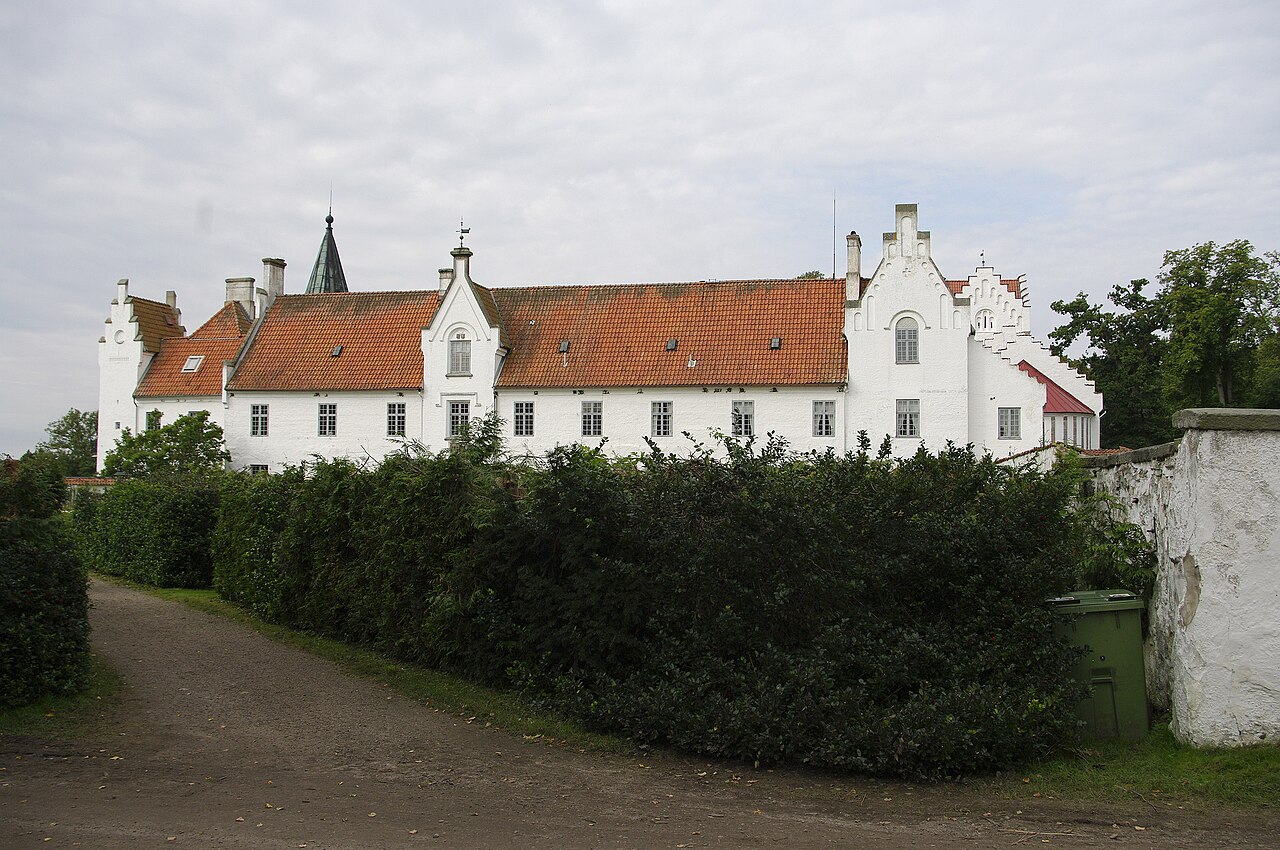
Osbyholm Castle
Osbyholm Castle is a historic manor located in Hörby, Sweden, with origins tracing back to the early 15th century. The estate, originally known as Ousbygård, was first documented in 1405, marking its longstanding presence in the region. The current castle structure was erected in the early 17th century, specifically during the first half of the 1600s, under the ownership of Lene Ramel. This period situates the castle firmly within the early modern era of Swedish architecture and history.
Architectural design and features
The castle is notable for its square-shaped layout, a common design in Scandinavian manorial architecture of the time, emphasizing both functionality and defense. Surrounding the castle is a moat, which historically served as a defensive feature to protect the manor from attacks. One of the most distinctive architectural elements of Osbyholm is its rare octagonal tower, which predates the main castle building and dates back to the 1570s. This tower adds a unique character to the castle complex and reflects architectural styles from the late Renaissance period in Sweden.
Historical context and restorations
Osbyholm Castle endured significant damage during the Scanian War (1675-1679), a conflict between Denmark-Norway and Sweden that affected much of the Scania region. Following the war, the castle required restoration to repair the war-inflicted damages. The major restoration began in the 1750s under the direction of Captain Georg Christian Cook. During this period, the castle was not only repaired but also enlarged to accommodate changing needs and tastes.
Rococo interior decoration
The 18th-century restoration brought with it a significant interior redesign in the Rococo style, which was popular in Europe at the time. This style is characterized by ornate decorations, elegant curves, and light colors, which contrasted with the castle's more austere exterior. The Rococo interiors at Osbyholm reflect the influence of contemporary European artistic trends and signify the castle's adaptation to more modern tastes and functions beyond mere defense.
19th-century reconstruction
Further architectural changes occurred in 1853, when the castle underwent another phase of reconstruction. This 19th-century work likely involved modernization efforts and possible stylistic updates, although specific details about this reconstruction phase are less documented. These modifications helped preserve the castle's relevance and usability into the modern era.
Current status and ownership
Today, Osbyholm Castle remains privately owned, maintaining its status as a significant historical and architectural landmark in the Scania region. The castle's preservation allows visitors and historians alike to appreciate its blend of Renaissance defensive features and later Rococo elegance. While it is not widely open to the public, its exterior and surroundings are of interest to those studying Swedish castle architecture and history.
Significance in Swedish architectural heritage
Osbyholm Castle exemplifies the evolution of Swedish manor houses from fortified farmsteads to elegant residences. The combination of the moat, the octagonal tower, and the Rococo interiors illustrate the layering of architectural styles and historical functions over several centuries. Its survival through wars and restorations highlights the resilience and adaptability of such estates in Sweden's cultural landscape.
Frequently asked questions (FAQ)
- What is the historical significance of Osbyholm Castle?
- Osbyholm Castle, located in Hörby, Sweden, dates back to the late 16th century and is a remarkable example of Renaissance architecture. It has served various functions throughout history, including as a noble residence and estate. The castle's rich history reflects the social and political changes of Sweden over the centuries.
- When was Osbyholm Castle built?
- Osbyholm Castle was constructed in the late 1500s, specifically around 1580. It was built by the noble family of the same name and has since undergone several renovations, preserving its historical charm while adapting to modern needs.
- Can I visit Osbyholm Castle?
- Yes, Osbyholm Castle is open to visitors, allowing them to explore its beautiful grounds and learn about its history. Guided tours are often available, which provide deeper insights into the castle's architecture and significance. It is recommended to check the official website for any special events or tour schedules.
- What are the opening hours for Osbyholm Castle?
- Osbyholm Castle typically opens its doors to visitors from May through September. During this period, the castle is open daily from 10 AM to 5 PM, but hours may vary on public holidays. It is advisable to confirm the specific hours before planning your visit.
- Is it possible to access Osbyholm Castle for individuals with mobility challenges?
- The castle grounds are generally accessible, but some areas may present challenges for visitors with mobility issues. It is recommended to contact the castle's management in advance to inquire about specific accessibility options and assistance that may be available during your visit.
- What is the best time to visit Osbyholm Castle?
- The best time to visit Osbyholm Castle is during the summer months, from June to August, when the weather is pleasant and the gardens are in full bloom. Additionally, this period often features special events and activities that enhance the visitor experience. Early spring or early fall can also be lovely times to visit, offering fewer crowds.
- Are there any nearby attractions to Osbyholm Castle?
- Yes, there are several nearby attractions to explore, including the beautiful nature reserves and lakes that surround Hörby. Additionally, the town of Hörby offers charming shops, local eateries, and cultural sites for visitors to enjoy. Combining a visit to Osbyholm Castle with these local attractions can create a more enriching experience.
- What are the ticket prices for visiting Osbyholm Castle?
- Ticket prices for Osbyholm Castle vary depending on age and the type of tour selected. Generally, adult tickets range from 100 to 150 SEK, while discounts may be available for children, students, and seniors. It's best to check the official website for the most current pricing and any special promotions.
Information
Sources & official resources
Verify the information above using these authoritative references.
Loading map...
Visitor reviews
No reviews yet. Been here? Write the first review and help other travelers!
Write the first reviewVisited this castle? Share your experience
Your review helps other travelers and adds first-hand knowledge to our encyclopedia.