Boselt Castle

Boselt Castle near Okumuşlar, Artvin
Near Okumuşlar Köyü, Turkey
Early Medieval (5th–10th c.)

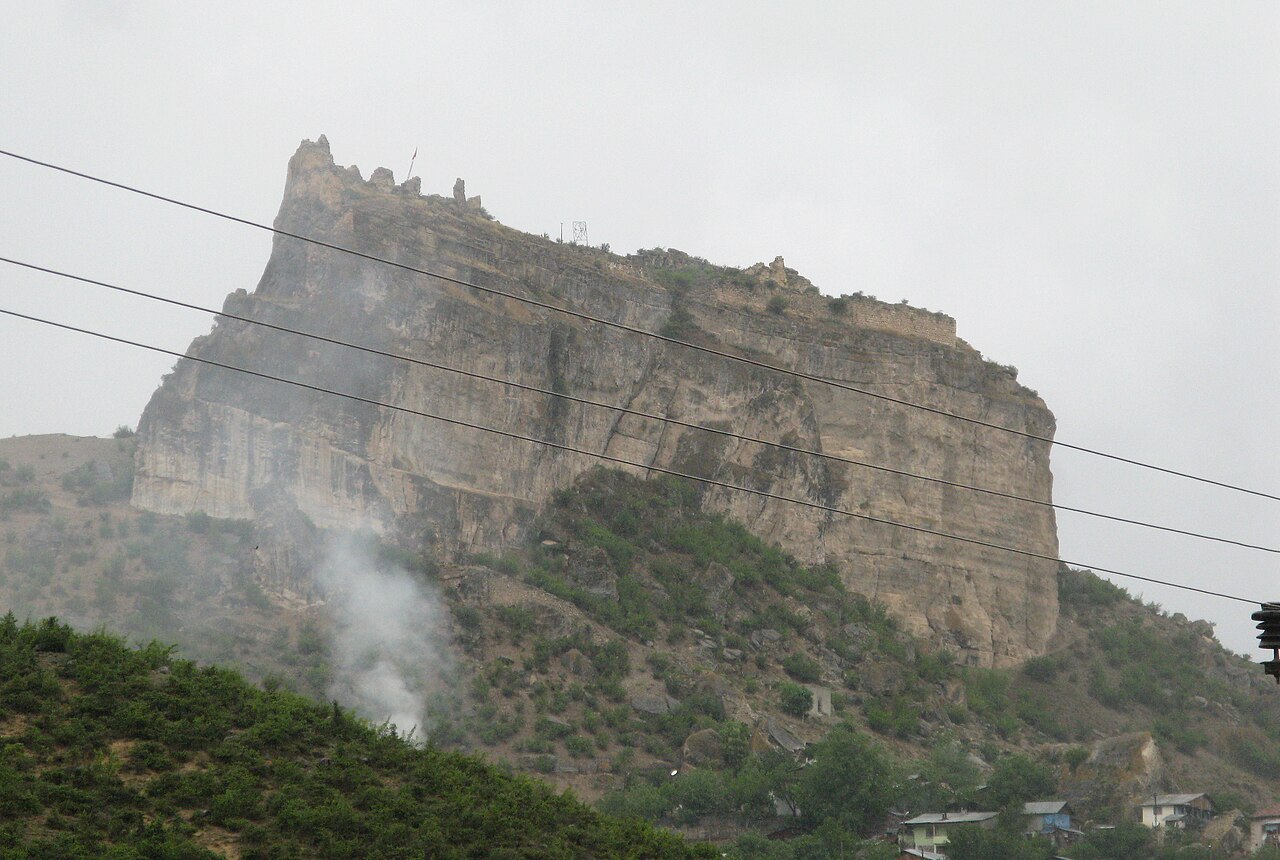
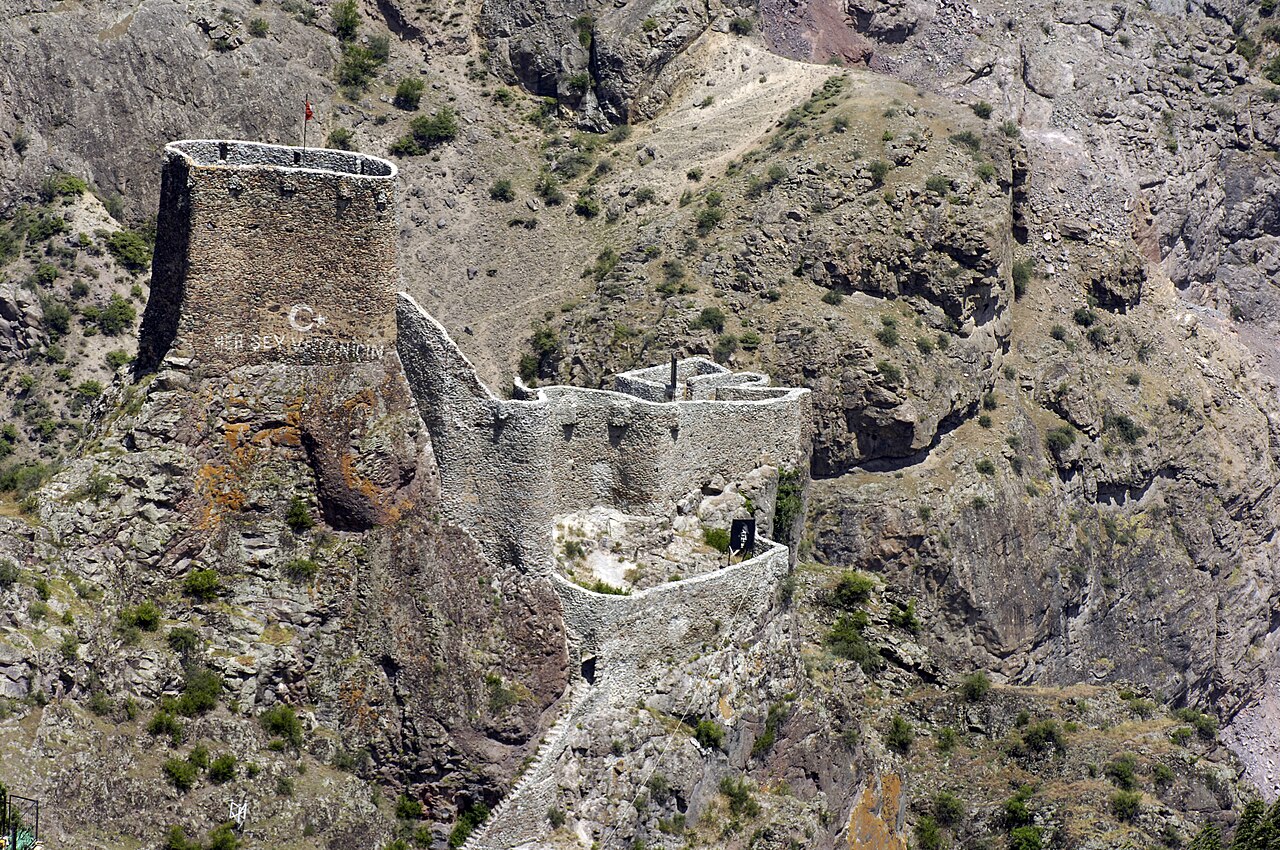
Boselt Castle, also known locally as Boselt Kalesi and sometimes referred to as Şerbiyet, Şatberdi Kalesi, or Kaleyle, is a historic fortress perched on a rocky crag southwest of the village of Okumuşlar in the Artvin province of northeastern Turkey. This castle stands as a notable example of early medieval fortifications in the region, dating back to the 9th century.

The castle was likely constructed during the time when the area was part of the historical Georgian province of Klarjeti. According to local legend, a Georgian king built Boselt Castle in memory of his daughter, which adds a layer of cultural and historical significance to the site. The fortress was not isolated; it was accompanied by a settlement located on the site of the present-day village of Okumuşlar. This settlement functioned as a trade center for the region, indicating that Boselt Castle played a crucial role in both defense and commerce.

Strategic location and architectural features

Boselt Castle is strategically positioned on a rocky outcrop, providing commanding views of the surrounding mountainous terrain. This elevated position was essential for its defensive function, allowing inhabitants to monitor and control movement through the valley below. The castle's construction utilized the natural rock formations, blending man-made walls with the rugged landscape.

Though detailed architectural studies are limited due to the castle's current inaccessibility, Boselt Castle likely included typical early medieval defensive elements such as thick stone walls, battlements, and possibly towers or lookout posts. The castle's walls would have been constructed from locally sourced stone, designed to withstand sieges and harsh weather conditions prevalent in the region.

Connection to Şatberdi Monastery and underground tunnels

Close to Boselt Castle are the ruins of the Şatberdi Monastery, an important religious site from the same period. It is widely believed that one of the primary purposes of Boselt Castle was to protect this monastic complex and the surrounding settlement. The proximity of the fortress to the monastery underscores the intertwined nature of religious and military architecture in medieval Caucasian regions.

Local tradition also speaks of underground tunnels beneath the castle, carved into the rock. These tunnels may have served as secret passageways for escape or communication between the castle and the monastery or village. However, these tunnels have not been extensively explored or documented by archaeologists, leaving their full extent and purpose a matter of speculation.

Historical context and cultural significance

During the early medieval period, the region of Klarjeti was a frontier zone between various powers, including the Byzantine Empire and emerging Georgian principalities. Boselt Castle was part of a network of fortifications that helped secure trade routes and protect local populations from invasions. The castle's Georgian heritage reflects the historical influence of Georgian culture and political control in this part of northeastern Anatolia.

The castle and its associated settlement highlight the blend of military, commercial, and religious functions typical of medieval Caucasus fortifications. The nearby monastery ruins further emphasize the cultural richness of the area during this period.

Current condition and accessibility challenges

At present, Boselt Castle is inaccessible to visitors due to the lack of safe paths leading to the site. The terrain is rugged and mountainous, and the traditional routes have been disrupted by the creation of the Deriner Reservoir, which flooded older access roads. This has made reaching the castle difficult without specialized equipment or local guidance.

Despite its inaccessibility, Boselt Castle remains a promising site for future archaeological study and cultural tourism development. Its well-preserved ruins offer valuable insights into early medieval Georgian military architecture and the historical dynamics of the Artvin region.

Recommendations for visitors and researchers

Those interested in visiting Boselt Castle should prepare for a challenging journey, including a long mountainous drive and hiking through difficult terrain. Due to the current lack of infrastructure and safety measures, visits should be undertaken with caution and preferably with experienced local guides.

Researchers and historians see Boselt Castle as an important site for understanding the medieval history of the Caucasus and northeastern Anatolia. Future excavations and preservation efforts could reveal more about the castle's structure, its role in regional defense, and its relationship with the nearby monastery and settlement.

Frequently asked questions (FAQ)

How do I get to Boselt Castle?
Boselt Castle is located near Okumuşlar Köyü in Turkey. The best way to reach the castle is by car, as public transportation options are limited. There are well-marked roads leading to the castle, and ample parking is available on-site.
What is the historical significance of Boselt Castle?
Boselt Castle has a rich history dating back to the medieval period, serving as a strategic stronghold in the region. It played a crucial role in various historical conflicts, making it an important landmark for understanding the area’s past. The castle is a testament to the architectural and military advancements of its time.
When was Boselt Castle built?
Boselt Castle was constructed in the 12th century, reflecting the architectural styles and defensive needs of that era. Over the centuries, it has undergone various renovations and restorations, preserving its historical integrity. Exploring the castle gives visitors insight into the construction techniques of the time.
Can I visit Boselt Castle year-round?
Yes, Boselt Castle is open to visitors year-round, although hours may vary seasonally. It's advisable to check the official website or local tourist information for the most accurate opening hours before your visit. The scenic surroundings make it a pleasant destination in any season.
Why is Boselt Castle considered an architectural gem?
Boselt Castle is admired for its unique blend of medieval architectural styles and its well-preserved structures. The castle features impressive stone walls, towers, and battlements that showcase the engineering skills of its builders. Visitors can appreciate the intricate details that reflect the culture and aesthetics of the time.
Is it possible to tour the inside of Boselt Castle?
Yes, guided tours are often available, allowing visitors to explore the inside of Boselt Castle and learn about its history. The tours provide a deeper understanding of the castle's significance and the stories behind its walls. Be sure to check for tour availability upon your arrival.
What is the best time to visit Boselt Castle?
The best time to visit Boselt Castle is during the spring and fall when the weather is mild and the landscape is particularly beautiful. These seasons offer comfortable temperatures for exploring the castle and the surrounding area. Summer can be quite hot, while winter may bring colder temperatures.
Are there any nearby attractions to see while visiting Boselt Castle?
Yes, there are several attractions near Boselt Castle, including picturesque villages and natural parks. Visitors can also explore local markets and historical sites in the surrounding area. Combining your visit to the castle with nearby attractions can enhance your experience.
What are the ticket prices for Boselt Castle?
Ticket prices for Boselt Castle are generally affordable, making it accessible for a wide range of visitors. Discounts may be available for students, seniors, and groups, so it's worth checking for any promotional offers. Always confirm current pricing at the entrance or on the official website before your visit.
What are the opening hours of Boselt Castle?
Boselt Castle typically opens at 9:00 AM and closes at 6:00 PM, but these hours may vary depending on the season. It's recommended to verify the current hours before your visit, as they can change due to special events or maintenance. Early arrival can help you avoid crowds and enjoy a more leisurely experience.

Loading map...

Visitor reviews

No reviews yet. Been here? Write the first review and help other travelers!

Write the first review

Visited this castle? Share your experience

Your review helps other travelers and adds first-hand knowledge to our encyclopedia.
Write a review

(5/5)

0/2000 characters

Your review will be visible after admin approval

Nearby castles

9.6 km
Ferhatli Castle — Turkey castle

Ferhatli Castle

Near Ferhatli, Turkey

Ferhatli Castle, locally known as Ferhatli Kalesi, is perched on a prominent rock formation overlooking the Ardanuç river near the village of Ferhatli in the Artvin province of northeastern Turkey. This hill castle occupies a strategic position that historically controlled river access and the surrounding valley, reflecting its military and administrative importance in the region. Historical background and origins The exact date of Ferhatli Castle's original construction remains uncertain, but it is believed to have early medieval origins. The castle's history is intertwined with the ancient kingdom of Caucasian Iberia, which encompassed parts of modern-day Georgia and northeastern Turkey. During the 5th century, the castle underwent significant restoration under the reign of Vakhtang I, King of Caucasian Iberia, who is noted for fortifying regional defenses against external threats. Ferhatli Castle was restored contemporaneously with nearby Gevhernik Castle, indicating a coordinated effort to secure this frontier zone. However, much of the visible remains today date from the Ottoman era, particularly from the 16th century onward, when the castle was adapted to the military needs of the empire. The Ottoman modifications likely included reinforcement of the outer walls and alterations to accommodate artillery, common in that period. Architectural features and layout The castle is classified as a hill castle, built atop a rocky outcrop that provided natural defense advantages. Although the original structures have largely vanished, some remnants of the outer defensive walls remain visible. These walls, constructed from local stone, would have enclosed the castle's inner courtyard and protected the inhabitants from invaders. Due to the castle's elevated position, the walls were designed to maximize visibility and control over the surrounding landscape, particularly the Ardanuç river valley. The surviving sections of the walls are best viewed from the road below the castle or from the opposite side of the valley, especially after the completion of a dam project that will flood the lower road, altering the accessibility and views. There are no significant remains of the castle's internal buildings or towers on the rock itself, suggesting that these may have been destroyed or dismantled over time. The castle's defensive design would have included features typical of early medieval fortifications, such as battlements and lookout points, though these are no longer extant. Current condition and access Today, Ferhatli Castle exists as ruins with limited structural remains. The site is freely accessible to visitors, but reaching the castle requires some physical effort, including rock climbing, due to its rugged terrain and elevated location. This challenging access helps preserve the site from extensive tourist impact but limits widespread visitation. The castle ruins have suffered damage over time, including destruction caused by treasure hunters from the nearby town of Ardanuç. These activities have contributed to the loss of archaeological materials and further degradation of the site. Visitors interested in viewing the castle's remains should plan for a physically demanding visit and take care when navigating the rocky paths. The surrounding landscape offers scenic views of the Ardanuç river valley and the Artvin region's mountainous terrain. Significance in regional history Ferhatli Castle is an important historical site that reflects the complex cultural and political dynamics of northeastern Turkey and the Caucasus region. Its association with the kingdom of Caucasian Iberia highlights the area's role as a crossroads of empires and cultures from antiquity through the Ottoman period. The castle's strategic location underscores its function as a military stronghold controlling river routes and local settlements. Its restoration under Vakhtang I and later Ottoman modifications demonstrate the continuous military significance of the site across centuries. Preservation and future prospects Efforts to preserve Ferhatli Castle have been limited, and the site remains vulnerable to natural erosion and human interference. The construction of a dam nearby will alter the landscape and may impact access routes and views of the castle ruins. Conservation initiatives could focus on stabilizing the remaining walls and improving visitor safety to promote sustainable tourism. Increased awareness of the castle's heritage value may encourage protective measures and archaeological research to better understand its historical phases and architectural evolution.

Early Medieval (5th–10th c.)
Details
12.4 km
Gevhernik Castle — Turkey castle

Gevhernik Castle

Ardanuç, Turkey

Gevhernik Castle, also known locally as Gevhernik Kale or Ardanuç Kalesi, stands prominently on a rocky outcrop above the town of Ardanuç in the province of Artvin, Turkey. This early medieval hill castle is a significant historical fortress with a layered past spanning from the 5th century through the Ottoman era. Its strategic location atop a large rock formation overlooking the Ardanuç River provided natural fortification, making it a formidable stronghold in the region for centuries. The castle was likely founded in the 5th century under the command of King Vakhtang I of Caucasian Iberia, an ancient Georgian kingdom that encompassed parts of modern-day Georgia and northeastern Turkey. According to medieval Georgian chronicles, notably the Kartlis Tshovreba, Vakhtang entrusted the construction to his nephew Artavan. This early establishment served not only as a military fortress but also as a political center during the formative period of Georgian statehood. Historical significance and early conflicts Throughout its history, Gevhernik Castle witnessed numerous military conflicts and political changes. In the 7th century, it suffered destruction during the Arab invasions led by the Umayyad Caliph Marwan II around 744 AD. Despite this, the fortress was restored in the early 9th century by Ashot I Kurapalati, a Georgian Bagratid prince who reinforced its defenses and elevated Ardanuç as the capital of the Tao-Klarjeti principality. This principality became a vital cultural and political hub in medieval Georgia. During the 10th century, Ardanuç thrived as a commercial center due to its location on the Great Silk Road, connecting the Black Sea with Persia. The Byzantine Emperor Constantine VII Porphyrogenitus documented the town's bustling trade and craftsmanship, highlighting its importance in regional commerce. Medieval struggles and changing rulers The 11th century saw the unification of the Georgian kingdom, which shifted the political focus to cities like Kutaisi and later Tbilisi. Ardanuç transitioned into a provincial town governed by a regional eristavi (duke). Hostilities began in 1080 between the Georgian Bagratids and the Anatolian Turkish beyliks, small principalities ruled by Beys. However, the castle's mountainous position made it difficult to conquer. In the 13th century, the fortress fell to the Mongols during their campaigns against Turks and Georgians, reflecting the turbulent power struggles in the Caucasus region. The castle remained a strategic military site until it finally succumbed to the Ottoman Empire in 1551 after a prolonged siege. Ottoman period and later developments Following its capture, Sultan Suleiman the Magnificent ordered the restoration of Gevhernik Castle in 1562, ensuring its continued military and administrative use within the Ottoman realm. The site includes a domed tomb constructed from rough stone, which serves as the burial place for several Ottoman officials, including Sefer Pasha, Yusuf Pasha, and Ali Pasha, who governed Ardanuç as mutasarrifs (district governors). Excavations initiated in September 2021 have focused on uncovering the Ottoman and later Russian layers of the castle's occupation. While these digs have yet to reveal direct evidence of the original Georgian founders, they underscore the site's complex and multi-period history. Architectural features and remains The fortress extends approximately 220 meters in length and up to 55 meters in width, encompassing two main sections: an upper castle and a settlement to the northwest, both enclosed by defensive walls built directly on the natural rock outcrop. This design takes full advantage of the rugged terrain to enhance the castle's defensive capabilities. Within the walls stands a single-nave church constructed from large, roughly hewn blocks of white stone, some measuring up to one by two meters. Although the roof has not survived, the eastern apse remains partially intact, rising between two and three meters high. Remnants of blue fresco paint on the plastered interior walls indicate the church's religious significance during the medieval period. The fortress also contains remains of a palace and extensive city walls, reflecting its dual role as a military bastion and administrative center. Surrounding the castle on lower ground lies the site of the old town, now part of modern Ardanuç. Archaeological work there has uncovered ruins of additional churches, trade shops, and fortifications, highlighting the extent of the medieval urban settlement. Access and current condition Today, Gevhernik Castle is freely accessible to visitors via wooden and iron stairs on the north side of the rock. While the ruins do not display extensive architectural detailing, the site offers a compelling glimpse into the layered history of this strategic fortress. Its well-preserved defensive walls and religious structures provide valuable insights into medieval Georgian and Ottoman fortification architecture. Cultural and historical legacy Gevhernik Castle stands as a testament to the complex history of the Caucasus region, reflecting the influences of Georgian, Byzantine, Mongol, and Ottoman powers over the centuries. Its strategic location and robust construction illustrate the military and political importance of Ardanuç throughout the medieval and early modern periods. The castle's association with prominent figures such as King Vakhtang I, Ashot I Kurapalati, and Sultan Suleiman the Magnificent underscores its significance as a cultural and historical monument. The ongoing archaeological investigations continue to enrich our understanding of the site’s multifaceted past, making Gevhernik Castle an important destination for historians and visitors interested in the rich heritage of Artvin and the broader Caucasus region.

Early Medieval (5th–10th c.)
Details
12.6 km
Artvin Castle — Turkey castle

Artvin Castle

Artvin, Turkey

Artvin Castle is a notable example of a hill castle located in the northeastern region of Turkey, near the city of Artvin. Constructed in the 10th century, this fortress was built during the early medieval period, serving as a strategic defensive stronghold in a region marked by frequent conflicts and shifting powers. Historical context and strategic importance During the early medieval era, the area around Artvin was a contested frontier zone between various regional powers, including the Byzantine Empire and emerging local principalities. The castle's elevated position on a hill provided commanding views over the surrounding valleys and routes, allowing control over trade and military movements. This strategic location made Artvin Castle a key military asset for controlling the approaches to the region. Architectural features and construction The castle exhibits characteristics typical of early medieval hill castles in Anatolia. Its defensive structures include thick stone walls adapted to the rugged terrain, designed to withstand sieges and assaults. The layout is irregular, conforming to the natural topography of the hill, which enhanced its defensive capabilities by limiting access points and creating natural barriers. Key architectural elements include fortified curtain walls with battlements, watchtowers positioned to cover vulnerable approaches, and a main gate reinforced for defense. The use of local stone materials reflects the practical construction methods of the period, emphasizing durability and functionality over ornamental design. Defensive innovations The castle's design incorporates features such as narrow arrow slits and elevated platforms for archers, which were common in early medieval fortifications to maximize defensive firepower. The steep slopes around the castle acted as natural deterrents against attackers, making direct assaults difficult. Role in regional history Artvin Castle played a significant role in the military history of northeastern Anatolia. It was part of a network of fortifications that protected the region from invasions and raids. Over the centuries, the castle witnessed various conflicts and changes in control, reflecting the turbulent history of the area. Although detailed historical records specific to the castle are limited, its enduring presence illustrates the importance of fortified sites in maintaining territorial control during the early medieval period. Current condition and preservation Today, Artvin Castle remains a hill castle ruin. Its walls and towers are partially preserved, allowing visitors to appreciate the scale and defensive ingenuity of the original structure. The site offers panoramic views of the surrounding landscape, enhancing its appeal as a historical and cultural landmark. Efforts to preserve and study the castle have helped protect its remains from further deterioration, although it remains primarily an archaeological site rather than a fully restored tourist attraction. Visiting Artvin Castle Visitors to the castle can explore the ruins and enjoy the natural beauty of the surrounding area. The castle's elevated position provides excellent opportunities for photography and understanding medieval military architecture in a natural setting. Access to the site may require some hiking due to its hilltop location, and visitors should prepare accordingly. The castle is an important destination for those interested in early medieval history and fortifications in Turkey.

Early Medieval (5th–10th c.)
Details