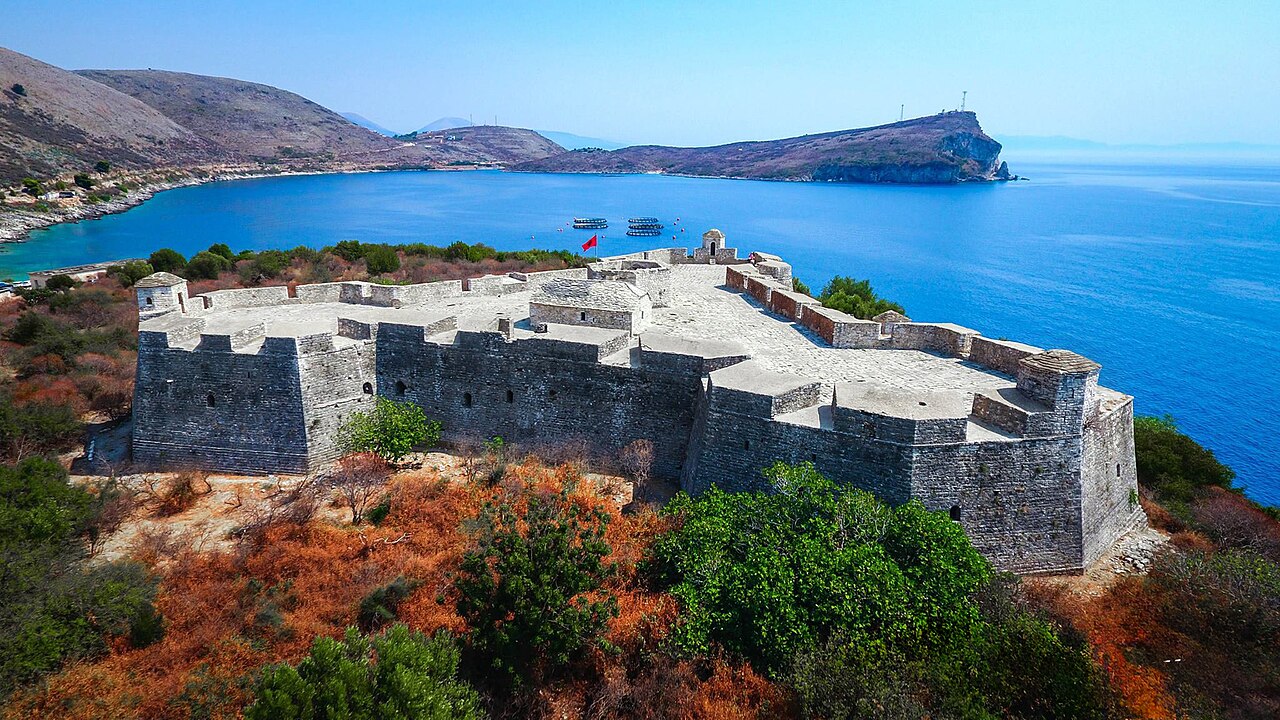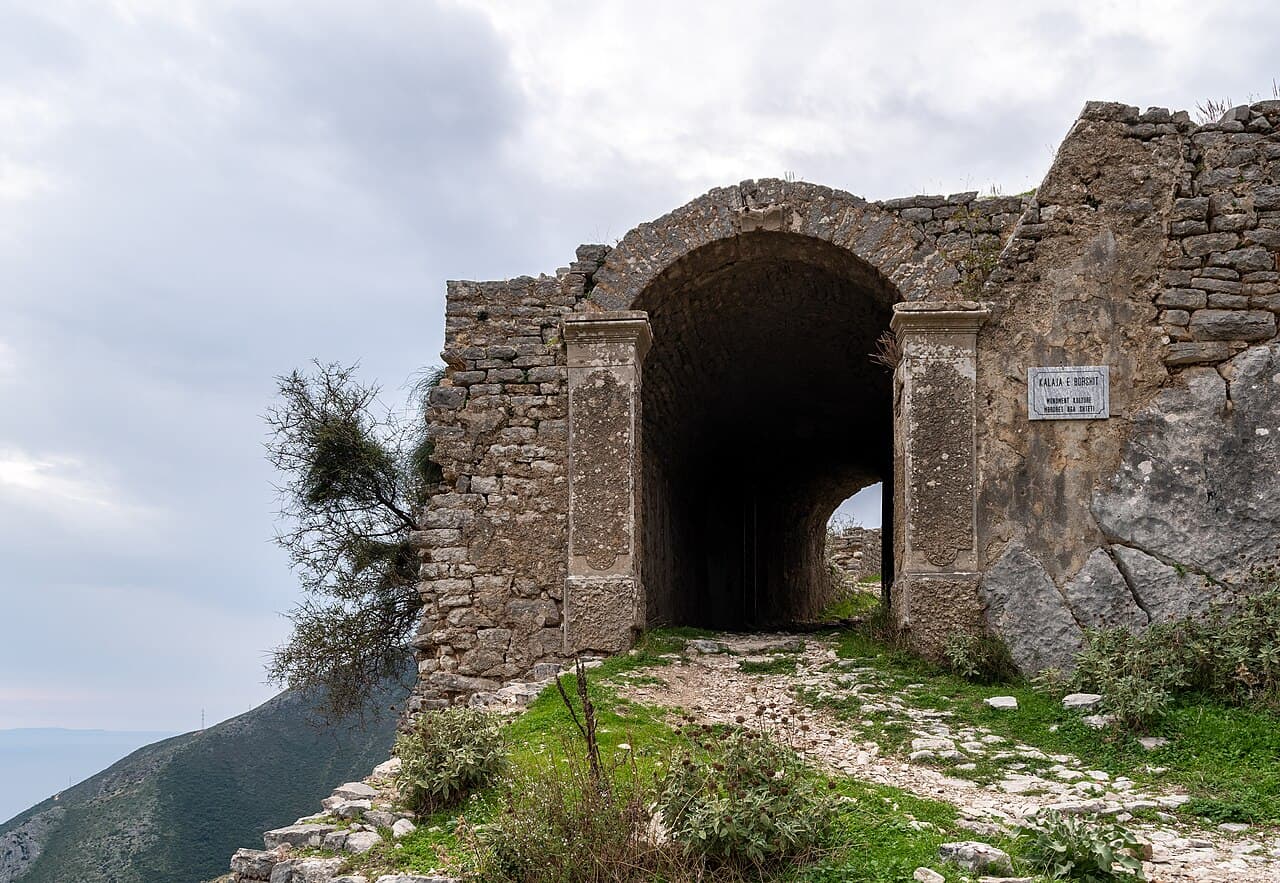
Borsh Castle
Borsh Castle, also historically known as Sopot Castle, is a striking example of an ancient hilltop fortress located north of the village of Borsh in the Vlorë county of Albania. This castle stands on a rocky hill approximately 500 meters above sea level, overlooking the Borsh Stream and commanding strategic views of the surrounding landscape and coastal access routes. The site has a rich history spanning from Antiquity through the Byzantine era and into the late medieval period, reflecting the complex geopolitical shifts of the region.
Archaeological evidence indicates that the site of Borsh Castle was inhabited since at least the 4th century BC, serving initially as the acropolis of a small settlement. This early occupation phase saw the development of terraces and fortifications that shaped the castle's enduring layout. The fortress's fortifications follow the trace of this ancient acropolis, with four main phases of reconstruction identified, ranging from the early Byzantine period to the late Middle Ages. The castle is first mentioned in historical records during the reign of the Byzantine emperor Justinian I (527-565 AD), who included it among his documented fortifications, underscoring its military importance in the region.
Historical significance and ownership through the centuries
Borsh Castle, known as Sopot in medieval times, features prominently in Byzantine and later historical sources. The name "Sopot" is of Slavic origin, reflecting the cultural influences in the region, and appears in Byzantine documents as Sopoton or Sopotos. The castle was also referenced in the 12th century in the Alexiad by the Byzantine princess-historian Anna Komnene, highlighting its continued strategic relevance.
Throughout the medieval period, Borsh Castle changed hands multiple times due to the shifting political landscape of the Balkans. In 1258, the castle was part of a dowry from the Despotate of Epirus to Manfred, King of Sicily, along with Buthrotum and the island of Corfu. Shortly thereafter, control reverted to the Despotate of Epirus before being ceded again to Charles I of Anjou in 1279. The castle returned to Epirote hands in the following decades and sided with the Byzantine Empire during the Epirote rebellion against Palaiologan rule in 1338-39.
The castle fell under Ottoman rule in 1417, marking the beginning of centuries of Ottoman control interrupted occasionally by Venetian occupation during the First Ottoman-Venetian War (1463-1479) and later conflicts. In 1481, Albanian forces led by Gjon Kastrioti II briefly captured the castle during an uprising against Ottoman rule, though it was retaken by the Ottomans in 1484. The Venetians seized the fortress again in 1571 but lost it to the Ottomans in 1790. Subsequently, it became part of the domain of Ali Pasha of Ioannina, an influential Albanian ruler within the Ottoman Empire, until its abandonment in the early 20th century.
Architectural features and fortifications
The fortress occupies a rocky hill rising between 326 and 500 meters above sea level, with defensive walls stretching nearly 1,000 meters, preserving the ancient layout shaped by original fortifications. The castle's walls follow the contours of the acropolis, enclosing a complex of terraces and slopes where medieval residential buildings were constructed. Within the medieval period, the fortress was divided internally by a wall into two separate sections, enhancing its defensive capabilities.
Notable architectural features include triangular towers, likely added during the middle Byzantine period, which punctuate the defensive walls and provide strategic vantage points for surveillance and defense. Numerous cisterns within the enclosure illustrate the castle's capacity for water storage, essential for sustaining inhabitants during sieges. Remnants of ancient walls on the southwestern side of the hill, measuring approximately 10 meters in length and 1.33 meters in height, reflect the earliest construction phases and highlight the site's long history of fortification.
The haxhi bendo mosque
Among the ruins within the castle stands the Haxhi Bendo Mosque, constructed likely in the late 17th century. This mosque is square in plan, featuring a single dome approximately eight meters on each side. A northern porch with three stone arches, roofed with bricks, leads into the prayer hall. The mosque retains a mihrab on its south wall, indicating the direction of Mecca, and the remains of a minaret are visible in the northwest corner. The dome is currently covered with concrete and has not undergone restoration since the end of communism in Albania, distinguishing it from many Byzantine churches in the region that have been renovated.
Archaeological research and discoveries
Archaeological investigations at Borsh Castle began in the 20th century, with initial surveys conducted in the 1930s. Detailed mapping was carried out in 1971, followed by excavation campaigns from 1976 to 1990. These efforts uncovered the complex stratigraphy of the site, revealing multiple occupation phases and construction periods that span from the Bronze Age through Antiquity and into the medieval era.
Excavations revealed the remains of walls, towers, residential buildings, and cisterns, as well as an ancient necropolis located to the south of the village. This necropolis indicates the area's importance not only for military defense but also as a significant cultural and burial site for local communities over millennia.
The fortress in the broader historical context
Borsh Castle's strategic location overlooking coastal routes made it a key military and administrative center throughout its history. It served as a regional capital during Ottoman times, as noted in a 1431 cadaster listing it with 60 households and as the center of a nahiye (administrative district). Its repeated capture and recapture by various powers, including the Despotate of Epirus, the Angevins, Venetians, and Ottomans, reflect the turbulent history of southern Albania and the wider Balkans.
Today, Borsh Castle is freely accessible to visitors. Although much of the castle is in ruins, the site offers spectacular views and an evocative glimpse into the layered history of the region. The largest standing structure within the castle is the Haxhi Bendo Mosque, which remains a poignant reminder of the Ottoman period and the cultural diversity that has shaped the fortress over centuries.
Visitors to Borsh Castle can explore the extensive ruins, including the surviving walls, towers, terraces, and cisterns, gaining insight into the architectural evolution and historical significance of this ancient hilltop fortress. The site’s rich archaeological and historical heritage makes it an important destination for those interested in medieval fortifications, Byzantine architecture, and Balkan history.
Frequently asked questions (FAQ)
- What is the historical significance of Borsh Castle?
- Borsh Castle dates back to the Byzantine period and played a crucial role in the defense against invasions. Its strategic location offers stunning views of the Ionian Sea, making it an important military stronghold in the region's history.
- When was Borsh Castle constructed?
- The castle's origins can be traced back to the 4th century, with significant modifications occurring during the Byzantine and later Ottoman periods. Its long history reflects the various cultural influences that have shaped Albania over the centuries.
- What are the opening hours for Borsh Castle?
- Borsh Castle is generally open to visitors from 9 AM to 6 PM during the peak tourist season, which runs from April to October. During the off-peak months, hours may vary, so it's advisable to check ahead before your visit.
- Can I access Borsh Castle with a disability?
- The castle is situated on a hill, and accessibility may be challenging for visitors with mobility issues. While efforts have been made to improve access, it's recommended to contact local authorities for the latest information on accessibility options.
- What is the best time to visit Borsh Castle?
- The best time to visit Borsh Castle is during the spring and early fall when the weather is mild and ideal for exploring. Summer can be quite hot, while winter may pose challenges due to rain and colder temperatures.
- Are there any nearby attractions to visit when at Borsh Castle?
- Yes, nearby attractions include the beautiful Borsh Beach, known for its clear waters and scenic views. Additionally, the charming village of Borsh offers local dining and cultural experiences that enhance your visit.
- How much is the ticket price to enter Borsh Castle?
- The ticket price for Borsh Castle is quite affordable, typically around 200 Albanian Lek for adults. Children and students may enjoy discounted rates, so it's a great option for families and groups.
Photo gallery

Information
Website
Visit websiteSources & official resources
Verify the information above using these authoritative references.
Loading map...
Visitor reviews
No reviews yet. Been here? Write the first review and help other travelers!
Write the first reviewVisited this castle? Share your experience
Your review helps other travelers and adds first-hand knowledge to our encyclopedia.