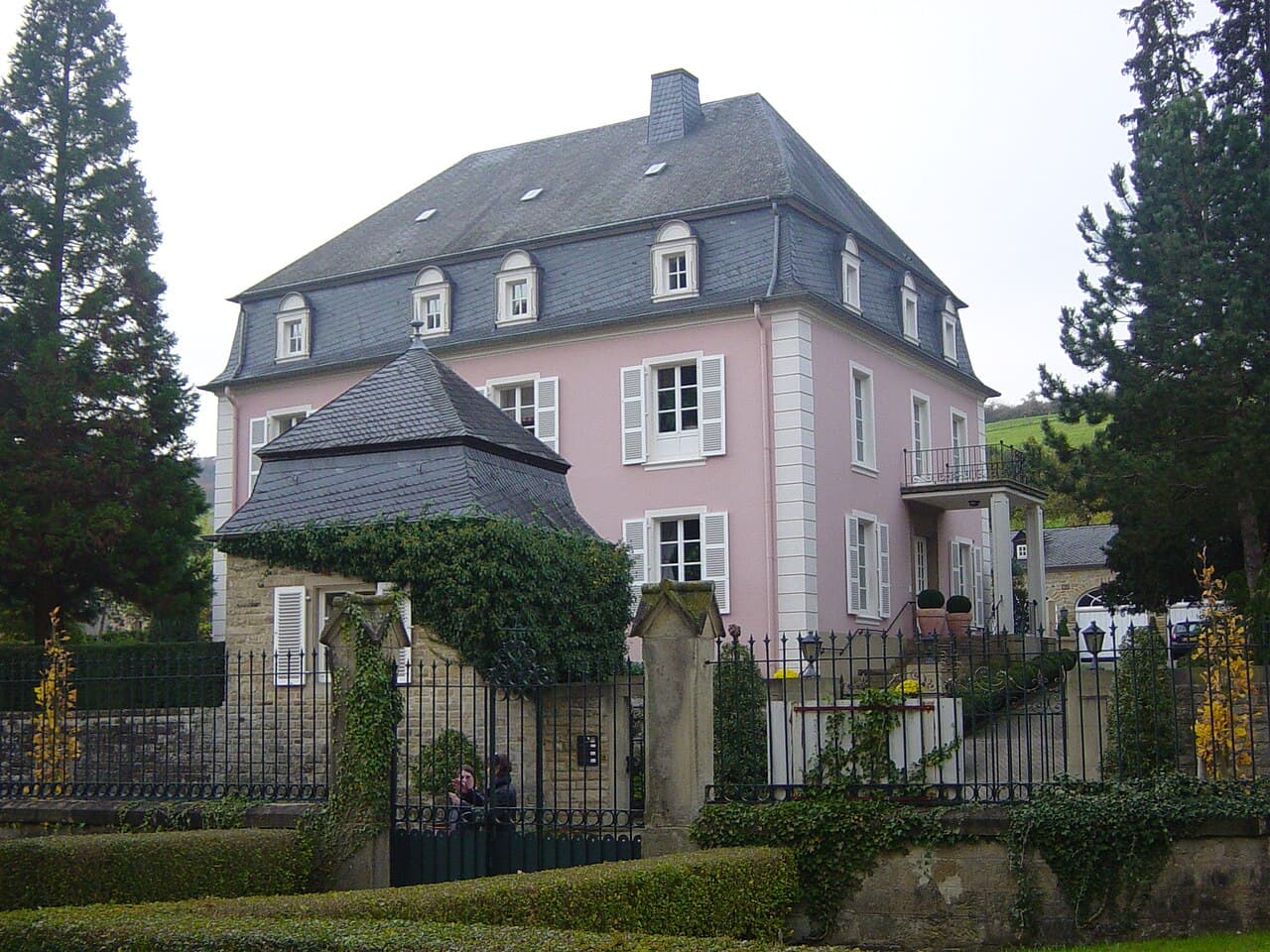
Born Castle (Luxembourgish: Schlass Bur; French: Château de Born; German: Schloss Born) is a notable hill castle situated in the heart of the village of Born, approximately 8 kilometers north of Wasserbillig in south-eastern Luxembourg. The castle's origins trace back to the late 13th century, with the earliest documented presence dating from 1286, when it served as the residence of the Lords of Born. These noble families included the Hattstein, Faust d'Aschaffenbourg, and de Villers, who played significant roles in the region's medieval history.
Medieval origins and noble families
The original castle was established in the High to Late Medieval period as a fortified residence for the local lords, reflecting the typical defensive and residential architecture of the time. The Lords of Born were influential feudal figures, and their castle formed a strategic point overseeing the surrounding landscape and trade routes near the Moselle River valley. The castle was likely constructed with typical medieval defensive features such as thick stone walls, a keep or donjon, and possibly a moat or other fortifications, although specific details about the original medieval structure are limited.
18th-century reconstruction and architectural style
The current Born Castle structure was built in 1740 on the site of the medieval castle, during the post-Renaissance period. This reconstruction reflects the architectural tastes and functional needs of the 18th century rather than the medieval fortress style. While the original medieval castle had defensive purposes, the 18th-century building was designed more as a stately residence, emphasizing comfort and aesthetic appeal over military defense.
The architectural style of the rebuilt castle aligns with the Baroque influences common in Luxembourg and the surrounding regions during this time, although the castle today may display a blend of styles due to later modifications and renovations. The castle's design likely features symmetrical layouts, elegant facades, and refined interior spaces suitable for noble living in the 18th century.
Location and setting
Born Castle is prominently located within the village of Born, which itself is nestled in a scenic area near the Moselle River, known for its vineyards and natural beauty. The castle's position on a hill provides commanding views of the surrounding countryside, a typical characteristic of hill castles designed for both defense and status display. The surrounding village and landscape contribute to the castle's picturesque setting, attracting visitors interested in Luxembourg's cultural heritage.
Ownership and current status
Today, Born Castle remains privately owned and is not generally open to the public. Its preservation as a private residence has helped maintain the building's structural integrity, though access is limited. The castle is a significant historical landmark within the region, representing centuries of Luxembourg's feudal and noble past alongside the architectural evolution from medieval fortification to 18th-century stately home.
Architectural features and heritage significance
While detailed descriptions of the castle's architectural features are scarce, the site's continuous occupation since the 13th century suggests layers of historical development. The transition from a medieval fortress to an 18th-century residence reflects broader European trends in castle architecture, where military functions diminished in favor of comfort and status. Born Castle exemplifies this evolution, embodying both the medieval heritage of Luxembourg and the refined tastes of the post-Renaissance nobility.
The castle's significance is enhanced by its association with notable noble families and its strategic location in the Moselle region, an area rich in history and cultural exchange. Its survival and adaptation through centuries highlight the dynamic nature of aristocratic residences in Luxembourg.
Visiting born castle and nearby attractions
Although Born Castle is privately owned and not open for public tours, visitors to the village of Born can appreciate the castle's exterior and its setting within the charming village environment. The surrounding Moselle valley is renowned for its scenic beauty, vineyards, and wine production, making it a popular destination for tourists interested in nature, history, and gastronomy.
Nearby towns such as Wasserbillig offer additional historical and cultural attractions, including riverfront promenades and local museums. Visitors to the region can explore hiking trails, wine routes, and the natural landscapes that complement the historical ambiance of Born and its castle.
Frequently asked questions (FAQ)
- When was Born Castle originally built?
- Born Castle dates back to 1286, originally serving as the residence of the Lords of Born during the medieval period.
- What architectural style characterizes the current Born Castle?
- The current castle, rebuilt in 1740, reflects the Baroque architectural style typical of the post-Renaissance period.
- Is Born Castle open to the public?
- Born Castle is privately owned and not generally open for public tours, but visitors can view the exterior from the village.
- Where is Born Castle located?
- Born Castle is located in the village of Born, about 8 km north of Wasserbillig in south-eastern Luxembourg.
- What notable families were associated with Born Castle?
- The castle was historically associated with the noble families of Hattstein, Faust d'Aschaffenbourg, and de Villers.
Photo gallery

Photo by Ipigott at English Wikipedia•Public domain
Information
Current owner
Private owner
Loading map...
Visitor reviews
No reviews yet. Been here? Write the first review and help other travelers!
Write the first reviewVisited this castle? Share your experience
Your review helps other travelers and adds first-hand knowledge to our encyclopedia.