Borba Castle
Borba Castle, or Castelo de Borba, is a historic hill castle situated in the town of Borba in the Beja district of Portugal's Alentejo Central region. This medieval fortress stands as a testament to the region's turbulent history and strategic importance along the border between Portugal and Castile. Originally constructed in the early 13th century, the castle has undergone various phases of building, destruction, and adaptation, reflecting the evolving military and political landscape of the Iberian Peninsula.
The site of Borba has a long history of occupation, with evidence suggesting earlier settlement by Gallo-Celtic peoples before the Muslim period. The castle's origins as a defensive structure date back to 1217, when King Afonso II of Portugal captured the settlement from the Moors during the Christian Reconquest. To secure this newly acquired territory, the king entrusted Borba to the Military Order of Aviz, a religious-military order responsible for defending the frontier and promoting settlement. It is believed that the Order initiated the initial construction of the castle to protect the town and assert Portuguese control.
Medieval construction and strategic role
In 1297, the Treaty of Alcañices formally recognized Borba as Portuguese territory under the reign of King Denis (Dinis) of Portugal. Shortly after, in the early 14th century, King Denis issued a foral charter to Borba, granting it municipal privileges and ordering the reinforcement or rebuilding of the castle. A notable stone epigraphic plaque embedded in the southern walls commemorates King Denis's direct involvement in overseeing the fortification works.
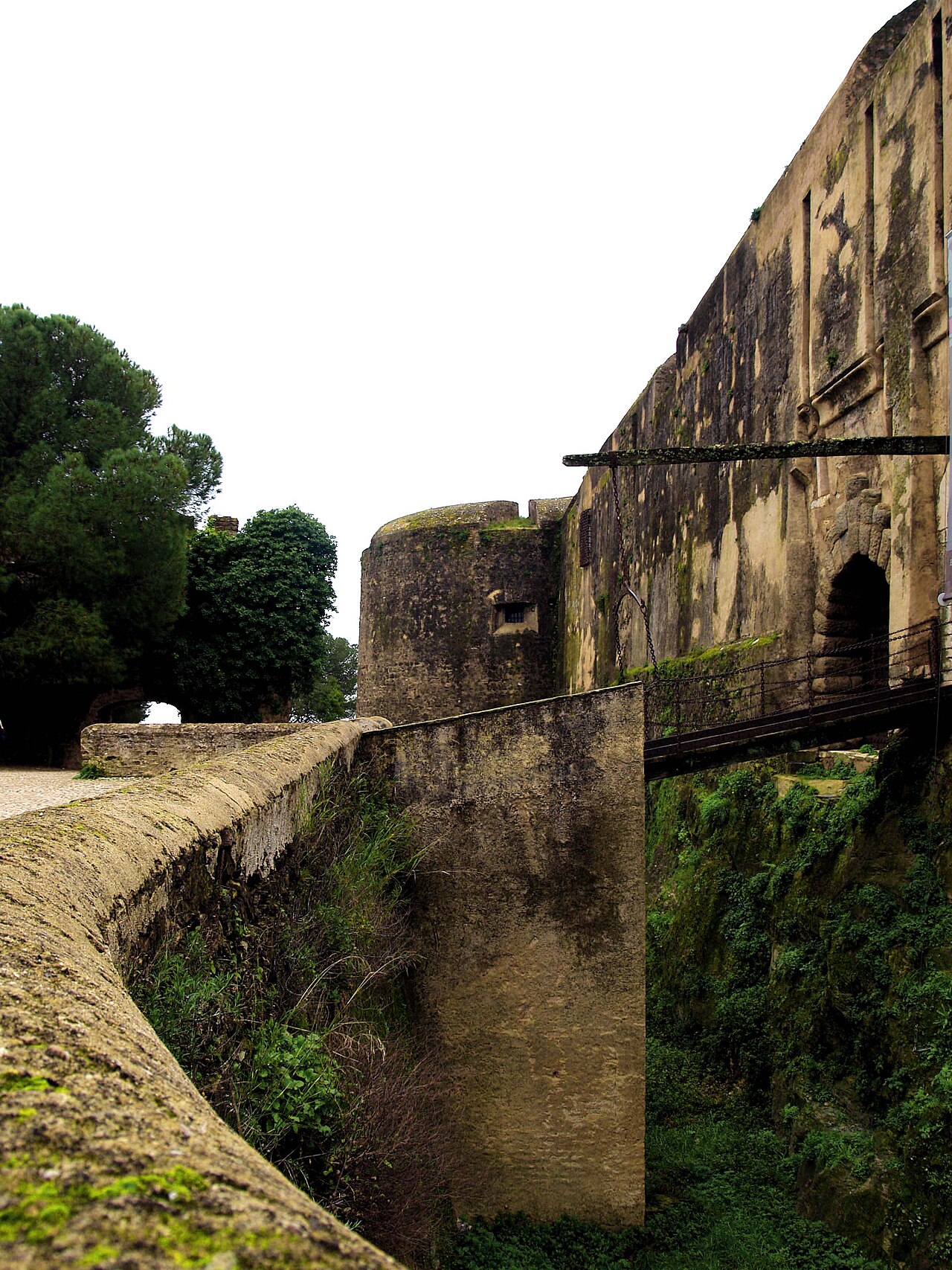
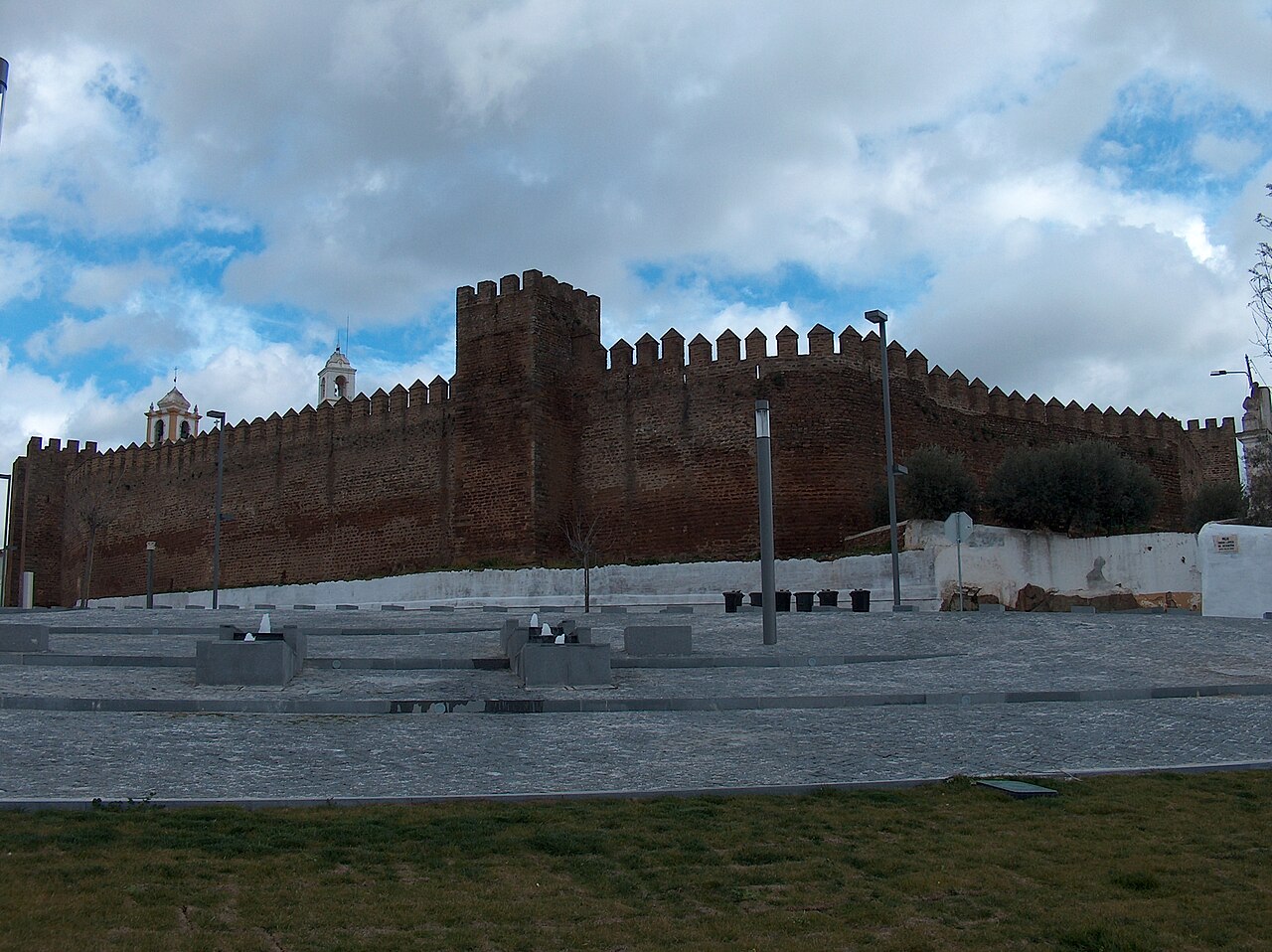
The castle was designed with a rectangular plan, typical of medieval military architecture, featuring thick stone walls topped with Gothic battlements. These battlements include characteristic merlons that provided cover for defenders on the adarve, a walkway along the top of the walls. The fortress was originally protected by a shallow moat encircling the walls, designed to impede attackers.
Defensive features
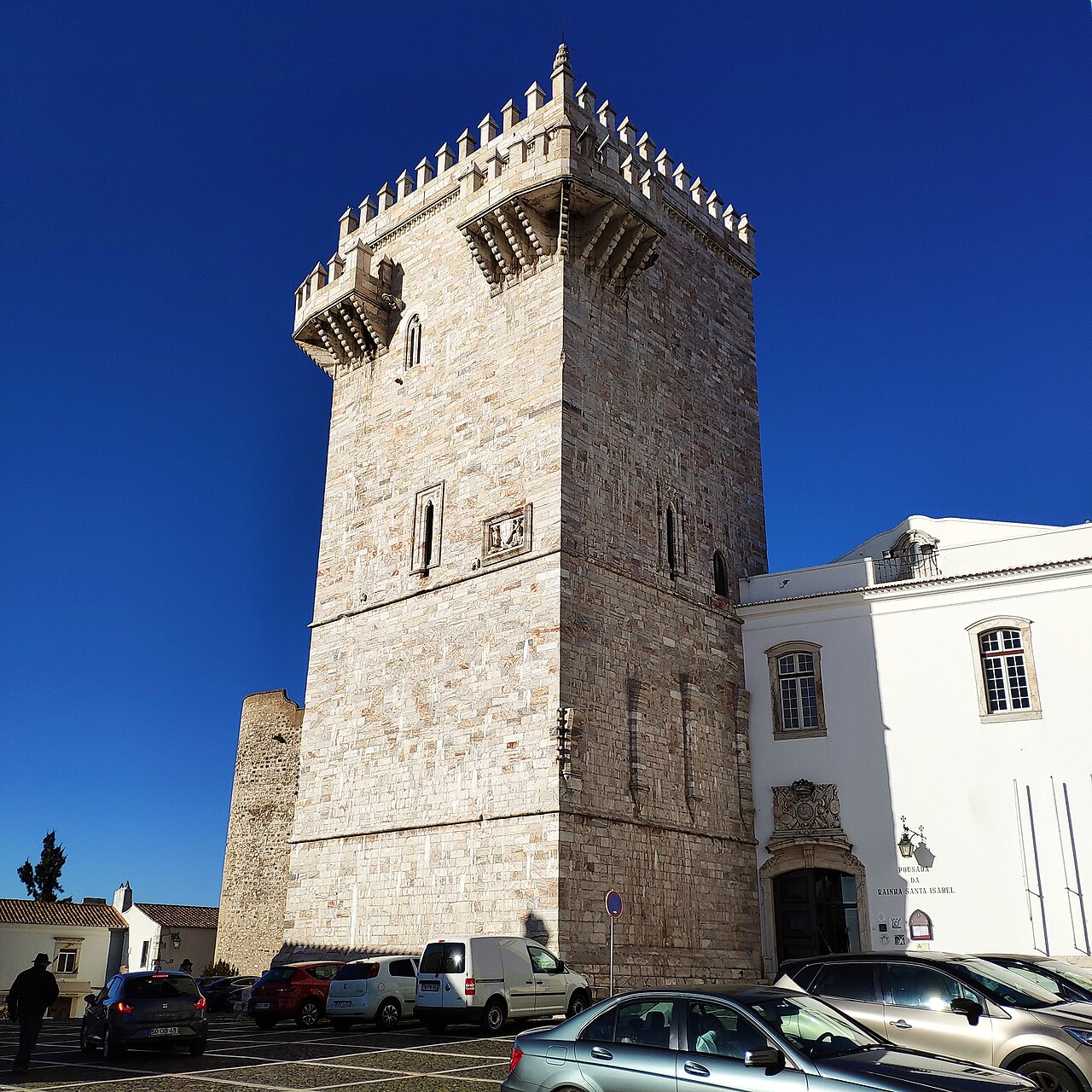
The main entrance to Borba Castle is guarded by two semi-circular turrets, which flank the gateway and provided strategic vantage points for defenders. The keep tower, a low rectangular structure within the castle grounds, remains one of the most prominent surviving features. This tower served as a last line of defense and a symbol of feudal authority.
Historical conflicts and transformations
Throughout its history, Borba Castle played a significant role in border conflicts between Portugal and Castile. In the late 14th century, the town suffered from incursions by English troops during the 1380s, reflecting the wider turmoil of the 1383–1385 Crisis in Portugal. Later, during the Portuguese Restoration War in the 17th century, Borba was again a site of military action. In the 1660s, Castilian forces under John Joseph of Austria devastated the town, underscoring its strategic vulnerability.
By the 19th century, the castle had lost its military purpose. As Borba expanded, the medieval walls were either dismantled or incorporated into urban buildings. The original moat was filled in, and much of the fortress was absorbed into the growing town fabric. Despite this, key elements such as the Porta do Celeiro (Granary Gate), Porta de Estremoz, and the keep tower have survived and remain visible today.
Architecture and preservation
Borba Castle exemplifies medieval military architecture adapted to the local terrain. Its quadrangular layout and defensive features reflect the influence of the Military Order of Aviz and the strategic priorities of the Portuguese crown. The castle's walls are constructed from robust stone masonry and feature Gothic-style battlements with distinctive merlons that allowed defenders to shield themselves while repelling attackers.
The surviving gates, Porta do Celeiro and Porta de Estremoz, retain their original defensive characteristics, including arrow slits and crenellations. The keep tower remains a focal point of the site, offering insight into the castle's defensive arrangements and residential functions.
Today, Borba Castle is well preserved in parts, with significant sections of the western walls and the keep accessible to visitors. The interior of the former castle grounds has been transformed into a quiet residential neighborhood, blending historical heritage with modern life. Although the keep tower is occasionally open to the public, visiting hours can be irregular, and visitors are advised to check local information before planning a visit.
Cultural significance and tourism
Borba Castle holds an important place in Portuguese heritage as a symbol of medieval frontier defense and the complex history of the Alentejo region. Its association with the Military Order of Aviz and the reigns of Kings Afonso II and Denis highlight its role in the consolidation of Portuguese territory during the Middle Ages.
The castle is freely accessible, allowing visitors to explore its imposing walls and gates and appreciate the blend of military architecture and urban evolution. The site offers a unique glimpse into the border conflicts that shaped Portugal's history and the architectural responses to these challenges.
Nearby, the town of Borba is known for its traditional whitewashed houses and local wine production, complementing a visit to the castle with cultural and gastronomic experiences. The castle's location in the Beja district makes it a notable destination for those interested in medieval history, military architecture, and Portuguese heritage.
Frequently asked questions (FAQ)
- How do I visit Borba Castle?
- Borba Castle is freely accessible to the public. Visitors can explore the exterior walls and gates at any time. The keep tower may be open occasionally, but it is recommended to check local visitor information for current opening hours.
- What is the historical significance of Borba Castle?
- Borba Castle was a key defensive fortress during the medieval period, especially in the 13th and 14th centuries. It played a strategic role in border conflicts between Portugal and Castile and was associated with the Military Order of Aviz and kings Afonso II and Denis.
- What architectural style is Borba Castle built in?
- Borba Castle features Gothic military architecture, with thick stone walls, Gothic battlements, merlons, and defensive turrets typical of the High Medieval period.
- Is Borba Castle suitable for families and children?
- Yes, Borba Castle's grounds are safe and accessible for families. The castle area is now a quiet neighborhood, making it a pleasant place for visitors of all ages to explore the historic walls and gates.
- When is the best time to visit Borba Castle?
- The best time to visit Borba Castle is during the spring and autumn months when the weather is mild. Summer can be hot in the Alentejo region, so planning visits in cooler seasons is advisable.
Information
Opening hours
Variable, check locally
Ticket prices
Free
Current owner
Municipality
Address
Av. do Povo, Borba, Portugal
Loading map...
Visitor reviews
No reviews yet. Been here? Write the first review and help other travelers!
Write the first reviewVisited this castle? Share your experience
Your review helps other travelers and adds first-hand knowledge to our encyclopedia.