Boise Castle

Boise Castle: a sandstone medieval revival residence in Idaho
Post-Renaissance (17th–18th c.)
Well Preserved

Boise Castle, located in Boise, Idaho, is a distinctive example of medieval revival architecture applied to a private residence rather than a traditional fortress. Constructed in the 20th century, this castle-like home stands out prominently on East Warm Springs Avenue due to its unique combination of sandstone masonry and evocative medieval motifs. While it is not a historic fortress, the castle's design draws heavily on European medieval architectural elements such as towers, crenellations, and ornamental gargoyles, creating a romantic and historic ambiance within a modern American urban context.

The castle's sandstone exterior is a defining characteristic, showcasing traditional masonry techniques that connect the building visually to the stone castles of Europe. This choice of material enhances the structure's authenticity as a medieval revival residence and provides a durable, textured façade that contrasts with more typical residential construction in the region.

Architectural features and design elements

The most striking architectural feature of Boise Castle is its prominent tower, which rises above the main body of the house, lending a vertical emphasis reminiscent of defensive keeps found in medieval castles. This tower, while decorative, echoes the form and function of historic watchtowers and donjons, serving as a focal point for the residence's silhouette.

Along the roofline, the castle features crenellations—the distinctive battlement notches that historically allowed defenders to fire arrows while being protected. In Boise Castle, these crenellations are purely ornamental but successfully evoke the defensive character of medieval fortifications. The entrance is marked by an element resembling a portcullis, a heavy grilled gate used in castles for security, which here serves a decorative role, enhancing the castle motif and creating a dramatic entryway.

Adding to the medieval atmosphere, a large sandstone gargoyle is positioned at the entrance. Gargoyles, traditionally used in Gothic architecture as waterspouts and symbolic protectors warding off evil spirits, contribute both functional and aesthetic value. In Boise Castle, the gargoyle is an ornamental feature that reinforces the building's connection to Gothic architectural traditions.

Interior and functional aspects

Although the exterior strongly references medieval defensive architecture, the interior of Boise Castle is designed for comfortable modern living. The castle does not incorporate traditional defensive features like dungeons or battlements with practical military use. Instead, its rooms and spaces are arranged as a private residence, blending castle aesthetics with contemporary amenities.

Historical and cultural context

Boise Castle represents a 20th-century fascination with romanticized medieval styles, part of a broader revival movement that found expression in residential and public architecture across the United States and Europe. Unlike genuine medieval castles built for defense and governance, Boise Castle was constructed as a private home to evoke the grandeur and mystique of medieval fortifications without their original military purpose.

While it does not have a documented role in Idaho's historical development, the castle has become a cultural landmark within the Boise community due to its distinctive design and frequent appearances on television and in real estate listings. Its presence enriches the architectural diversity of the city and sparks interest in castle-inspired architecture among locals and visitors.

Preservation and current status

Maintained as a private residence, Boise Castle is well preserved, with its sandstone façade and architectural details carefully cared for by its owners. The building remains structurally sound and visually striking, retaining the integrity of its medieval revival style. Although it is not open to the public, the castle is visible from the street, where it continues to attract attention and admiration.

The castle's preservation reflects the owners' commitment to maintaining its unique character and the broader appeal of castle-inspired architecture in a modern residential setting. Visitors are encouraged to appreciate the building from a respectful distance to honor the privacy of the residents.

Notable characteristics and public interest

Boise Castle is notable for its successful integration of medieval architectural motifs into a private home, a rarity in Idaho. Its sandstone construction and detailed ornamental features such as the gargoyle distinguish it from typical residential buildings in the area. The castle's media exposure and real estate prominence have made it a subject of local curiosity and admiration.

Though it does not offer tours or public access, Boise Castle contributes to Boise's cultural landscape as a unique architectural landmark. It exemplifies the adaptation of historic castle elements to modern American residential design, inspiring interest in medieval revival architecture and the creative use of historic styles in contemporary contexts.

Frequently asked questions (FAQ)

Can I visit Boise Castle inside?
Boise Castle is a private residence and is not open to the public. Visitors can view the castle from the street but should respect the owners' privacy and not attempt to enter the property.
What architectural style is Boise Castle built in?
Boise Castle is designed in a medieval revival style with elements of romantic neo-Gothic architecture, featuring towers, crenellations, and ornamental gargoyles.
When was Boise Castle constructed?
Boise Castle was constructed in the 20th century as a private home inspired by medieval European castles, rather than as a historic fortress.
Why does Boise Castle have a gargoyle?
The gargoyle at Boise Castle is an ornamental feature inspired by Gothic architecture, traditionally used to ward off evil spirits and add visual interest.
Is Boise Castle a historic fortress?
No, Boise Castle is not a historic fortress but a private residence designed to evoke the appearance and atmosphere of medieval castles.

Information

Lowland Castle

Current owner

Private owner

Address

East Warm Springs Avenue, Boise, Idaho, United States

Loading map...

Visitor reviews

No reviews yet. Been here? Write the first review and help other travelers!

Write the first review

Visited this castle? Share your experience

Your review helps other travelers and adds first-hand knowledge to our encyclopedia.

Write a review

(5/5)

0/2000 characters

Your review will be visible after admin approval

Nearby castles

63.1 km

(Old) Fort Boise

Canyon County, United States Minor Outlying Islands

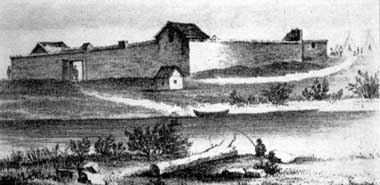
Old Fort Boise stands as a significant historic site in the early 19th century fur trade era of the American West. Established in 1834 by Thomas McKay, a seasoned leader of the Hudson's Bay Company (HBC) Snake Country brigades, the fort was strategically located in what is now Canyon County, Idaho. Its location was deliberately chosen on the same site as an earlier fort built by Reid and Mackenzie, underscoring the importance of this area along the Snake River for trade and territorial influence.The fort's establishment was part of a broader competition between British and American interests in the Pacific Northwest. Though McKay had retired in 1833, the HBC's Chief Factor John McLoughlin dispatched him to construct Fort Boise to counter the expansion of American influence symbolized by the newly built Fort Hall further east on the Snake River. Fort Boise thus played a crucial role in asserting British trading dominance and maintaining control over key trade routes during a period of intense rivalry.Historical context and strategic importanceDuring the early 19th century, the fur trade was a dominant economic activity in the region. The Hudson's Bay Company, a British enterprise, sought to control the lucrative fur markets by establishing a network of forts and trading posts. Fort Boise was a vital link in this network, serving as a trading hub and supply depot for trappers and indigenous peoples.The fort's location on the Snake River was particularly strategic. The river served as a major transportation corridor, facilitating the movement of goods and people. By controlling Fort Boise, the HBC could monitor and influence trade flows and territorial claims in the contested Snake River basin.Architecture and layout of Fort BoiseUnlike the large stone castles of Europe, Fort Boise was a typical early 19th-century trading post constructed primarily of wood. The fort featured a palisaded enclosure with log walls designed to provide defense against potential attacks. Inside the enclosure were various buildings including living quarters, storehouses, and workshops.The fort's defensive features included palisade walls made from vertical logs sharpened at the top, a common design for frontier forts of the period. Watchtowers were positioned at corners to provide vantage points for surveillance. The gate was reinforced and served as the main controlled entry point.Facilities and daily lifeThe interior of Fort Boise contained essential facilities for the fur trade and daily living. The storehouses held furs, trade goods, and supplies. Living quarters accommodated the fort's employees, including trappers, traders, and support staff. Workshops were used for repairing equipment and preparing goods for trade.Life at the fort was demanding and isolated, with harsh winters and the constant need to maintain security. The fort also served as a social center where indigenous peoples and traders exchanged goods, information, and cultural practices.Legacy and declineFort Boise's significance waned as American settlers and government presence increased in the region following the Oregon Treaty of 1846, which resolved territorial disputes between Britain and the United States. The fort was eventually abandoned in favor of a new American Fort Boise established further west near the Boise River in 1863.Today, the original site of Old Fort Boise is recognized for its historical importance in the fur trade era and early western expansion. Although the fort itself no longer stands, archaeological investigations have revealed the layout and artifacts that illuminate life at this frontier trading post.Preservation and public accessThe site of Old Fort Boise is preserved as an archaeological site, offering valuable insights into early 19th-century frontier life and the complex dynamics of colonial competition in the American West. Visitors interested in the history of the fur trade and early Idaho settlement can explore interpretive displays and nearby museums that contextualize Fort Boise's role in regional history.

Modern (19th–20th c.)
Details
63.3 km
Fort Boise — United States of America castle

Fort Boise

, United States of America

Fort Boise refers to two historically significant sites in southwestern Idaho, each playing distinct roles in the region's development during the 19th century. The first Fort Boise was established as a Hudson's Bay Company (HBC) trading post near the Snake River on what is now the Oregon border, within present-day Canyon County, Idaho. This fort was part of the British fur company's Columbia District and was integral to the fur trade economy of the Pacific Northwest during the early to mid-1800s. It underwent several reconstructions before being ultimately abandoned in 1854 following the resolution of the northern boundary dispute that brought the territory under United States control in 1846. The second Fort Boise was founded by the United States government in 1863 as a military post situated approximately fifty miles east along the Boise River. This fortification was a bastioned fortress designed to provide defense and support for settlers and military operations during the period of western expansion and regional conflicts. The establishment of this fort was a catalyst for the growth of the nearby settlement, which evolved into the city of Boise, now the capital of Idaho. Historical context and significance The original Fort Boise trading post was strategically placed to facilitate the fur trade, which was a dominant economic activity in the Pacific Northwest during the early 19th century. Operated by the Hudson's Bay Company, the fort served as a hub for trapping, trading, and supply distribution, connecting indigenous trappers, European traders, and settlers. Its location near the Snake River allowed for transportation and communication across a vast territory that spanned parts of present-day Idaho, Oregon, and Washington. Following the Oregon Treaty of 1846, which settled the boundary between British North America and the United States at the 49th parallel, the original Fort Boise lost its strategic importance to the British fur trade. The fort was eventually abandoned in 1854 as American settlers and military forces established control over the region. The second Fort Boise, established in 1863, was part of the United States military's efforts to secure its new western territories. This fortification was constructed during a period marked by increased migration along the Oregon Trail and conflicts with Native American tribes. It served as a protective outpost and a center for military operations aimed at maintaining peace and order in the region. Architectural features and military design The 1863 Fort Boise was designed as a bastioned fortress, a style characterized by angular bastions projecting from the walls to provide defensive coverage against attackers. This design allowed defenders to cover all approaches with overlapping fields of fire, reducing blind spots and enhancing the fort's defensive capabilities. The fort's layout typically included earthwork walls reinforced with timber, bastions at the corners for artillery placement, and enclosed courtyards housing barracks, storage facilities, and command buildings. Defensive features such as moats or ditches may have been incorporated to hinder enemy advances, although specific details about these features at Fort Boise are limited. As a military installation, the fort was equipped to support a garrison of soldiers tasked with protecting settlers and maintaining control over the surrounding territory. Its construction reflected military engineering principles of the mid-19th century, adapted to the frontier conditions of the American West. Legacy and impact on the region The establishment of the second Fort Boise directly influenced the development of the city of Boise. The fort provided security that encouraged settlement and economic growth, eventually leading to Boise becoming the capital of Idaho. The military presence helped stabilize the area during a time of significant change, including the transition from Native American lands to organized American territories. Today, the original trading post site and the later military fort represent important chapters in Idaho's history. While the original fort near the Snake River no longer exists as a standing structure, its historical significance is recognized in regional heritage. The later fort's location near Boise marks the origins of the city's establishment and its strategic role in the American West. Visiting fort boise and historical interpretation Visitors interested in Fort Boise can explore the historical sites and museums in the Boise area that interpret the fort's role in regional history. While the physical remains of the forts are limited, local heritage organizations provide educational resources and exhibits detailing the forts' contributions to Idaho's development. The story of Fort Boise is intertwined with themes of exploration, trade, military strategy, and settlement. It offers insight into the complex interactions between indigenous peoples, European traders, and American settlers during a transformative era in the American West.

Modern (19th–20th c.)
Details
302.1 km
Fort Hall — United States of America castle

Fort Hall

Bannock County, United States of America

Fort Hall was established in 1834 as a fur trading post by Nathaniel Jarvis Wyeth, an inventor and businessman from Boston, Massachusetts. Located on the Snake River in what is now Bannock County, southeastern Idaho, it played a significant role in the early economic development of the Oregon Country. Wyeth's venture included another post, Fort William, near present-day Portland, Oregon, as part of a plan to compete in the fur trade and fisheries business. However, by 1837, facing strong competition from the British Hudson's Bay Company headquartered at Fort Vancouver, Wyeth sold both posts to the company. Following the 1846 Oregon Treaty, which settled the boundary between the United States and British North America, Fort Hall became part of U.S. territory. It developed into a crucial station for emigrants traveling westward on the Oregon Trail during the 1850s. Situated at the end of a common 500-mile (800 km) stretch shared by the Oregon, California, and Mormon Trails, Fort Hall was the point where these routes diverged northwest and southwest. It is estimated that approximately 270,000 emigrants passed through Fort Hall on their journey west, marking it as one of the most important waypoints in the migration to the Pacific Northwest. Architectural and structural features Fort Hall was originally constructed as a fortified trading post rather than a traditional castle or fortress. Its design reflected the practical needs of a frontier trading station, with stockade walls enclosing buildings that served as trading rooms, storage, and living quarters. The fort's defensive features were modest, primarily consisting of wooden palisades and blockhouses. It did not exhibit the elaborate bastioned fortifications typical of military forts but was designed to provide basic protection against potential threats from hostile forces or wildlife. Role in westward expansion and transportation During the 1860s, Fort Hall evolved into a key post for overland stagecoaches, mail delivery, and freight lines serving the mining frontier of the Pacific Northwest. It functioned as a critical hub for transportation and communication, facilitating the movement of people, goods, and information between eastern settlements and the rapidly developing western territories. In 1870, a new Fort Hall was constructed approximately 25 miles northeast of the original site to continue supporting these functions, particularly protecting stagecoach routes and mail carriers traveling through the region. Historical significance and legacy Fort Hall holds a prominent place in the history of the American West as the most important trading post in the Snake River Valley. It was included within the boundaries of the Fort Hall Indian Reservation following the 1867 treaty with the Shoshone and Bannock tribes. Although no original buildings remain at either the Old or New Fort Hall sites, the Old Fort Hall location was designated a National Historic Landmark in 1961, recognizing its cultural and historical importance. The New Fort Hall site is also listed on the National Register of Historic Places. Geographical context and nearby development The fort's location on the Snake River made it a strategic point for trade and travel. The nearby town of Fort Hall later developed about eleven miles to the east, while Pocatello, an important regional city, grew approximately thirty miles south along the Portneuf River. These settlements owe their origins in part to the presence and influence of Fort Hall as a commercial and transportation center in southeastern Idaho.

Modern (19th–20th c.)
Details