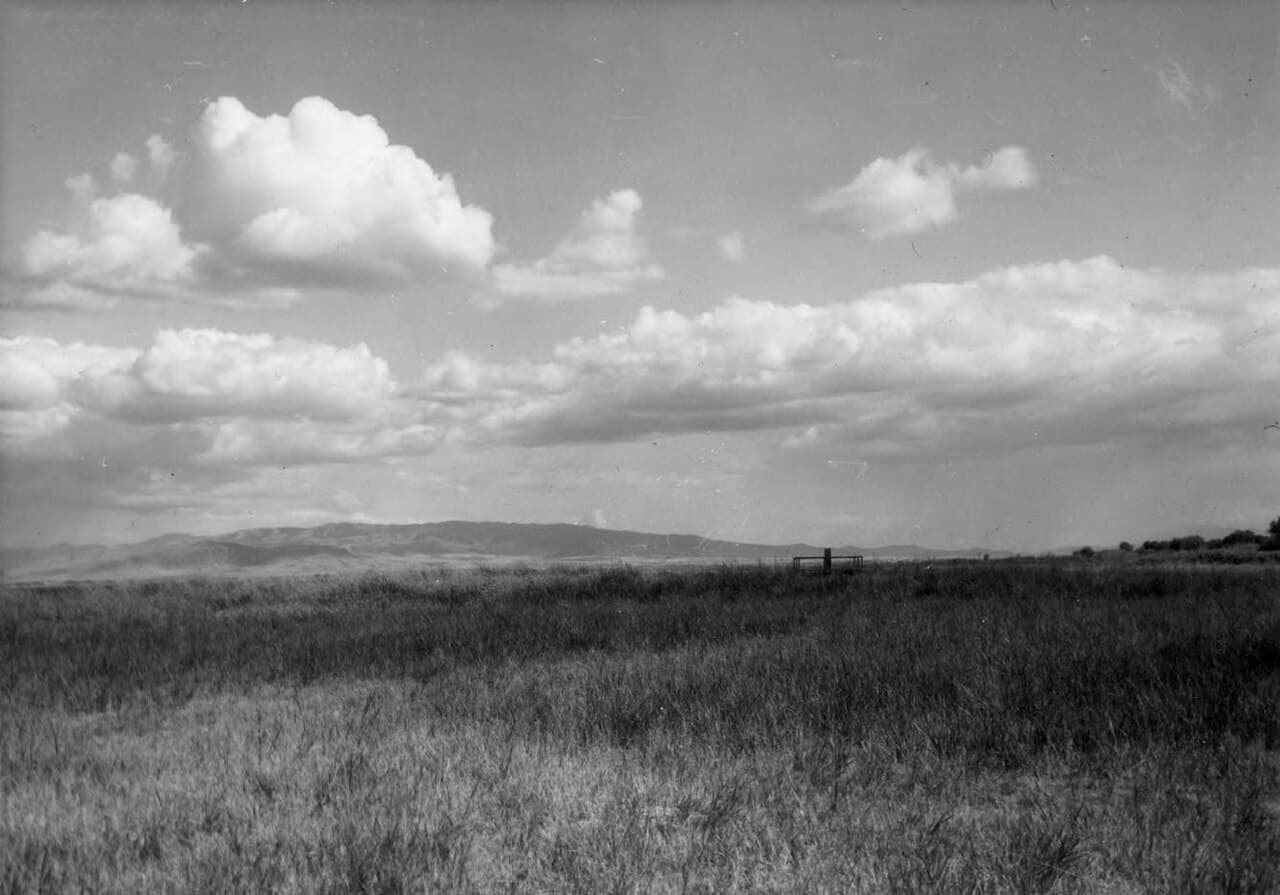
Fort Hall
Fort Hall was established in 1834 as a fur trading post by Nathaniel Jarvis Wyeth, an inventor and businessman from Boston, Massachusetts. Located on the Snake River in what is now Bannock County, southeastern Idaho, it played a significant role in the early economic development of the Oregon Country. Wyeth's venture included another post, Fort William, near present-day Portland, Oregon, as part of a plan to compete in the fur trade and fisheries business. However, by 1837, facing strong competition from the British Hudson's Bay Company headquartered at Fort Vancouver, Wyeth sold both posts to the company.
Following the 1846 Oregon Treaty, which settled the boundary between the United States and British North America, Fort Hall became part of U.S. territory. It developed into a crucial station for emigrants traveling westward on the Oregon Trail during the 1850s. Situated at the end of a common 500-mile (800 km) stretch shared by the Oregon, California, and Mormon Trails, Fort Hall was the point where these routes diverged northwest and southwest. It is estimated that approximately 270,000 emigrants passed through Fort Hall on their journey west, marking it as one of the most important waypoints in the migration to the Pacific Northwest.
Architectural and structural features
Fort Hall was originally constructed as a fortified trading post rather than a traditional castle or fortress. Its design reflected the practical needs of a frontier trading station, with stockade walls enclosing buildings that served as trading rooms, storage, and living quarters. The fort's defensive features were modest, primarily consisting of wooden palisades and blockhouses. It did not exhibit the elaborate bastioned fortifications typical of military forts but was designed to provide basic protection against potential threats from hostile forces or wildlife.
Role in westward expansion and transportation
During the 1860s, Fort Hall evolved into a key post for overland stagecoaches, mail delivery, and freight lines serving the mining frontier of the Pacific Northwest. It functioned as a critical hub for transportation and communication, facilitating the movement of people, goods, and information between eastern settlements and the rapidly developing western territories. In 1870, a new Fort Hall was constructed approximately 25 miles northeast of the original site to continue supporting these functions, particularly protecting stagecoach routes and mail carriers traveling through the region.
Historical significance and legacy
Fort Hall holds a prominent place in the history of the American West as the most important trading post in the Snake River Valley. It was included within the boundaries of the Fort Hall Indian Reservation following the 1867 treaty with the Shoshone and Bannock tribes. Although no original buildings remain at either the Old or New Fort Hall sites, the Old Fort Hall location was designated a National Historic Landmark in 1961, recognizing its cultural and historical importance. The New Fort Hall site is also listed on the National Register of Historic Places.
Geographical context and nearby development
The fort's location on the Snake River made it a strategic point for trade and travel. The nearby town of Fort Hall later developed about eleven miles to the east, while Pocatello, an important regional city, grew approximately thirty miles south along the Portneuf River. These settlements owe their origins in part to the presence and influence of Fort Hall as a commercial and transportation center in southeastern Idaho.
Frequently asked questions (FAQ)
- What is the historical significance of Fort Hall?
- Fort Hall was a crucial fur trading post and emigrant station on the Oregon Trail, facilitating westward expansion in the 19th century.
- When was Fort Hall built and by whom?
- Fort Hall was built in 1834 by Nathaniel Jarvis Wyeth as a fur trading post in the Oregon Country.
- Can I visit the original Fort Hall buildings today?
- No original buildings remain at the Old or New Fort Hall sites, but the Old Fort Hall site is a National Historic Landmark open for visitation.
- What role did Fort Hall play in the Oregon Trail migration?
- Fort Hall served as the key station where the Oregon, California, and Mormon Trails diverged, with an estimated 270,000 emigrants passing through.
- Is Fort Hall accessible year-round?
- Visiting the Fort Hall site depends on local conditions and access permissions, often managed by the Fort Hall Indian Reservation; check ahead for access details.
Photo gallery

Photo by National Park Service photographer•Public domain
Information
Current owner
Fort Hall Indian Reservation
Loading map...
Visitor reviews
No reviews yet. Been here? Write the first review and help other travelers!
Write the first reviewVisited this castle? Share your experience
Your review helps other travelers and adds first-hand knowledge to our encyclopedia.



