Bodrum
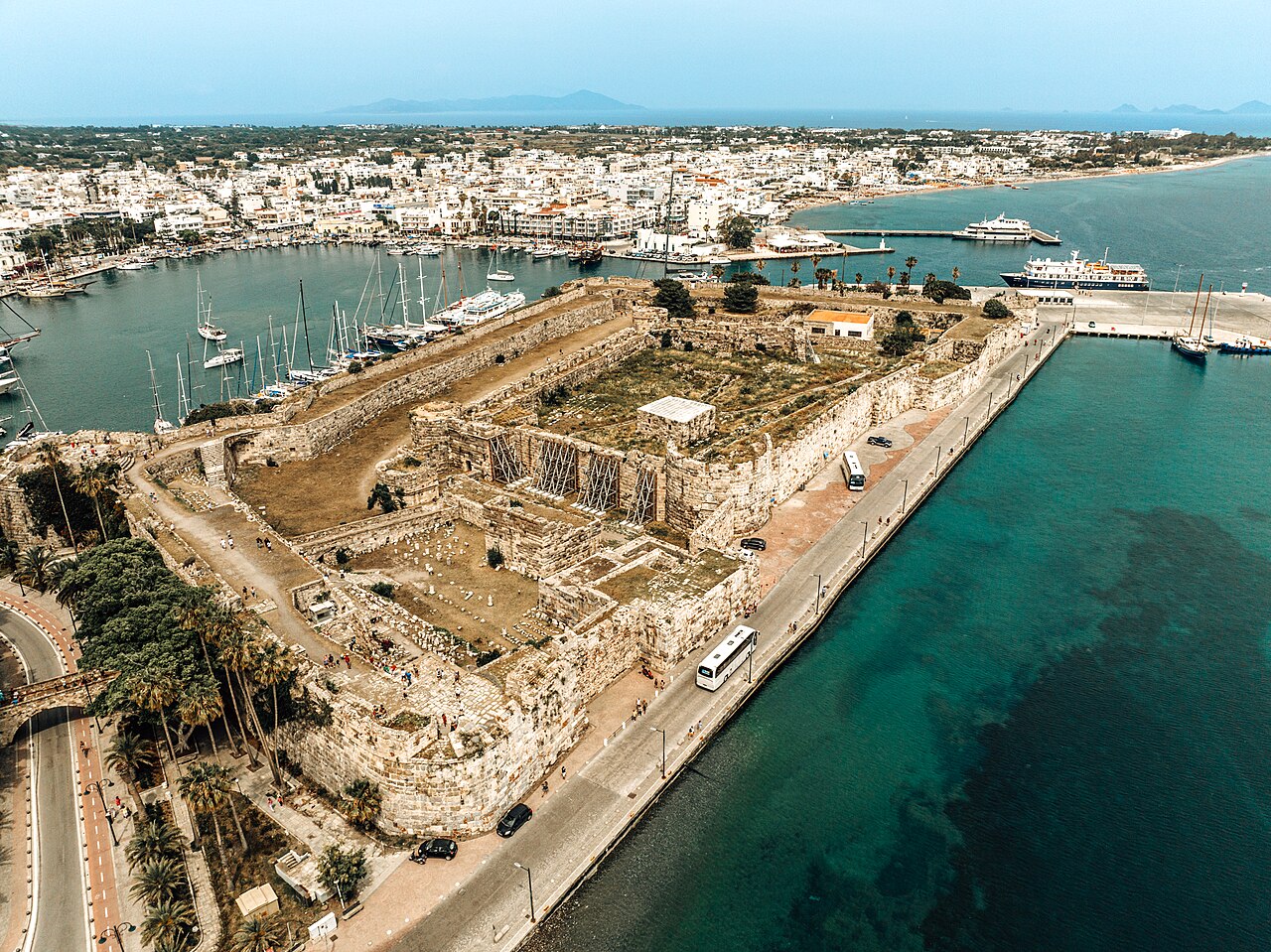
Bodrum Castle, also known as the Castle of St. Peter, is a striking medieval fortress located on a promontory overlooking the harbor of Bodrum on the Aegean coast of Turkey. Constructed by the Knights Hospitaller (also called the Order of St. John) beginning in 1402, the castle stands as a testament to the turbulent history of the eastern Mediterranean during the late medieval period. Its imposing bastioned walls and towers embody the military architecture of the High Medieval era adapted to defend against evolving siege technologies and naval threats.
The castle was built to secure important maritime routes and to serve as a strategic stronghold against the expanding Ottoman Empire. Its location on a peninsula opposite the island of Kos allowed the Hospitallers to control sea traffic in this crucial part of the Mediterranean. The fortress was named after Saint Peter (Latin: Petrum), which later evolved into the Turkish name Bodrum.
Historical context and foundation
The origins of Bodrum Castle are closely linked to the fate of the Knights Hospitaller after the fall of Jerusalem in 1291. Following the loss of their base in the Holy Land, the knights relocated to Cyprus and later, after receiving the properties of the disbanded Knights Templar in 1312, they gained significant wealth and power. Under the leadership of the formidable Fulk de Villaret, the order conquered the island of Rhodes, establishing it as their main stronghold and naval base.
By the early 15th century, the Hospitallers had become a dominant maritime power controlling trade routes in the eastern Mediterranean. To protect their naval communications and assert their presence on the Anatolian coast, they commenced construction of the castle at Bodrum in 1402. The fortress was designed to withstand both land and sea attacks, reflecting the military innovations of the time.
Architectural features and construction
Design and layout
Bodrum Castle is built on a roughly square plan on a rocky peninsula jutting into the sea, providing natural defensive advantages. The fortress features thick bastioned walls designed to resist cannon fire, a relatively advanced feature for its time. The walls are punctuated by five prominent towers, each named after the different "tongues" or linguistic groups of the Knights Hospitaller who were responsible for their defense: the English Tower, Italian Tower, German Tower, French Tower, and the Snake Tower.
Materials and reuse of ancient elements
Remarkably, the builders incorporated stones from the nearby Mausoleum at Halicarnassus, one of the Seven Wonders of the Ancient World, which had fallen into ruin. This reuse of ancient marble and stone not only provided high-quality building materials but also symbolically linked the new fortress to the region's illustrious classical heritage.
Defensive innovations
The castle's design included a moat, multiple gates, and thick curtain walls reinforced with bastions to counter artillery threats. Over time, as Ottoman artillery technology advanced, the Hospitallers thickened the walls on the landward side and added additional bastions, reflecting continuous adaptation to new military challenges.
Role in regional conflicts and later history
Throughout the 15th and early 16th centuries, Bodrum Castle was a key stronghold in the ongoing conflict between the Knights Hospitaller and the Ottoman Empire. Despite several Ottoman sieges, including notable attempts in 1480 and 1543, the fortress held firm until the fall of Rhodes in 1522 to Sultan Suleiman the Magnificent. Following the Ottoman conquest, the castle was converted for use by the Ottoman military.
The castle's chapel was transformed into a mosque, with the addition of a minaret known as the Minaret of Suleiman. This minaret was destroyed during bombardment by the French navy in 1915 during World War I but was reconstructed in 1997.
In the late 19th century, the fortress was repurposed as a prison, and after World War I, it was briefly occupied by Italian forces. The castle fell into disuse and ruin for several decades until it was restored and converted into the Museum of Underwater Archaeology in 1962. Today, it houses an extensive collection of artifacts recovered from shipwrecks in the Aegean Sea, making it a major cultural and tourist attraction.
Cultural significance and tourism today
Bodrum Castle is not only a remarkable example of bastioned fortress architecture but also a symbol of the complex history of the eastern Mediterranean, reflecting layers of crusader, Byzantine, and Ottoman influences. Its preservation and adaptive reuse as a museum have helped maintain its status as a vital heritage site.
Visitors can explore the castle's ramparts, towers, and courtyards, gaining insight into medieval military architecture and the maritime history of the Knights Hospitaller. The castle's location offers panoramic views of the Aegean Sea and the surrounding coastline, enhancing its appeal as a destination for history enthusiasts and tourists alike.
Museum of underwater archaeology
The museum inside the castle showcases an impressive collection of ancient shipwreck artifacts, including amphorae, anchors, and navigational instruments, providing a unique window into maritime trade and naval warfare from antiquity through the medieval period.
Frequently asked questions (FAQ)
- How do I get to Bodrum Castle?
- Bodrum Castle is located in the heart of Bodrum, Turkey, making it easily accessible by foot from most central locations. You can also reach it by local buses or taxis, which are readily available throughout the city.
- What is the historical significance of Bodrum Castle?
- Bodrum Castle, also known as the Castle of St. Peter, was constructed by the Knights of St. John in the 15th century. It played a crucial role in the defense of the region and now serves as a museum, showcasing artifacts from the history of the area.
- When was Bodrum Castle built?
- Construction of Bodrum Castle began in 1402 and was completed in 1522. It was built using stones from the nearby Mausoleum of Halicarnassus, one of the Seven Wonders of the Ancient World.
- Can I visit Bodrum Castle with children?
- Yes, Bodrum Castle is family-friendly and offers a great educational experience for children. The castle's expansive grounds and interesting exhibits make it an enjoyable visit for all ages.
- Why is Bodrum Castle a popular tourist attraction?
- Bodrum Castle is popular for its stunning architecture, rich history, and breathtaking views of the Aegean Sea. Visitors are drawn to its well-preserved walls and the fascinating museum housed within, making it a must-see in Bodrum.
- Is it possible to access all areas of Bodrum Castle?
- While many areas of Bodrum Castle are accessible to visitors, certain sections may have restrictions due to preservation efforts. However, the main attractions, including the museum and viewpoints, are open for exploration.
- What are the opening hours for Bodrum Castle?
- Bodrum Castle is typically open daily from 9:00 AM to 7:00 PM during the summer months and may have shorter hours in the winter. It’s advisable to check the official website for any seasonal changes or special closures.
- What are the ticket prices for Bodrum Castle?
- As of the latest information, the entrance fee for Bodrum Castle is around 100 Turkish Lira for adults, with discounted rates available for students and children. Tickets can be purchased at the entrance, and it’s best to check for any updates on pricing before your visit.
- When is the best time to visit Bodrum Castle?
- The best time to visit Bodrum Castle is during the spring (April to June) and fall (September to October) when the weather is mild and the crowds are smaller. Visiting during these times allows for a more enjoyable experience while exploring the castle and its surroundings.
- Are there any nearby attractions to visit after Bodrum Castle?
- Yes, nearby attractions include the ancient Theater of Halicarnassus and the Bodrum Museum of Underwater Archaeology located within the castle itself. After visiting the castle, you can also enjoy the vibrant marina and local shops just a short walk away.
Information
Loading map...
Visitor reviews
No reviews yet. Been here? Write the first review and help other travelers!
Write the first reviewVisited this castle? Share your experience
Your review helps other travelers and adds first-hand knowledge to our encyclopedia.