Babaoğlan Castle
Babaoğlan Castle, also known locally as Babaoğlu Kalesi and sometimes referred to as Simanaklay Kalesi, is a historic fortress situated in the densely wooded hills near the village of Babaoğlu in the Osmaniye province of southern Turkey. This castle occupies a strategic position overlooking the surrounding landscape, which historically included vital mountain passes and river routes. Its location was crucial for controlling access to the Cilician plain, a frontier zone between the Byzantine Empire and neighboring powers during the medieval period.
Byzantine origins and strategic purpose
The exact date of Babaoğlan Castle's construction remains uncertain, but it is widely accepted that it was built by the Byzantines during the period when the Cilician plain marked the empire's eastern frontier. This places its origins likely in the High Medieval era, a time when the Byzantine Empire fortified its borders against the expanding Seljuk Turks. The castle was part of a broader network of smaller fortifications designed to guard critical mountain passes and river crossings, serving as a defensive outpost against repeated incursions.
Its architecture reflects the typical Byzantine military design of the era, emphasizing rugged stone walls adapted to the natural topography of the hill on which it stands. The castle's position allowed defenders to monitor and control movements through the region, which was of great military and economic significance.
Armenian period and later occupations
Following the decline of Byzantine control in the region, the castle came under the influence of the Armenian Kingdom of Cilicia. While the Armenians certainly utilized Babaoğlan Castle as part of their defensive network, there are no surviving architectural modifications or inscriptions that distinctly mark their occupation. This absence of Armenian-era structural changes suggests that the castle's original Byzantine form remained largely intact during this period.
Subsequently, the castle was occupied by the Mamluks, who controlled much of the region after the fall of the Armenian Kingdom. The Mamluks likely maintained the fortress for strategic purposes, though detailed records of their use of Babaoğlan are scarce.
Archaeological and cultural significance
One remarkable feature near Babaoğlan Castle is a Hittite rock-cut relief located in the rocks beneath the castle hill. This ancient carving depicts a man and a horse, indicating the area's long-standing historical importance predating the medieval fortress. Although the relief is not widely publicized and can be easily missed due to its location, it adds a layer of cultural depth to the site, linking it to the ancient civilizations that once inhabited the region.
Current condition and visitor information
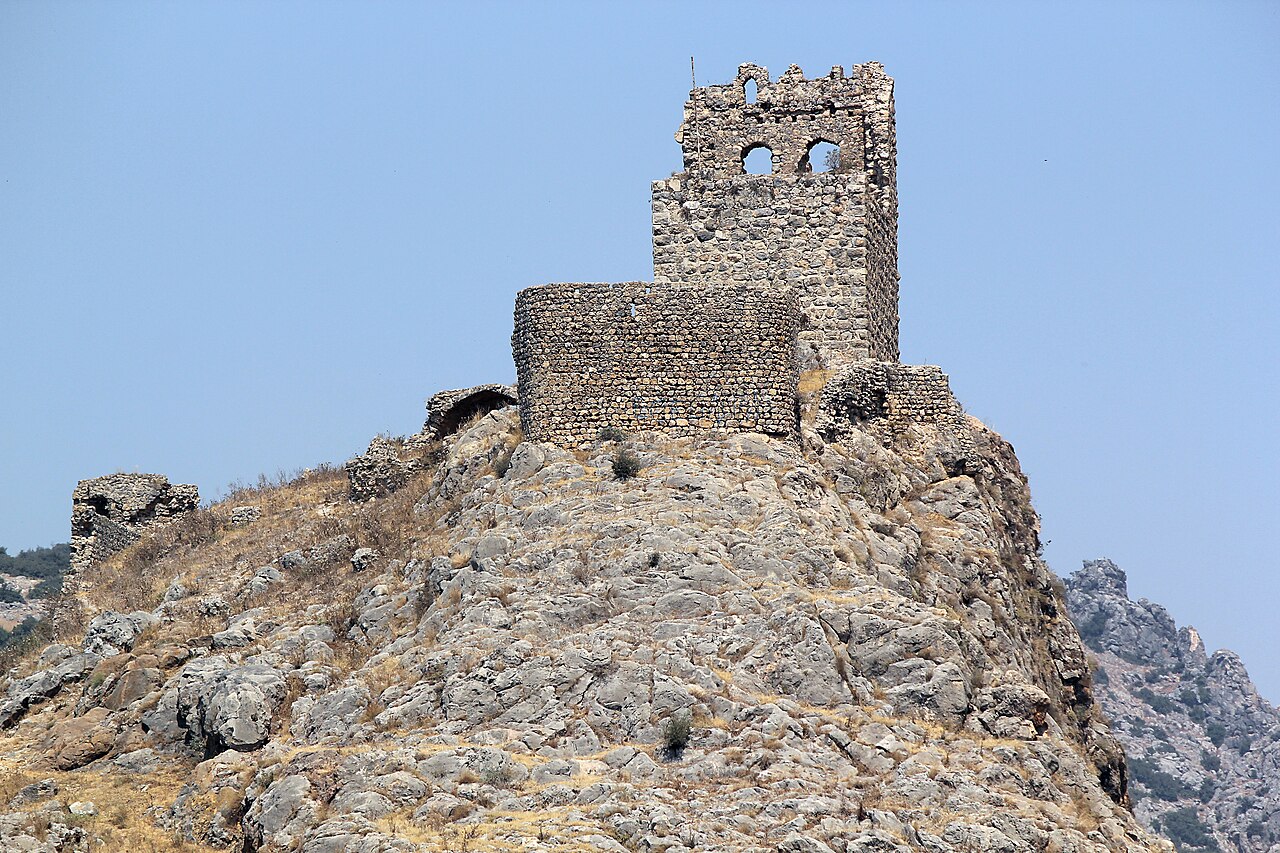
Today, Babaoğlan Castle stands as a ruined fortress, largely overgrown and without clearly marked paths leading to it. The nearest access is via a dirt road at the base of the hill, and visitors should be prepared for a somewhat challenging approach through natural terrain. The castle's remains are subtle, with stone walls blending into the surrounding vegetation, making it a secluded site favored by those interested in off-the-beaten-path historical ruins.
Despite its remote location and limited infrastructure, the castle is freely accessible to the public. Its quiet setting offers a glimpse into the region's layered history, from ancient Hittite times through Byzantine, Armenian, and Mamluk periods. Visitors interested in military architecture, medieval history, or archaeology will find Babaoğlan Castle an intriguing destination.
Architectural features
The castle's design takes advantage of the natural rocky hill, with stone walls integrated into the terrain to enhance defense. Though much of the structure has deteriorated, remnants of towers and curtain walls can still be discerned. The fortress likely included basic defensive elements common to Byzantine hill castles, such as battlements, narrow arrow slits, and a gatehouse, though specific details are difficult to confirm due to the ruinous state.
Historical context of the Cilician plain frontier
The Cilician plain was a contested zone during the medieval period, serving as a buffer between the Byzantine Empire and the Seljuk Turks. Fortresses like Babaoğlan played a critical role in monitoring and delaying enemy advances, protecting trade routes, and asserting control over key geographical features. The castle's presence reflects the strategic military thinking of the Byzantine Empire as it sought to maintain its eastern borders amid shifting political and military pressures.
Preservation challenges
Due to its remote location and lack of formal conservation efforts, Babaoğlan Castle faces natural degradation from vegetation overgrowth and weathering. The absence of visitor facilities and signage means that the site remains relatively unknown and under-visited, which has helped preserve its quiet atmosphere but also limits public awareness and protection.
Frequently asked questions (FAQ)
- How do I get to Babaoğlan Castle?
- Babaoğlan Castle is accessible via a dirt road at the foot of the hill near Babaoğlu Köyü in Osmaniye. Visitors should be prepared for a hike through overgrown terrain to reach the ruins.
- What is the historical significance of Babaoğlan Castle?
- Babaoğlan Castle was built by the Byzantines as part of a defensive network guarding the Cilician plain frontier against Seljuk incursions, later used by Armenians and Mamluks.
- Can I visit Babaoğlan Castle for free?
- Yes, the castle is freely accessible to the public with no entrance fee, but facilities are limited and the site is largely overgrown.
- What remains can be seen at Babaoğlan Castle today?
- Visitors can see the ruins of stone walls, remnants of towers, and the castle's integration into the rocky hill, though much is overgrown and in poor condition.
- Is there any ancient art near Babaoğlan Castle?
- Yes, a Hittite rock-cut relief depicting a man and a horse is located beneath the castle hill, highlighting the area's ancient historical significance.
Information
Loading map...
Visitor reviews
No reviews yet. Been here? Write the first review and help other travelers!
Write the first reviewVisited this castle? Share your experience
Your review helps other travelers and adds first-hand knowledge to our encyclopedia.