Bodelschwingh Castle
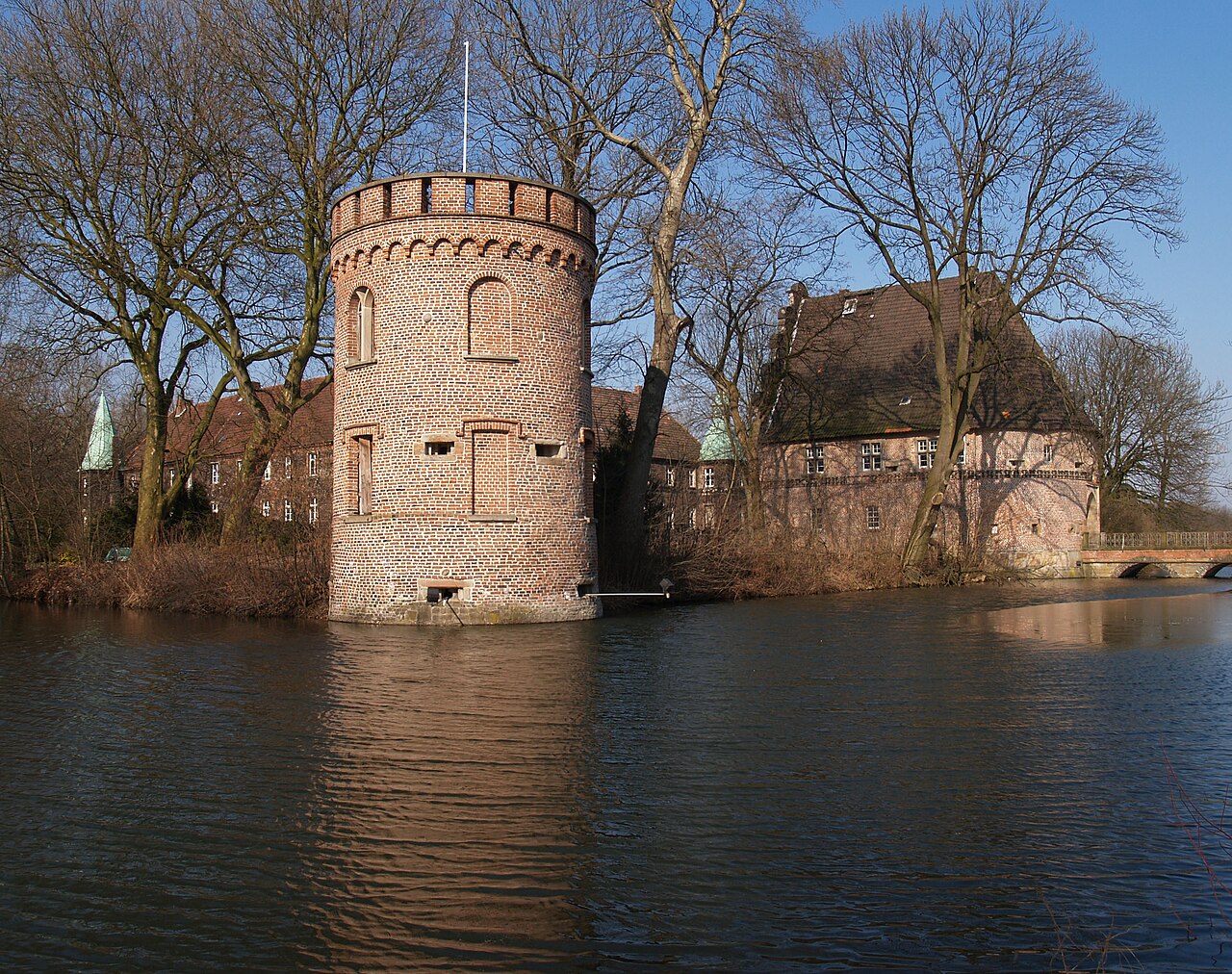
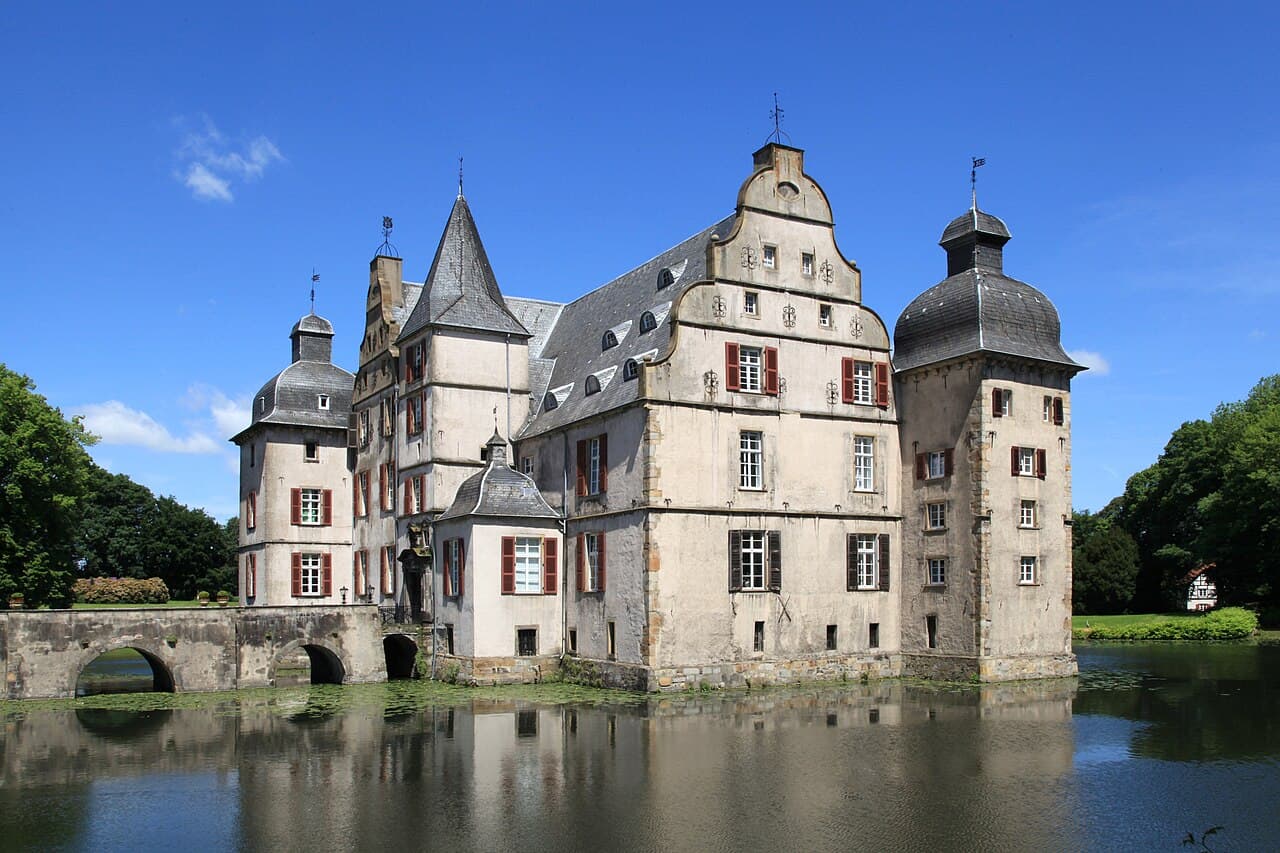
Bodelschwingh Castle is a distinguished Renaissance water castle located in the Bodelschwingh district of Dortmund, North Rhine-Westphalia, Germany. This historic castle, dating back to the 13th century, is renowned for its idyllic setting surrounded by a large pond and its architectural evolution spanning the medieval to early modern periods. The castle complex is privately owned by the noble family zu Innhausen und Knyphausen, who occasionally open its gates to the public for special events such as adventure markets and the annual Open Monument Day, providing rare opportunities to explore the richly preserved interiors and grounds.
Medieval origins and noble lineage
The earliest records of the estate, originally known as Bodelswenge, date back to around 1220. By 1302, it was granted as a fief to the knight Gis(e)lbert called Speke by Count Eberhard I of the Mark, marking the foundation of a noble lineage that would become the von Bodelschwingh family. This family played a significant role in the region, expanding their influence through acquisitions of neighboring farms, villages, and judicial rights during the 14th and 15th centuries, including the lordship of Mengede in 1421.
Throughout the Middle Ages, Haus Bodelschwingh was one of twelve water castles with moats in the Dortmund area, situated within the County of Mark. It was part of a small autonomous community known as Burgfreiheit Bodelschwingh, which maintained its own church and independent administration until 1928. The castle served as a protective center for this community, highlighting its strategic and social importance in the region.
Architectural evolution and renaissance transformation
The castle’s architectural development reflects centuries of adaptation and stylistic change. The oldest surviving parts on the northern side date back to around 1300 and consist of a late medieval two-room house. In the mid-16th century, significant Renaissance-style renovations were undertaken by Wennemar II von Bodelschwingh, who replaced the original medieval structure with a more complex manor house featuring multiple wings and towers with distinctive spires.
The main building rests on historic oak piles submerged in the pond, showcasing a blend of brick and finely cut ashlar masonry with white plastered facades. It features two wings connected by a polygonal tower that functions as a gatehouse and stair tower. This tower, topped in 1909 with an octagonal neo-Baroque spire, contains a spiral staircase and chambers integrated within the wall thickness. The entrance door is crafted in the Mannerist style, leading into living quarters arranged in perpendicular wings.
A notable architectural highlight is the "Kambyses fireplace" in the main hall, dating from the mid-16th century. This fireplace is adorned with an oval green sandstone relief depicting the story of King Cambyses punishing a corrupt judge, a narrative from Herodotus, flanked by the coats of arms of Wennemar II and his wife. The chimney is decorated with sculpted busts in medallions, exemplifying Renaissance artistic detail.
The castle also includes two square pavilion towers with domed roofs inspired by Italian design. The eastern tower, dating from the younger wing, contains narrow embrasures in the cellar for defensive firing, while the western tower was rebuilt in the 19th century after collapse. The steep slate roofs and Renaissance gables with spherical finials and sandstone cornices contribute to the castle’s historic silhouette.
Outer bailey and park landscape
The castle complex includes a southwestern outer bailey surrounded by its own moat. Access to the main castle island is via a three-arched stone bridge bearing the coat of arms of Gisbert III and Katharina von der Recke, constructed shortly after their 1605 marriage. Originally, the bridge had a movable drawbridge section now replaced by a fixed brick span.
The outer bailey buildings form a U-shaped cluster around a rectangular courtyard, housing former stables, a forge, and storage facilities. The 18th-century core building features large gates indicative of its agricultural function. A guesthouse built in 1829 in the strict Berlin neoclassical style of Karl Friedrich Schinkel stands in the northern corner. These buildings were modernized in the 1980s to accommodate residential and office spaces while preserving historical character.
The surrounding park, originally a baroque garden, was transformed into a landscaped park in the late 19th century under the guidance of Eduard Petzold, a prominent landscape architect. The park spans approximately 18 hectares and includes old trees, several ponds, fountains, and remnants of garden sculptures. Although bisected by the modern A45 motorway, the park remains a significant element of the castle’s setting, reflecting evolving tastes from formal baroque to naturalistic landscape design.
Historical challenges and preservation
The castle has endured various challenges throughout its history, including inheritance disputes in the early 17th century, industrial impacts from nearby coal mining in the 19th century, and the turmoil of the 20th century wars. Notably, it survived World War II bombing raids without structural damage but suffered looting that resulted in the loss of many artworks.
Restoration efforts in the 20th century, particularly under Carl zu Innhausen und Knyphausen, focused on preserving the castle’s architectural integrity and park. The estate remains privately owned by the family, who continue to maintain the property and plan further renovations, including structural repairs and restoration of the moat as a flood retention basin, with work anticipated to complete by 2027.
Cultural significance and visitor experience
Bodelschwingh Castle stands as a testament to the rich noble heritage and architectural history of the Dortmund region. Its combination of medieval defensive features, Renaissance artistry, and landscaped parkland offers a unique glimpse into the evolution of German noble estates. While generally closed to the public, the castle’s occasional openings for cultural events and guided tours provide valuable opportunities to experience its historic interiors and scenic surroundings.
The castle’s setting on an artificial island, accessible by a historic stone bridge, and its well-preserved Renaissance elements such as the Kambyses fireplace and pavilion towers, make it a remarkable example of a moated castle that has adapted to changing times while retaining its historic charm.
Frequently asked questions (FAQ)
- What is the historical significance of Bodelschwingh Castle?
- Bodelschwingh Castle, dating back to the 13th century, is an important example of medieval architecture and has served various roles throughout its history. Originally built as a defensive fortress, it has been a residence for noble families and is now a cherished cultural landmark in Dortmund.
- When is the best time to visit Bodelschwingh Castle?
- The best time to visit Bodelschwingh Castle is during the spring and early autumn months when the weather is mild, and the surrounding gardens are in full bloom. Special events and guided tours are often scheduled during these times, enhancing the visitor experience.
- Can I access Bodelschwingh Castle with public transportation?
- Yes, Bodelschwingh Castle is accessible via public transportation. Visitors can take local buses that connect to the castle, making it convenient for those using public transport to explore this beautiful site.
- What are the opening hours of Bodelschwingh Castle?
- Bodelschwingh Castle is typically open to visitors from 10 AM to 5 PM, Wednesday through Sunday. It's advisable to check the official website or contact the castle for any seasonal changes in hours or special closures.
- Is there an admission fee to visit Bodelschwingh Castle?
- Yes, there is an admission fee to visit Bodelschwingh Castle, which helps maintain the site and its grounds. Ticket prices are generally affordable, with discounts available for students, seniors, and groups.
- What architectural styles can be seen at Bodelschwingh Castle?
- Bodelschwingh Castle showcases a blend of medieval and Renaissance architectural styles, reflecting its long history and various renovations. Visitors can admire its imposing towers, fortified walls, and elegant interiors that tell the story of its evolution over the centuries.
- Are there any nearby attractions to visit along with Bodelschwingh Castle?
- Yes, several attractions are located near Bodelschwingh Castle, including scenic parks and museums. The nearby Dortmund-Ems Canal offers picturesque walking paths, and the city center features shops and restaurants for a complete day out.
- Is it possible to take guided tours of Bodelschwingh Castle?
- Yes, guided tours of Bodelschwingh Castle are available and provide a deeper insight into its history and architecture. These tours are often conducted by knowledgeable guides who share fascinating stories about the castle's past and its significance in the region.
Photo gallery

Information
Loading map...
Visitor reviews
No reviews yet. Been here? Write the first review and help other travelers!
Write the first reviewVisited this castle? Share your experience
Your review helps other travelers and adds first-hand knowledge to our encyclopedia.