Strünkede Castle

Strünkede Castle in Herne: medieval moated fortress with Baroque transformations
Herne, Germany
High Medieval (11th–13th c.)
Restored

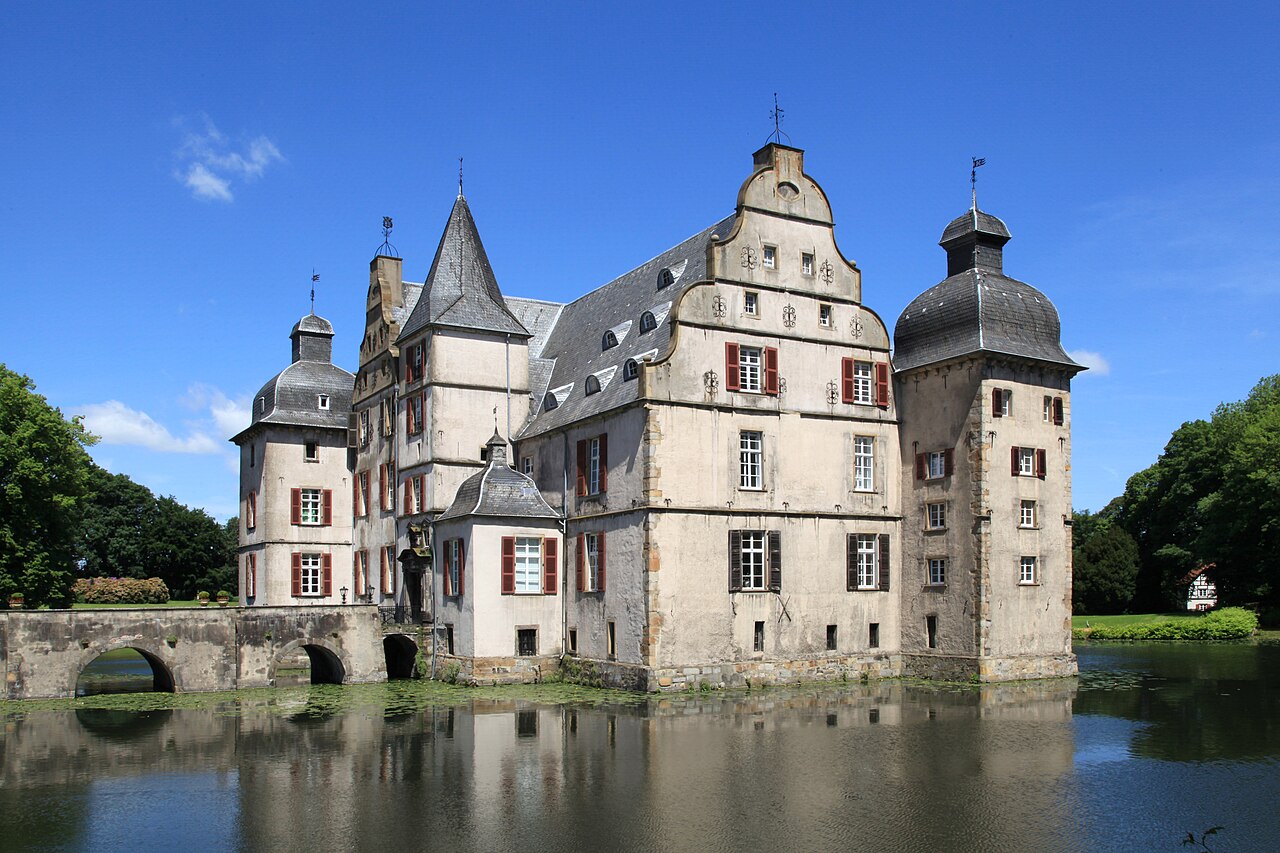
Strünkede Castle is a notable medieval moated fortress located in Herne, Germany. It served as the ancestral seat of the Barons of Strünkede for over seven centuries, reflecting a long and layered history. The castle was originally constructed before 1243, placing its origins firmly in the High Medieval period. Its strategic location and thick defensive walls exemplify typical features of medieval fortifications designed to withstand sieges and protect its noble inhabitants.

Medieval origins and architectural features

The castle’s initial construction focused on robust defensive elements, including a surrounding moat and thick stone walls. These features were essential for protection during the turbulent medieval era. The moat, fed by nearby water sources, encircled the castle, creating a natural barrier against invaders. The main structures included a fortified gatehouse, curtain walls, and residential buildings arranged around a central courtyard. The presence of a 13th-century church within the castle grounds, now recognized as the oldest church in Herne, highlights the integration of religious and residential functions typical of medieval noble estates.

Baroque transformation in the 17th century

In the mid-17th century, Strünkede Castle underwent significant rebuilding in the early Baroque style. This architectural transformation introduced more decorative elements and altered the castle's silhouette, reflecting changing tastes and the reduced emphasis on military defense. The Baroque renovations likely included enhancements to the castle’s façade, windows, and interior spaces to create a more comfortable and aesthetically pleasing residence for its owners. Despite these changes, many medieval defensive features were preserved, blending the fortress origins with Baroque elegance.

20th-century uses and restoration

Throughout the 20th century, the castle served varied civic functions. Initially, it housed a restaurant, providing a public gathering space within the historic walls. Later, it was repurposed as a police station and during wartime, it functioned as a hospital. These adaptations demonstrate the castle’s flexibility and continued relevance to the community. In 1948, the city of Herne purchased Strünkede Castle and initiated restoration efforts to preserve its historic fabric. Following restoration, the castle was opened as a branch of the Emschertal Museum, featuring exhibitions dedicated to the history of Herne, the castle itself, and the Strünkede family lineage.

Strünkede church and cultural significance

The church built within Strünkede Castle in the 13th century holds particular historical importance as the oldest church in Herne. After reconstruction completed in 1950, the church was opened to the public, allowing visitors to appreciate its medieval architecture and religious heritage. The castle grounds, including the courtyard and surrounding park, have become a vibrant cultural hub. The courtyard hosts open-air concerts and events such as the Strünkeder Summer festival, which features theatrical performances, folk music, comedy, film screenings, and local craft markets. These activities attract both tourists and local residents, maintaining the castle’s role as a center of community life.

The castle park and community engagement

The park surrounding Strünkede Castle offers a green retreat favored by the townspeople of Herne. Its landscaped grounds provide recreational space and enhance the castle’s scenic setting. The integration of natural surroundings with the historic architecture contributes to the castle’s appeal as a destination for leisure and cultural activities. Visitors can enjoy traditional crafts and local culinary specialties during festival events, deepening their connection to the region’s heritage.

Frequently asked questions (FAQ)

What is the historical significance of Strünkede Castle?
Strünkede Castle, located in Herne, Germany, dates back to the 13th century and serves as a remarkable example of medieval architecture. It has witnessed numerous historical events and changes in ownership, reflecting the region's rich history. Today, it stands as a symbol of local heritage and is a popular site for visitors interested in the area's past.
When was Strünkede Castle built?
Strünkede Castle was originally constructed in the early 13th century, with significant renovations and expansions occurring in the following centuries. Its architectural style has evolved over time, showcasing various influences from different historical periods. This blend of styles contributes to the castle's unique character and charm.
Can I visit Strünkede Castle?
Yes, Strünkede Castle is open to visitors who wish to explore its beautiful grounds and historical interiors. Guided tours are often available, allowing guests to learn more about the castle's history and architecture. It's advisable to check the castle's official website for any specific visiting guidelines or requirements.
What are the opening hours for Strünkede Castle?
Strünkede Castle typically welcomes visitors from Tuesday to Sunday, with opening hours varying seasonally. During peak tourist season, the castle may extend its hours to accommodate more visitors. Always check ahead for the most current hours and any special events that might affect accessibility.
Is it possible to access Strünkede Castle with a wheelchair?
Strünkede Castle aims to be accessible to all visitors, but some areas may have limited wheelchair access due to the castle's historical structure. It's recommended to contact the castle staff prior to your visit to inquire about specific accessibility options and any available assistance. They are generally willing to accommodate needs to enhance the visitor experience.
What are the ticket prices for visiting Strünkede Castle?
Ticket prices for Strünkede Castle vary depending on the type of tour and age of the visitor. Generally, there are discounted rates for children, seniors, and groups. For the most accurate and up-to-date ticket information, please visit the castle's official website or contact their visitor services.
When is the best time to visit Strünkede Castle?
The best time to visit Strünkede Castle is during the spring and early autumn when the weather is mild and the gardens are in full bloom. These seasons often see fewer crowds, allowing for a more enjoyable experience. Additionally, special events and exhibitions may be organized during these times, enhancing your visit.
What nearby attractions can I explore while visiting Strünkede Castle?
While visiting Strünkede Castle, you can explore the nearby Stadtgarten Herne, a beautiful park ideal for leisurely strolls. Additionally, the German Mining Museum in Bochum is a short drive away and offers fascinating insights into the region's industrial history. Combining these visits can provide a well-rounded experience of the local culture and heritage.

Information

Water Castle

Loading map...

Visitor reviews

No reviews yet. Been here? Write the first review and help other travelers!

Write the first review

Visited this castle? Share your experience

Your review helps other travelers and adds first-hand knowledge to our encyclopedia.
Write a review

(5/5)

0/2000 characters

Your review will be visible after admin approval

Nearby castles

5.1 km
Bladenhorst Castle — Germany castle

Bladenhorst Castle

Castrop-Rauxel, Germany

Bladenhorst Castle (German: Schloss Bladenhorst) is a notable moated hill castle located in the suburbs of Castrop-Rauxel in Germany. Its origins trace back to the 13th century, with the first documented mention occurring in 1266 as the residence of the lords of Blarnhurst. Over the centuries, the castle has witnessed a series of ownership changes, architectural transformations, and historical events that reflect the region's medieval and Renaissance heritage. Early history and medieval significance The castle initially served as a fortified residence for the lords of Blarnhurst. By the early 14th century, ownership passed to the influential Düngelen family. In 1338, Rötger Düngelen pledged the castle to the Duchy of Cleves for use during wartime, highlighting its strategic importance in regional conflicts. The castle's defensive role was characteristic of high medieval hill castles, designed to control surrounding territories and provide refuge. Architectural evolution and renaissance rebuilding Originally, Bladenhorst Castle featured a quadrangular layout with four wings enclosing a central courtyard. The gatehouse remains the oldest surviving part of the structure, serving as the primary fortified entrance. The castle chapel, constructed in 1332, reflects the religious functions integrated within the castle complex. Between 1530 and 1584, the castle underwent significant rebuilding in the Renaissance style, which defines much of its present appearance. This transformation involved updating defensive features to accommodate changing military technologies and enhancing residential comfort and aesthetics, typical of Renaissance architectural trends in German noble residences. Moat and fortifications The castle's moat is a defining feature, providing both defense and status symbolism. The water-filled moat surrounds the castle, emphasizing its role as a fortified water castle despite its classification as a hill castle due to its elevated position. The combination of natural elevation and water defenses made Bladenhorst a formidable stronghold in its time. Ownership transitions and noble families Through marriage alliances, the castle passed to Philip of Viermünden in 1496. Later, from 1624 to 1881, it was inherited by the Westphalian noble family von Romberg, who maintained the property for over two centuries. These families played significant roles in local governance and the social fabric of the region, with the castle serving as a symbol of their status and power. Modern usage and preservation Today, Bladenhorst Castle remains privately owned and is still partially inhabited. Due to its private status, the castle is not generally open to public tours, although some sections are rented out to private individuals. The castle's preservation reflects ongoing efforts to maintain its historical fabric while adapting to contemporary residential use. The castle's condition is generally well preserved, retaining key architectural elements from its medieval origins and Renaissance reconstruction. Its continued habitation ensures that the structure remains an active part of the local heritage landscape rather than a static monument. Architectural features and cultural significance Bladenhorst Castle exemplifies the evolution of German castle architecture from the high medieval period through the Renaissance. The integration of a moat, gatehouse, chapel, and the four-winged layout illustrates typical noble residence design adapted for defense and status. The castle's Renaissance rebuilding reflects broader European architectural trends emphasizing symmetry, proportion, and decorative elements, marking a shift from purely military fortifications to more comfortable and representative noble homes. As a historic site, the castle contributes to understanding the region's feudal history, noble lineage, and architectural developments. Its location in Castrop-Rauxel situates it within the cultural and historical context of North Rhine-Westphalia, an area rich in medieval and early modern heritage.

High Medieval (11th–13th c.)
Details
10 km
Schloss Berge — Germany castle

Schloss Berge

Gelsenkirchen, Germany

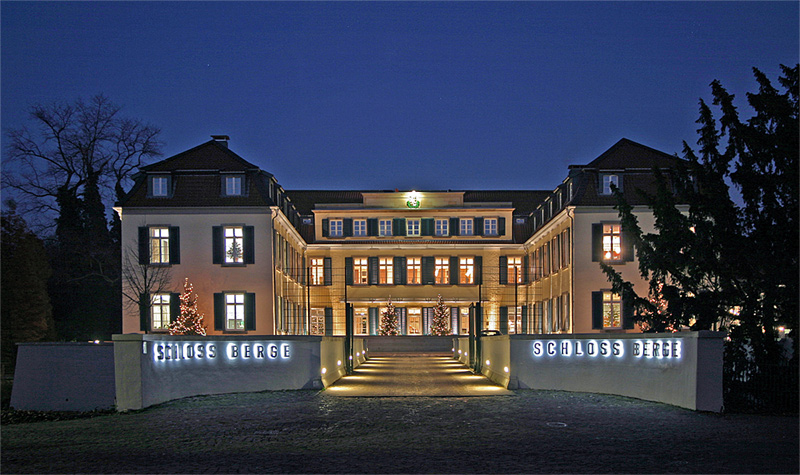
Schloss Berge is a historic hill castle located in Gelsenkirchen, Germany, with origins dating back to the 13th century. Although first mentioned in medieval records, the castle's present architectural form was established between 1785 and 1788, reflecting the Late Baroque and Classicism styles popular in that era. This transformation replaced earlier medieval structures, giving Schloss Berge its distinctive appearance characterized by elegant symmetry and restrained decorative elements typical of late 18th-century architecture. Historical background and evolution The site of Schloss Berge has a long history, with its first recorded mention in the 13th century. Initially, it likely served as a fortified manor or small castle typical of the medieval period in the region. Over the centuries, the castle underwent several modifications, reflecting changing tastes and functions. The significant reconstruction in the late 18th century marked a shift from a defensive fortress to a stately residence, aligning with the aristocratic lifestyle of the time. During the Post-Renaissance period, Schloss Berge was redesigned to emphasize comfort and aesthetic appeal rather than military utility. This was a common trend among European noble residences as the need for fortifications diminished. The castle's transformation incorporated Baroque elements such as grand facades and decorative details, combined with the balanced proportions and classical motifs of Classicism. Architectural features and style Late Baroque and Classicism influences The castle exhibits a harmonious blend of Late Baroque exuberance and Classical restraint. Its symmetrical layout, orderly window arrangements, and use of pilasters and columns reflect classical ideals. Meanwhile, Baroque influences appear in the ornate entrance, sculptural decorations, and the overall grandeur of the structure. Structural elements and layout Schloss Berge is situated on a gentle hill, typical of a hill castle, providing a commanding view of the surrounding landscape. The building features a central main block with flanking wings, creating a U-shaped plan that encloses a courtyard. The roofline is punctuated by dormer windows and chimneys, adding vertical emphasis to the otherwise horizontal composition. The castle grounds include landscaped gardens and parkland, which were designed to complement the architectural style and provide a picturesque setting. The integration of natural and built environments is characteristic of aristocratic estates of the period. Current use and preservation Today, Schloss Berge serves as a hotel and restaurant, allowing visitors to experience its historical ambiance firsthand. The castle has been well preserved and maintained, retaining much of its 18th-century architectural character. Its adaptation for hospitality purposes has ensured ongoing care and accessibility to the public. The castle's location in Gelsenkirchen makes it a notable cultural landmark within the region, attracting guests interested in history, architecture, and fine dining. The preservation of Schloss Berge contributes to the appreciation of Germany's architectural heritage from the Post-Renaissance era. Visiting Schloss Berge Visitors to Schloss Berge can enjoy the elegant interiors, beautifully maintained gardens, and the hospitality services offered. The castle's setting provides a tranquil retreat with historical significance, combining cultural enrichment with leisure. Frequently asked questions When was Schloss Berge built? Schloss Berge was constructed in its current form between 1785 and 1788, although the site dates back to the 13th century. What architectural styles characterize Schloss Berge? The castle showcases a blend of Late Baroque and Classicism styles typical of the late 18th century. Can visitors stay overnight at Schloss Berge? Yes, Schloss Berge operates as a hotel, offering accommodations in a historic setting. Is Schloss Berge open to the public? The castle is accessible to visitors, especially those using its restaurant and hotel facilities. Where is Schloss Berge located? It is located in Gelsenkirchen, Germany, situated on a hill that provides scenic views.

Post-Renaissance (17th–18th c.)
Details
10.4 km
Bodelschwingh Castle — Germany castle

Bodelschwingh Castle

Dortmund, Germany

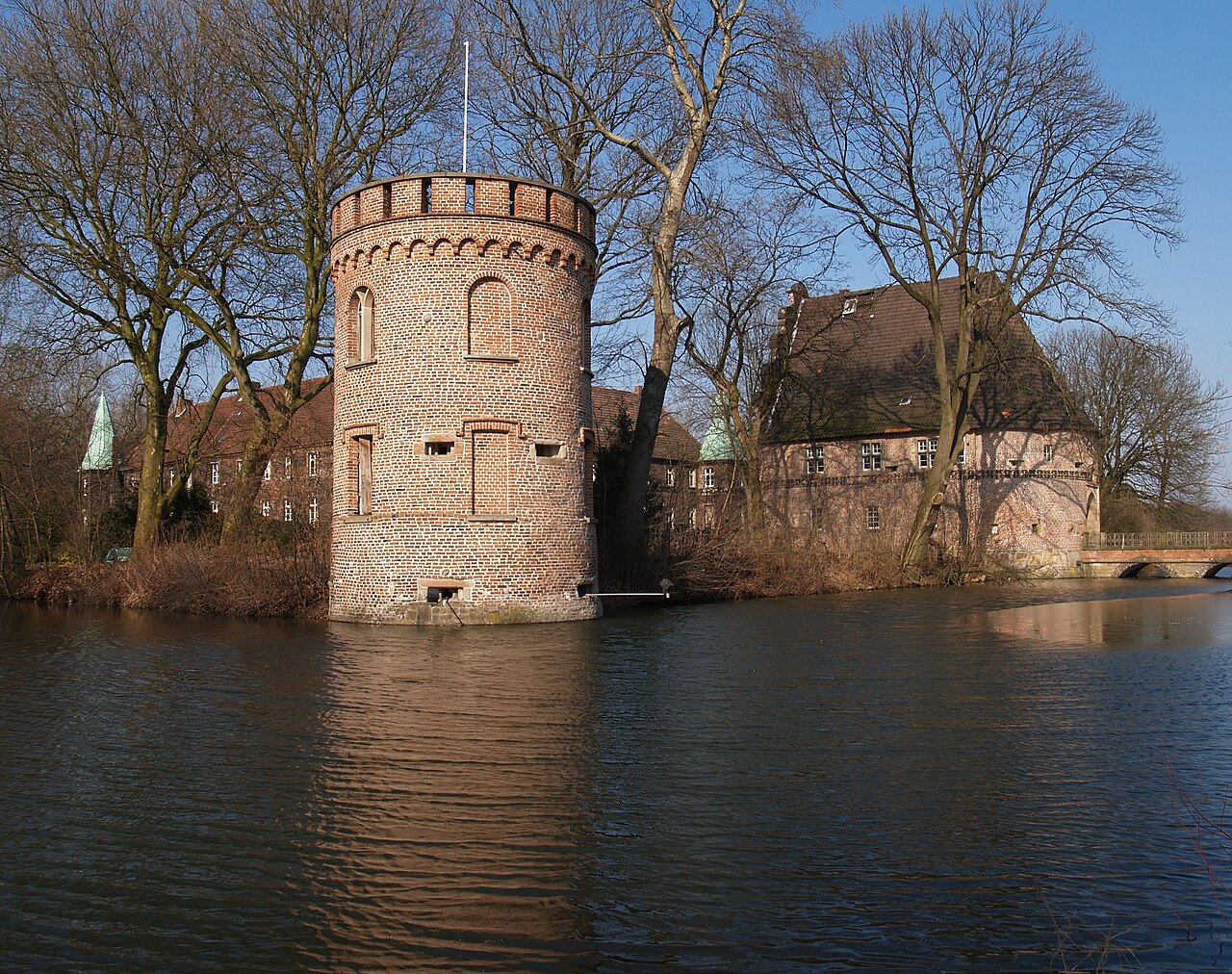
Bodelschwingh Castle is a distinguished Renaissance water castle located in the Bodelschwingh district of Dortmund, North Rhine-Westphalia, Germany. This historic castle, dating back to the 13th century, is renowned for its idyllic setting surrounded by a large pond and its architectural evolution spanning the medieval to early modern periods. The castle complex is privately owned by the noble family zu Innhausen und Knyphausen, who occasionally open its gates to the public for special events such as adventure markets and the annual Open Monument Day, providing rare opportunities to explore the richly preserved interiors and grounds. Medieval origins and noble lineage The earliest records of the estate, originally known as Bodelswenge, date back to around 1220. By 1302, it was granted as a fief to the knight Gis(e)lbert called Speke by Count Eberhard I of the Mark, marking the foundation of a noble lineage that would become the von Bodelschwingh family. This family played a significant role in the region, expanding their influence through acquisitions of neighboring farms, villages, and judicial rights during the 14th and 15th centuries, including the lordship of Mengede in 1421. Throughout the Middle Ages, Haus Bodelschwingh was one of twelve water castles with moats in the Dortmund area, situated within the County of Mark. It was part of a small autonomous community known as Burgfreiheit Bodelschwingh, which maintained its own church and independent administration until 1928. The castle served as a protective center for this community, highlighting its strategic and social importance in the region. Architectural evolution and renaissance transformation The castle’s architectural development reflects centuries of adaptation and stylistic change. The oldest surviving parts on the northern side date back to around 1300 and consist of a late medieval two-room house. In the mid-16th century, significant Renaissance-style renovations were undertaken by Wennemar II von Bodelschwingh, who replaced the original medieval structure with a more complex manor house featuring multiple wings and towers with distinctive spires. The main building rests on historic oak piles submerged in the pond, showcasing a blend of brick and finely cut ashlar masonry with white plastered facades. It features two wings connected by a polygonal tower that functions as a gatehouse and stair tower. This tower, topped in 1909 with an octagonal neo-Baroque spire, contains a spiral staircase and chambers integrated within the wall thickness. The entrance door is crafted in the Mannerist style, leading into living quarters arranged in perpendicular wings. A notable architectural highlight is the "Kambyses fireplace" in the main hall, dating from the mid-16th century. This fireplace is adorned with an oval green sandstone relief depicting the story of King Cambyses punishing a corrupt judge, a narrative from Herodotus, flanked by the coats of arms of Wennemar II and his wife. The chimney is decorated with sculpted busts in medallions, exemplifying Renaissance artistic detail. The castle also includes two square pavilion towers with domed roofs inspired by Italian design. The eastern tower, dating from the younger wing, contains narrow embrasures in the cellar for defensive firing, while the western tower was rebuilt in the 19th century after collapse. The steep slate roofs and Renaissance gables with spherical finials and sandstone cornices contribute to the castle’s historic silhouette. Outer bailey and park landscape The castle complex includes a southwestern outer bailey surrounded by its own moat. Access to the main castle island is via a three-arched stone bridge bearing the coat of arms of Gisbert III and Katharina von der Recke, constructed shortly after their 1605 marriage. Originally, the bridge had a movable drawbridge section now replaced by a fixed brick span. The outer bailey buildings form a U-shaped cluster around a rectangular courtyard, housing former stables, a forge, and storage facilities. The 18th-century core building features large gates indicative of its agricultural function. A guesthouse built in 1829 in the strict Berlin neoclassical style of Karl Friedrich Schinkel stands in the northern corner. These buildings were modernized in the 1980s to accommodate residential and office spaces while preserving historical character. The surrounding park, originally a baroque garden, was transformed into a landscaped park in the late 19th century under the guidance of Eduard Petzold, a prominent landscape architect. The park spans approximately 18 hectares and includes old trees, several ponds, fountains, and remnants of garden sculptures. Although bisected by the modern A45 motorway, the park remains a significant element of the castle’s setting, reflecting evolving tastes from formal baroque to naturalistic landscape design. Historical challenges and preservation The castle has endured various challenges throughout its history, including inheritance disputes in the early 17th century, industrial impacts from nearby coal mining in the 19th century, and the turmoil of the 20th century wars. Notably, it survived World War II bombing raids without structural damage but suffered looting that resulted in the loss of many artworks. Restoration efforts in the 20th century, particularly under Carl zu Innhausen und Knyphausen, focused on preserving the castle’s architectural integrity and park. The estate remains privately owned by the family, who continue to maintain the property and plan further renovations, including structural repairs and restoration of the moat as a flood retention basin, with work anticipated to complete by 2027. Cultural significance and visitor experience Bodelschwingh Castle stands as a testament to the rich noble heritage and architectural history of the Dortmund region. Its combination of medieval defensive features, Renaissance artistry, and landscaped parkland offers a unique glimpse into the evolution of German noble estates. While generally closed to the public, the castle’s occasional openings for cultural events and guided tours provide valuable opportunities to experience its historic interiors and scenic surroundings. The castle’s setting on an artificial island, accessible by a historic stone bridge, and its well-preserved Renaissance elements such as the Kambyses fireplace and pavilion towers, make it a remarkable example of a moated castle that has adapted to changing times while retaining its historic charm.

High Medieval (11th–13th c.)
Details