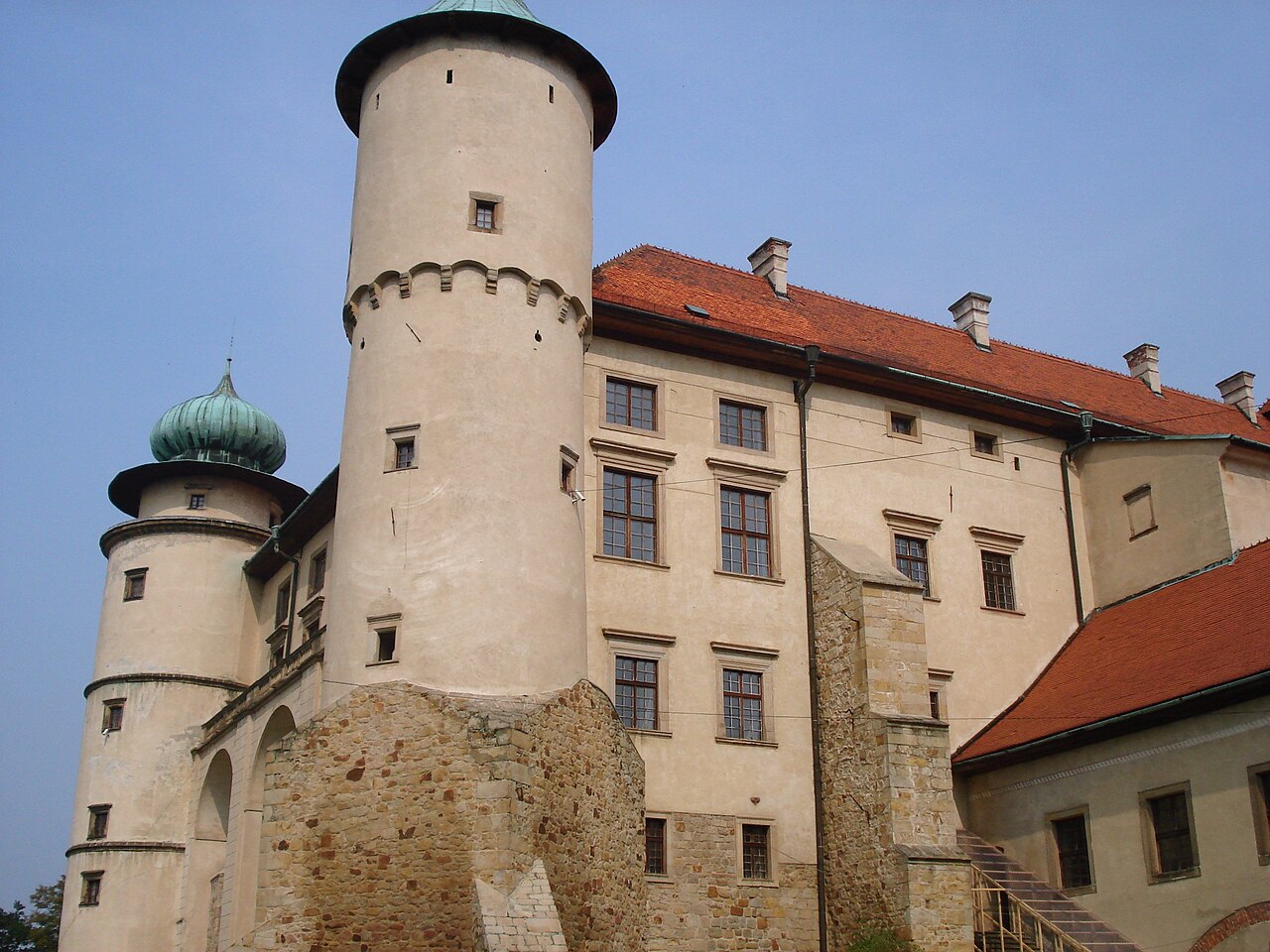
Bochnia
Bochnia castle stands as a testament to the rich history of salt mining and medieval fortification in Bochnia, Poland. Although salt extraction in the area dates back to the Neolithic period, it was the discovery of rock salt deposits in 1248 that sparked the growth of what was then a small settlement. The town was officially chartered in 1251 by Prince Bolesław the Chaste, who granted it numerous privileges, laying the foundation for its economic and strategic importance.
By the 13th century, Bochnia already featured a salt mining administrative center known as the dwór żupny, serving as the residence of the podżupnik, the official overseeing salt extraction. This early complex likely included a stone tower built on a square plan measuring approximately 8 meters per side, accompanied by a wooden building enclosed within defensive walls. The defensive nature of this site was crucial to protect the valuable salt resources and the mining operations.
The medieval fortress and its evolution
During the reign of King Casimir the Great in the 14th century, the original administrative manor was transformed into a more robust stone castle. A rectangular, two-story building measuring 26 by 17 meters was added to the existing tower, constructed using both stone and brick. The castle's walls were integrated with the town's fortifications, including ramparts and defensive walls, enhancing the protection not only of the castle but also of the town and the salt mine itself.
The castle's primary function was to safeguard the salt mines, the extracted salt, and the revenues generated from its sale. Its fortifications also served to protect the podżupnik and his officials from potential uprisings by the miners, who were often subjected to harsh working conditions and exploitation.
Salt miners' rebellion and castle defense
One of the most notable events in the castle's history was the 1538 miners' revolt. The miners, oppressed under the rule of the notoriously greedy podżupnik Sebastian Lubomirski, launched an attack on the castle. The assault was repelled, with many rebels wounded or imprisoned in the castle's dungeon. This incident underscores the castle's role not only as a defensive stronghold but also as a center of authority and control over the mining community.
Renaissance transformation under Seweryn Boner
In the first half of the 16th century, the castle underwent significant renovation under the direction of Seweryn Boner, the royal salt mine administrator. The castle was remodeled in the Renaissance style, featuring decorative elements such as an attic and a small clock tower. The ground floor housed functional spaces including storage for mining equipment, a kitchen, an office, an arsenal, and a treasury.
The castle also contained two rooms used for official meetings and banquets for the mine's officials. The upper floor was home to a chapel dedicated to St. Stanislaus, a large representative hall, and the podżupnik's private residence. The basement served multiple purposes, including storage, utility rooms, and a prison where convicted miners served their sentences.
The castle's supporting structures and community
Adjacent to the castle was a suburbium or podgrodzie, where lower-ranking officials lived. This area also contained essential economic buildings such as warehouses for salt storage, stables, and bathhouses, forming a self-sufficient community closely tied to the castle's operations.
Decline and later adaptations
By the 17th century, the castle's military significance diminished, shifting towards administrative functions related to the salt mine management. During the Swedish Deluge in 1655, the castle's defenses were insufficient to prevent Swedish forces from occupying Bochnia.
In the 18th century, the castle fell into disrepair. The southern part of the complex was demolished, and the northern section was rebuilt into a Baroque-style palace with a steep roof and a small tower. During the period of the partitions of Poland, Austrian authorities repurposed the castle as residential quarters for officials.
The most substantial changes occurred in 1875 when nearly all structures except the residential building were demolished. The remaining building was remodeled, losing its tower and receiving a new roof and a veranda supported by wooden columns. This structure served as a tenement house until 2009, when it was vacated due to poor condition and has remained unoccupied since.
Archaeological discoveries and future prospects
In 2016, archaeological excavations revealed significant remains of the medieval castle, including stone walls, the castle house, one of the towers, and the surrounding defensive walls. These findings have provided valuable insights into the castle's original layout and construction techniques.
There are plans to restore and adapt the ruins for cultural purposes, which would preserve and showcase the remains of what was once the largest and most representative secular building in Bochnia. Such a project would enhance the town's historical heritage and offer a tangible connection to its medieval past.
Architectural features and significance
Bochnia castle exemplifies the evolution of medieval fortifications adapted to the specific needs of a salt mining town. Its combination of a defensive tower, fortified walls, and later Renaissance and Baroque modifications reflects changing architectural styles and functional requirements over centuries.
The castle's integration with town defenses and its role as an administrative center highlight its importance beyond mere military purposes. It was a hub of governance, economic control, and social order within the salt mining industry, which was vital to the region's prosperity.
The castle's place in Polish heritage
Bochnia castle is a significant cultural landmark, illustrating the interplay between natural resources, economic development, and defensive architecture in medieval Poland. Its ruins serve as a reminder of the town's historical prominence in salt mining and the broader socio-political dynamics of the era.
Preserving and revitalizing the castle remains would provide educational and cultural benefits, fostering appreciation for Poland's medieval heritage and the historical importance of salt mining in shaping local communities.
Frequently asked questions (FAQ)
- How do I get to Bochnia Castle?
- Bochnia Castle is conveniently located in the town of Bochnia, Poland. You can reach it by car, with parking available nearby, or by public transport, including buses and trains that connect to the town center.
- What is the historical significance of Bochnia Castle?
- Bochnia Castle dates back to the 14th century and served as a royal residence and a defensive fortress. Its rich history is intertwined with the development of the region, showcasing the architectural styles and cultural influences of various periods.
- When was Bochnia Castle built?
- Construction of Bochnia Castle began in the late 14th century, primarily during the reign of King Casimir III the Great. It has undergone various renovations and restorations over the centuries, reflecting changes in architectural styles.
- Can I visit Bochnia Castle year-round?
- Yes, Bochnia Castle is open to visitors year-round, although specific opening hours may vary seasonally. It is advisable to check the official website or contact the visitor center for the latest information on hours and any potential closures.
- Why is Bochnia Castle a popular tourist attraction?
- Bochnia Castle is popular for its stunning architecture, historical significance, and picturesque setting. Visitors are drawn to its beautiful grounds, informative exhibitions, and the chance to explore a piece of Polish history.
- Is it possible to take guided tours of Bochnia Castle?
- Yes, guided tours are available at Bochnia Castle, providing visitors with in-depth knowledge of the castle's history and architecture. These tours often include access to areas that may not be available to self-guided visitors.
- What are the ticket prices for Bochnia Castle?
- Ticket prices for Bochnia Castle are generally affordable, with discounts available for students, seniors, and groups. It's a good idea to check the official website for the most current pricing and any special offers.
- What are the opening hours for Bochnia Castle?
- Bochnia Castle typically opens in the morning and closes in the early evening, but hours may vary depending on the season. Visitors should verify the exact hours of operation prior to their visit to ensure the best experience.
- What other attractions are nearby Bochnia Castle?
- Near Bochnia Castle, you can explore other historical sites, parks, and museums, including the Bochnia Salt Mine, which is a UNESCO World Heritage site. The charming town of Bochnia also offers local shops and restaurants to enhance your visit.
Information
Loading map...
Visitor reviews
No reviews yet. Been here? Write the first review and help other travelers!
Write the first reviewVisited this castle? Share your experience
Your review helps other travelers and adds first-hand knowledge to our encyclopedia.