Bobovac
Bobovac is a significant medieval fortress and the former royal capital of the Bosnian Kingdom during the 14th and 15th centuries. Located near the modern town of Vareš and the village of Kraljeva Sutjeska in Bosnia and Herzegovina, Bobovac served as the principal seat of Bosnian rulers and a key defensive stronghold during the Late Medieval period.
Historical significance of Bobovac
Bobovac was constructed in the 14th century and functioned as the fortified royal residence and administrative center of the Bosnian Kingdom. It was strategically positioned on a hilltop, which provided natural defense advantages and allowed control over the surrounding valleys and routes. The fortress was the site where Bosnian kings were crowned and where the royal treasury and archives were kept, underscoring its political and cultural importance.
Throughout its history, Bobovac witnessed numerous conflicts, including sieges during the Ottoman expansion into the Balkans. Its fortifications were designed to withstand prolonged attacks, reflecting the turbulent times of the Late Medieval era in the region.
Architectural features and layout
Bobovac is classified as a bastioned fortress, a style characterized by angular bastions protruding from the curtain walls to provide overlapping fields of fire. The fortress complex includes multiple defensive walls, towers, and gates arranged to maximize protection.
The castle's layout comprises an upper and lower town. The upper town housed the royal palace, chapels, and residential quarters, while the lower town contained supporting structures such as workshops, stables, and storage facilities. The walls are constructed primarily of stone, with thick defensive ramparts and battlements designed for archers and artillery placement.
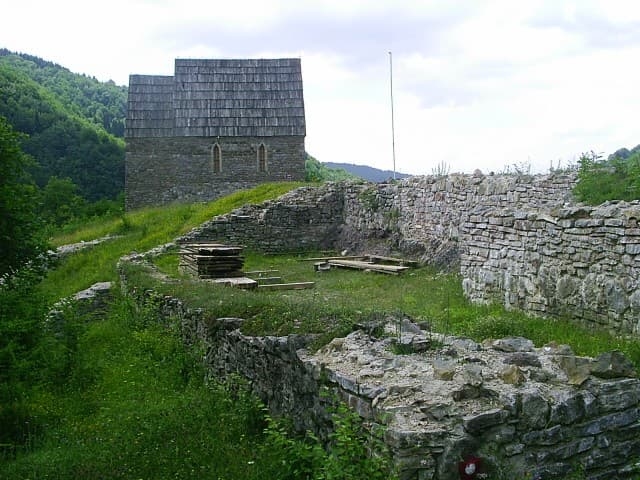
One of the notable architectural elements is the keep, a stronghold within the fortress that served as the last line of defense. The complex also features a water cistern essential for sustaining the inhabitants during sieges. The remains of a medieval chapel indicate the religious significance of the site for the Bosnian royal family.
Preservation and archaeological research
Today, Bobovac is a protected national heritage site designated as a National monument of Bosnia and Herzegovina by the Commission to preserve national monuments (KONS). The fortress is partially preserved, with substantial ruins that reveal the original defensive structures and residential buildings.
Archaeological excavations have uncovered artifacts such as medieval weaponry, pottery, and coins that provide insight into the daily life and military history of the Bosnian Kingdom. Conservation efforts aim to stabilize the ruins and make the site accessible for visitors interested in medieval history and architecture.
Visiting Bobovac
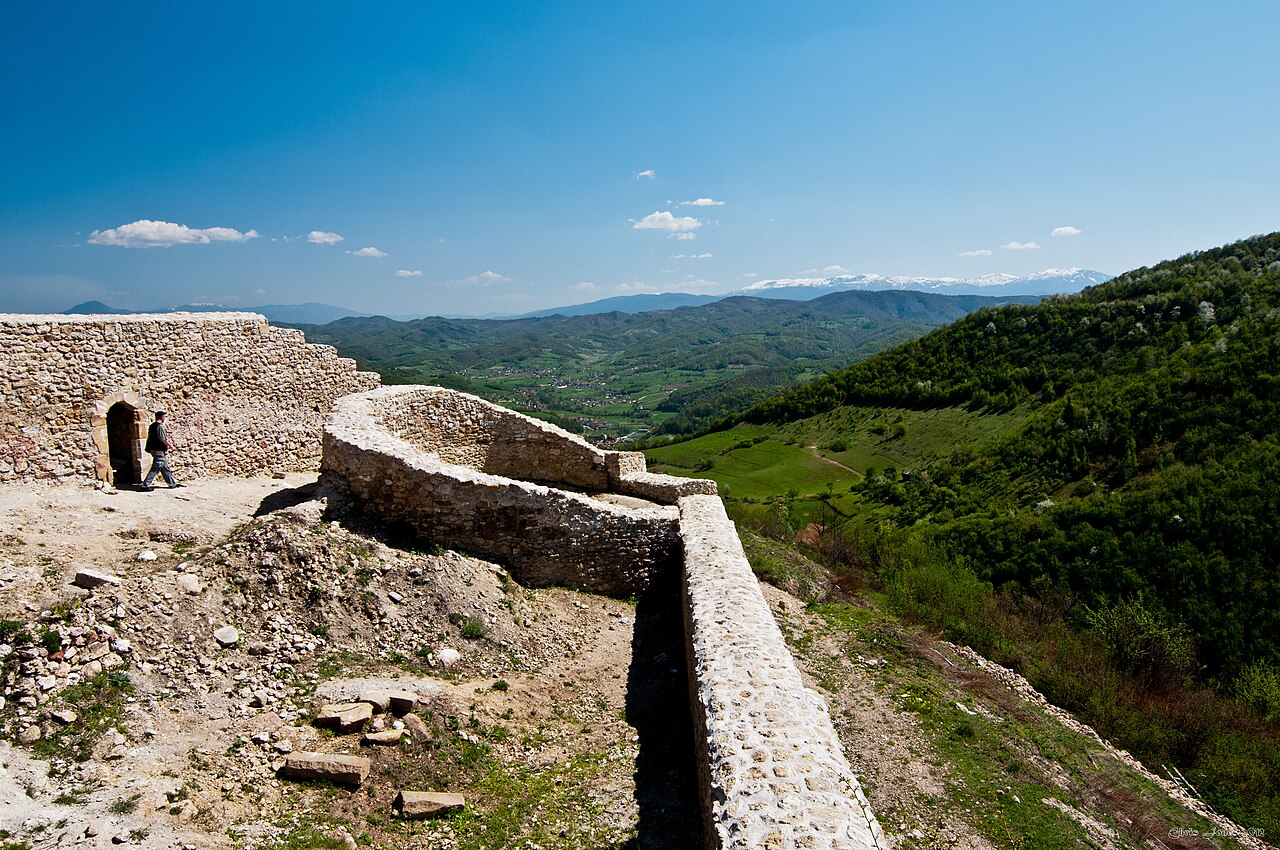
Bobovac is located near the village of Kraljeva Sutjeska, close to the Royal court in Sutjeska, making it accessible for tourists exploring Bosnia and Herzegovina's medieval heritage. The site offers panoramic views of the surrounding landscape, emphasizing its strategic placement.
Visitors can explore the castle ruins, including the defensive walls, towers, and foundations of the royal palace. Informational signage at the site provides historical context, enhancing the educational experience.
Frequently asked questions about Bobovac
- When was Bobovac built? Bobovac was constructed in the 14th century and served as the royal seat during the Late Medieval period.
- What type of castle is Bobovac? It is a bastioned fortress designed for defense with angular bastions and thick stone walls.
- Is Bobovac open to visitors? Yes, the site is accessible to the public, offering ruins to explore and historical information.
- Where is Bobovac located? It is near Vareš and the village of Kraljeva Sutjeska in Bosnia and Herzegovina.
- What is the condition of Bobovac? The fortress is partially preserved with significant ruins visible today.
- Why is Bobovac historically important? It was the royal capital and a key defensive fortress of medieval Bosnia, central to its political and cultural history.
Frequently asked questions (FAQ)
- When was Bobovac built?
- Bobovac was constructed in the 14th century and served as the royal seat during the Late Medieval period.
- What type of castle is Bobovac?
- It is a bastioned fortress designed for defense with angular bastions and thick stone walls.
- Is Bobovac open to visitors?
- Yes, the site is accessible to the public, offering ruins to explore and historical information.
- Where is Bobovac located?
- It is near Vareš and the village of Kraljeva Sutjeska in Bosnia and Herzegovina.
- What is the condition of Bobovac?
- The fortress is partially preserved with significant ruins visible today.
- Why is Bobovac historically important?
- It was the royal capital and a key defensive fortress of medieval Bosnia, central to its political and cultural history.
Photo gallery

Information
Loading map...
Visitor reviews
No reviews yet. Been here? Write the first review and help other travelers!
Write the first reviewVisited this castle? Share your experience
Your review helps other travelers and adds first-hand knowledge to our encyclopedia.