Zniev Castle Ruins
Zniev Castle, also historically known as Turiec Castle or castrum Turuc, stands as a significant medieval fortress ruin near the village of Kláštor pod Znievom in Slovakia. Although the first written record dates to 1243, archaeological evidence reveals the site hosted a fortified settlement as early as the 11th and 12th centuries. Perched on a limestone hill at an elevation of 985 meters above sea level, the castle commanded a strategic vantage point overlooking the valley and the nearby town, making it a key defensive and administrative centre during the High medieval period.
The castle’s origins are closely linked to the medieval Hungarian kingdom and the influence of the Zobor Benedictine monastery, which once owned the surrounding lands. The fortress evolved over time from an early stronghold into a more complex castle complex, reflecting the changing military and political landscape of the region. A notable historical figure associated with Zniev Castle is Ondrej Forgáč, who, according to a 1253 document issued by King Béla IV, refortified the castle and constructed a new habitable tower known as Forgáč’s tower between 1241 and 1242. Legend holds that this castle served as a refuge for King Béla IV during the Tartar invasions, as Forgáč famously aided the king’s escape after a devastating battle near the river Slaná.
Historical significance and ownership
From the mid-13th century until approximately 1339, Zniev Castle functioned as the administrative seat of the Turiec region. This role underscored its importance in local governance and defense. However, with the creation of the independent Turiec County separate from the larger Zvolen County, the administrative centre was relocated to Sklabiňa Castle due to its superior strategic position. This shift marked the beginning of Zniev Castle’s gradual decline in political and military significance.
During the early 14th century, the castle came under the ownership of prominent noble families and church officials. Between 1312 and 1321, it was held by Matúš Čák of Trenčín, a powerful regional magnate. Subsequently, the castle passed into the hands of the Premonstratensian order, reflecting its changing role from a military fortress to an ecclesiastical possession. Throughout the 16th century, the castle experienced military conflict, notably in 1532 when it was seized by the royal army after falling to the Kostka family, supporters of the claimant Ján Zápoľský. This period of turmoil further contributed to the castle’s deterioration.
Architectural evolution and features
Original fortifications and upper castle
The castle’s original layout featured an upper castle situated at the highest point of the hill, surrounded by a neck ditch—a defensive trench that separated the fortress from the adjacent terrain. This upper section included a complex of towers and walls designed for both defense and habitation. Among these was the habitable tower built by Ondrej Forgáč, located approximately 250 meters from the main castle structure, which served as a fortified residence.
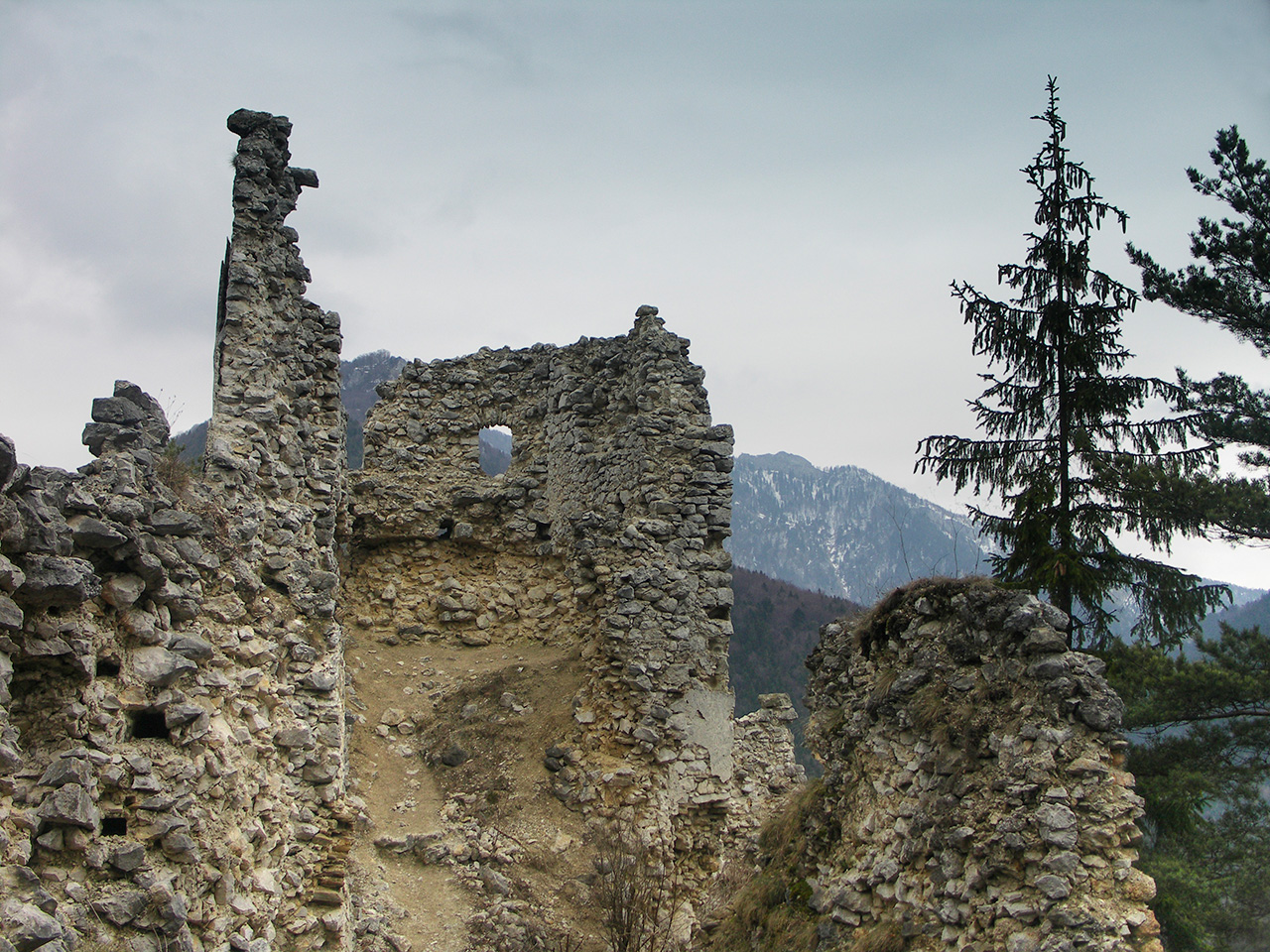
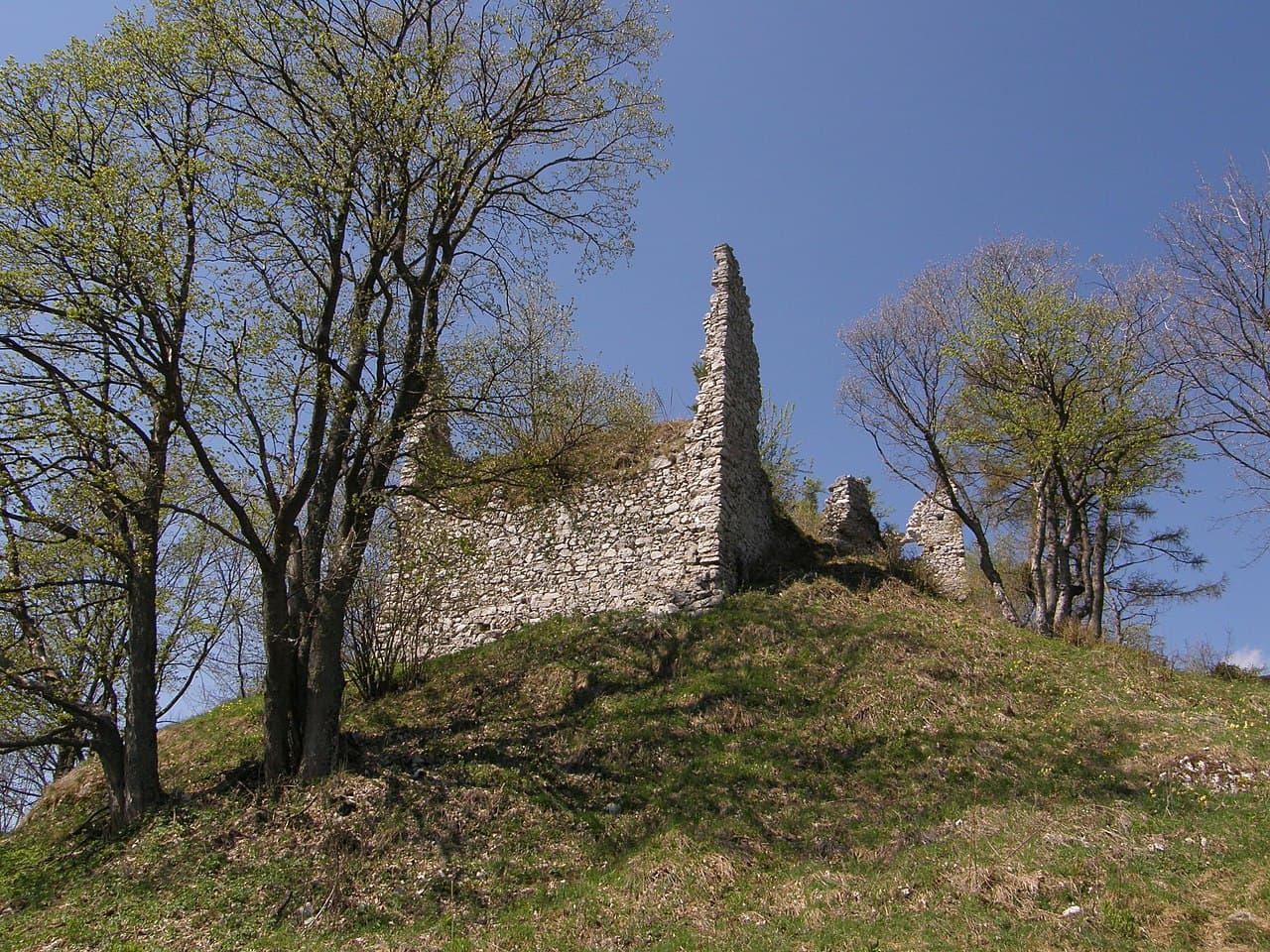
Today, only foundational remains and heavily damaged stonework survive from the upper castle. Noteworthy remnants include preserved corner blocks and traces of a machicolation (locally known as smolný nos), a projecting defensive gallery with openings for dropping objects or pouring substances onto attackers. This feature highlights the castle’s sophisticated medieval defensive architecture.
Lower castle and later additions
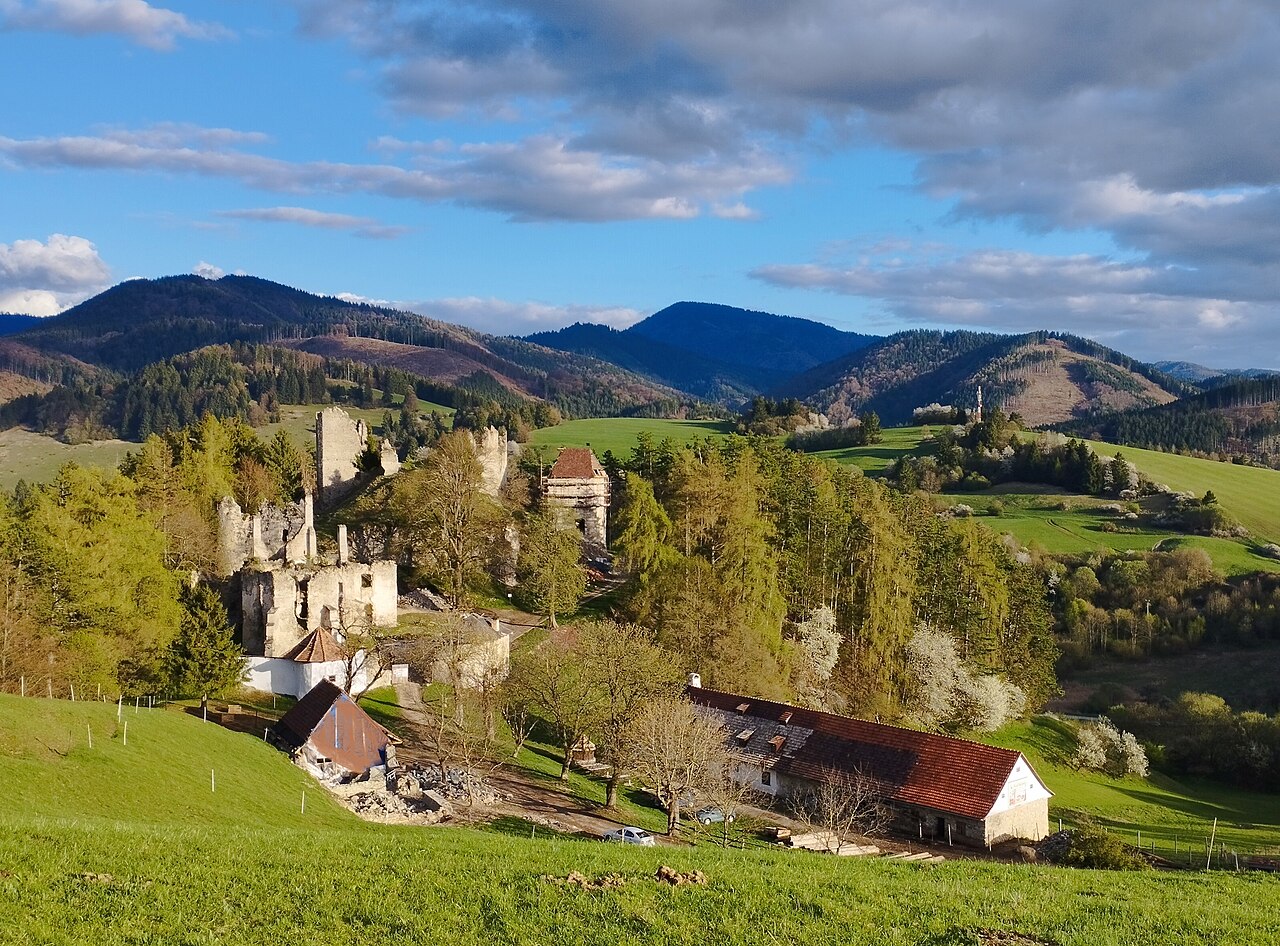
About 100 meters downslope from the upper castle lies a lower building constructed in the 14th century. This structure, likely a palace-style building, incorporated defensive elements and reflected the castle’s expansion during its ecclesiastical ownership. The lower castle’s remains include the ruins of a small tower attached to the eastern side of a Gothic-style longitudinal building. Other structures at the site have largely disappeared, leaving only scattered wall fragments obscured by vegetation.
Decline and archaeological research
Following its diminished military importance and changes in ownership, Zniev Castle fell into ruin by the 18th century. The last historical mention dates to 1713, noting that archives were still kept within the castle walls. Over the centuries, natural decay and neglect reduced the fortress to its current ruinous state.
Interest in the castle’s historical and architectural significance revived in the 20th century. Archaeological excavations led by G. Balaša during 1962–1963 uncovered valuable information about the castle’s construction phases, defensive features, and habitation patterns. These studies have helped preserve the site and promote understanding of its role in Slovak medieval history.
Visiting zniev castle ruins today
Visitors to Zniev Castle can explore the remains of this high medieval hill castle set amidst scenic natural surroundings. The site offers insights into medieval fortification techniques, regional history, and the legacy of noble and ecclesiastical powers in the Turiec region. While the castle is in a ruined condition, the visible foundations, defensive structures, and the natural terrain layout provide a tangible connection to its past grandeur.
The castle’s elevated position affords panoramic views of the surrounding landscape, including the nearby village of Kláštor pod Znievom. It remains a popular destination for history enthusiasts, hikers, and those interested in medieval architecture and Slovak heritage.
Frequently asked questions (FAQ)
- How do I get to Zniev Castle Ruins?
- Zniev Castle Ruins is located near Kláštor pod Znievom in Slovakia. You can reach the castle by taking local public transport to the nearby town and then enjoying a scenic hike to the ruins. There are also parking facilities available for those who prefer to drive.
- What is the historical significance of Zniev Castle Ruins?
- Zniev Castle Ruins dates back to the 13th century and played a crucial role in the defense of the region. The castle was strategically positioned to oversee trade routes and served as a residence for noble families, reflecting the feudal history of Slovakia. Today, it stands as a testament to medieval architecture and history.
- When was Zniev Castle built?
- Zniev Castle was originally constructed in the early 13th century, with significant modifications and expansions occurring in the following centuries. The castle's structure has endured various historical events, contributing to its current state as a ruin. Its construction reflects the architectural styles of the medieval period.
- Can I explore the Zniev Castle Ruins?
- Yes, visitors are welcome to explore the Zniev Castle Ruins. While there are no formal guided tours, the site is open for self-exploration, allowing you to appreciate the historical remains at your own pace. Be sure to wear appropriate footwear for the rocky terrain.
- Why is Zniev Castle Ruins a popular tourist destination?
- Zniev Castle Ruins attracts visitors due to its rich history, stunning views of the surrounding landscape, and unique medieval architecture. The site offers a glimpse into the past and is perfect for history enthusiasts and nature lovers alike. Additionally, its proximity to Kláštor pod Znievom makes it easily accessible for day trips.
- Is it possible to visit Zniev Castle Ruins year-round?
- Yes, Zniev Castle Ruins is open for visitors throughout the year, although accessibility may vary depending on weather conditions. The best time to visit is during the spring and summer months when the weather is pleasant and the surrounding nature is in full bloom. However, winter visits can also provide a unique and serene experience.
- What are the opening hours for Zniev Castle Ruins?
- Zniev Castle Ruins does not have specific opening hours, as it is an open site available for exploration at any time. However, visiting during daylight hours is recommended for safety reasons and to fully enjoy the views. Always check local resources for any updates or changes in accessibility.
- Are there any nearby attractions to Zniev Castle Ruins?
- Yes, there are several nearby attractions, including the charming town of Kláštor pod Znievom, which offers cultural and historical experiences. Additionally, the surrounding natural landscapes provide opportunities for hiking, biking, and enjoying the outdoors. Visitors can also explore other historical sites in the region.
- What are the ticket prices for Zniev Castle Ruins?
- Zniev Castle Ruins is free to visit, making it an accessible option for all travelers. While there are no entrance fees, donations to help preserve the site are appreciated. Be sure to check for any special events that may have associated costs.

Information
Website
Visit websiteSources & official resources
Verify the information above using these authoritative references.
Loading map...
Visitor reviews
No reviews yet. Been here? Write the first review and help other travelers!
Write the first reviewVisited this castle? Share your experience
Your review helps other travelers and adds first-hand knowledge to our encyclopedia.