Bischofstein Castle
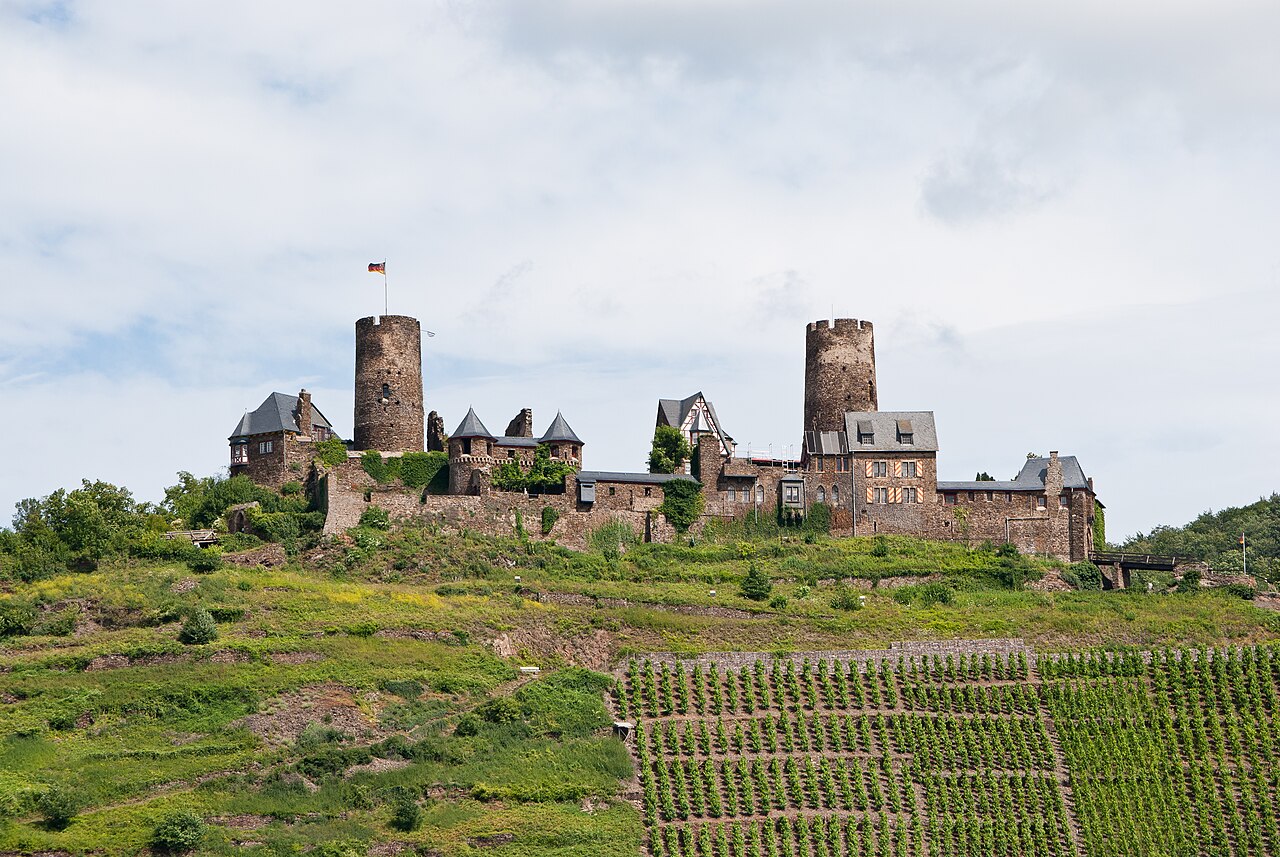
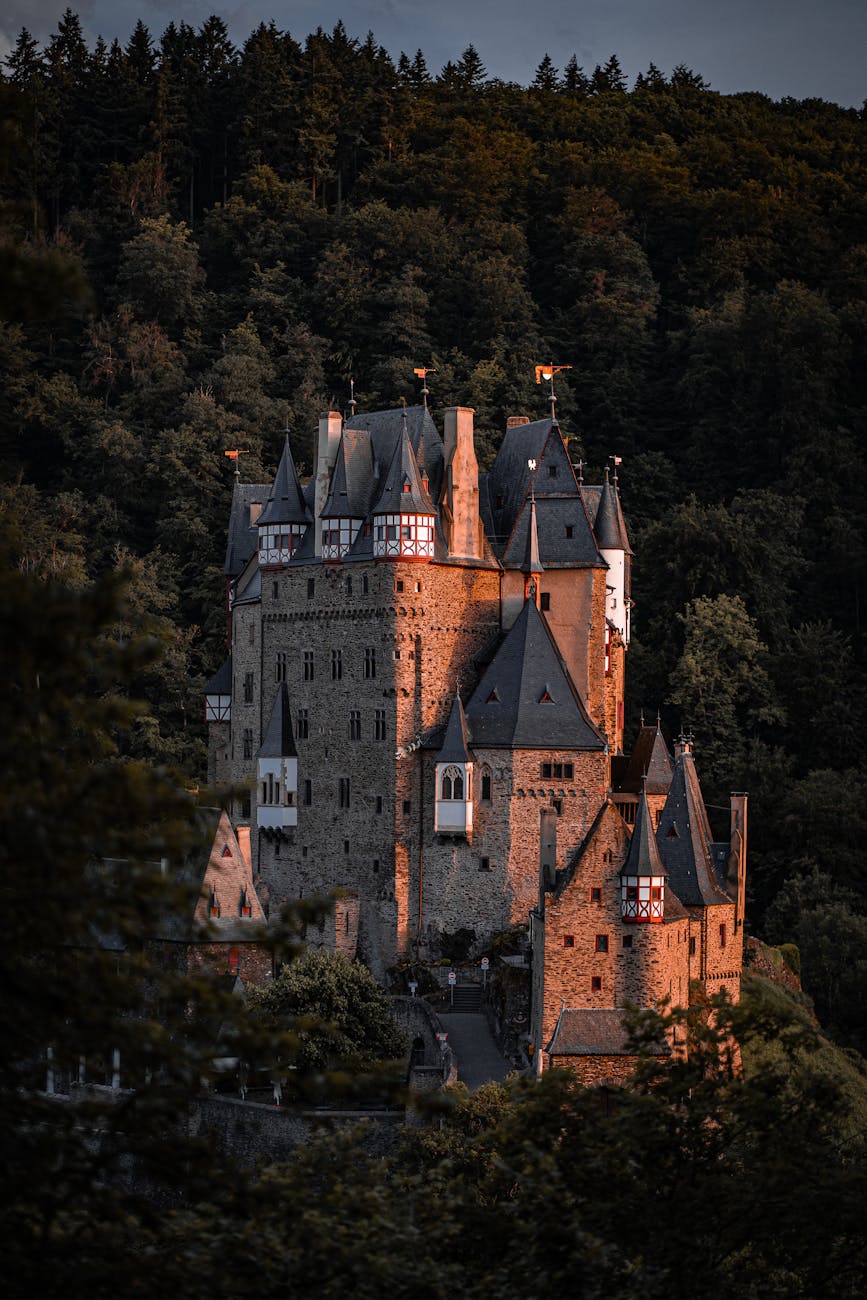
Bischofstein Castle is a historic hill castle perched above the Moselle River in the municipality of Münstermaifeld, Germany. Its commanding position on a rocky promontory about 150 meters above sea level offers sweeping views of the Moselle valley and the surrounding wine-growing villages. Originally constructed in the High Medieval period, the castle was a significant stronghold for the Archbishops of Trier, reflecting the ecclesiastical power structures of the region during the 13th century.
The castle's origins date back to around 1270, when construction began under the auspices of the Archbishopric of Trier. Archbishop Arnold II Heinrich von Bolanden notably purchased the half-finished fortress in 1273 and funded its completion, securing the castle as an official seat within the archdiocese's extensive holdings. Throughout its history, Bischofstein served as a strategic defensive site tasked with protecting the crossings over the Moselle and denying shelter to adversaries of the Archbishop.
Medieval architecture and strategic significance
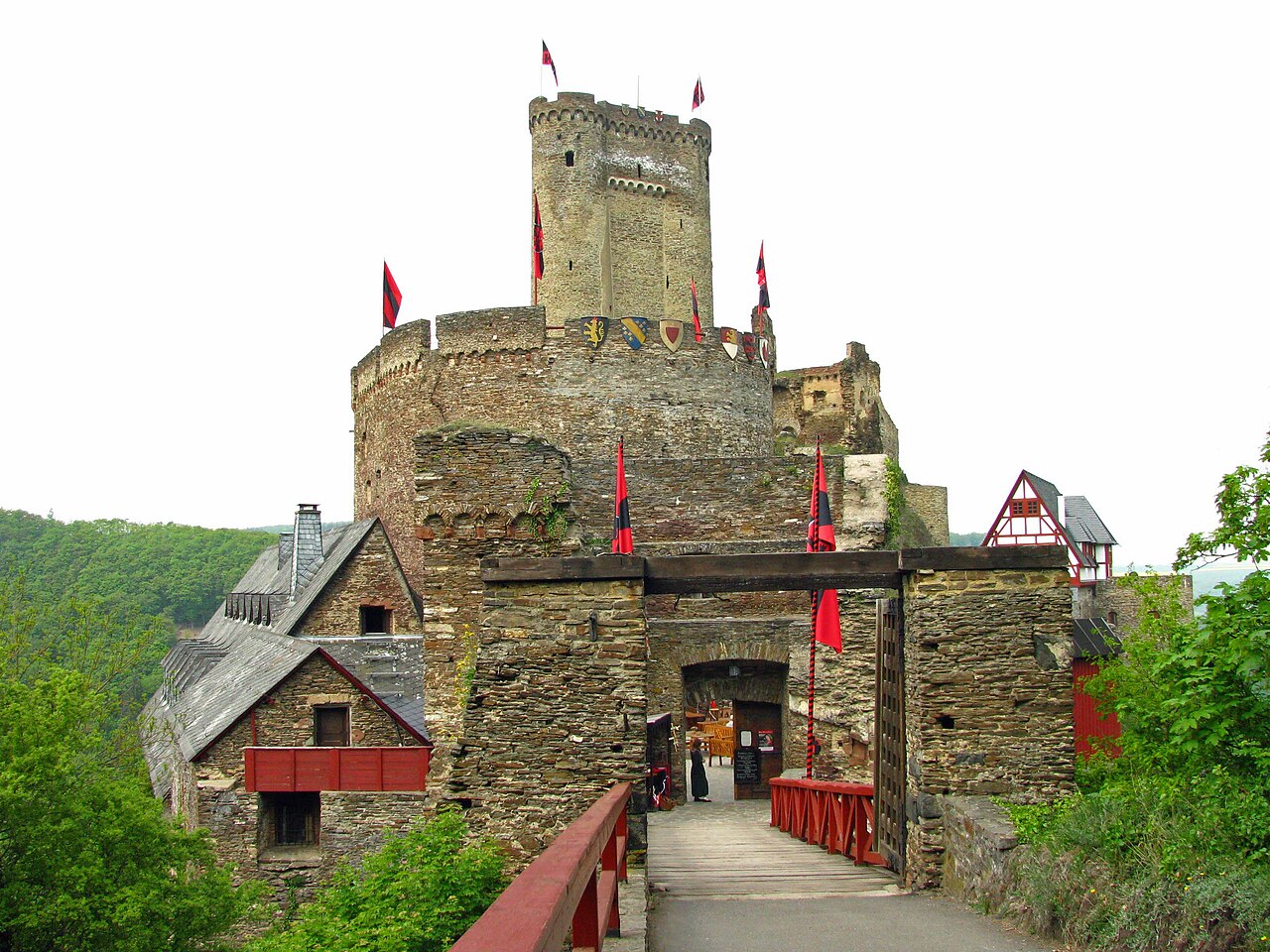
Bischofstein was originally designed as a spur castle, built on a projecting ridge to maximize natural defenses. The castle's most distinctive surviving feature is its tall, cylindrical bergfried or keep, which rises approximately 25 meters. This tower is notable for a rare surviving white plaster band encircling it about halfway up, a unique medieval architectural detail that once adorned many such towers but has mostly disappeared elsewhere. The bergfried was renovated in 1997, with battlements and the tower platform rebuilt and a new wooden staircase installed to allow safe visitor access.
The castle complex also includes a chapel dedicated to Saint Stephen (St. Stephanus), rebuilt in the 1930s and renovated in 1995. The chapel houses a remarkable door originally from the Baroque choir stalls of the Mainz Carthusian monastery, dating from 1723–1726, which adds an important historic and artistic element to the site.
Historical events and transformations
Bischofstein Castle endured the turmoil of the Thirty Years' War (1618–1648) without damage, as evidenced by a detailed visitor log from 1680. However, its fortunes changed during the War of the Grand Alliance (1688–1697), when French forces under Louis XIV deliberately destroyed the castle in 1689 as part of their campaign to weaken the Palatinate region.
Following the French annexation of the Rhineland in 1794, the castle ruins, then owned by the St. Castor monastery in Karden, were sold at a state auction in 1803 to a local winemaker. By 1824, a residential house with seven inhabitants had been constructed within the ruins, marking a shift from military to civilian use.
20th-century reconstruction and modern use
The castle remained in ruins until the late 19th century, when it was acquired by the Bienen family. A significant transformation occurred in the 1930s after businessman Erich Deku purchased the property in 1930. Deku aimed to create a summer home by reusing the preserved medieval walls, but the reconstruction was not a faithful restoration of the medieval fortress. Instead, it reflected the architectural sensibilities of the 1930s, combining historic fragments with new construction. To facilitate the rebuilding, a road was blasted into the rocky terrain for construction vehicles.
After Deku's bankruptcy, the Neuerburg family completed the reconstruction by 1938. During World War II, the castle served humanitarian purposes as a sanatorium for soldiers, a hospital, and a refuge for displaced persons under the leadership of Aenny Neuerburg and later her son Raymond.
In 1954, the Fichte Gymnasium in Krefeld purchased Bischofstein Castle to use it as a school retreat center (Schullandheim). Today, it functions primarily as an educational and recreational facility, hosting classes and groups from across Germany. The castle contains dormitories, teacher rooms, a common room, and a multi-purpose dining and teaching area. The knights' hall has been repurposed as a recreation room with leisure games.
Cultural significance and surrounding landscape
Bischofstein Castle is protected as a historic monument, not as an intact medieval fortress but as an example of 20th-century historicist architecture that incorporates medieval elements. The site is culturally significant for its unique architectural features, such as the bergfried's white plaster band, which has inspired local legends and folklore related to floods, warnings, and episcopal symbolism.
The castle is surrounded by several hiking trails, including the Schoppenstecher-Wanderweg, local trail number 7 leading to Eltz Castle, the long-distance Moselsteig path, and part of the Mosel-Camino connected to the Way of St. James pilgrimage route. Nearby stands the Paulus Chapel, dating from around 1200, which complements the historical landscape.
In 2014, a major restoration addressed a wood-boring beetle infestation by heating the residential wing under sealed conditions to preserve the castle's structural integrity. This careful conservation effort ensures that Bischofstein Castle remains a valuable cultural and educational resource for future generations.
Frequently asked questions (FAQ)
- What is the historical significance of Bischofstein Castle?
- Bischofstein Castle, built in the 12th century, served as a fortified residence for the bishops of Trier. Its strategic location allowed it to oversee the important trade routes along the Moselle River, making it an essential stronghold during its time. Today, it stands as a testament to medieval architecture and history in the region.
- When was Bischofstein Castle constructed?
- Bischofstein Castle was constructed around the year 1190. It has undergone various renovations and restorations over the centuries, but its original medieval charm remains intact. The castle's architecture reflects the typical styles of the late Romanesque period.
- Can I visit Bischofstein Castle?
- Yes, visitors are welcome to explore Bischofstein Castle. Guided tours are available, allowing guests to learn about the castle's history and architecture. It is recommended to check the official website for any special events or group tours that may be offered.
- What are the opening hours for Bischofstein Castle?
- Bischofstein Castle is typically open to visitors from April to October, with specific hours varying by day. It is advisable to visit the official website or contact the castle directly for the most up-to-date information on opening hours and any seasonal changes.
- Is it possible to access Bischofstein Castle for those with mobility issues?
- Bischofstein Castle has some accessibility features, but due to its historical nature and location on elevated terrain, full access may be limited. It is recommended to contact the castle management in advance to inquire about accessibility options available for visitors with mobility challenges.
- What is the best time to visit Bischofstein Castle?
- The best time to visit Bischofstein Castle is during the spring and early autumn months when the weather is pleasant and the surrounding landscapes are at their most beautiful. Additionally, visiting during these seasons allows you to enjoy various outdoor activities and nearby attractions without the summer crowds.
- What are the ticket prices for visiting Bischofstein Castle?
- Ticket prices for Bischofstein Castle are usually modest, with discounts available for children, students, and seniors. Group rates may also be offered for larger parties. It’s best to check the castle's official website for current pricing and any special promotions.
- Are there any nearby attractions to visit along with Bischofstein Castle?
- Yes, visitors to Bischofstein Castle can also explore the charming town of Münstermaifeld, known for its medieval architecture and quaint streets. Additionally, the beautiful Moselle Valley offers numerous wineries and scenic views, making it a great area to spend a day exploring.
Information
Website
Visit websiteSources & official resources
Verify the information above using these authoritative references.
Loading map...
Visitor reviews
No reviews yet. Been here? Write the first review and help other travelers!
Write the first reviewVisited this castle? Share your experience
Your review helps other travelers and adds first-hand knowledge to our encyclopedia.