Birr Castle
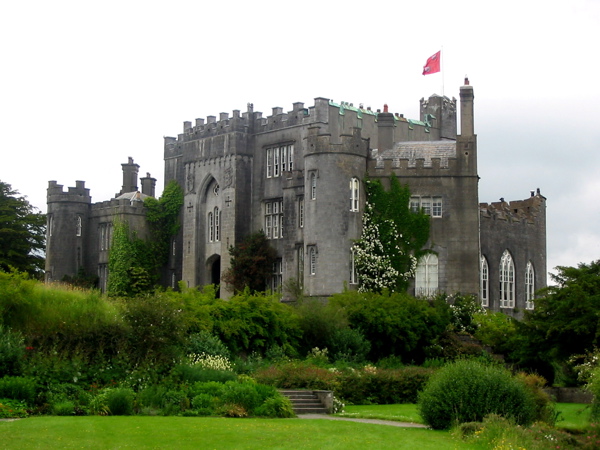
Birr Castle stands as a remarkable example of a historic hill castle in County Offaly, Ireland. Established originally in the 12th century as an Anglo-Norman fortress, it has evolved through centuries of architectural modifications and historical events, becoming the ancestral home of the Parsons family, notably the Earls of Rosse. The castle remains a private residence, currently occupied by the 7th Earl of Rosse, with the surrounding grounds and gardens open to the public, offering a rich blend of heritage, science, and natural beauty.
Historical development and ownership
The site of Birr Castle has been continuously occupied since its foundation around 1170. Initially constructed as a stronghold for the Anglo-Normans, it later became the seat of the O’Carroll family, rulers of the territory known as Ely O’Carroll, from the 14th to the 17th century. The O’Carrolls' original structures, including the Black Tower gatehouse, laid the groundwork for the castle's defensive layout.
Following the death of Sir Charles O’Carroll in 1620, the castle and lands were granted to Sir Laurence Parsons. Parsons commissioned English masons to rebuild the castle near the original gatehouse, incorporating diagonal flankers to the gatehouse that define the castle’s current layout. The Parsons family has maintained ownership ever since, with notable figures such as William Parsons, who endured a 15-month siege during the Irish Rebellion of 1641, and his son Laurence Parsons, who became a baronet in 1677 and refurbished the castle post-civil war.
Architectural evolution and style
In the early 19th century, the castle underwent significant transformation under Laurence Parsons, 2nd Earl of Rosse. He raised the castle’s height and introduced Gothic architectural elements, enhancing its imposing silhouette and aesthetic appeal. The castle's design features a large stone structure with a prominent gatehouse flanked by two projecting towers or flankers, reflecting its defensive origins adapted for residential grandeur.
The surrounding demesne includes Ireland’s oldest wrought-iron bridge, dating from 1820, showcasing early industrial craftsmanship. The walled gardens are home to box hedges over 300 years old, recognized by the Guinness Book of Records as the tallest globally. These gardens complement the castle’s historic ambiance and botanical heritage.
The great telescope and scientific heritage
Birr Castle is internationally renowned for the Great Telescope, also known as the Leviathan of Parsonstown, constructed by William Parsons, 3rd Earl of Rosse and completed in 1845. This 72-inch (183 cm) reflecting telescope was the largest in the world for several decades, pioneering astronomical observation and cementing Birr as a center of scientific innovation.
The telescope attracted eminent scientists and dignitaries, including Charles Babbage and Napoléon Eugène, Prince Imperial. It was used extensively until the early 20th century, with its mirror eventually moved to the Science Museum in London. The telescope’s metal framework was dismantled during World War I for the war effort, and wooden components were removed for safety in the 1920s.
A comprehensive restoration in the 1990s rebuilt the telescope to operational condition. Today, it is a key attraction open to visitors, with occasional demonstrations that celebrate its scientific legacy.
Modern scientific contributions and heritage recognition
Continuing its tradition of scientific inquiry, Birr Castle hosts the I-LOFAR radio telescope station, operated by Trinity College Dublin. This modern installation, part of the European LOFAR network, consists of 384 antennas and is the westernmost station in the network. It underscores Birr’s ongoing role in cutting-edge astronomical research.
In 2025, Birr Castle, alongside Dunsink and Armagh Observatories, was placed on the UNESCO World Heritage Tentative List, recognizing its outstanding historical and scientific significance.
Grounds, gardens, and cultural features
The castle’s extensive demesne is notable for its diverse features. The historic wrought-iron bridge near the castle exemplifies early 19th-century engineering. The walled gardens contain the world-record-holding box hedges and a plantation known as Giants’ Grove, featuring Californian sequoia redwoods available for sponsorship.
The grounds also include Ireland’s Historic Science Centre museum, which preserves collections related to astronomy, engineering, photography, and botany. A highlight is the photographic darkroom of Mary Parsons, Countess of Rosse, considered the oldest surviving darkroom worldwide.
The demesne is bounded by a dry moat and an internal gate on a bridge, with the River Camcor flowing through the property, adding to the scenic and historic atmosphere of the site.
Visiting birr castle today
While the residential areas of Birr Castle remain private and closed to the public, the grounds, gardens, and scientific attractions are open for visitors. The castle offers a unique combination of historic architecture, world-class scientific heritage, and natural beauty.
Visitors can explore the restored Great Telescope, wander the ancient box hedges, and enjoy exhibits at the Historic Science Centre. The site provides a rich educational experience that highlights the intersection of medieval history and modern science.
Frequently asked questions (FAQ)
- How do I visit Birr Castle and its grounds?
- Birr Castle's residential areas are private, but the extensive grounds, gardens, and scientific exhibits, including the Great Telescope, are open to the public year-round during daylight hours.
- What is the historical significance of Birr Castle?
- Birr Castle has been a key site since the 12th century, serving as an Anglo-Norman fortress and later the seat of the O’Carroll family, with significant developments by the Parsons family, including the construction of the Great Telescope.
- Can I see the Great Telescope at Birr Castle?
- Yes, the Great Telescope was fully restored in the 1990s and is accessible to visitors, with occasional demonstrations showcasing its astronomical capabilities.
- What architectural style is Birr Castle?
- Birr Castle features a blend of medieval defensive architecture with early 19th-century Gothic revival elements added during renovations by the 2nd Earl of Rosse.
- Are there any unique gardens or natural features at Birr Castle?
- The castle grounds include box hedges over 300 years old, the tallest in the world according to Guinness World Records, and a plantation of Californian sequoia redwoods known as Giants’ Grove.
Information
Website
Visit websiteSources & official resources
Verify the information above using these authoritative references.
Loading map...
Visitor reviews
No reviews yet. Been here? Write the first review and help other travelers!
Write the first reviewVisited this castle? Share your experience
Your review helps other travelers and adds first-hand knowledge to our encyclopedia.