Bir Hakeim (Arabic: بئر حكيم, romanized: biʾr ḥakīm, lit. 'wise well') is a historically significant site located in the Libyan desert. It was originally the location of an Ottoman fort built around an ancient Roman well, which served as a vital water source in the arid region. The fort lies approximately 160 km west of Sollum on the Libyan coast and 80 km southeast of Gazala, placing it strategically within the former Ottoman Tripolitania province. Its name, meaning "wise well," reflects the importance of water in this desert oasis.
The fort's primary historical importance stems from its role in World War II, particularly during the Battle of Bir Hakeim in 1942. This battle was a key engagement within the larger Battle of Gazala campaign, fought from 26 May to 21 June 1942. The site was defended by the 1st Free French Brigade, commanded by Général de brigade Marie-Pierre Kœnig, who would later become a Marshal of France. From 26 May to 11 June, the brigade held the fort against overwhelming German and Italian forces led by Generaloberst Erwin Rommel, the famed "Desert Fox."
The battle of Bir Hakeim and its defenders
The defense of Bir Hakeim was notable for the resilience and determination of the Free French forces. The brigade included units such as the 13th half-brigade of the French Foreign Legion, commanded by Capitaine Pierre Messmer, a graduate of the prestigious St Cyr Military School. Messmer led the 3rd battalion, which was composed largely of soldiers of Spanish and German origin, many of whom were Jewish. The daily recitation of the Kaddish at Bir Hakeim highlighted the diverse backgrounds of its defenders.
Other units in the 1st Free French Division included the Bataillon de Marche n°2 de l'Afrique équatoriale française (BM2), the Bataillon du Pacifique (with troops from French Polynesia, New Caledonia, and New Hebrides), the 1st Bataillon of Infanterie de Marine, the 1st Regiment of Artillerie, the 1st Bataillon of Fusiliers Marins, and allied units such as troop D of the 43rd Battery of the 11th City of London Yeomanry Regiment and the 22nd North-African French Armored Company. This multinational force displayed remarkable coordination and bravery during the siege.
During the 14-day siege, approximately 3,700 French soldiers held off an estimated 40,000 Axis troops. Despite suffering heavy casualties, with around 800 killed or missing, the defenders succeeded in delaying the Axis advance significantly. This delay had strategic consequences, contributing to the cancellation of Operation Herkules, the planned Axis invasion of the Suez Canal and Malta.
Strategic impact and legacy
The steadfast defense at Bir Hakeim allowed the retreating British Eighth Army to regroup and reorganize after severe losses. This ultimately helped the Allies halt the Axis advance at the First Battle of El Alamein. The Algerian and Moroccan units of the 1st Free French Division later formed the core of the French Expeditionary Corps, which fought in the Italian Campaign, including the Battle of Monte Cassino. Units such as the 3rd Division d'Infanterie Algérienne (3rd DIA) and the Groupement des Tabors Marocains were crucial in breaking the German Gustav Line defenses.
The battle's significance is commemorated in France through the naming of the Bir-Hakeim metro station and the Pont de Bir-Hakeim bridge in Paris.
Earlier history and military significance
Before World War II, Bir Hakeim was already notable for a daring rescue operation during World War I. On 14 March 1916, Major Hugh Grosvenor led an armoured car squadron of the Western Frontier Force across 120 miles of desert from Sollum to Bir Hakeim. They successfully rescued 91 British prisoners of war captured by German U-boats and held by the local Senussi, who were allied with the Germans.
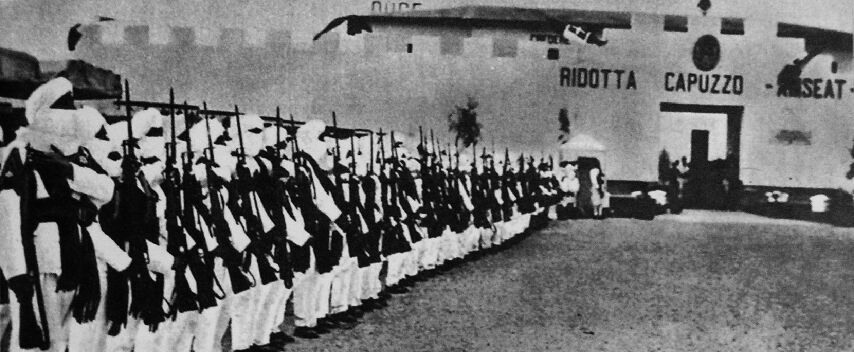
Following the Italo-Turkish War (1911-1912), Italy took control of the Ottoman province of Tripolitania, which became Italian Libya. The Italian army stationed a unit of its Zaptié Meharista at Bir Hakeim, maintaining the site's military importance in the region.
Architectural and structural features
Bir Hakeim was classified as a bastioned fortress, a type of fortification characterized by projecting bastions designed to provide defensive fire in multiple directions. The fortress was strategically positioned around the ancient Roman well, emphasizing the critical role of water sources in desert fortifications.
The fort's design incorporated thick walls and defensive bastions suited to withstand artillery and infantry assaults typical of early 20th-century warfare. Its isolated desert location made it a key stronghold controlling access to the surrounding region and desert routes.
Current condition and cultural importance
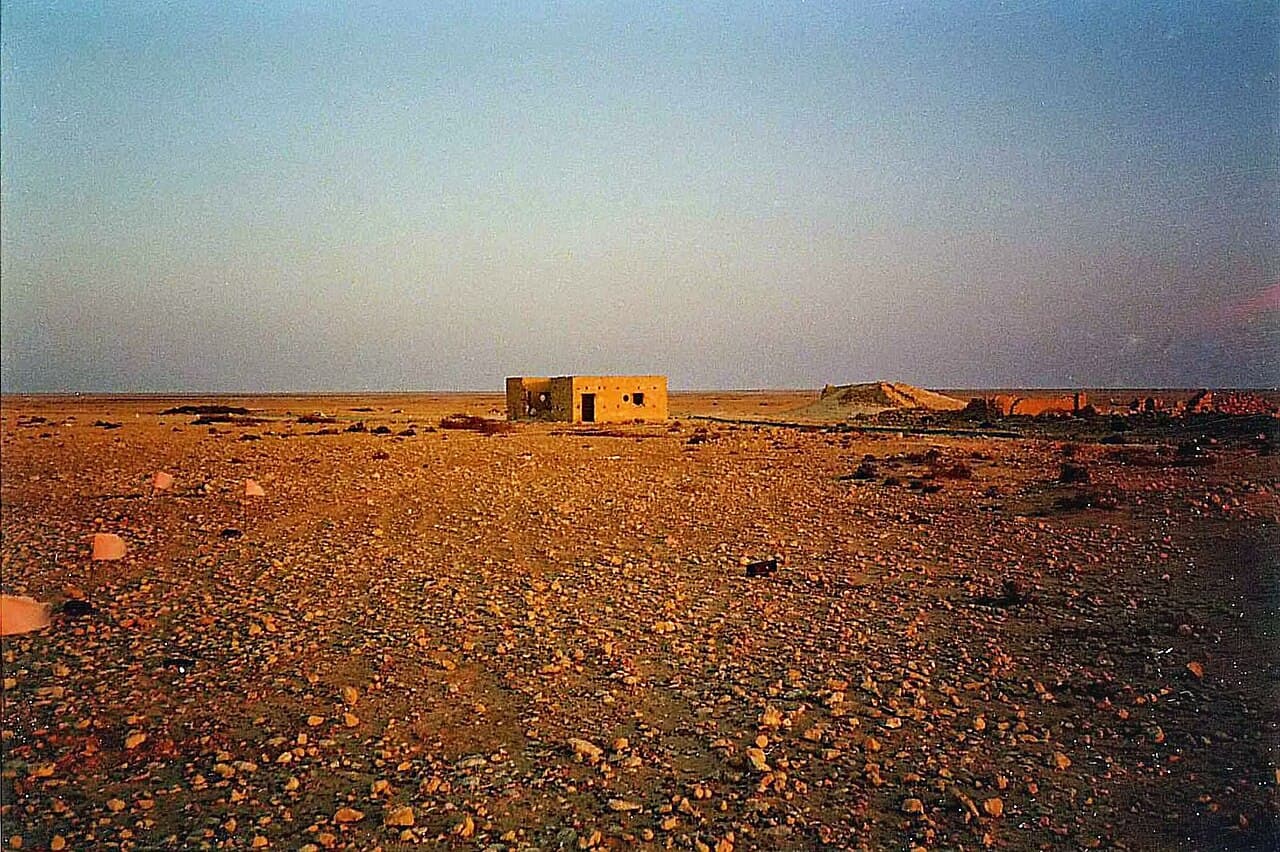
Today, Bir Hakeim remains a site of historical and military significance, though its physical condition is largely that of partially preserved ruins. The site attracts historians and visitors interested in World War II history and desert military architecture.
The legacy of Bir Hakeim endures not only in military history but also in cultural memory, symbolizing the courage and resilience of Free French forces during one of the most challenging campaigns of the North African theater.
Frequently asked questions (FAQ)
- What is the historical significance of Bir Hakeim?
- Bir Hakeim is historically significant for its role in World War II, particularly the 1942 battle where Free French forces defended the fort against Axis troops. It also played a role in World War I and was a strategic Ottoman fort in the Libyan desert.
- When did the battle of Bir Hakeim take place?
- The battle of Bir Hakeim occurred from 26 May to 11 June 1942 during the larger Battle of Gazala in World War II.
- Who commanded the Free French forces at Bir Hakeim?
- The Free French forces were commanded by Général de brigade Marie-Pierre Kœnig, who later became a Marshal of France.
- What was the outcome of the battle of Bir Hakeim?
- The Free French Brigade successfully delayed the Axis advance, holding out for 14 days and inflicting significant casualties. This delay contributed to the cancellation of Operation Herkules and allowed the British Eighth Army to regroup.
- Is Bir Hakeim accessible to visitors today?
- Bir Hakeim is a partially preserved ruin in the Libyan desert. Due to its remote location and preservation state, access may be limited and visitors should plan accordingly.
Photo gallery

Information
Loading map...
Visitor reviews
No reviews yet. Been here? Write the first review and help other travelers!
Write the first reviewVisited this castle? Share your experience
Your review helps other travelers and adds first-hand knowledge to our encyclopedia.