Castle of Paleochora
The Castle of Paleochora stands as a significant historical monument on the southwestern coast of Crete, Greece, embodying centuries of strategic military architecture and cultural transitions. This hill castle was originally constructed by the Venetians in the late 13th century to secure crucial maritime routes and protect the southern coastline from piracy and rival powers. Its location near the village of Paleochora, on a rocky promontory about 20 meters above sea level, provided a commanding vantage point over the surrounding sea and land approaches, reflecting the military priorities of the period.
Venetian origins and early history
Construction of the castle began in 1282 under the direction of Marino Gradenigo, the Venetian governor responsible for overseeing Crete's southern coast. The fortress was the only defensive stronghold in the immediate region, lending its name to the surrounding area, which was known for the wild celery plants (selinon in Greek) growing nearby. The castle's design featured a roughly square or rectangular layout, typical of medieval fortifications aimed at maximizing defense on uneven terrain.
In 1332, the castle became the focal point of a local uprising when Cretan rebels, led by Várdas Kallérgis, seized control. This rebellion resulted in the death of the Venetian commander Ermólaos Velénios and members of his family. However, the Venetians reasserted their authority two years later, in 1334, restoring control over the southern coastline and maintaining the castle's strategic role.
Ottoman conquest and later transformations
The mid-16th century marked a significant turning point for the castle when the renowned Ottoman corsair Khayr ad-Din Barbarossa captured it in 1539. This event diminished the fortress's strategic importance as the Ottoman Empire expanded its influence in the region. Despite this, the Venetians recognized the need to bolster defenses and undertook restoration efforts between 1595 and 1596 under the supervision of Benetto Dolfin.
The conflict between Venetian and Ottoman forces persisted into the 17th century. In 1653, the Ottoman army besieged and captured the castle, subsequently dismantling much of its fortifications to prevent its reuse by Venetian forces. The Ottomans later rebuilt and adapted the fortress to suit their military needs, converting it into a watchtower by the 19th century. Renovations in 1867 reflect this functional transformation, emphasizing surveillance over active defense.
Architectural features and remains
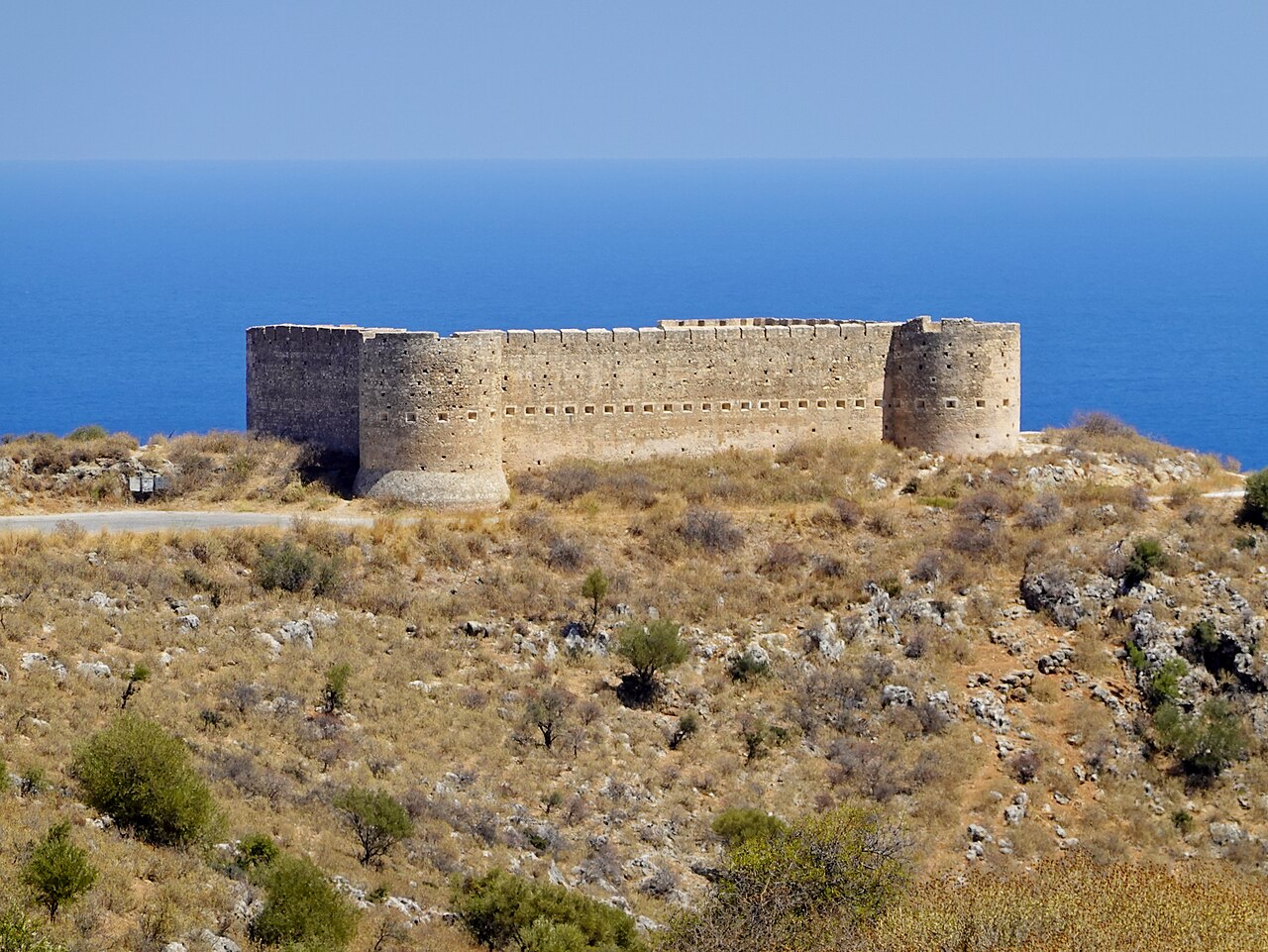
The castle's layout is characterized by its square or rectangular plan, optimized for defense on a rocky promontory. The fortification included three towers—two along the southern walls and one on the northern side—providing essential vantage points for monitoring maritime and land approaches. These towers, along with the curtain walls, formed a robust defensive perimeter.
Within the enclosure, the castle housed essential facilities such as barracks for the garrison, water storage installations to sustain defenders during sieges, and a small church that served the spiritual needs of its occupants. These features illustrate the castle's role not only as a military stronghold but also as a self-contained community.
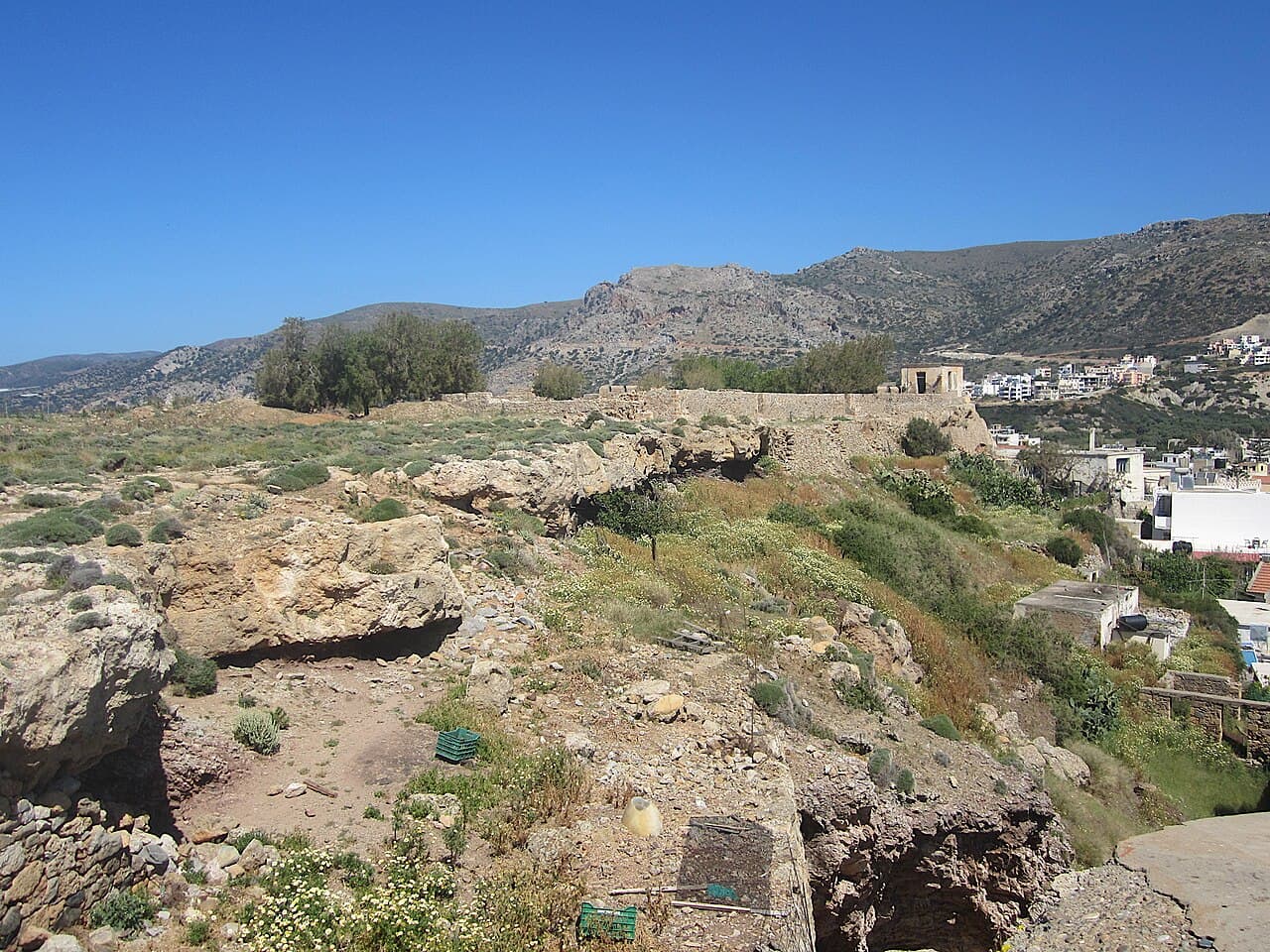
Most of the surviving ruins today date from the Ottoman reconstruction phase, with masonry and structural elements reflecting adaptations for use as watchtowers rather than medieval fortresses. The remnants of two towers showcase this evolution, highlighting the layered history of occupation and military strategy at the site.
While the castle no longer retains complete structural integrity, the visible remains and layout allow for a clear understanding of its historical function as a coastal defense point. The absence of decorative elements such as mosaics or inscriptions underscores the fortress's practical military character throughout its active use.
Historical significance and cultural legacy
The Castle of Paleochora is a testament to the complex history of Crete, reflecting the island's strategic importance in the Mediterranean. Its Venetian origins and subsequent Ottoman adaptations illustrate the shifting power dynamics and military technologies from the late medieval period through the early modern era.
As a site, it offers valuable insights into the architectural and defensive strategies employed by both the Venetians and Ottomans. The castle's ruins serve as a cultural landmark, connecting modern visitors with Crete's rich past of maritime trade, warfare, and cross-cultural interactions.
Visiting the castle today
Today, the Castle of Paleochora stands in ruins but remains accessible to visitors interested in history and architecture. Its location near the modern village provides an opportunity to explore the remnants of a fortress that once played a crucial role in controlling southern maritime routes.
Visitors can observe the layout of the walls, the foundations of towers, and the scattered architectural elements that reveal the castle's military purpose. The site offers panoramic views of the surrounding coastline, enhancing its appeal as a destination for both history enthusiasts and nature lovers.
Frequently asked questions (FAQ)
- How do I get to the Castle of Paleochora?
- The Castle of Paleochora is located near the village of Paleochora on the southwestern coast of Crete. It is accessible by local roads from the village center, and visitors can reach the site by car or on foot via marked paths.
- What is the historical significance of the Castle of Paleochora?
- The castle was built by the Venetians in the late 13th century to protect maritime routes and later adapted by the Ottomans. It played a key role in regional conflicts and reflects the island's strategic importance in the Mediterranean.
- When was the Castle of Paleochora built?
- Construction of the castle began in 1282 under Venetian governor Marino Gradenigo as part of efforts to secure Crete's southern coast.
- Can I visit the castle ruins?
- Yes, the castle ruins are open to visitors. While the site is largely in ruins, the layout and remaining structures provide insight into its historical military function.
- What architectural features does the castle have?
- The castle features a roughly square plan with three towers, curtain walls, barracks, water storage facilities, and a small church within its enclosure, typical of medieval hill castles.
Photo gallery

Information
Loading map...
Visitor reviews
No reviews yet. Been here? Write the first review and help other travelers!
Write the first reviewVisited this castle? Share your experience
Your review helps other travelers and adds first-hand knowledge to our encyclopedia.