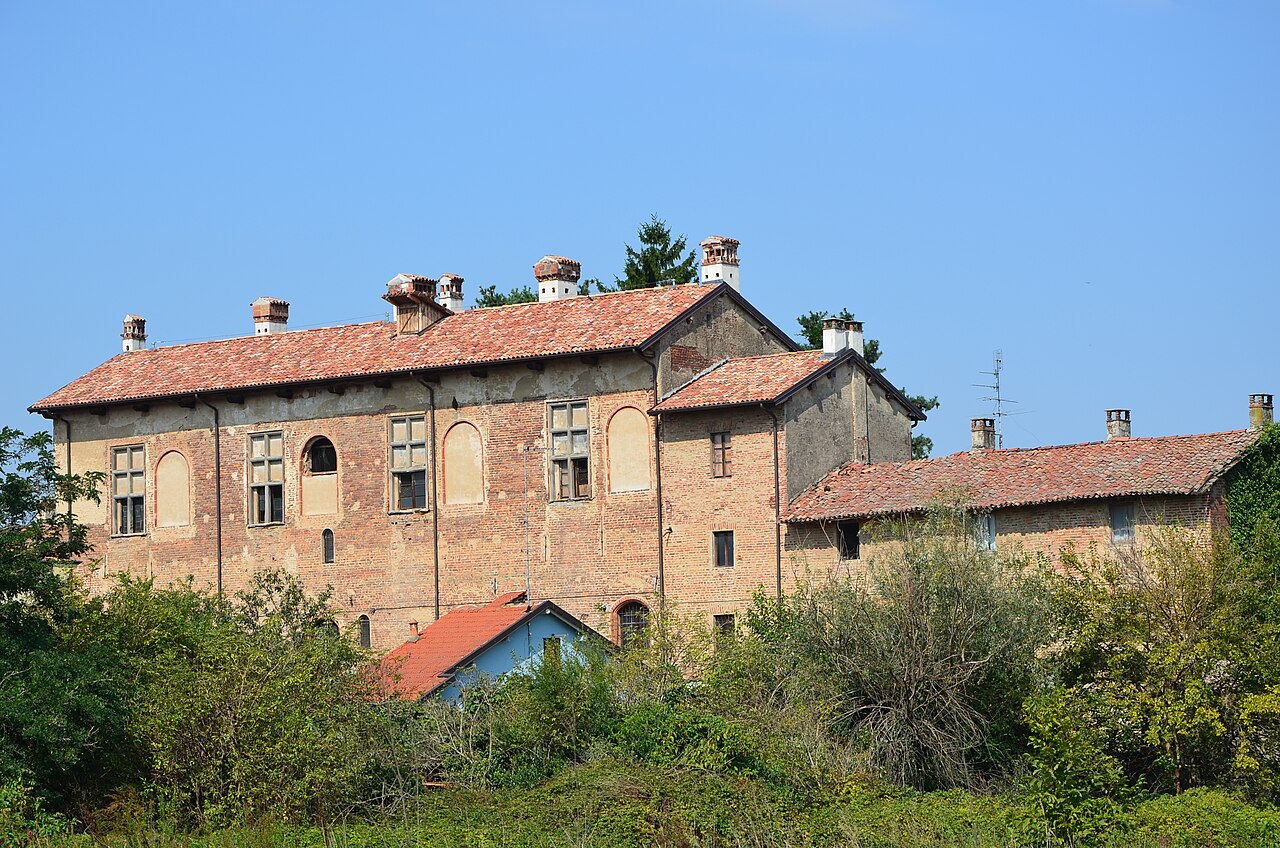
Binasco Castle
Binasco Castle, also known locally as Castello Visconteo di Binasco, is a historic fortress located in the town of Binasco, within the Milan province of the Lombardy region in northern Italy. This castle holds a significant place in medieval Italian history, primarily due to its association with the powerful Visconti family, who ruled Milan during the Middle Ages. The castle's origins trace back to the early 14th century, making it a notable example of medieval military architecture in Lombardy.
The first documented mention of Binasco Castle dates to 1329, although it was likely constructed slightly earlier, between 1315 and 1319, under the direction of the Visconti. It may have been erected on the site of an earlier Lombard fortification, reflecting the strategic importance of the location. Positioned on the vital road connecting Milan and Pavia, the castle served as a defensive stronghold designed to protect Milan from enemy incursions and to assert Visconti control over the surrounding territory.
Architectural features and layout
The castle was originally designed as a rectangular fortress, likely featuring four square corner towers that provided defensive vantage points. A wet moat once encircled the castle, adding an additional layer of protection against attackers; however, this moat has since been filled in. Today, only two of the original towers remain visible along the south facade, offering a glimpse into the castle's medieval defensive system.
The structure has undergone various modifications over the centuries, including significant changes in the 17th century when the castle was adapted and restored. Despite suffering damage from fires and military actions, the castle's current form reflects these historical layers, combining medieval fortification elements with later architectural interventions.
Historical significance and notable events
The tragic fate of beatrice lascaris di tenda
One of the most infamous episodes in the castle's history is the imprisonment and execution of Beatrice Lascaris di Tenda, the Duchess of Milan and wife of Filippo Maria Visconti. In 1418, Beatrice was accused of adultery and subsequently beheaded in the castle's courtyard. Despite enduring torture, she maintained her innocence. The execution was likely influenced by political motives, as Filippo Maria Visconti favored his mistress, Agnese del Maino.
Alongside Beatrice, her page, Michele Orombello, who was accused of being her lover, and two of her maids, who confessed under torture to witnessing the alleged adultery, were also executed. This event marks a dark chapter in the castle's history and is a significant aspect of its cultural heritage.
Military conflicts and decline
The castle endured military action during the Napoleonic Wars, specifically in May 1796, when it was attacked by Napoleonic troops and set on fire. Later, in 1869, another devastating fire further damaged the structure, leading it to fall into ruin. These events contributed to the castle's decline until restoration efforts were undertaken in the 20th century.
Restoration and modern use
Following its period of neglect, Binasco Castle was restored during the 20th century to preserve its historical and architectural value. The restoration aimed to recapture the fortress's medieval character while adapting it for contemporary use. Today, the castle serves multiple municipal functions, including housing the town hall and a public library.
The castle's open courtyard is accessible to visitors during daytime hours, allowing the public to experience the historic ambiance of this medieval stronghold. Its location in a pleasant small town and its relatively well-preserved state make it a valued cultural landmark in Lombardy.
The castle in the context of lombardy's heritage
Binasco Castle exemplifies the network of fortifications established by the Visconti family to control and defend their territories around Milan. Its strategic placement on the road between Milan and Pavia highlights its role in regional defense and administration. The castle's history, marked by political intrigue, military conflict, and architectural evolution, reflects broader themes in the history of northern Italy during the late Middle Ages and early modern period.
Today, Binasco Castle stands as a testament to the enduring legacy of the Visconti dynasty and offers insight into the military and residential architecture of medieval Lombardy. Its preservation and adaptive reuse contribute to the cultural vitality of the region, making it an important site for both historical study and public engagement.
Frequently asked questions (FAQ)
- When was Binasco Castle originally built?
- Binasco Castle was likely constructed between 1315 and 1319 by the Visconti family on the site of an earlier Lombard fortification.
- What is the historical significance of Beatrice Lascaris di Tenda in relation to Binasco Castle?
- Beatrice Lascaris di Tenda, Duchess of Milan, was imprisoned and executed at Binasco Castle in 1418 after being falsely accused of adultery, marking a notable event in the castle's history.
- Is Binasco Castle open to visitors today?
- Yes, the castle's courtyard is open to the public during daytime hours, and the building houses municipal offices including the town hall and library.
- What architectural features remain visible at Binasco Castle?
- Two of the original four square corner towers remain visible along the south front, and the castle's rectangular layout and former wet moat are key features, though the moat has been filled in.
- How did the Napoleonic Wars affect Binasco Castle?
- The castle was attacked and set on fire by Napoleonic troops in May 1796, causing significant damage that contributed to its decline before 20th-century restorations.
Information
Opening hours
Daytime, courtyard open to the public
Ticket prices
Free
Current owner
Municipality of Binasco
Address
Via G. Matteotti 135, Binasco, Italy
Loading map...
Visitor reviews
No reviews yet. Been here? Write the first review and help other travelers!
Write the first reviewVisited this castle? Share your experience
Your review helps other travelers and adds first-hand knowledge to our encyclopedia.