Bidar Fort
Bidar Fort is a prominent bastioned fortress located in the historic city of Bidar in Karnataka, India. Established in the early 15th century, this fortification served as the capital of the Bahmani Sultanate after Sultan Ahmad Shah I shifted the capital from Gulbarga (then Kalaburagi) to Bidar in 1427. The fort is a vast complex that encompasses over 30 Islamic monuments, reflecting the architectural and cultural zenith of the Bahmani dynasty during the Late Medieval period.
Historical significance and political context
The construction of Bidar Fort was initiated by Ahmed Shah Wali Bahmani, but it was Sultan Ahmad Shah I who significantly expanded and renovated the fort as he established Bidar as the new capital. The fort witnessed the rise and fall of the Bahmani dynasty, which was a major power in the Deccan region of India during the 14th and 15th centuries. After the decline of the Bahmani Sultanate, the fort came under the control of successor Deccan sultanates, including the Barid Shahi and Adil Shahi dynasties.
In 1657, the fort was captured by the Mughal emperor Aurangzeb after a prolonged siege, marking a significant shift in the region's political landscape. The fort's history encapsulates the turbulent period of the Deccan sultanates' fragmentation and the Mughal expansion into southern India.
Architectural features and layout
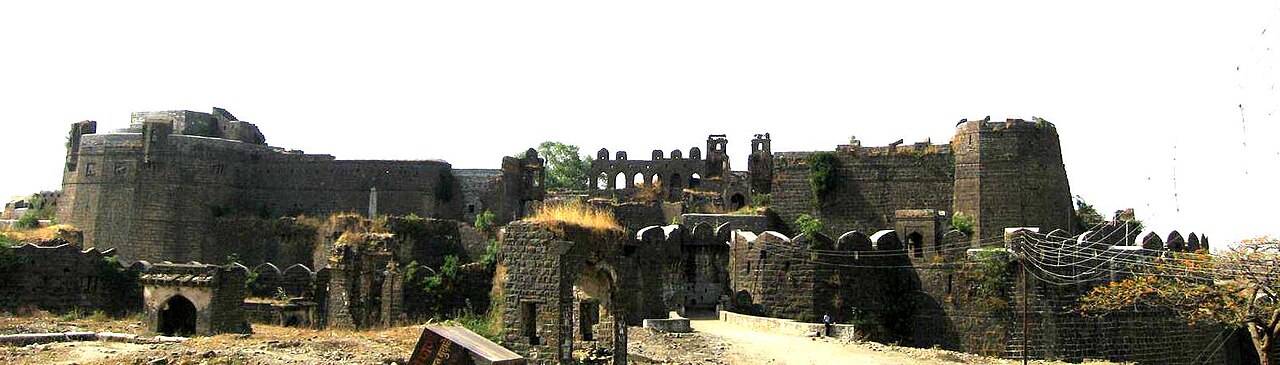
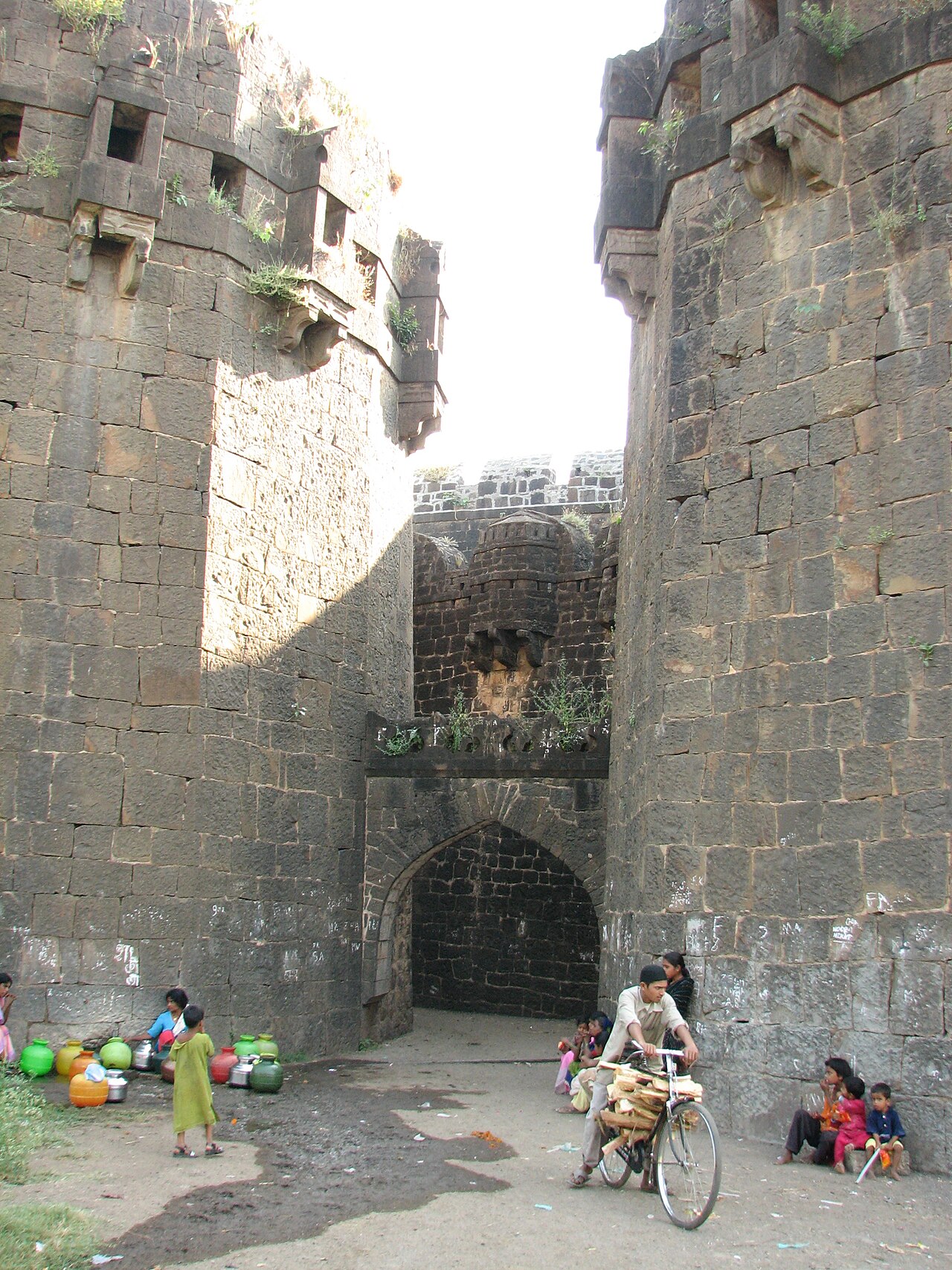
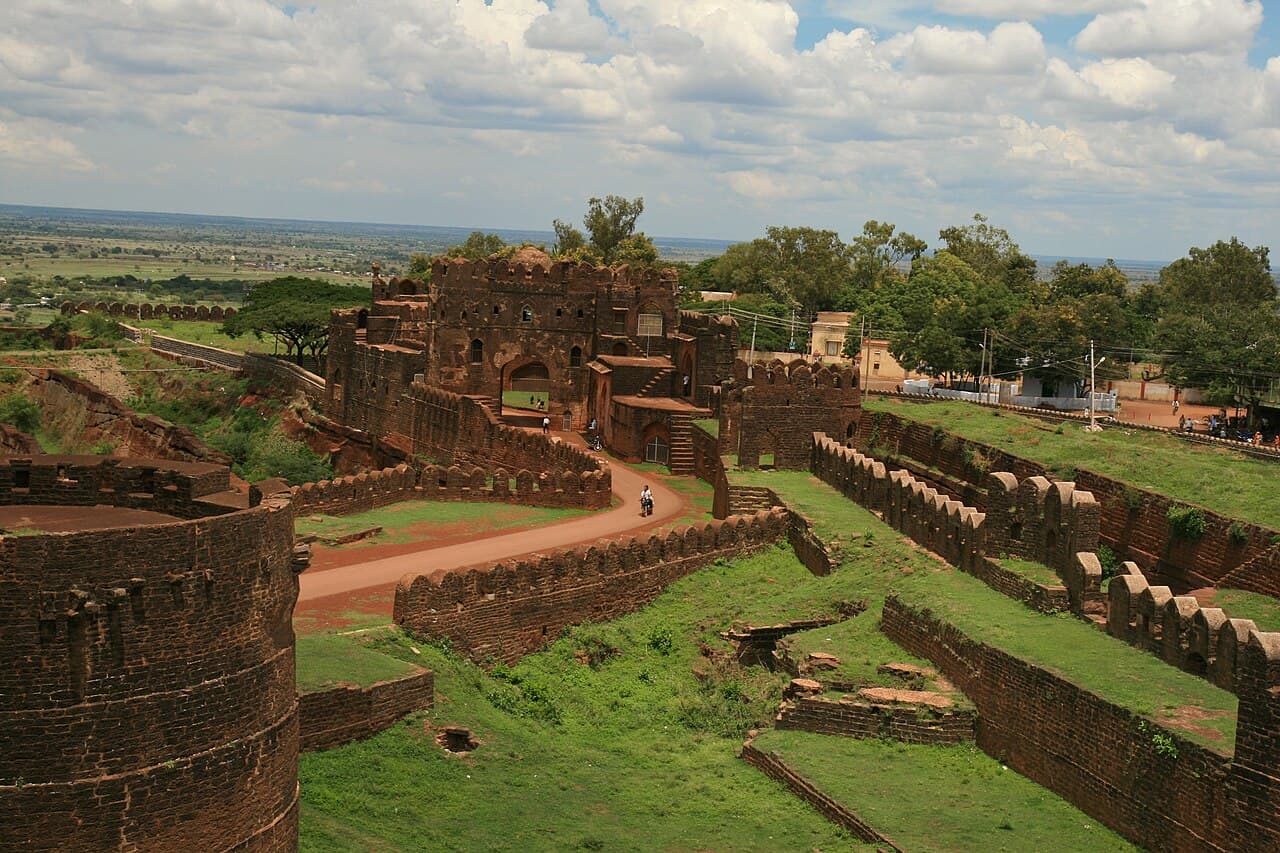
Bidar Fort is an exemplary bastioned fortress characterized by its robust defensive walls, massive bastions, and strategic location atop a hill, which provided natural defense advantages. The fort's walls are built primarily from local granite and lime mortar, featuring crenellated battlements and fortified gateways that reflect the military architectural style of the period.
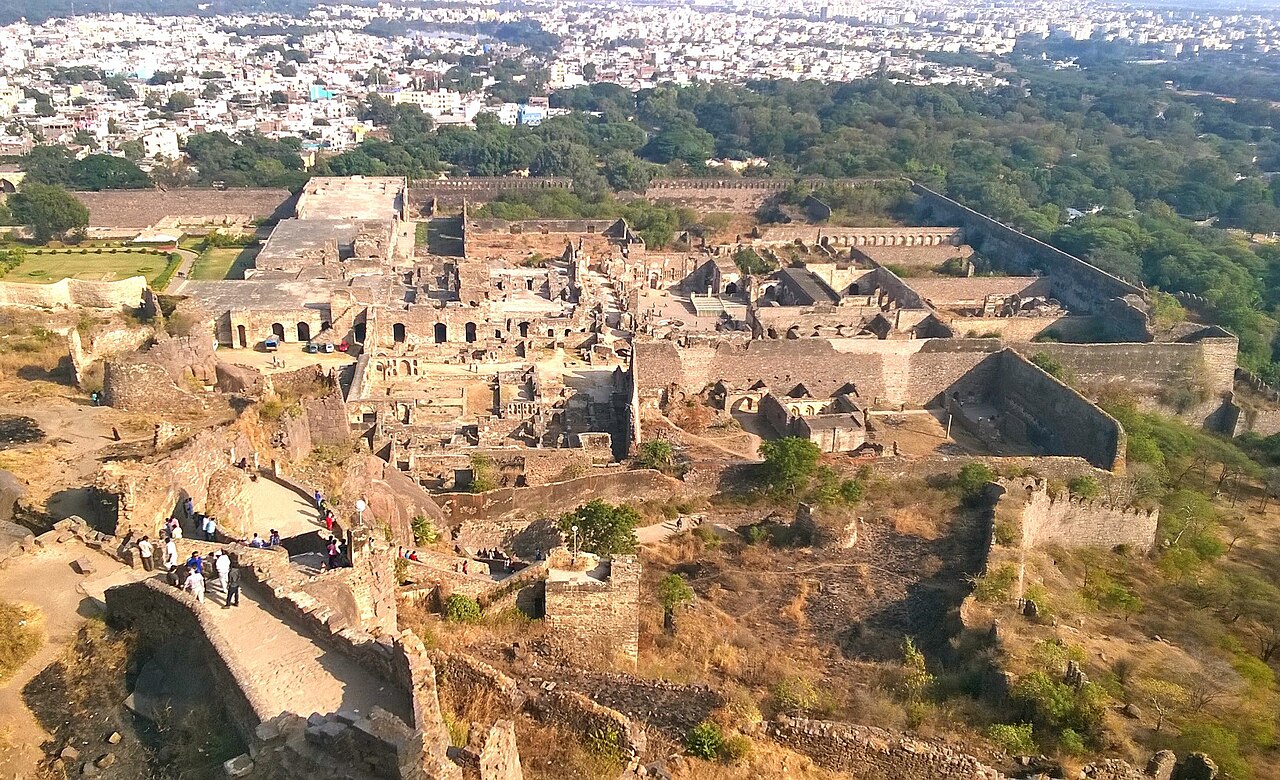
The fort complex includes several key structures such as the Solah Khamba Mosque, Rangeen Mahal (a palace known for its ornate tile work), and the Barid Shahi tombs. The Solah Khamba Mosque is notable for its sixteen pillars and intricately carved arches, showcasing the Islamic architectural influence prevalent in the Deccan sultanates. The Rangeen Mahal features vibrant tile decoration and stucco work, highlighting the artistic achievements within the fort.
The fort also contains a large water reservoir and a complex system of aqueducts and wells, ensuring a reliable water supply during sieges. The layout of the fort reflects a blend of military functionality and residential comfort, with courtyards, gardens, and living quarters integrated within the defensive walls.
Cultural and heritage importance
Bidar Fort is not only a military stronghold but also a cultural hub that reflects the synthesis of Persian, Turkish, and local Deccan architectural traditions. The fort's monuments display intricate tile work, calligraphy, and ornamental designs that are significant examples of Islamic art in southern India.
In recognition of its historical and architectural value, the fort was placed on the UNESCO tentative list in 2014 as part of the "Monuments and Forts of the Deccan Sultanate" group. This status highlights the fort's potential for World Heritage designation, emphasizing its importance in the cultural heritage of the Deccan region.
Visiting bidar fort today
Today, Bidar Fort is a well-preserved monument open to visitors interested in exploring the rich history of the Deccan sultanates. The fort's extensive grounds allow tourists to walk through its fortified walls, explore the mosques, palaces, and tombs, and appreciate the detailed craftsmanship of its Islamic architecture.
The site offers insights into the military strategies, architectural innovations, and cultural life of the 15th and 16th centuries in southern India. Visitors can also learn about the fort's role during the Mughal conquest and its subsequent historical developments.
Frequently asked questions (FAQ)
- When was Bidar Fort built and by whom?
- Bidar Fort was initially constructed by Ahmed Shah Wali Bahmani and significantly expanded by Sultan Ahmad Shah I in the 15th century when he shifted the capital to Bidar.
- What architectural style is prominent in Bidar Fort?
- The fort features Islamic architectural elements characteristic of the Deccan sultanates, including intricately carved arches, tile work, and fortified bastions.
- Is Bidar Fort recognized by UNESCO?
- Yes, Bidar Fort was placed on the UNESCO tentative list in 2014 as part of the Monuments and Forts of the Deccan Sultanate group.
- What are some notable monuments inside Bidar Fort?
- Notable monuments include the Solah Khamba Mosque, Rangeen Mahal palace, and the Barid Shahi tombs, each showcasing unique architectural and artistic features.
- Can visitors explore the entire fort complex?
- Yes, the fort is well-preserved and open to visitors who can explore its walls, mosques, palaces, tombs, and water systems.
Photo gallery

Information
Loading map...
Visitor reviews
No reviews yet. Been here? Write the first review and help other travelers!
Write the first reviewVisited this castle? Share your experience
Your review helps other travelers and adds first-hand knowledge to our encyclopedia.