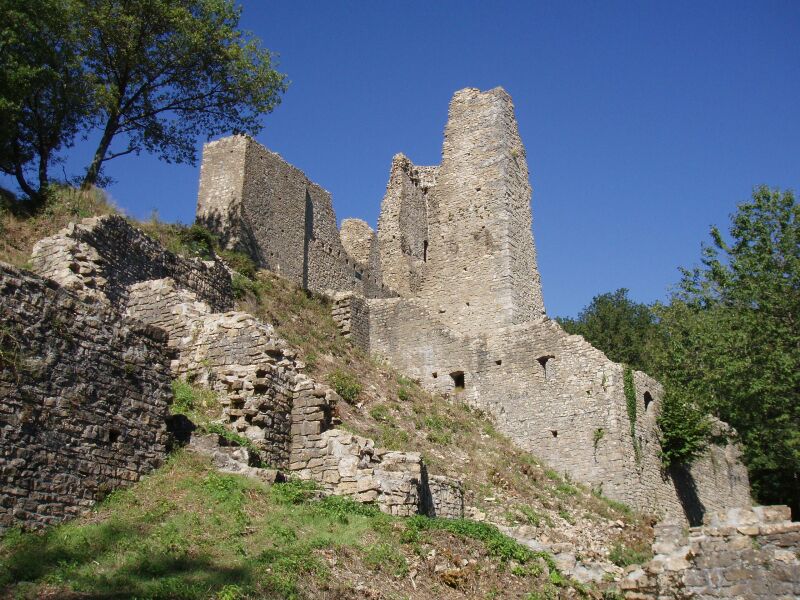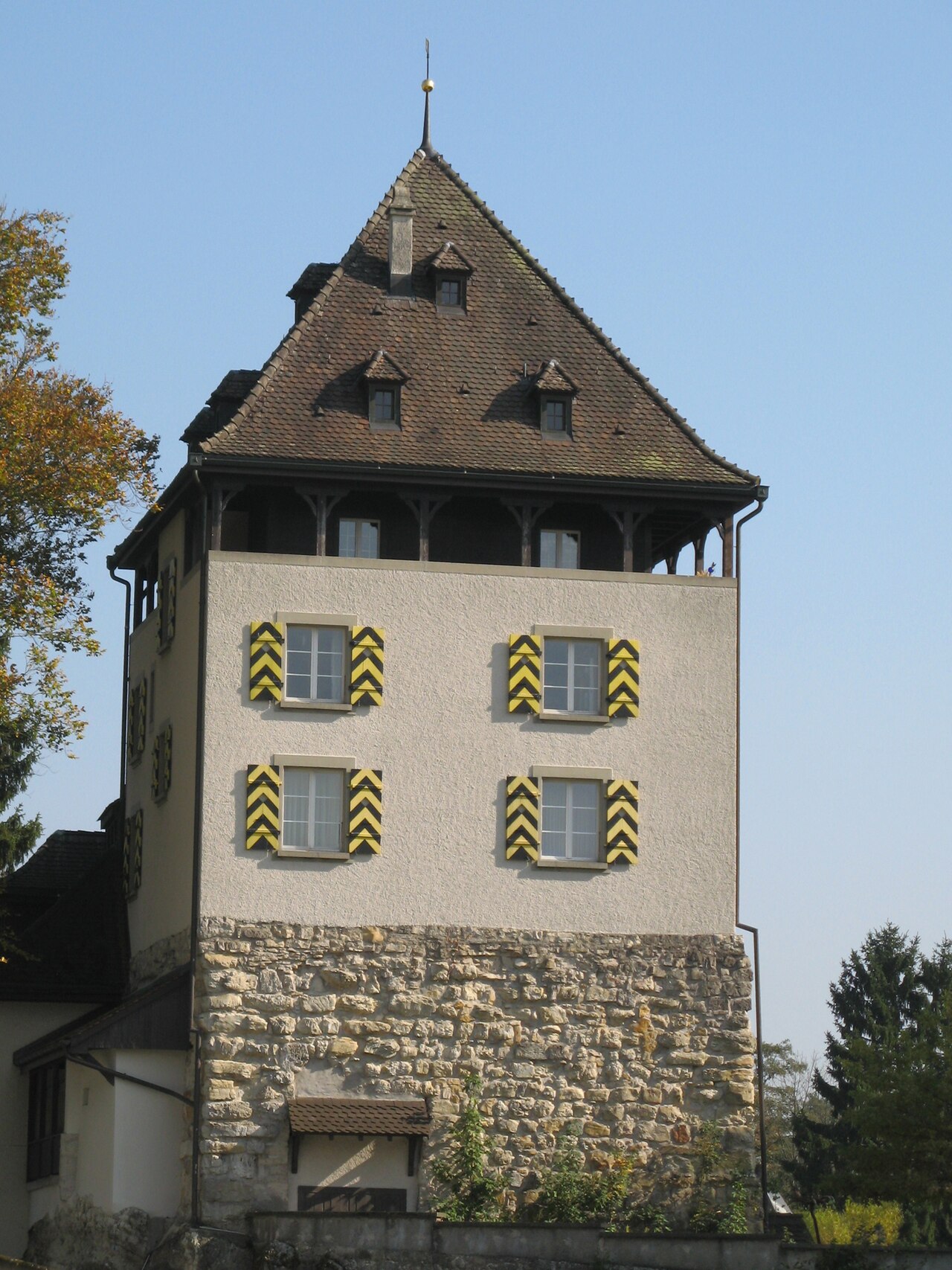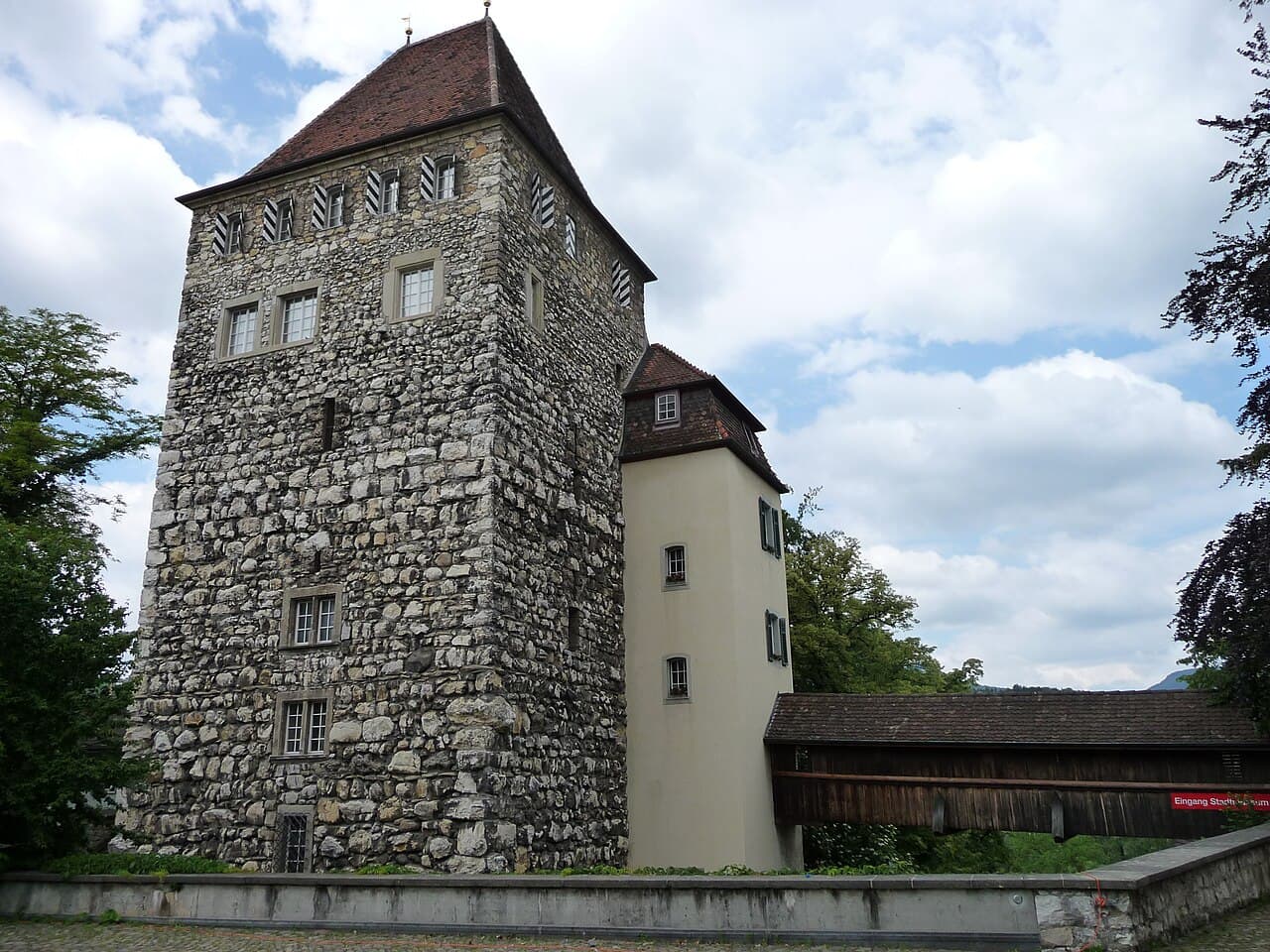
Aarau Castle — Switzerland castle

Aarau Castle

Aarau Castle: historic hill castle in Aargau, Switzerland
Aarau, Aargau, Switzerland
High Medieval (11th–13th c.)
Well Preserved

Aarau Castle, locally known as the Schlössli, is a historic hill castle situated in the heart of Aarau, the capital of the Aargau region in Switzerland. This small but significant medieval fortress has stood almost unchanged since its construction around the early 13th century, making it the oldest surviving building in the city. Its origins trace back to shortly after the founding of Aarau itself, established as a strategic stronghold during the High Medieval period.

Historical background and foundation

While the exact date of Aarau Castle's construction remains uncertain, historical records and architectural analysis place its foundation at around 1200 AD. The castle was built to serve as a defensive and administrative center for the newly founded city, which was strategically located along important trade routes and near the Aare River. This positioning allowed the castle to oversee and protect the burgeoning settlement, control river crossings, and assert the authority of local rulers.

The castle's establishment coincided with the expansion of regional powers in the High Medieval era, reflecting the typical pattern of fortification construction to secure territories and influence. Aarau Castle likely functioned as a residence for local nobility or officials appointed to govern the area on behalf of larger feudal authorities.

Architectural features and layout

Aarau Castle is classified as a hill castle, constructed on a modest elevation that provides a natural defensive advantage over the surrounding landscape. The castle's design is characteristic of early medieval fortifications in Switzerland, emphasizing functionality and defense.

The structure is compact, featuring thick stone walls that have endured for over eight centuries. Its layout includes a central keep or main residential building, surrounded by defensive walls that once enclosed a courtyard. Although smaller in scale compared to grander castles, the Schlössli exhibits typical medieval defensive elements such as narrow windows for archery, battlements, and possibly a gatehouse controlling access.

Over the centuries, the castle has undergone minimal alterations, preserving much of its original 13th-century architectural character. This preservation offers valuable insight into the construction techniques and defensive strategies employed during the High Medieval period.

Role through the centuries

Throughout its history, Aarau Castle has served various functions. Initially a military and administrative stronghold, its importance evolved as the city of Aarau grew. The castle's defensive role diminished with changing military technology and political conditions, leading to its adaptation for civic purposes.

In later centuries, the castle was repurposed for administrative use and eventually became a symbol of the city's heritage. Its continuous preservation reflects the value placed on maintaining historical architecture within Aarau.

Current use and cultural significance

Today, Aarau Castle houses the city museum, which showcases the local history, culture, and art of Aarau and the surrounding region. The museum's exhibitions provide visitors with a comprehensive understanding of the castle's origins, the city's development, and the broader historical context of the Aargau canton.

The castle's well-preserved state and central location make it a focal point for cultural events and educational programs. It stands as a tangible link to the medieval past, offering both residents and tourists a chance to explore Swiss history firsthand.

Visiting information

Visitors to Aarau Castle can explore the museum's collections and enjoy the castle's historic ambiance. Its accessibility within the city center allows for easy integration into broader tours of Aarau's landmarks. The castle's preservation and adaptive reuse exemplify the successful conservation of medieval architecture in a modern urban setting.

Frequently asked questions (FAQ)

What is the historical significance of Aarau Castle?
Aarau Castle, dating back to the 13th century, played a crucial role in the defense and governance of the region. It served as a residence for the local nobility and later became a key administrative center, reflecting the political shifts in Switzerland throughout the centuries.
When was Aarau Castle built?
Construction of Aarau Castle began in the early 13th century, with significant expansions and modifications occurring over the years. The structure we see today showcases various architectural styles, primarily influenced by the Gothic and Renaissance periods.
What are the opening hours for Aarau Castle?
Aarau Castle is open to visitors from Tuesday to Sunday, typically from 10 AM to 5 PM. However, it is advisable to check their official website for any seasonal variations or special events that might affect these hours.
Can I access Aarau Castle with public transportation?
Yes, Aarau Castle is easily accessible via public transportation. The Aarau train station is located just a short walk away, making it convenient for visitors traveling by train or bus.
Is it possible to take guided tours of Aarau Castle?
Yes, guided tours are available and highly recommended for an enriched experience. These tours provide insights into the castle's history, architecture, and the stories of its past inhabitants.
What is the best time to visit Aarau Castle?
The best time to visit Aarau Castle is during the spring and early autumn months when the weather is mild and pleasant. Additionally, visiting during weekdays can help you avoid larger crowds, allowing for a more personal experience.
Are there any nearby attractions to visit along with Aarau Castle?
Yes, there are several attractions near Aarau Castle, including the beautiful old town of Aarau, with its charming streets and historic buildings. The nearby Aare river also offers scenic walks and recreational opportunities.
What are the ticket prices for Aarau Castle?
Tickets for Aarau Castle are reasonably priced, with discounts available for students and seniors. Children under a certain age may enter for free, making it an affordable family outing.

Photo gallery

Aarau Castle
Click to view

Photo by Sandro Senn•CC BY-SA 3.0

1 photo • Click any image to view in full screen

Information

Hill Castle

Loading map...

Visitor reviews

No reviews yet. Been here? Write the first review and help other travelers!

Write the first review

Visited this castle? Share your experience

Your review helps other travelers and adds first-hand knowledge to our encyclopedia.

Write a review

(5/5)

0/2000 characters

Your review will be visible after admin approval

Nearby castles

3.6 km

Biberstein Castle

Biberstein, Switzerland

Biberstein Castle stands as a remarkable example of a high medieval hill castle in Switzerland, with origins dating back to the late 13th century. Perched upon a commanding tuff rock hill overlooking the Aare river, the castle's strategic location underscores its historical military and administrative significance. Initially constructed for the Counts of Habsburg-Laufenburg, a noble lineage intertwined with the influential Habsburg dynasty, the castle first appears in historical records in 1280. This early documentation highlights its importance as a feudal stronghold and territorial center in the region. Throughout its long history, Biberstein Castle has witnessed a series of pivotal ownership changes and architectural transformations. In 1335, the castle and its adjacent town were sold by the Habsburgs to the Knights Hospitaller, a prominent religious and military order. The Knights established a commandry at Biberstein, which became a focal point of their regional authority. The fortified town, protected by a ring wall likely completed by 1399, reflected the growing strategic and defensive needs of the era. Medieval origins and early history The castle's initial construction in the late 13th century was typical of hill castles designed to exploit natural topography for defense. The site’s steep tuff hill provided a natural vantage point, while terraced walls and a moat enhanced its protective capabilities. The castle's layout included a bergfried, a tall defensive tower characteristic of medieval fortifications, which originally dominated the silhouette of Biberstein. Although the bergfried was partially dismantled around 1670 due to stability concerns, its lower walls and foundations remain visible, offering tangible links to the castle's high medieval origins. During the 14th century, the castle served as a center of power for the Knights Hospitaller. In 1368, the Habsburgs attempted to regain control through covert means, but the Knights resisted any exchange or sale. This period highlights the castle's role as both a military and religious stronghold. The fortified town's ring wall further emphasized the importance of defense and control in a turbulent medieval landscape. Bernese control and the reformation era The early 15th century brought significant political shifts. In 1415, the city-state of Bern occupied the surrounding region of Aargau, including Biberstein. Despite Bern's military presence, the Knights Hospitaller retained legal ownership and administrative rights over the castle and town. This dual authority persisted until the Swabian War of 1499, when Bernese troops took direct control of the castle to secure their northern frontier. The Protestant Reformation profoundly altered the castle's status. Bern's adoption of Protestantism in 1527 led to the suppression of monasteries and religious orders within its territories. By 1528, a Bernese vogt was installed at Biberstein Castle, marking the beginning of direct secular governance. The Knights' protests culminated in the forced sale of the castle to Bern in 1535, after which Biberstein became the seat of one of Bern's smallest vogtei, or administrative districts. The vogtei administration Between 1535 and 1798, Biberstein Castle served as the residence and administrative center for a succession of 51 vogts. Despite its official status, the vogtei was one of the smallest and poorest in the Canton of Bern, leading many officeholders to seek other appointments quickly. The castle's role during this era was primarily administrative rather than military, reflecting broader political and religious changes brought by the Reformation. Fires and reconstruction The castle's history includes dramatic episodes such as the devastating fire of 1587. This blaze gutted the castle, and local legend attributes its cause to Elsa Schiblerin, a woman accused of witchcraft who was subsequently executed by burning. The fire necessitated extensive rebuilding efforts led by the city of Bern, which transformed the castle into a more comfortable residence for the vogt, blending defensive features with residential needs. During the reconstruction, decorative elements were added, including the painting of the Biberstein coat of arms above the main gate in 1627, and the Bernese coat of arms on the tower in 1643. These heraldic symbols reinforced the castle's identity and political allegiance. A later fire in 1784 caused limited damage to the roof, but the castle remained structurally intact. Political upheaval and modern adaptations The French invasion of 1798 and the establishment of the Helvetic Republic dismantled the vogtei system, ending Bern's administrative control. The 1803 Act of Mediation created the Canton of Aargau, which absorbed Biberstein Castle and its surrounding villages into a single municipality. This political reorganization marked a new chapter in the castle's history. In the 19th century, the castle's function shifted away from feudal administration. It briefly served as a home for the prominent Swiss historian and reformer Heinrich Zschokke and operated as a municipal school until 1835. Subsequently, the castle entered private ownership before undergoing renovation in 1889 to become a children's home. Since 1987, it has functioned as a residential and work facility for adults with mental handicaps, demonstrating the castle's ongoing adaptation to social needs. Architectural features and remnants Biberstein Castle retains significant architectural elements from its medieval and post-medieval phases. The castle's irregular octagonal main building is topped by a multi-hipped roof, a feature reflecting its reconstruction and later renovations. The outer defensive structures include terraced walls that conform to the natural contours of the tuff hill, enhancing its defensive posture. The approach to the castle is marked by a 10-meter covered wooden bridge leading to a round-arched entrance gate. This entrance opens into the Zwinger, an outer defensive courtyard designed to trap and expose attackers between walls, exemplifying medieval military architecture's layered defense strategies. Surviving sections of the original outer wall and the foundations of the bergfried provide valuable insights into the castle's initial defensive design. The castle's exterior walls are coated with plaster applied in a late Gothic style, contributing to its distinctive historic appearance. Inside, the entrance hall features a star vault ceiling, showcasing skilled craftsmanship and stylistic trends from the post-medieval period. The painted coats of arms on the main gate and tower serve as enduring symbols of the castle's historical allegiances to the Biberstein family and the city of Bern, respectively. These elements, combined with the castle's layered architectural fabric, illustrate its evolution from a medieval fortress to a comfortable administrative residence and ultimately a facility with social functions. Today, Biberstein Castle stands as a well-preserved monument encapsulating centuries of Swiss history, architectural innovation, and adaptive reuse. Its strategic location, rich heritage, and architectural features make it a significant cultural landmark within the Canton of Aargau.

High Medieval (11th–13th c.)
Details
6.8 km
Schenkenberg Castle — Switzerland castle

Schenkenberg Castle

Thalheim, Switzerland

Schenkenberg Castle stands as a prominent hill castle ruin perched atop a 631-meter hill in the Jura Mountains near Thalheim, Switzerland. Built in the early 13th century, it was originally constructed by the Habsburg dynasty to serve as a strategic headquarters and to protect their core holdings around the nearby town of Brugg. The castle's elevated position, rising approximately 200 meters above the Schenkenberg valley, offered commanding views and defensive advantages typical of high medieval fortifications. The first documented mention of the castle dates to 1243, when the Lords of Schenkenberg, vassals of the Habsburgs, were granted lands surrounding the fortress. Over the centuries, ownership shifted among various Habsburg supporters, reflecting the turbulent political landscape of the region. The castle's early history is closely intertwined with the fortunes of the Habsburg family, including Albrecht von Löwenstein-Schenkenberg, son of Rudolf I of Habsburg, who was noted as lord of the castle in 1282. Historical significance and ownership transitions Following the Habsburg defeat at the Battle of Sempach in 1386, the family faced financial difficulties, leading to the mortgaging of Schenkenberg Castle. The Swiss Confederates conquered the surrounding region of Aargau in 1415, but the castle and its valley remained under imperial protection for a few more years. In 1417, King Sigismund placed the castle under his direct safeguard, underscoring its strategic importance. In 1431, Margaret of Fridingen sold the castle and its associated rights to Baron Thüring of Aarburg. Later, in 1451, Thüring transferred ownership to his son-in-law Hans von Baldegg and his brother Markwart. The Baldegg family, allied with Austria, became embroiled in conflicts with the nearby city of Bern, which controlled the adjacent territory. These tensions culminated in 1460 when Bernese forces occupied Schenkenberg Castle, expelled the Baldegg family, and established the castle as the seat of the Bernese bailiff or Landvogt. The Baldeggs made several unsuccessful attempts to reclaim the fortress, including during the Swabian War of 1499. The last of the Baldegg line, Hans von Baldegg, died around 1510 from the plague. Strategic location and military architecture Situated near Bern's northeastern border adjacent to Further Austria (Vorderösterreich), Schenkenberg Castle held significant strategic value. After Bern's takeover, the castle was fortified to strengthen its defensive capabilities, though maintenance gradually declined over time. By the early 18th century, the structure had deteriorated severely, with crumbling walls endangering occupants. Consequently, in 1720, the Bernese council abandoned the castle, relocating the bailiff's residence to nearby Wildenstein Castle in Veltheim. Castle layout and defensive features The castle complex evolved through multiple construction phases, evident from detailed architectural surveys conducted in 2003. Its core is anchored by a central bergfried or main tower, which served as a refuge and defensive stronghold. This tower, the oldest surviving element, was enlarged twice and modified to include battlements and later an artillery platform, reflecting advancements in military technology from archery to cannon warfare. Dendrochronological analysis dates the wooden beams used in the second heightening to between 1226 and 1233, confirming the castle's early 13th-century origins. Surrounding the bergfried is the core castle (Kernburg), which includes the palas or main residential hall attached to a strong shield wall with a semi-circular tower for enhanced defense. A stair tower provided internal access between these structures. Defensive walls known as Streichwehr protected the living quarters on the eastern side. Adjacent to the core castle lies the lower castle (Unterburg), housing economic buildings and the gate complex controlling access. This section is connected to the core castle by a staircase ascending the southern slope of the western ridge. South of the core castle and southwest of the lower castle is the castle garden area, featuring the Geissturm (Goat Tower) at the southeastern corner, the lowest point in the complex. The Geissturm, constructed around 1500 and later heightened, includes a high entrance opening onto the battlement walkway, signifying its continued military use into the early modern period. The western boundary of the site is marked by the powder tower (Pulverturm), historically used for storing gunpowder and ammunition. An additional defensive outwork, the Vorwerk, lies east of the main tower, separated by a deep neck ditch, enhancing the castle's fortifications. Decline, abandonment, and preservation efforts Following its abandonment in the early 18th century, Schenkenberg Castle fell into ruin. Local farmers quarried stone from the site, accelerating its deterioration. After the political restructuring of Switzerland in 1798, the castle became property of the newly formed Canton of Aargau. In 1837, the castle was purchased by a mysterious figure known only as "Herr von Schenkenberg," who soon vanished from records. A severe storm in 1917 caused the collapse of the east wall, prompting authorities to declare the castle ownerless and auction it in 1918. It was acquired for a symbolic sum by the Aargau Historical Preservation Society, which undertook extensive conservation and repair work. Today, Schenkenberg Castle is recognized as a nationally significant cultural monument, attracting visitors interested in its rich history and impressive medieval architecture. The castle's ruins offer a tangible glimpse into the high medieval period of Swiss history, showcasing the evolution of fortification techniques and the shifting political dynamics between the Habsburgs, Bern, and the Swiss Confederacy. Its surviving structures, including the bergfried, palas, and various defensive walls and towers, stand as enduring symbols of the region's heritage and the complex history of territorial control in the Aargau region.

High Medieval (11th–13th c.)
Details
7.5 km
Auenstein Castle — Switzerland castle

Auenstein Castle

Auenstein, Switzerland

Auenstein Castle is a historic hill castle located above the Aare river in the municipality of Auenstein, in the Swiss canton of Aargau. Constructed originally in the 13th century for the local nobleman Gowenstein, this castle has witnessed significant historical events and transformations over the centuries, reflecting the turbulent political and social changes of the region. Medieval origins and strategic location The castle was strategically built on a rocky hill, providing commanding views over the surrounding landscape and the vital waterway of the Aare river. This location was typical of high medieval hill castles, designed both for defense and asserting control over the nearby lands. The initial construction in the high medieval period reflects architectural features common to Swiss fortifications of the time, including robust stone walls and a compact layout optimized for defense. Early ownership and political significance Originally established for the nobleman Gowenstein, the castle changed hands around 1300 when it was acquired by the Lord of Rinach. The castle's ownership ties it closely to the local feudal hierarchy and the shifting allegiances of the period. The Lords of Rinach maintained the castle through the 14th century, a time marked by increasing regional conflicts. Conflict and decline in the late medieval period In 1389, during the conflict between the Habsburgs and the Old Swiss Confederacy, a Bernese army attacked and burned Auenstein Castle. This event was part of broader military campaigns that shaped the political landscape of what is now Switzerland. Following the Bernese conquest of the Aargau in 1415, the castle became part of the Landvogtei of Lenzburg, an administrative district under Bernese control. Despite its strategic importance, the castle was never fully rebuilt by the Lords of Rinach after the destruction. In 1465, Albrecht von Rinach sold the ruined castle and its surrounding villages to Heinrich Hasfurter from Lucerne. The castle remained in ruins for centuries, passing through various owners but never regaining its former military or administrative prominence. Ownership changes and 18th-19th century developments In 1732, the castle and its territory came under direct Bernese control, remaining so until the upheavals of the late 18th century. The 1798 French invasion and the establishment of the Helvetic Republic abolished the old feudal systems, ending the rule of noble landlords over villages and estates including Auenstein. With the creation of the Canton of Aargau in 1803 under the Act of Mediation, the ruins became canton property. During the 1850s, the ruins were sold to a private owner who undertook the significant task of rebuilding the castle. By 1858, a new habitable structure had risen from the medieval ruins, marking a revival of the site as a residence rather than a fortress. 20th century renovations and current status In the early 20th century, Mrs. A. Hoffmann acquired the castle and carried out extensive renovations and expansions between 1927 and 1929. These works gave the castle much of its current appearance, blending the historical medieval elements with 20th-century restoration sensibilities. Today, Auenstein Castle remains in private ownership and is not generally open to the public. Its preservation reflects the layered history of Swiss castles that have evolved from medieval fortifications to private residences, embodying centuries of architectural and social change. Architectural features and layout Though much of the original medieval structure was lost or altered during the centuries of ruin and rebuilding, the castle retains characteristic features of a high medieval hill castle. The rocky hill foundation provided natural defense, complemented by stone walls and defensive towers typical of 13th-century construction. The 19th and 20th-century reconstructions introduced residential elements, adapting the fortress into a more comfortable dwelling while preserving the historic silhouette. The castle's layout includes a central courtyard, fortified walls, and residential wings, reflecting its transformation from military stronghold to noble residence. Location and surroundings Situated in the canton of Aargau, the castle overlooks the Aare river valley, an area rich in Swiss history and natural beauty. The site’s elevation on a rocky outcrop allowed control over river traffic and local trade routes, a key factor in its original placement. Historical significance in Swiss heritage Auenstein Castle exemplifies the trajectory of many Swiss castles that transitioned from medieval military installations to modern private estates. Its history reflects the broader political shifts in Switzerland from feudal fragmentation through Habsburg influence, Bernese conquest, and eventual integration into the modern Swiss state. The castle’s survival through destruction, ruin, and restoration offers insight into the resilience of Swiss cultural heritage and the evolving functions of castles in Swiss society.

High Medieval (11th–13th c.)
Details