Bethlen Castle
Bethlen Castle stands as a remarkable example of a fortified noble residence in the village of Criș, located in present-day Romania. The castle’s history is deeply intertwined with the influential Bethlen family, one of the most prominent noble lineages in Transylvania. Its architectural evolution spans from the mid-15th century through the Renaissance and into the late 17th century, reflecting the shifting military and residential needs of its owners.
The castle’s origins trace back to the efforts of Márk Bethlen, son of Miklós Bethlen, who initiated construction in the 15th century. These early fortifications exhibit the characteristics of medieval military architecture, designed primarily for defense. By 1559, George Bethlen and his wife Klára Nagykárolyi undertook significant expansions, enhancing both the defensive structures and the residential quarters. Their son, Mihály Bethlen, further reinforced the castle in 1598 during a period when Renaissance architectural influences were becoming prominent in Transylvania.
Architectural features and fortifications
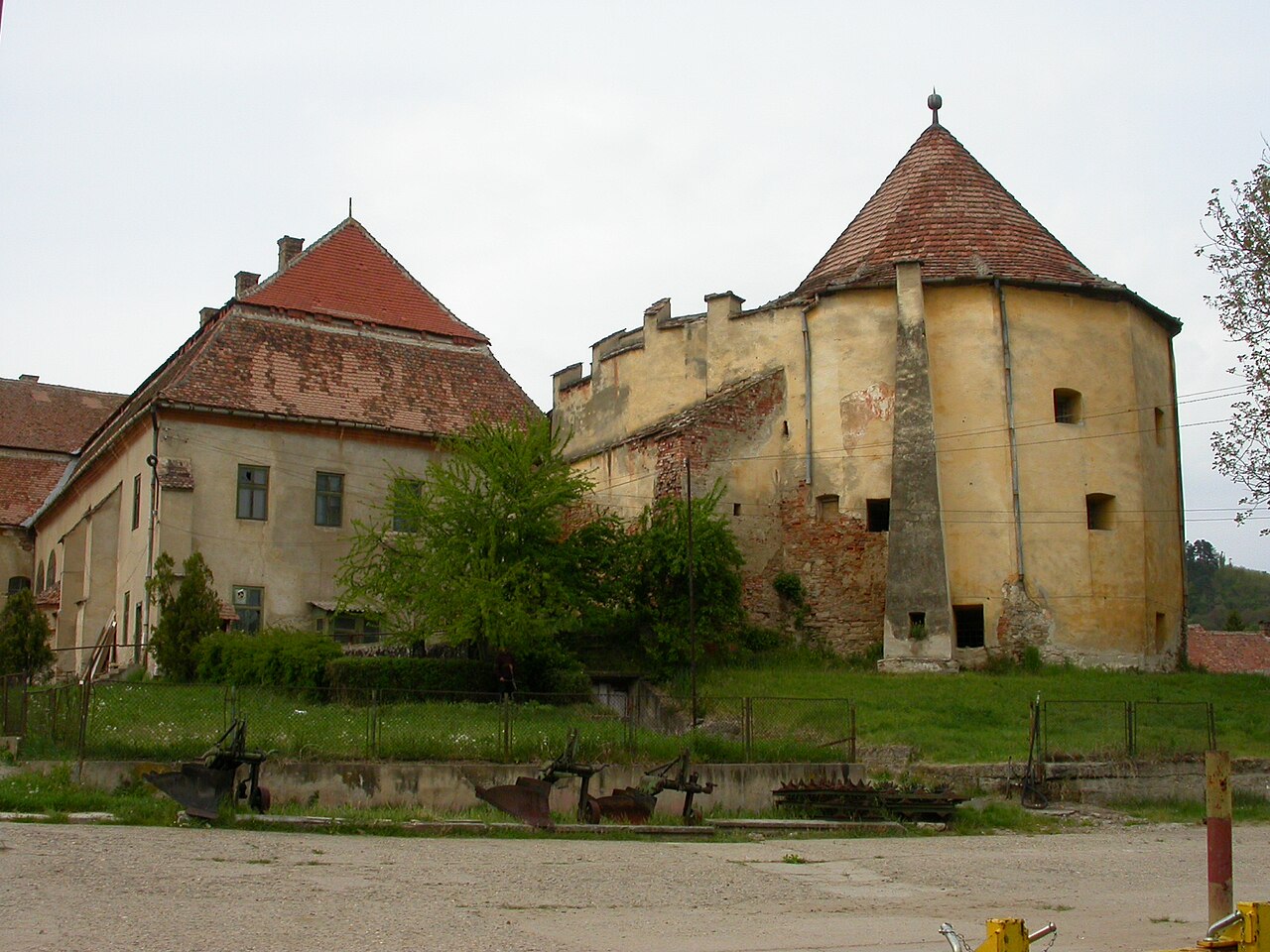
The castle is organized around a square courtyard, enclosed by robust fortified walls that reflect the late medieval military style. Defensive features include circular bastions at each corner of the enclosure, though only two of these bastions remain standing today. The main entrance is marked by a square-shaped entrance tower, serving as a controlled gateway to the castle grounds.
Archers’ Tower
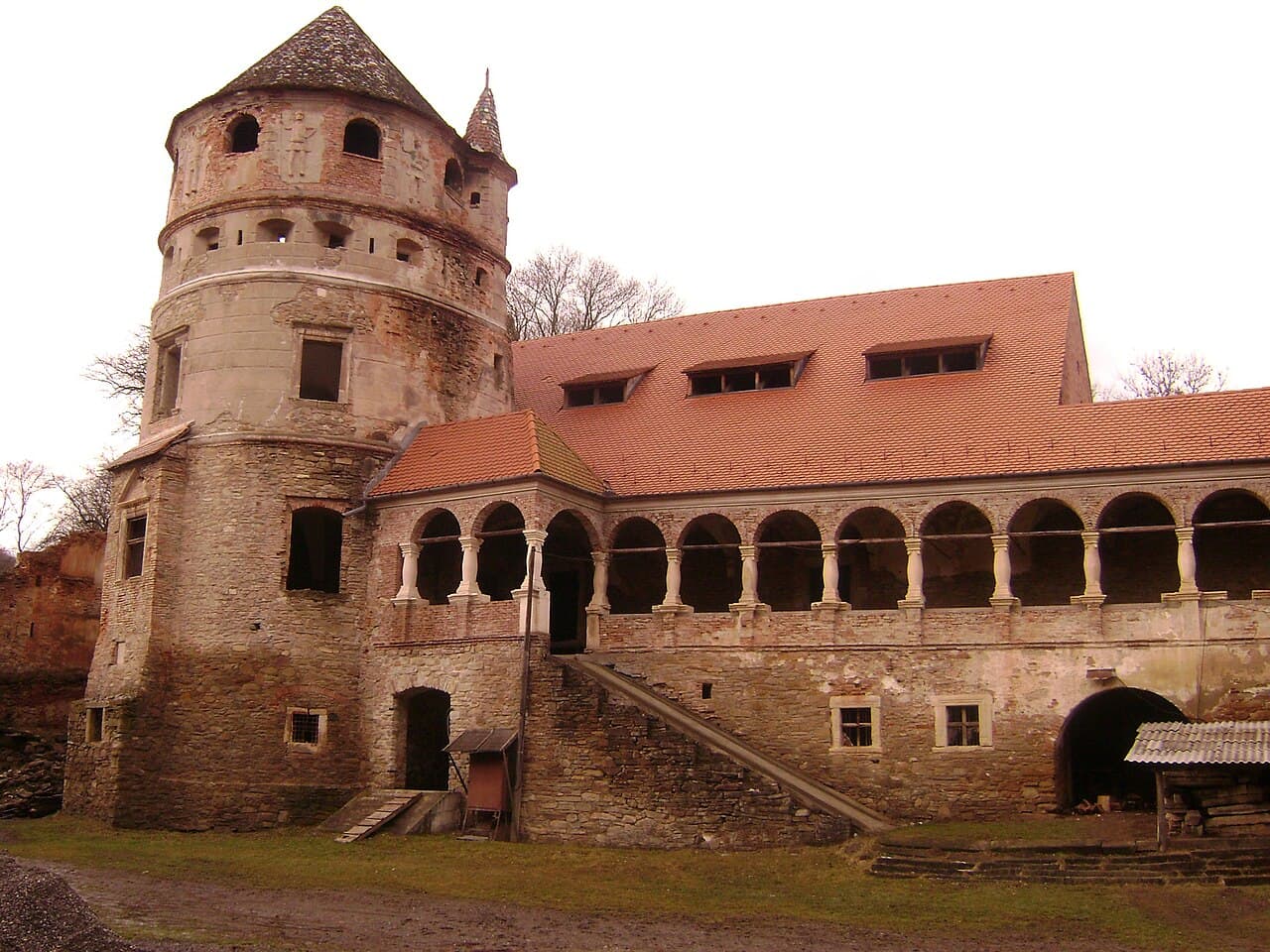
One of the most distinctive architectural elements is the Archers’ Tower, a tall, round tower rising three stories high. This tower originally featured intricately carved bas-relief figures that acted as symbolic guardians. The tower’s walls contain embrasures, openings designed for archers or firearms to defend the castle. Access to the upper floors was provided by a balustraded staircase, a traditional defensive feature. While some decorative details have been lost over time, the tower remains a prominent symbol of the castle’s martial heritage.
Residential wing and decorative elements
The residential section includes an arcaded wing noted for its aesthetic refinement. This wing features semicircular arches supported by short, cylindrical columns, forming an elegant loggia or open corridor. The richly carved window frames and the arched balustraded porch are reminiscent of Renaissance designs found elsewhere in the region, such as the Perényi loggia in Sárospatak. The castle chapel preserves medieval Gothic details, contrasting with the Renaissance elements in other parts of the structure.
Throughout the castle, architectural decorations such as original Bethlen family coats of arms, bas-reliefs, and inscribed stone tablets emphasize the noble heritage of the site. Despite periods of neglect that led to the loss of some window frames, tiled stoves, and stone carvings, many features have been preserved or stabilized through recent conservation efforts.
Historical significance and family legacy
The castle’s history is closely linked to the Bethlen family’s political and cultural influence in Transylvania. In 1675, Elek Bethlen enhanced the castle’s fortifications by improving the bastions and wall defenses. He also established a printing press within the castle, marking a significant cultural advancement. Elek Bethlen authored the first comprehensive history of the Bethlen family, underscoring the castle’s role as a center of intellectual activity.
Another notable figure, Farkas Bethlen, lived in the castle and wrote a detailed history of Transylvania, further cementing the estate’s importance as a cultural hub. The castle remained in the Bethlen family’s possession until the early 20th century and was inhabited until sometime between the First and Second World Wars.
Decline and restoration efforts
Following the political upheavals after World War II, the castle was nationalized in 1948. This led to the dispersal of its furnishings and gradual deterioration of the structure. Although restoration attempts were made, they were ultimately abandoned, resulting in the loss of some architectural details.
In 2007, the Transylvanian branch of the Bethlen family regained possession of the castle, initiating renewed conservation efforts. From 2008 onward, archaeological excavations, museum installations, and structural repairs such as roof restoration and electrical work were undertaken to stabilize and protect the castle. The surrounding park was enclosed to safeguard the grounds, and since 2014, the Saint Francis Foundation from Dej has managed ongoing preservation and use of the property.
Since 2012, archaeological research in partnership with the Mureș County Museum has uncovered and documented many aspects of the castle’s construction and history. Visitor pathways and exhibition spaces have been established, enhancing public understanding of the castle’s historical layers and significance.
Frequently asked questions (FAQ)
- How do I get to Bethlen Castle in Criș?
- Bethlen Castle is located in the village of Criș, Transylvania, Romania. The castle can be reached by car or local transport from nearby towns such as Reghin or Târgu Mureș. Clear signage guides visitors from the main roads to the castle entrance.
- What are the main architectural styles of Bethlen Castle?
- Bethlen Castle features a mix of late medieval military architecture and Renaissance residential elements. Key features include fortified walls, circular bastions, the tall Archers’ Tower, and an elegant arcaded wing with Renaissance loggia.
- When was Bethlen Castle built and who were its primary builders?
- Construction began in the mid-15th century by Márk Bethlen. Significant expansions and fortifications were carried out by George Bethlen and his wife Klára Nagykárolyi in 1559, with further enhancements by Mihály Bethlen in 1598 and Elek Bethlen in 1675.
- Can I visit the interior of Bethlen Castle?
- Yes, the castle is open to visitors daily from 10:00 to 17:00. The interior includes exhibition spaces and preserved architectural features such as the Archers’ Tower, the arcaded wing, and the chapel. Guided tours may be available during peak seasons.
- Why is Bethlen Castle historically significant?
- Bethlen Castle was a noble residence and cultural center for the influential Bethlen family. It housed a printing press and was the site where important historical works about the family and Transylvania were written. Its architecture reflects the region’s military and Renaissance heritage.
Photo gallery

Photo by Khamsin at Romanian Wikipedia•Public domain
Information
Opening hours
10:00-17:00, daily
Ticket prices
€5 adult, €3 child
Current owner
Bethlen family (Transylvanian branch)
Website
Visit websiteSources & official resources
Verify the information above using these authoritative references.
Loading map...
Visitor reviews
No reviews yet. Been here? Write the first review and help other travelers!
Write the first reviewVisited this castle? Share your experience
Your review helps other travelers and adds first-hand knowledge to our encyclopedia.