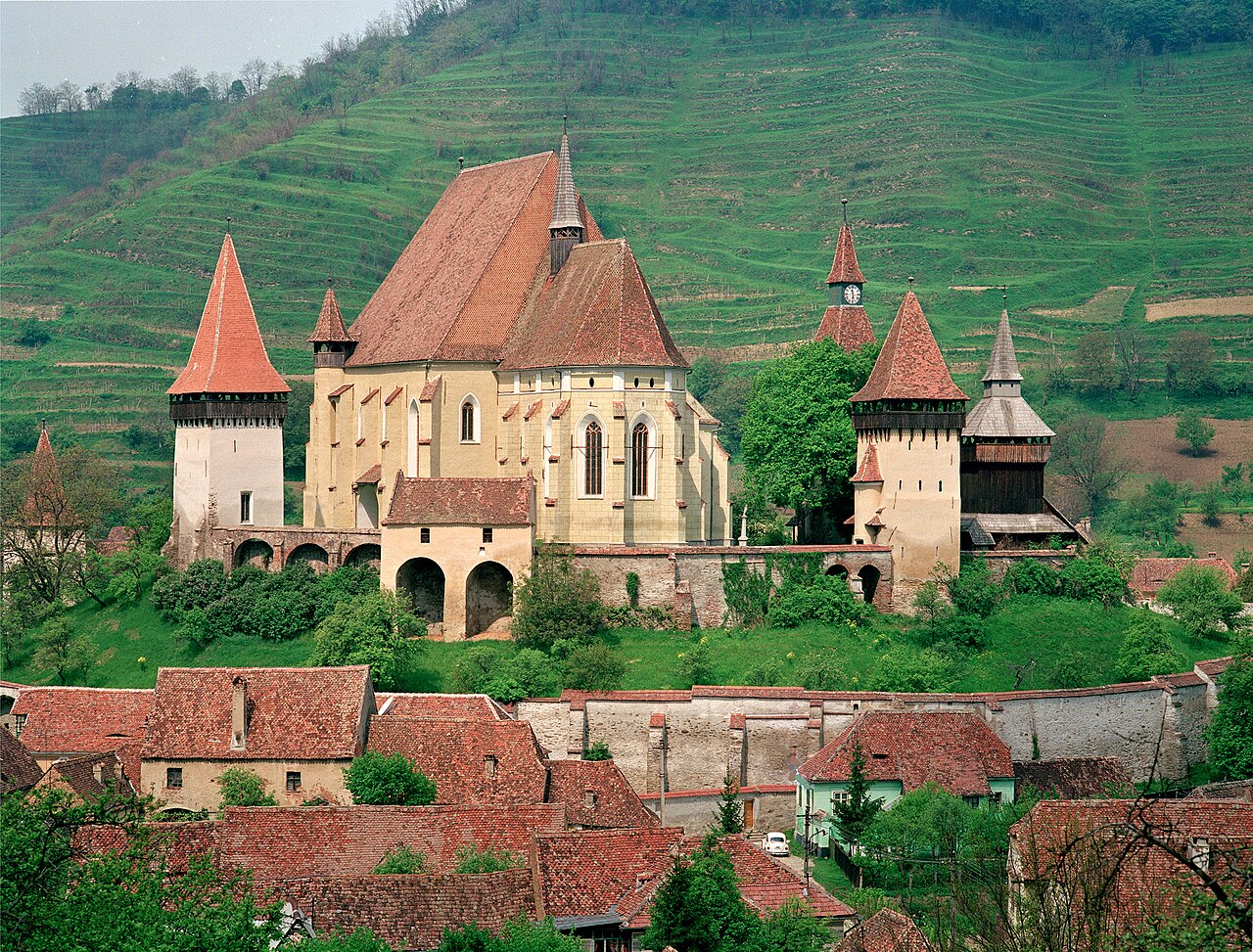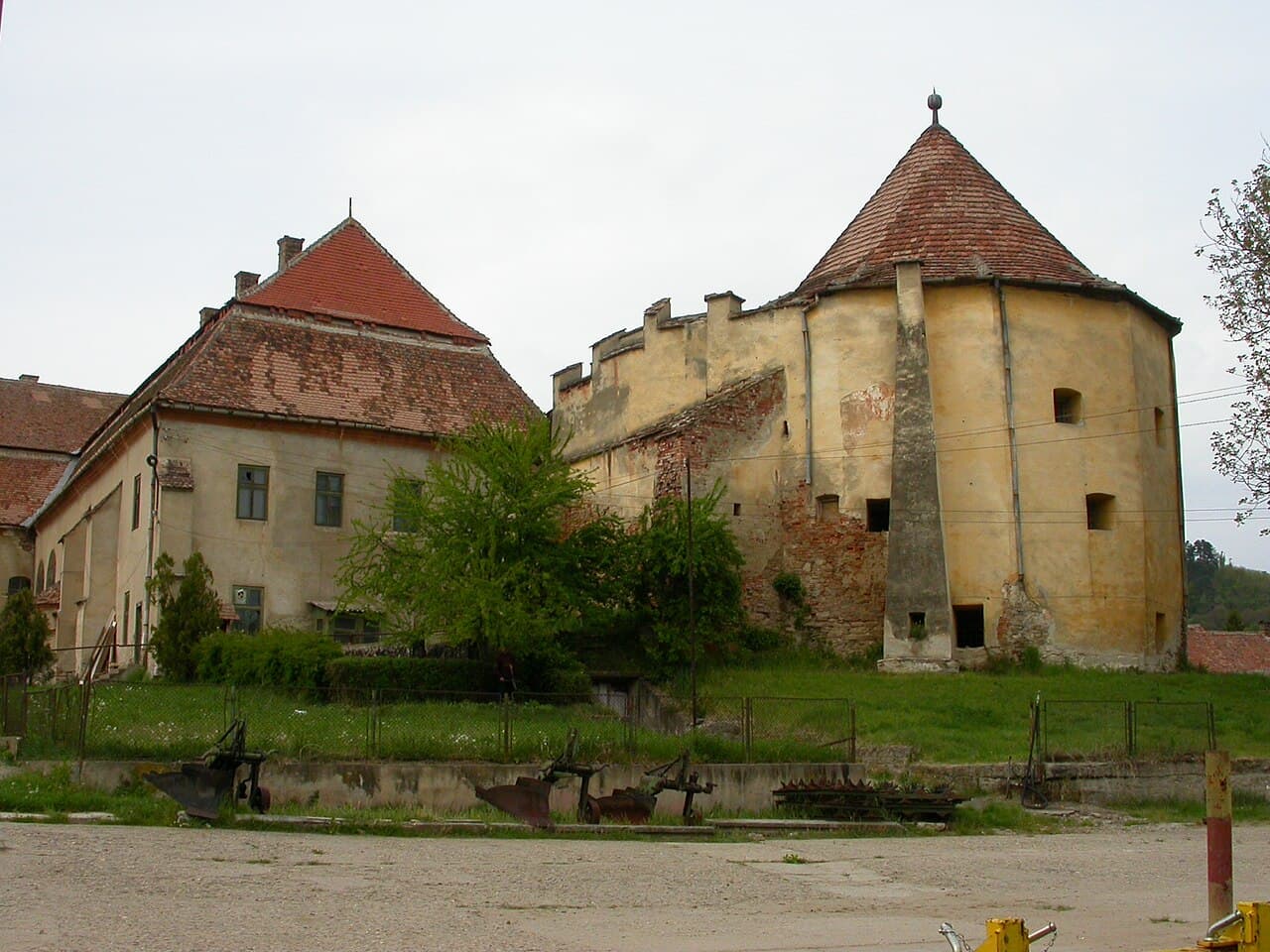
Apafi castle in Dumbrăveni
Apafi castle, situated in Dumbrăveni, Romania, is a notable example of a hill castle that reflects the region's medieval heritage and architectural traditions. Although the exact date of construction is uncertain, the castle's origins likely trace back to the High Medieval period, a time when fortifications were essential for defense and control over strategic territories in Transylvania.
The strategic location and historical context
Perched on a prominent elevation, Apafi castle was designed to command views over the surrounding landscape, a typical feature of hill castles that provided both defensive advantages and territorial oversight. This location allowed its inhabitants to monitor approaching threats and control important routes through the region.
The castle is named after the Apafi family, a noble lineage influential in Transylvanian history, particularly during the 16th and 17th centuries. The family's prominence in regional politics and military affairs is reflected in the castle's fortified design and its role as a stronghold during periods of conflict.
Architectural features and construction
Apafi castle exhibits characteristics typical of medieval hill castles, including robust defensive walls, towers for surveillance and protection, and a central courtyard. The construction employs local stone and masonry techniques common to the region, emphasizing durability and defense.
The castle's layout likely includes a keep or donjon, which served as the last line of defense and residence for the lord. Surrounding this core structure, curtain walls and battlements provided additional layers of security. The presence of a gatehouse would have controlled access, often reinforced with portcullises and murder holes to repel attackers.
While detailed architectural plans are scarce, the castle's design reflects the practical needs of its era, balancing residential comfort with military functionality. Over time, modifications may have been made to adapt to changing defensive technologies and the evolving status of the Apafi family.
Historical significance and events
The castle's history is intertwined with the turbulent history of Transylvania, marked by conflicts between local nobility, the Ottoman Empire, and the Habsburg monarchy. The Apafi family played a significant role in these dynamics, and their castle served as a center of power and refuge.
Throughout the centuries, Apafi castle witnessed sieges, battles, and political negotiations that shaped the region. Its fortifications were tested during these conflicts, and the castle's endurance is a testament to its solid construction and strategic importance.
Current condition and preservation
Today, Apafi castle stands as a partially preserved historical monument. While some sections of the castle remain intact, others have suffered from the passage of time and lack of continuous maintenance. Efforts to preserve and restore parts of the castle have been undertaken to protect its cultural heritage and promote tourism.
The castle's ruins attract visitors interested in medieval architecture and Transylvanian history. Interpretative signage and guided tours help contextualize the site, although access may be limited in certain areas due to safety concerns.
Visiting Apafi castle
Visitors to Apafi castle can explore its scenic hilltop location and remnants of its medieval fortifications. The castle offers panoramic views of the surrounding landscape, making it a popular destination for history enthusiasts and hikers alike.
While specific visitor facilities and opening hours may vary, it is advisable to check local tourism resources for the latest information. The castle's remote location requires appropriate preparation, including suitable footwear and awareness of weather conditions.
Architectural legacy and cultural importance
Apafi castle represents an important piece of Transylvania's medieval architectural heritage. Its design embodies the defensive strategies and noble lifestyles of the period, offering insights into the region's feudal past.
The castle contributes to our understanding of the social and military history of Romania, particularly the role of noble families like the Apafis in shaping regional power structures. Preservation of such sites is vital for cultural continuity and education.
Frequently asked questions (FAQ)
- How do I get to Apafi castle in Dumbrăveni?
- Apafi castle is located on a hill near Dumbrăveni, Romania. Visitors typically reach it by car or local transport to Dumbrăveni, followed by a hike to the castle site.
- What is the historical significance of Apafi castle?
- Apafi castle was a fortified residence of the Apafi noble family, important in Transylvanian history during the 16th and 17th centuries. It played a role in regional defense and political affairs.
- Can I tour the interior of Apafi castle?
- The castle is partially preserved, with some areas accessible to visitors. However, due to safety concerns and preservation efforts, access to certain parts may be restricted.
- When is the best time to visit Apafi castle?
- The best time to visit Apafi castle is during the warmer months from late spring to early autumn, when weather conditions are favorable for hiking and outdoor exploration.
- Are there guided tours available at Apafi castle?
- Guided tours may be available through local tourism offices or historical societies. It is recommended to inquire locally for current offerings and schedules.
Photo gallery

Information
Loading map...
Visitor reviews
No reviews yet. Been here? Write the first review and help other travelers!
Write the first reviewVisited this castle? Share your experience
Your review helps other travelers and adds first-hand knowledge to our encyclopedia.