Besora Castle — Spain castle

Besora Castle

Besora Castle in Catalonia, Spain
Santa Maria de Besora, Spain
Partially Preserved

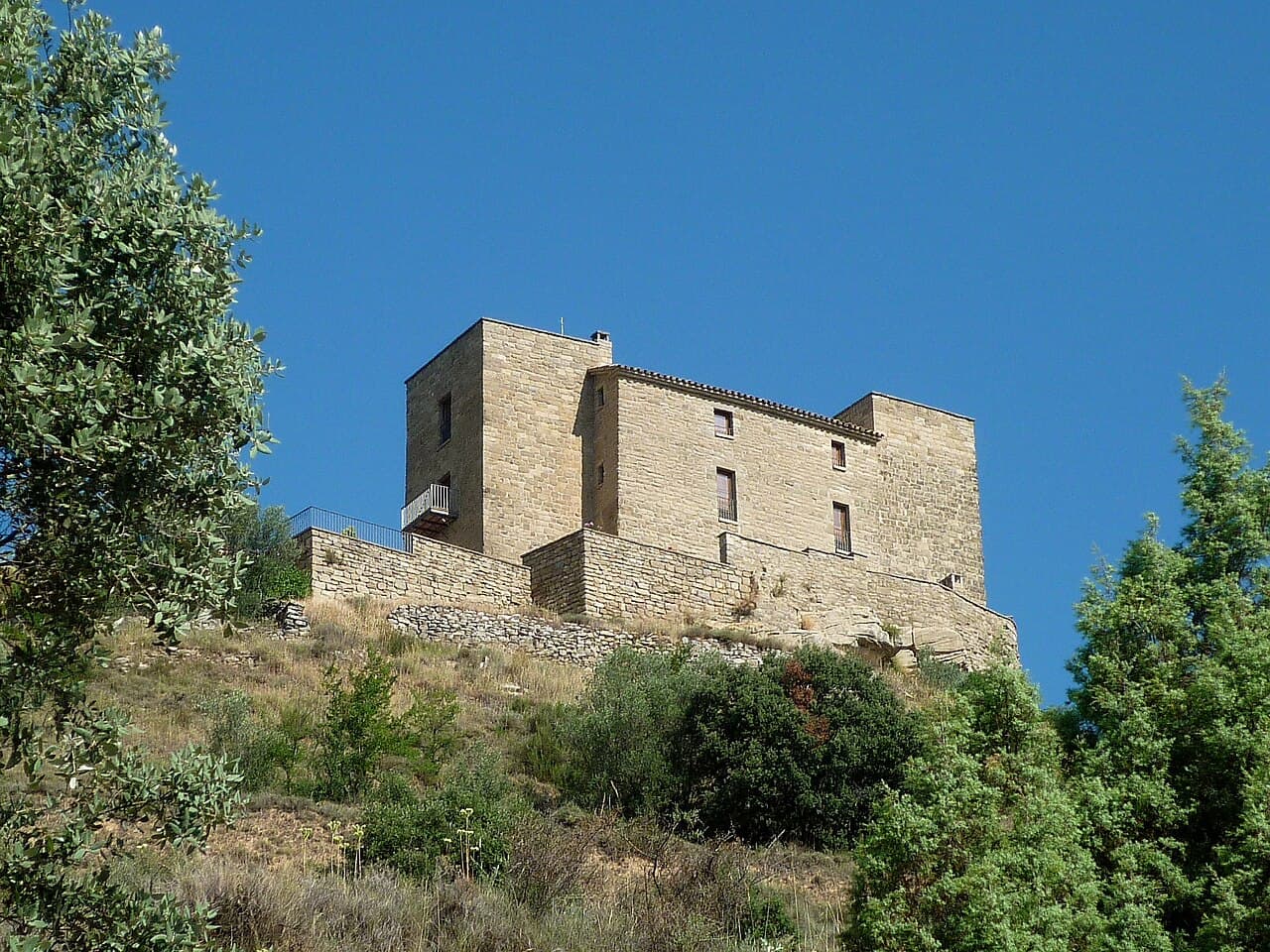
Besora Castle is a historic hill castle located in the Vall de Lord, within the municipality of Santa Maria de Besora, nestled between Navès and the Serra de Busa in the Solsonès comarca of the Lleida province, Catalonia, Spain. This strategic position atop a rocky spur at an altitude of 1,092 meters provided it with natural defensive advantages, making it a formidable stronghold in the region.

The castle's location was deliberately chosen for its defensibility, with access limited to a narrow path from the north that was heavily fortified to deter invaders. The site commands extensive views over the surrounding valleys and mountains, which was crucial for early warning and defense during the medieval period.

Architectural layout and features

The castle complex is composed of three elongated buildings arranged along the rocky ridge. These structures have been adapted over time and are currently used as a rural dwelling styled in the traditional Catalan masia form. The masia is a type of farmhouse typical of the region, characterized by thick stone walls and simple, functional design, reflecting the castle's transition from military use to agricultural habitation.

Originally, Besora Castle would have included typical medieval defensive features such as fortified walls, battlements, and possibly a keep or donjon, although much of the original fortifications have been altered or lost due to centuries of modification and adaptation to non-military uses.

Historical context and significance

Besora Castle dates back to the High to Late Medieval period, a time when the region of Catalonia was marked by frequent territorial disputes and the need for fortified residences to control trade routes and local populations. The castle served as a defensive outpost and a symbol of feudal power in the area.

Throughout its history, the castle likely witnessed various conflicts and changes in ownership, reflecting the turbulent history of Catalonia and the broader Iberian Peninsula during the Middle Ages. Its adaptation into a masia reflects the broader social and economic shifts that occurred as military castles lost their strategic importance and were repurposed for agricultural and residential use.

Location and surroundings

Situated in the Solsonès comarca, Besora Castle is surrounded by mountainous terrain and dense forests typical of the central Catalan landscape. The proximity to the Serra de Busa mountain range adds to the castle's natural defenses and scenic value.

The castle's elevated position not only provided military advantages but also made it a landmark visible from great distances, reinforcing its role as a territorial marker.

Current condition and preservation

Today, Besora Castle is partially preserved and has been converted into a rural dwelling, which has helped maintain the structural integrity of the main buildings. While some medieval features remain, the castle has undergone significant modifications to accommodate residential and agricultural functions.

Its preservation as a masia contributes to the cultural heritage of the region, offering insights into the evolution of medieval castles into rural estates in Catalonia.

Visiting Besora Castle

Although the castle is privately owned and functions as a residence, its historical significance and picturesque setting attract interest from historians, architects, and visitors exploring the Solsonès region. Visitors can appreciate the castle's exterior architecture and the surrounding natural landscape.

Access and accessibility

The castle is accessible via a mountain path from the north, reflecting its original defensive design. Visitors should be prepared for a hike through rugged terrain to reach the site.

Nearby attractions

The area surrounding Besora Castle offers opportunities for hiking, nature observation, and exploring other medieval sites within the Vall de Lord and Solsonès comarca.

Frequently asked questions (FAQ)

How do I get to Besora Castle?
Besora Castle is located in Santa Maria de Besora, Spain, and is accessible by car. The nearest major city is Barcelona, which is about a two-hour drive away. Public transportation options are limited, so driving or taking a guided tour is recommended for convenience.
What is the historical significance of Besora Castle?
Besora Castle dates back to the 10th century and played a crucial role in the defense of the region against invasions. It is a symbol of the medieval history of Catalonia and reflects the architectural styles of its time. The castle also serves as a reminder of the feudal system that once dominated the area.
When was Besora Castle built?
Besora Castle was constructed in the late 10th century, making it one of the oldest fortifications in the region. Over the centuries, it has undergone various modifications and restorations, reflecting different architectural trends. Its enduring presence showcases the historical development of military architecture in Spain.
Can I enter Besora Castle?
Yes, visitors are welcome to explore Besora Castle during the designated opening hours. Guided tours are available, providing insights into the castle's history and architectural features. However, it's advisable to check in advance for any restrictions or special events that may affect access.
Why is Besora Castle a popular tourist attraction?
Besora Castle attracts visitors due to its rich history, stunning views, and well-preserved architecture. It offers a glimpse into medieval life and the strategic importance of the castle during its prime. Additionally, its picturesque location in the Catalonian countryside makes it a great spot for photography and hiking enthusiasts.
Is it possible to visit Besora Castle year-round?
Yes, Besora Castle is open for visitors year-round, although specific opening hours may vary by season. It's recommended to check the official website or local tourism information for the most up-to-date hours and any seasonal events. Visiting during the spring or fall can provide a more pleasant experience due to milder weather.
What are the ticket prices for Besora Castle?
Ticket prices for Besora Castle are generally modest, making it an affordable destination for families and history enthusiasts. Discounts may be available for students, seniors, and groups. Be sure to confirm the current pricing and any special offers before your visit.
What are the nearby attractions to Besora Castle?
Near Besora Castle, visitors can explore the charming village of Santa Maria de Besora, which features beautiful landscapes and local eateries. Additionally, the surrounding region offers hiking trails and natural parks, perfect for outdoor enthusiasts. Other historical sites and castles in the area also make for great day trips.
What are the best times to visit Besora Castle?
The best times to visit Besora Castle are during the spring (April to June) and fall (September to October) when the weather is mild and the surrounding scenery is vibrant. Summer can be quite hot, while winter may see fewer visitors due to colder temperatures. Planning your visit during weekdays may also help avoid crowds.

Photo gallery

Besora Castle
Click to view

Photo by Isidre blanc•CC BY-SA 3.0

1 photo • Click any image to view in full screen

Information

Hill Castle

Loading map...

Visitor reviews

No reviews yet. Been here? Write the first review and help other travelers!

Write the first review

Visited this castle? Share your experience

Your review helps other travelers and adds first-hand knowledge to our encyclopedia.

Write a review

(5/5)

0/2000 characters

Your review will be visible after admin approval

Nearby castles

8.8 km

Castellvell de Solsona

Olius, Spain

Castellvell de Solsona is a historic hill castle located in the municipality of Olius, near the city of Solsona in Catalonia, Spain. Perched approximately 130 meters above the surrounding landscape, the castle commands sweeping views of the region’s natural landmarks, emphasizing its strategic importance since its construction in the mid-10th century. Founded under the direction of Count Sunyer of Urgell, the fortress was originally established as a defensive stronghold to oversee and protect the surrounding territories. Medieval origins and strategic significance The initial construction phase of Castellvell de Solsona began in the early medieval period, specifically in the mid-900s. This early fortification was part of a wider network of castles in Catalonia designed to consolidate control over the region during a time of frequent territorial disputes. In 973, the castle’s defenses were notably strengthened by Count Borrell II of Barcelona, underscoring its rising military and political significance. Throughout the 11th century, the castle underwent further fortification efforts led by Ecard Miró, the lord of Solsona, and later by his descendants Bernat and Ramon de Tarroja. These expansions and enhancements culminated in the early 13th century, coinciding with the marriage of Agnès Tarroja to Viscount Ramon Folc IV of Cardona in 1217. This alliance brought the castle under the influence of the powerful Cardona family, who made it their seat for nearly seventy years before relocating to a newer residence. Subsequently, the fortress acquired the moniker “old castle.” Gothic transformation and architectural features Between 1310 and 1320, the castle was remodeled into a Gothic-style palace under the auspices of the Viscount of Cardona. This renovation introduced a large square hall featuring characteristic pointed arches and cylindrical columns with simple cubic capitals. This hall, located on the eastern side of the castle, exemplifies the Catalan Gothic architectural style prevalent in medieval fortifications of the region. In addition to the hall, the castle’s original quadrangular layout was fortified by four square towers. Unfortunately, in 1389, Hug II of Cardona authorized the partial demolition of the castle’s walls to repurpose stone for new fortifications in the nearby city of Solsona. This act led to the destruction of three of the four towers; their truncated bases remain visible today, while the fourth tower has been preserved in its original form. Religious structures within the castle Within the castle grounds, a Romanesque chapel originally stood, later modified in the 15th century into a Gothic sanctuary dedicated to Santa Maria, known as the Virgin of Remedy (Mare de Déu del Remei). This chapel remains an active place of worship and reflects the castle’s religious heritage. Adjacent to the castle on its western side are the remains of the Romanesque parish church of Sant Miquel de Castellvell. Notable for its distinctive trilobed apse, this church was eventually replaced when the parish moved to the nearby village of Brics. Heritage and symbolic elements A significant decorative element preserved within the castle walls is a Romanesque sculpted capital adorned with the coats of arms of the Tarroja family (represented by a tower) and the Cardona family (symbolized by a thistle). This capital also features a monastery cross and sun motif, which are echoed in the heraldry of the nearby city of Solsona, highlighting the castle’s integration into the region’s cultural identity. The castle once housed a notable 14th-century seated statue of the Virgin Mary, known as either the Virgin of the Snows or the Virgin of Milk. While the statue itself remains valued, the infant Jesus’s head was removed in 1882 and is now preserved at the Diocesan and Regional Museum of Solsona, maintaining a tangible connection to the castle’s religious past. Modern history and preservation During the First Carlist War in the 19th century, renovations were undertaken by the Baron de Meer, who incorporated the old structure into his plans. However, the castle suffered severe damage during the Third Carlist War. In 1872, Carlist forces led by Morlans demolished three of the castle’s four square towers. Only one tower survived, thanks to the intervention of government troops. Today, Castellvell de Solsona remains well preserved and inhabited, serving as a cultural and political venue. It hosts an annual festival called Roseret and a pilgrimage promoting Catalan independence each September, underscoring its continuing significance in regional identity and heritage. Architectural layout and landscape setting The castle’s quadrangular enclosure is characteristic of medieval military architecture, designed to maximize defense with its four corner towers and thick walls. The surviving tower and the truncated remains of the others provide insight into the castle’s original formidable appearance. Its elevated position on a hilltop allows for extensive views over the surrounding countryside, a strategic advantage that was crucial for early warning and defense. The proximity to the city of Solsona and the natural landscape around the castle enhances its historical and touristic appeal.

Early Medieval (5th–10th c.)
Details
14.4 km
Portal de Graells — Spain castle

Portal de Graells

, Spain

Portal de Graells is a significant example of a late medieval bastioned fortress located in Spain, dating back to the 15th century. This fortress exemplifies the military architectural developments that occurred during the transition from medieval fortifications to early modern defensive structures. The name "Portal de Graells" refers to a fortified gateway or entrance, which is a key feature in the design of bastioned fortresses that were constructed to withstand artillery attacks. Historical context and strategic importance The 15th century was a period of considerable military innovation in Spain, influenced by the introduction of gunpowder and cannon warfare. Fortresses like Portal de Graells were built or adapted to incorporate bastions, angular defensive projections that allowed defenders to cover adjacent walls with crossfire, eliminating blind spots and improving the fortress's ability to repel sieges. While the precise historical events associated with Portal de Graells are less documented, its architectural style places it firmly within the era of the Reconquista and the consolidation of Spanish territories. Fortresses of this kind were essential in controlling key routes and protecting towns from rival forces during this turbulent period. Architectural features and design Bastioned fortifications Portal de Graells features characteristic bastions, which are angular, projecting structures built at the corners of the fortress walls. These bastions replaced the traditional round towers of earlier medieval castles, allowing for better defense against artillery. The design facilitated overlapping fields of fire, making it difficult for attackers to approach the walls without being exposed to defensive fire. Gateway and defensive elements The fortress's name suggests a prominent portal or gateway, which would have been heavily fortified. Such portals often included multiple layers of defense, such as a drawbridge, portcullis, and murder holes, designed to slow down and expose attackers. The gateway served as a critical control point for access to the fortress and surrounding settlements. Wall construction and materials The walls of Portal de Graells were likely constructed using local stone, carefully cut and laid to create thick, durable defenses capable of withstanding cannon fire. The bastions and walls would have been topped with battlements and parapets, providing cover for defenders. Preservation and current condition The current state of Portal de Graells is not widely documented, but as a bastioned fortress from the late medieval period, it may exist as partially preserved ruins or restored sections. Such fortresses are often protected as cultural heritage sites in Spain, reflecting their historical and architectural significance. Significance in military architecture Portal de Graells represents an important stage in the evolution of fortification design, bridging the gap between medieval castles and the star forts of the Renaissance. The incorporation of bastions marks a response to the changing nature of warfare, particularly the increasing use of gunpowder artillery. This fortress exemplifies how military architects adapted traditional defensive concepts to new technological challenges, influencing fortress construction throughout Spain and Europe. Visiting and cultural impact While detailed visitor information is not readily available, bastioned fortresses like Portal de Graells often attract interest from historians, architects, and tourists interested in military history. Such sites provide valuable insights into the defensive strategies and architectural innovations of the late medieval period.

Late Medieval (14th–15th c.)
Details
14.7 km
Castle of Cardona — Spain castle

Castle of Cardona

Cardona, Spain

The Castle of Cardona stands as one of the most significant and well-preserved medieval fortresses in the Principality of Catalonia. Perched atop a strategic hill overlooking the Cardener river valley and the historic town of Cardona, this fortress has played a pivotal role in the region's military, political, and cultural history for over a millennium. Its origins trace back to the early medieval period, specifically the 9th century, during the Carolingian era. The castle was initially constructed to defend the area against Saracen raids and to secure the frontier of the Frankish Empire. After being destroyed in these conflicts, it was restored in 798 by Louis the Pious to fortify the region in preparation for the reconquest of Barcelona. The fortress was definitively reestablished between 872 and 886 under the leadership of Wilfred the Hairy (Guifré el Pilós), who granted one of the earliest known settlement charters to the inhabitants, marking the castle as a center of local governance and community. Historical significance and noble lineage From the late 10th century onward, the viscounts of Osona made the castle their residence. Around 1040, Folc I adopted the Cardona name and founded the Barony of Cardona, establishing the castle as the seat of this influential noble family. The Cardona lineage played a crucial role in the politics of Catalonia and Aragon throughout the Middle Ages, participating in military campaigns and noble revolts. Their prominence culminated in their elevation to dukes in 1491, and the castle served as both a noble residence and a political stronghold. Architectural features and fortifications The torre de la minyona The castle's most iconic architectural feature is the torre de la minyona, a truncated tower dating from the 11th century. Originally nearly 20 meters tall with a base diameter exceeding 10 meters, this tower was reduced to 13 meters in height during the Peninsular War in 1812. The tower has served multiple functions, including as a watchtower, powder magazine, and prison. Its robust construction and prominent location made it a key element of the castle’s defenses. The church of sant vicenç Adjacent to the fortress is the Romanesque Church of Sant Vicenç de Cardona, constructed between 1029 and 1040 under Viscount Bermon I. The church is well preserved and once featured murals on its portico, which have since been relocated to the National Art Museum of Catalonia for preservation. The church also contains one of the fortress’s three surviving powder magazines, highlighting its dual religious and military functions. Fortifications and military adaptations The castle's fortifications evolved significantly from the late 17th century onward. In 1682, the engineer Ambrosio Borsano designed the first ring of bastions around the ducal castle. During the War of Spanish Succession (1701–1714), additional bastions and artillery batteries were constructed, including the reconstruction of the Sant Llorenç bastion and the establishment of the main powder magazine near the church. These enhancements reflect the fortress's adaptation to the evolving military technology of the era. A prominent defensive structure is the casamata, a heavily fortified artillery emplacement built during the Peninsular War in 1812. This two-level structure includes a covered bunker with five cannon openings and an upper exterior level with four loopholes for firing. The casamata served as an arms and ammunition depot supplying surrounding batteries and is considered one of the strongest defensive points within the complex. Within the fortress, three powder magazines survive: those located in the casamata, the church of Sant Vicenç, and the Sant Carles bastion. These magazines stored gunpowder and munitions essential for the castle’s defense during sieges and military operations. Historical events and military role The Castle of Cardona played a crucial role during the War of Spanish Succession. In 1711, it withstood a prolonged siege by Bourbon forces, holding out until September 1714. It was the last fortress in Catalonia to surrender, symbolizing the region’s resistance during this turbulent period. This siege marked the castle’s final major military engagement. In the 19th century, the castle was repurposed as a military barracks. The church within the complex was adapted to house soldiers, reflecting the castle’s continued military use until the early 20th century. After the military command was dissolved, the castle was abandoned for a time. Modern preservation and cultural significance Declared a national monument in 1949, the Castle of Cardona has undergone extensive restoration efforts since 1976. It was transformed into a parador, a state-run luxury hotel, offering 106 rooms within its historic walls. Since 2010, it has functioned as Catalonia’s first parador-museum under the auspices of the Historical Museum of Catalonia. Further rehabilitation in 2014 included musealization and structural improvements, ensuring the preservation of its historical fabric while adapting it for cultural and educational purposes. The castle is also known for its cultural presence, having served as a filming location for Orson Welles's movie Chimes at Midnight. Visitors praise the parador for its excellent food, attentive service, and breathtaking views from the castle's patio, especially under moonlight. The original path leading down to the town offers a scenic and historic stroll, connecting the fortress to the community it once protected. Architectural layout and surroundings The fortress complex is situated at an elevation between 585 and 600 meters, strategically positioned on a hill overlooking a river meander and the nearby salt mines that historically contributed to the town's wealth and importance. The castle's layout reflects continuous adaptations from the medieval period through the 19th century, incorporating bastions, artillery batteries, and casemates that demonstrate evolving defensive strategies. The Chapel of Sant Ramon Nonat, founded in 1681 on the site where the saint died in 1240, is part of the castle complex. It houses a silver lamp and a retable crafted by sculptor Pau Sunyer and gilded by silversmith Magí Torrabruna. The retable was restored in 2021, preserving its artistic and religious significance within the fortress. Overall, the Castle of Cardona stands as a testament to the rich medieval heritage of Catalonia. Its well-preserved structures, historical significance, and continued use as a cultural site make it a valuable destination for those interested in medieval architecture, Spanish history, and heritage tourism.

Early Medieval (5th–10th c.)
Details