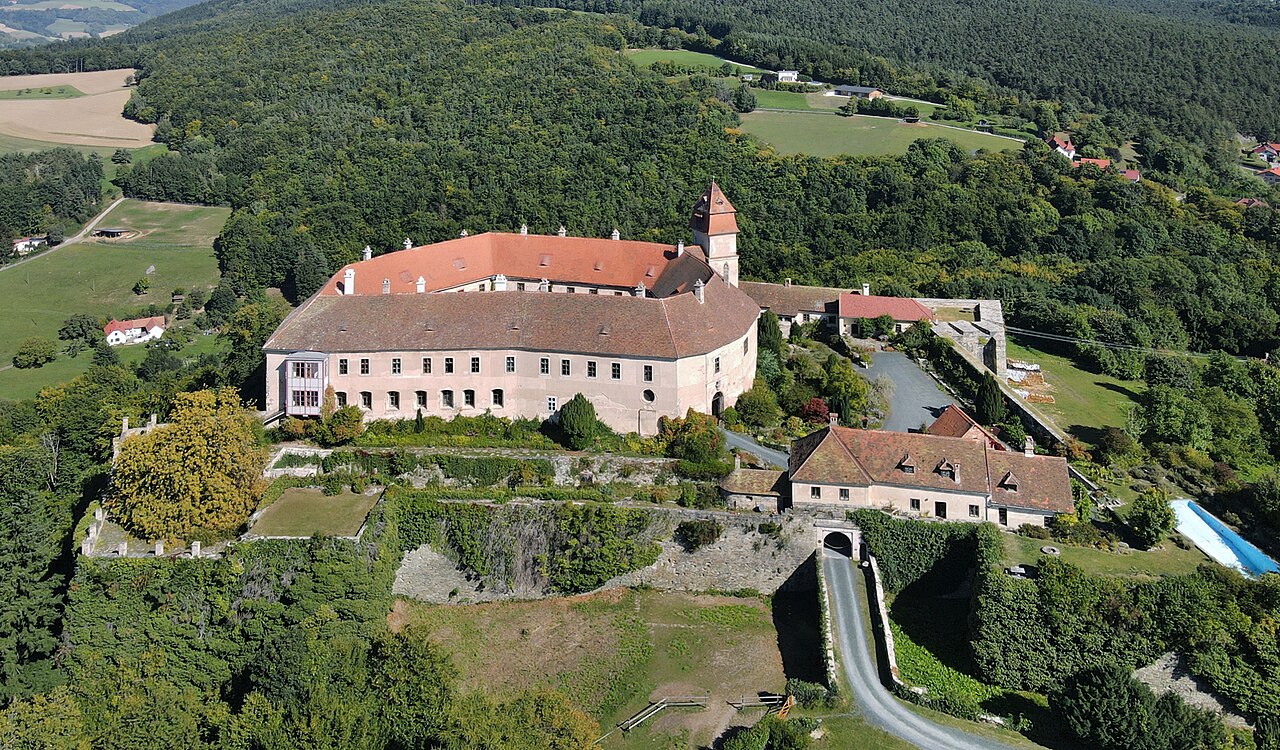
Burgruine Kirchschlag
Burgruine Kirchschlag is a remarkable example of a medieval hill castle situated in the town of Kirchschlag in der Buckligen Welt, Austria. Constructed in the 12th century, this fortress was originally built by local nobles to secure the eastern border of their territories. Perched strategically on the Schlossberg hill approximately 480 meters above sea level, the castle's elevated position provided significant defensive advantages, overseeing the surrounding landscape and controlling access routes. Its close integration with the town through a fortified ring wall exemplifies the medieval approach to combining urban and military architecture for enhanced protection.
Early history and construction
The initial construction of Burgruine Kirchschlag dates back to the 12th century, during a period when noble families across Europe were fortifying their domains amidst frequent territorial disputes. The castle's location on the Schlossberg was chosen for its natural defensive qualities, rising about 80 meters above the surrounding terrain. Early phases of the castle's development remain largely undocumented above ground, as later reconstructions have obscured much of the original fabric.
Throughout the high medieval period, the castle underwent several phases of expansion and modification. It was initially owned by various prominent noble families who recognized its strategic value. A significant event in its early history was its partial destruction during a noble revolt against Duke Friedrich the Fair in the early 14th century. This conflict underscored the castle's importance as a military stronghold in regional power struggles.
Reconstruction and architectural evolution
Between 1320 and 1325, the Pottendorfer family undertook major reconstruction efforts that shaped much of the castle's enduring form. This rebuilding phase introduced robust stone fortifications and refined defensive structures, aligning with contemporary military architectural trends of the late high medieval period. The castle's design incorporated a fortified ring wall that connected the stronghold to the adjacent town, creating a continuous defensive perimeter that integrated civilian and military spaces.
The castle's most prominent surviving architectural feature is its bergfried, locally known as the "Feuerturm" or fire tower. This main tower stands approximately 22 meters tall and was strategically positioned on a small rise about 50 meters southwest of the castle entrance. The bergfried served multiple defensive functions: as a last refuge during sieges, an observation point for monitoring enemy movements, and a signaling tower to warn of attacks by lighting fires. Today, it remains a key landmark and serves as a viewing platform offering panoramic vistas of the castle ruins and the surrounding countryside.
Historical significance and ownership
Over the centuries, Burgruine Kirchschlag played a vital role in regional defense and governance. It passed through the hands of several influential noble families, including the Styrian Lords of Wildon, the Kuenringers, the Güssingers, the Pottendorfers, the Puchheimers, and ultimately the Hungarian Counts Pálffy. These families contributed to the castle's maintenance and adaptation to evolving military needs.
Notably, the castle was under the lordship of King Matthias Corvinus of Hungary until his death, after which it was reclaimed by Emperor Maximilian I. The fortress withstood numerous military challenges, including two major sieges during the Turkish invasions of 1529 and 1683. It also faced raids by Haiduks in 1605, attacks led by Hungarian rebel leader Gábor Bethlen in 1621, and the Kuruc uprisings in 1703. These conflicts highlight the castle's enduring strategic importance across several centuries of regional turmoil.
Decline and preservation
The castle's decline began around the mid-17th century when its noble residents began relocating their primary residences. Hans Christoph III von Puchheim constructed a manor house within the town of Kirchschlag and shifted his residence there, signaling a reduced military and administrative role for the castle. Subsequently, the Pálffy family also moved their seat to Burg Krumbach, a better-preserved fortress nearby. This transition marked the gradual abandonment and decay of Burgruine Kirchschlag as a defensive stronghold and noble residence.
Following the political and social changes after 1848, the castle changed ownership multiple times before being acquired by the municipality of Kirchschlag in the 20th century. Although detailed records of archaeological excavations or restorations are limited, preservation efforts have been undertaken to stabilize the ruins. These efforts have focused on maintaining key structural elements such as the bergfried and sections of the stone walls, allowing visitors to appreciate the castle's medieval character and historical significance.
Architectural features and layout
The castle was originally part of a larger fortified complex that included a ring wall connecting the fortress to the town below, creating a continuous defensive barrier. The surviving ruins primarily reflect the early 14th-century reconstruction by the Pottendorfer family. The castle courtyard and various adjoining buildings were enclosed within this wall, although specific details about their size and arrangement are not extensively documented.
The bergfried remains the most intact and visually striking feature of the site. Its robust construction and elevated position made it an effective lookout and defensive refuge. The castle walls, built from stone, have been partially restored and maintained, providing visitors with a tangible sense of medieval fortification techniques.
Cultural significance and modern use
Beyond its historical and architectural importance, Burgruine Kirchschlag continues to serve as a cultural landmark for the local community. The castle ruins host an annual Advent market that draws thousands of visitors, celebrating regional traditions in a historic setting. Additionally, the site has previously accommodated a summer rock festival, demonstrating its versatility as a venue for contemporary cultural events.
These activities underscore the ongoing connection between the castle and the people of Kirchschlag, ensuring that the ruins remain a vibrant part of the town's identity and heritage. The preservation of the castle not only honors its medieval past but also fosters community engagement through cultural celebration.
Frequently asked questions (FAQ)
- How do I get to Burgruine Kirchschlag?
- Burgruine Kirchschlag is located in Kirchschlag in der Buckligen Welt, Austria, and can be reached by car or public transport. The nearest train station is in the town of Kirchschlag, from where you can take a short bus ride or walk to the castle. Parking is available nearby for those driving.
- What is the historical significance of Burgruine Kirchschlag?
- Burgruine Kirchschlag is a medieval castle ruin dating back to the 13th century, reflecting the feudal history of the region. It served as a strategic fortification during various conflicts and has witnessed significant historical events over the centuries. The castle's ruins offer a glimpse into the architectural styles and defensive needs of medieval Austria.
- When was Burgruine Kirchschlag built?
- Construction of Burgruine Kirchschlag began in the early 13th century, with its strategic location chosen for defense against invasions. Over the years, it underwent several renovations and expansions, adapting to the changing needs of its inhabitants. The castle played an important role until it fell into disrepair in the late 17th century.
- Can I visit Burgruine Kirchschlag year-round?
- Yes, Burgruine Kirchschlag is open to visitors year-round, but it's advisable to check for any seasonal hours or maintenance closures. The best time to explore the castle is during spring and summer when the weather is pleasant, and the surrounding landscapes are in full bloom. Always check the local tourism website for the latest updates before your visit.
- Why is Burgruine Kirchschlag a popular tourist attraction?
- Burgruine Kirchschlag attracts visitors for its stunning views of the Bucklige Welt region and its rich historical background. The castle's picturesque ruins are perfect for photography and exploring the remnants of medieval architecture. Additionally, the surrounding natural beauty and hiking trails enhance the overall experience for visitors.
- Is it possible to have a guided tour of Burgruine Kirchschlag?
- Yes, guided tours are available at Burgruine Kirchschlag, providing insights into its history and architectural features. These tours are typically conducted by knowledgeable guides who can share fascinating stories about the castle and its significance. It's recommended to book in advance during peak tourist seasons for a more enriching experience.
- What are the opening hours for Burgruine Kirchschlag?
- The opening hours for Burgruine Kirchschlag vary by season, with longer hours typically during the summer months. Generally, the castle is open from 9 AM to 5 PM, but it's best to check the official website for the most accurate and up-to-date information. Special events or holidays may also affect opening hours.
- Are there any ticket prices for visiting Burgruine Kirchschlag?
- Entry to Burgruine Kirchschlag is usually free, but donations to support the preservation of the site are appreciated. For guided tours, there may be a small fee, which helps maintain the castle and improve visitor facilities. Always check in advance for any changes to pricing or special events that may require tickets.
- What nearby attractions can I visit when in Kirchschlag?
- While visiting Burgruine Kirchschlag, consider exploring the charming town of Kirchschlag itself, with its local shops and cafes. Additionally, the surrounding Bucklige Welt region offers numerous hiking trails, nature parks, and other medieval sites to explore. Don't miss the opportunity to experience the local culture and cuisine while you're in the area.
Information
Website
Visit websiteSources & official resources
Verify the information above using these authoritative references.
Loading map...
Visitor reviews
No reviews yet. Been here? Write the first review and help other travelers!
Write the first reviewVisited this castle? Share your experience
Your review helps other travelers and adds first-hand knowledge to our encyclopedia.