Burg Schlaining
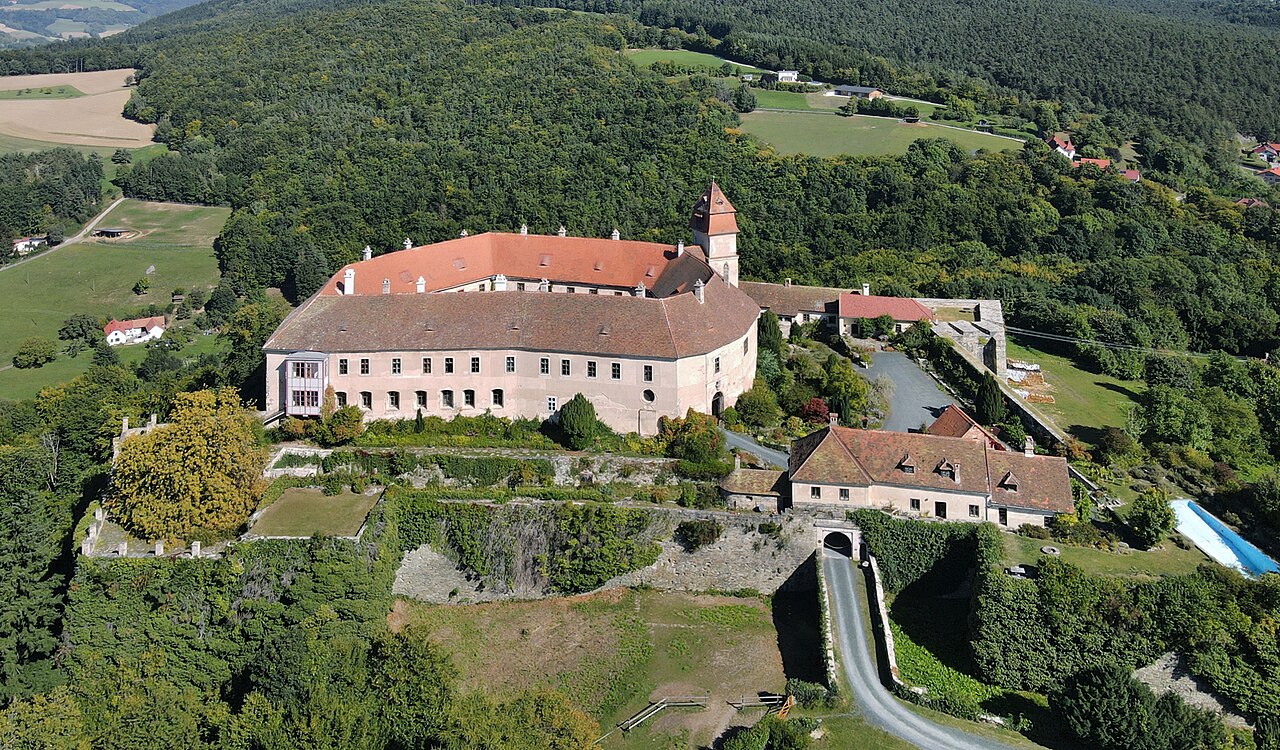
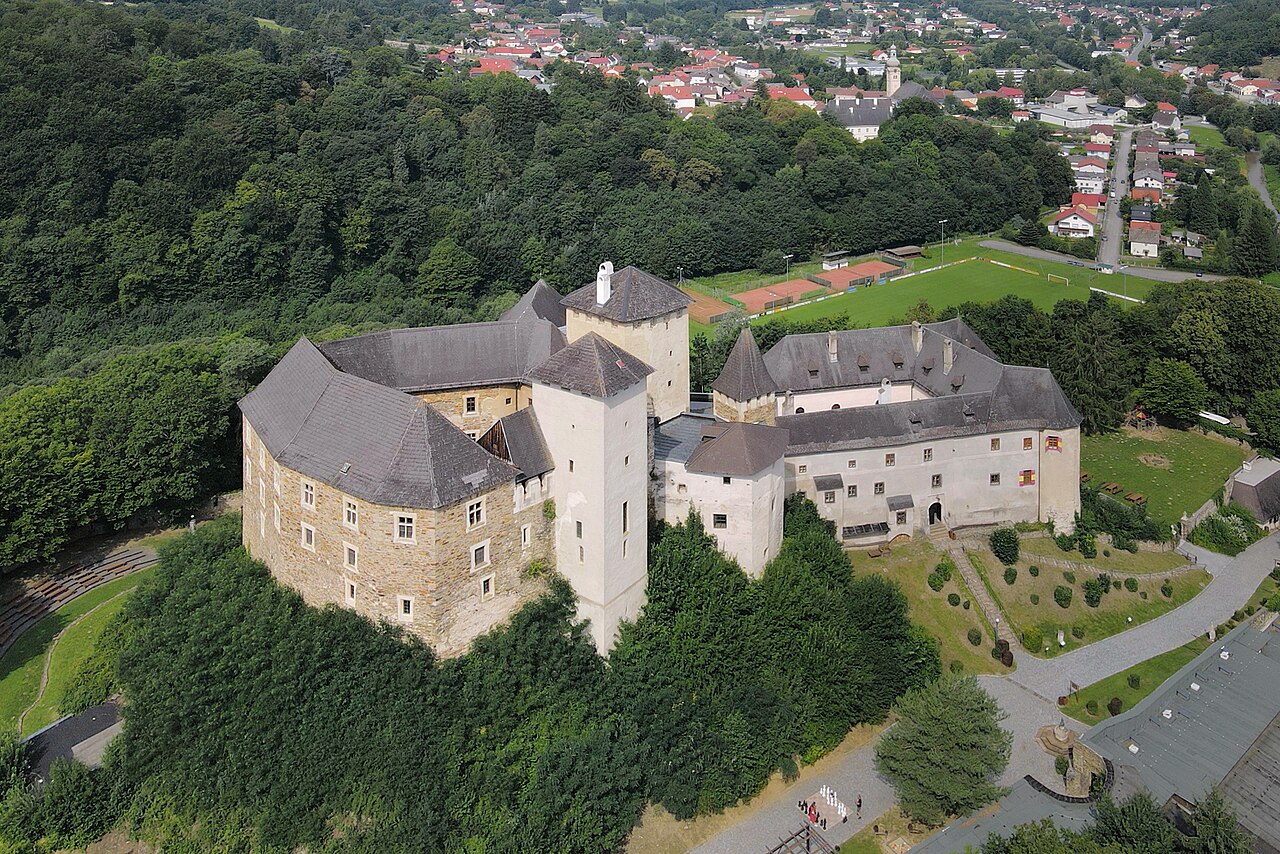
Burg Schlaining stands as one of the most remarkable and well-preserved medieval castles in Austria, nestled in the town of Stadtschlaining within the Burgenland region. This hill castle dates back to the 13th century and showcases a fascinating architectural evolution, beginning with its original Gothic construction and later enriched by significant Renaissance and Baroque additions. Its strategic location atop a hill overlooking the Bernstein mountains allowed it to control vital medieval trade routes, contributing to its historical importance as a military and administrative center.
Historical background and ownership
First documented in 1271 under the name "castrum Zloynuk," Burg Schlaining was initially established by Slavic settlers before coming under the possession of the Counts of Güssing, who held it as part of the dominion of Czech King Přemysl Otakar II. Following the military upheavals of the late 13th and early 14th centuries, the castle was transferred as a fief to the influential Kanizsay family by King Charles I Robert of Hungary.
Throughout the late medieval period, the castle changed hands multiple times, including temporary possession by Nikolaus Zarka of Pecöl and the Tompek family. In 1445, the fortress was seized by Emperor Frederick III, who incorporated it into the imperial estates and pledged it to the mercenary leader Andreas Baumkircher. Baumkircher expanded his influence over nearby villages but later rebelled against the emperor in the so-called "Baumkircher Feud" (1469–1471), which ended with his execution.
Subsequently, the castle was granted to the Batthyány family, who maintained ownership for over three centuries. Among them, Ludwig Batthyány stands out as a significant historical figure, serving as Hungary's first prime minister during the 1848 revolution before his execution in 1849. After this period, the castle passed through various private owners, including railway pioneer Franz Schmidt and Demeter Salesky, before being acquired in 1957 by former Austrian federal minister Udo Illig. Illig's vision transformed the castle into a center for peace studies, culminating in the establishment of the Austrian Study Centre for Peace and Conflict Resolution (ÖSFK) in 1983 and recognition as an "Ambassador of Peace" by the United Nations in 1987.
Architectural features and layout
Burg Schlaining is a quintessential example of a hill castle with a complex layout that reflects its long history of construction and adaptation. The castle comprises multiple courtyards enclosed by robust stone walls predominantly dating from the 15th century. These walls are punctuated by several defensive towers and bastions, designed to withstand sieges and attacks.
The castle's most prominent architectural feature is its keep, located within the inner courtyard. This massive structure boasts walls up to 8 meters thick, exemplifying the defensive priorities of medieval fortifications. Visitors can explore the keep, gaining insight into the military engineering of the period.
Among the residential and ceremonial spaces, the knight's hall is notable for its decorative fresco painted in 1740, one of the oldest secular wall paintings in the region depicting noble life. The castle chapel remains a well-lit and spacious room, occasionally used for worship, featuring a small pipe organ crafted in 1695 by Jakob Häcklinger.
The granarium, originally the main storage for grain, has been repurposed as a modern seminar center, offering versatile spaces for events ranging from intimate meetings to large conferences.
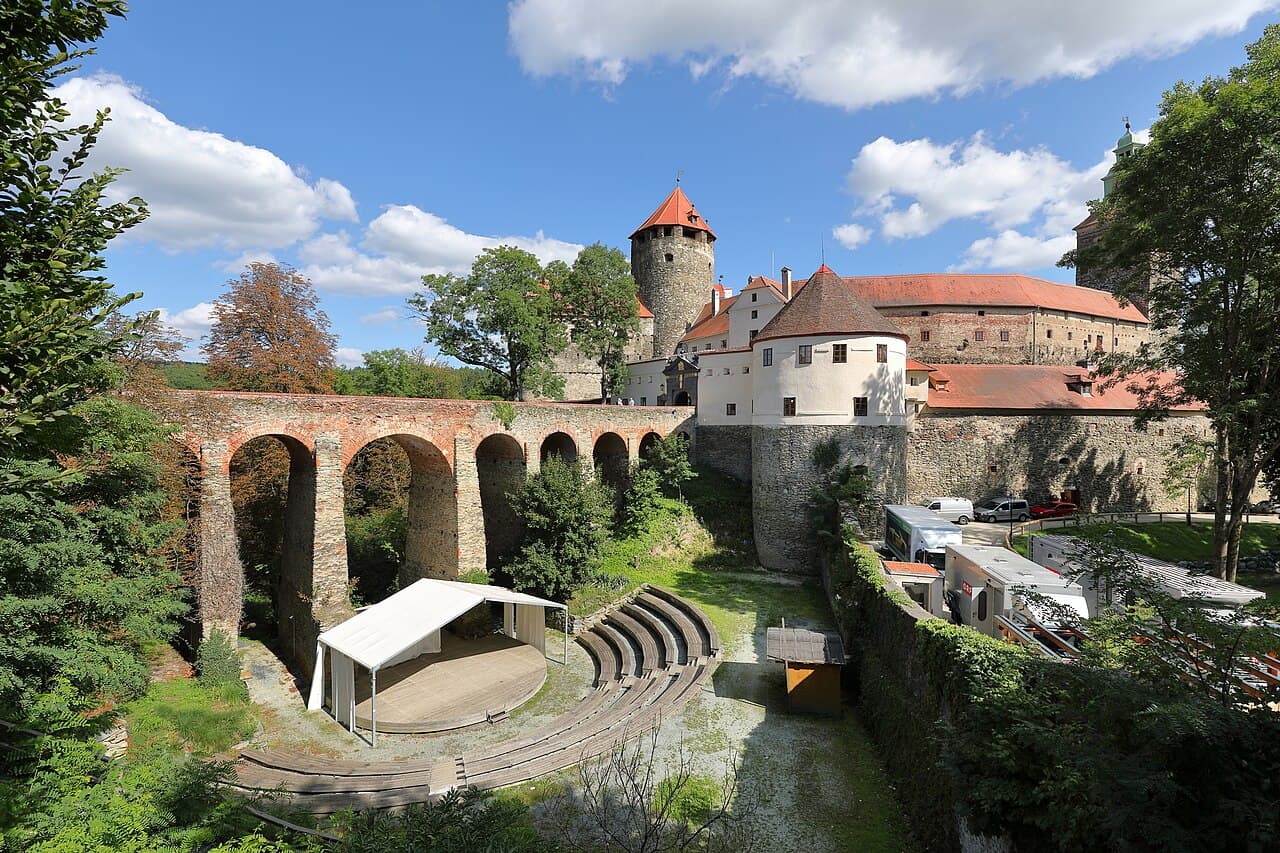
Access to the castle is gained via a long bridge equipped with a fully restored drawbridge. Alongside this bridge runs the "Forbidden Way," a path that allows visitors to walk beside the external castle walls and towers, providing unique perspectives on the fortress's defensive architecture.
Courtyards and defensive elements
The castle features several courtyards, each with distinct historical and architectural significance. The Black Courtyard, the oldest part of the complex, is named for its intricate sgraffito decorations on stairways and candle arches. This courtyard is encircled by original defensive walls and contains three underground cisterns carved into the rock, which historically secured drinking water during sieges.
The main courtyard is surrounded by walls topped with solid stone battlements and includes 15th-century defense towers. Notably, two large stone battering rams from the 18th century stand before the third gate, symbolizing the castle's martial heritage. The northern wall features the "Baumkircher Stone," a monument commemorating Andreas Baumkircher.
Adding symbolic and natural beauty to the grounds, five chestnut trees planted in a circular pattern honor Empress Elisabeth of Bavaria's coronation as Queen of Hungary.
Cultural significance and modern use
Today, Burg Schlaining functions as a vibrant cultural and educational center. It houses the European Peace Museum, dedicated to the history and promotion of peace, and hosts the Austrian Study Centre for Peace and Conflict Resolution, which organizes conferences and seminars on peace and conflict topics.
The castle's inner courtyard is equipped with a unique stage and grandstand system, facilitating a wide range of events including concerts, theatrical performances, and international conferences. The castle also offers spaces for private events such as weddings and birthdays, making it a lively venue that blends historical ambiance with contemporary use.
Adjacent to the castle, the well-preserved former Stadtschlaining synagogue and the protected rabbi's house stand as poignant reminders of the town's Jewish heritage prior to the community's expulsion in 1938.
Across the main square, a cluster of 15th-century smithy, armory, and arsenal buildings has been sensitively renovated and converted into a conference hotel, providing modern accommodations while respecting the site's cultural monument status.
Restoration and preservation efforts
Extensive restoration work began in 2019 to coincide with the 100th anniversary of Burgenland joining Austria. These efforts uncovered significant frescoes dating from around 1500 and other original architectural features that had been concealed over centuries. The restoration has been crucial in preserving the castle's historical integrity and enhancing visitor experience.
The castle is currently in a well-preserved state, with ongoing maintenance ensuring the protection of its medieval structures and artistic treasures. Its status as a cultural monument and center for peace studies underscores its multifaceted importance in Austrian heritage.
Frequently asked questions (FAQ)
- What is the historical significance of Burg Schlaining?
- Burg Schlaining, dating back to the 13th century, is a remarkable example of medieval architecture and played a crucial role in the region's defense against invasions. It has also served as a cultural center and is now home to the European Peace Centre, emphasizing its ongoing relevance in promoting peace and dialogue.
- When was Burg Schlaining built?
- Construction of Burg Schlaining began in the 13th century, around 1260, and it was completed in the subsequent decades. The castle has undergone various renovations and restorations, preserving its historical essence while adapting to modern uses.
- How do I get to Burg Schlaining?
- Burg Schlaining is conveniently located in Stadtschlaining, Austria, and can be reached by car or public transport. The nearest train station is in Oberwart, from which you can take a local bus or taxi to the castle.
- Is it possible to visit Burg Schlaining year-round?
- Yes, Burg Schlaining is open to visitors year-round, though certain areas may have restricted access during winter months. It is advisable to check the castle's official website for specific seasonal opening hours and any special events.
- What are the opening hours of Burg Schlaining?
- Burg Schlaining generally opens at 9 AM and closes at 5 PM, with extended hours during the summer months. However, specific hours may vary on holidays or during special events, so it's best to verify before planning your visit.
- Can I take a guided tour of Burg Schlaining?
- Yes, guided tours of Burg Schlaining are available and provide an in-depth exploration of the castle's history, architecture, and its role in regional development. These tours are led by knowledgeable guides who can answer your questions and offer insights into the castle's significance.
- What are the ticket prices for Burg Schlaining?
- Ticket prices for Burg Schlaining are quite reasonable, with discounts available for students, seniors, and groups. Children under a certain age may enter for free, making it an affordable option for families and visitors looking to explore the rich history of the castle.
- What is the best time to visit Burg Schlaining?
- The best time to visit Burg Schlaining is during the spring and early autumn months when the weather is pleasant, and the surrounding landscapes are particularly beautiful. Additionally, summer offers various events and activities that enhance the visitor experience.
- Are there any nearby attractions to visit along with Burg Schlaining?
- Yes, there are several attractions near Burg Schlaining, including the historic town of Oberwart and the picturesque nature reserves in the area. Visitors can also explore local museums and hiking trails that highlight the natural beauty and cultural heritage of the region.
Photo gallery

Information
Website
Visit websiteSources & official resources
Verify the information above using these authoritative references.
Loading map...
Visitor reviews
No reviews yet. Been here? Write the first review and help other travelers!
Write the first reviewVisited this castle? Share your experience
Your review helps other travelers and adds first-hand knowledge to our encyclopedia.