Castle Clinton
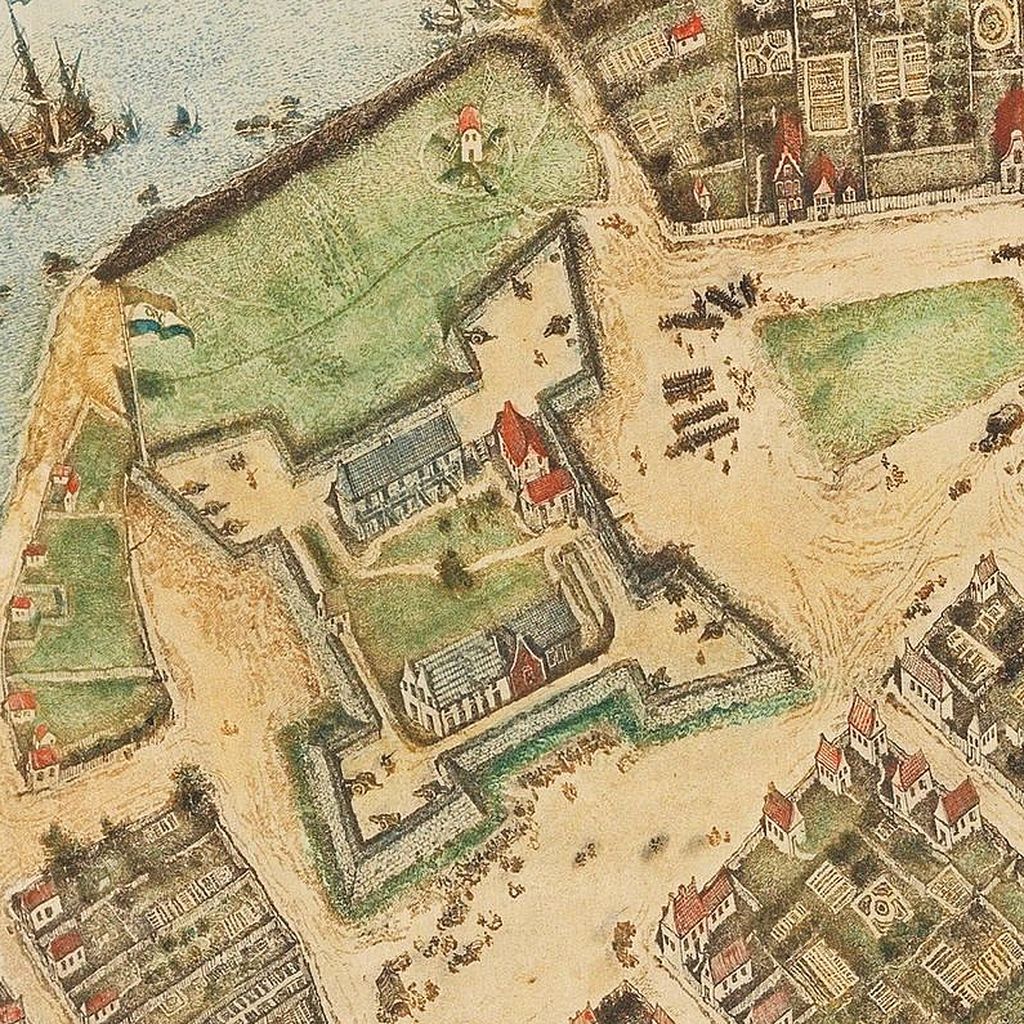
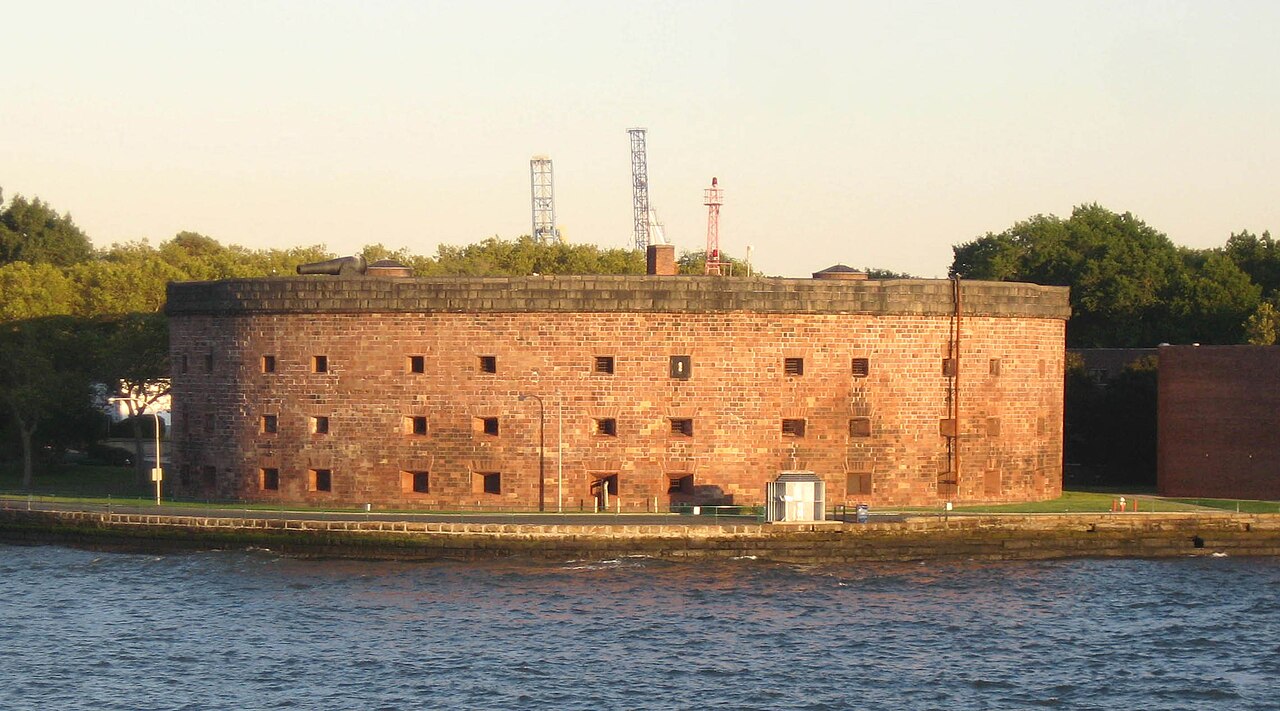
Castle Clinton, originally known as Fort Clinton and Castle Garden, is a restored bastioned sandstone fort located in Battery Park at the southern tip of Manhattan, New York City. Constructed between 1808 and 1811, it represents one of the earliest examples of American coastal fortifications designed to protect the vital harbor of New York. The fort's circular design and bastioned walls reflect early 19th-century military architectural principles aimed at maximizing defensive coverage and resistance to artillery fire.
Initially named the West Battery or Southwest Battery, the fort was built on an artificial island off the Manhattan shoreline. It was designed by the prominent architect John McComb Jr. with engineering consultation from Jonathan Williams, who was the first superintendent of the United States Military Academy at West Point. The fort was garrisoned during the War of 1812 but never engaged in battle, serving primarily as a deterrent against British naval forces.
Architectural features and military design
Castle Clinton is a bastioned fortress characterized by its circular sandstone walls approximately 62 feet in diameter and 20 feet high. The walls are punctuated by casemates—vaulted chambers used for mounting cannons and storing ammunition. The fort's design incorporates earthen embankments behind the stone walls to absorb artillery impacts, a common defensive feature in the period's coastal forts.
The fort's bastions project outward to allow defenders to fire along the face of the walls, eliminating blind spots. The original structure included a moat and drawbridge, enhancing its defensive capabilities. Over time, the moat was filled in as the surrounding land was expanded through landfill projects.
Evolution of use: from military fort to cultural landmark
Early military role and transition
Though built for defense, Fort Clinton saw limited military action. After the War of 1812, its strategic importance diminished due to advances in military technology and changing defense priorities. By the 1820s, the fort was repurposed to serve the growing city's recreational needs.
Castle garden: an entertainment venue
In 1824, the City of New York transformed the fort into Castle Garden, a 6,000-seat theater and beer garden. It became a popular venue for concerts, exhibitions, and public gatherings. The fort's robust stone walls and unique circular shape provided an atmospheric setting for entertainment, making it a cultural hub in the city.
The first american immigration station
Castle Garden's most historically significant role began in 1855 when it was converted into the first American immigration station, predating the famous Ellis Island facility by several decades. Between 1855 and 1890, more than 7.5 million immigrants passed through its processing halls, marking it as a critical gateway for newcomers to the United States during a period of intense immigration.
The immigration station was equipped with offices, dormitories, and medical inspection rooms. Its location at Manhattan's southern tip made it an ideal entry point for ships arriving from Europe. The station operated until 1890, when immigration processing was moved to Ellis Island, reflecting the need for a larger, more modern facility.
New york aquarium and later uses
Following its immigration role, Castle Clinton was repurposed as the first home of the New York Aquarium in 1896. The aquarium operated there until 1941, featuring marine exhibits and public educational programs. During this period, the fort underwent several expansions and renovations to accommodate its new functions.
Preservation efforts and modern significance
In the 1940s, the fort faced demolition proposals by New York City parks commissioner Robert Moses to make way for the Brooklyn–Battery Tunnel. This sparked a preservation campaign that led to the establishment of the Castle Clinton National Monument in 1946. The National Park Service assumed control in 1950, safeguarding the structure for future generations.
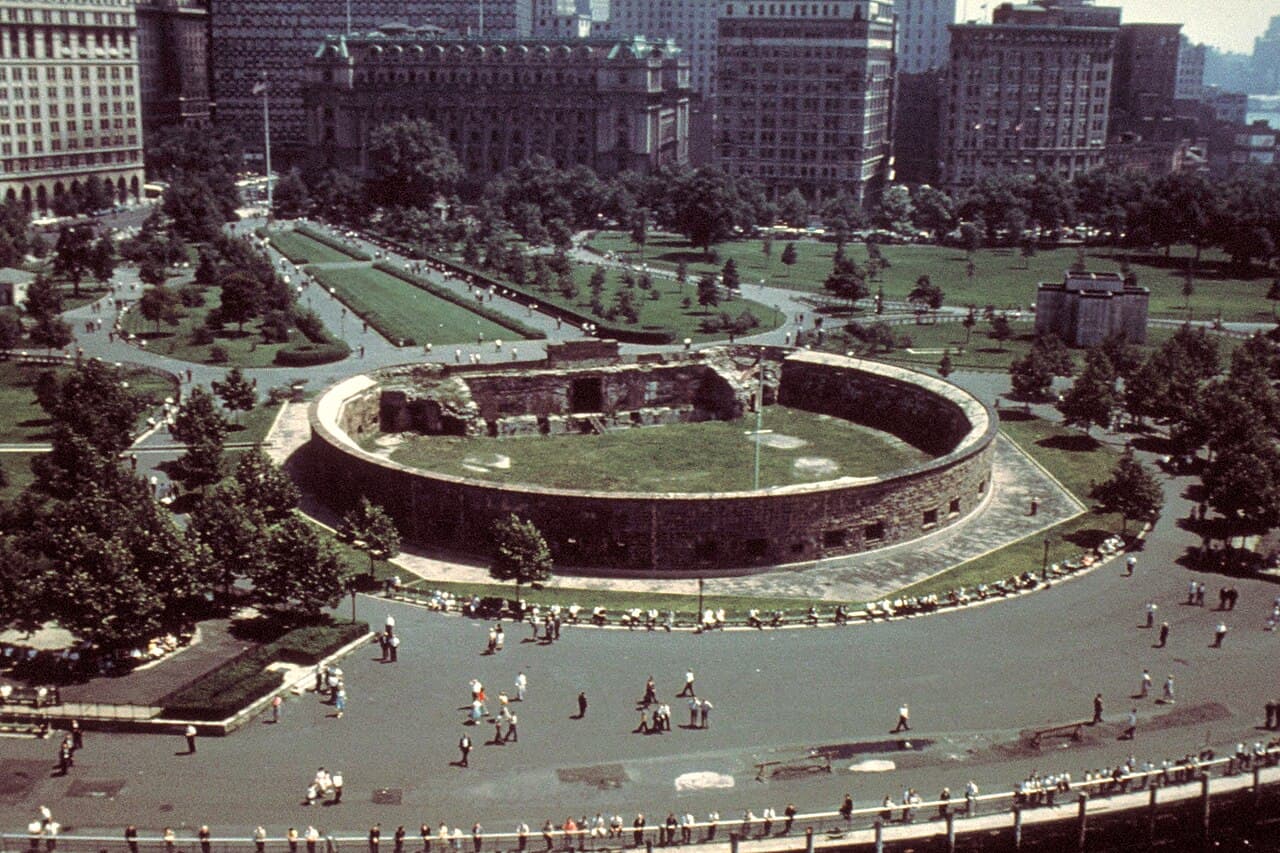
After decades of neglect and several restoration attempts, a comprehensive renovation was completed in 1975, restoring the fort's historic appearance and structural integrity. Since 1986, Castle Clinton has served as a visitor center and the departure point for ferries to the Statue of Liberty National Monument and Ellis Island, continuing its legacy as a gateway to American history.
Cultural and historical importance
Castle Clinton stands as a rare surviving example of early 19th-century American coastal fortifications and embodies multiple layers of New York City's history—from military defense to entertainment, immigration, and conservation. Its designation as a New York City landmark, a U.S. national monument, and its listing on the National Register of Historic Places reflect its significance as a cultural and architectural treasure.
The fort's adaptive reuse over two centuries illustrates the evolving needs of a growing metropolis and the importance of preserving historic sites for public education and heritage tourism. Visitors today can explore the fort's stone walls, casemates, and courtyard, gaining insight into its multifaceted past.
Frequently asked questions (FAQ)
- How do I get to Castle Clinton?
- Castle Clinton is located in Battery Park, New York City, making it easily accessible by public transportation. You can take the subway to the Bowling Green or South Ferry stations, which are just a short walk away from the castle.
- What is the historical significance of Castle Clinton?
- Originally built in 1808 as a fort, Castle Clinton played a crucial role in defending New York Harbor during the War of 1812. It later served as an immigration station from 1855 to 1890, welcoming millions of immigrants to the United States.
- When was Castle Clinton built?
- Construction of Castle Clinton began in 1808 and was completed in 1811. It was designed by the architect John McComb Jr. and was originally named West Battery before being renamed in honor of DeWitt Clinton, the governor of New York.
- Can I enter Castle Clinton without a ticket?
- While access to the grounds of Castle Clinton is free, there is an admission fee for tours and special events. It is advisable to check the official website for ticket prices and any special exhibits that may require a ticket.
- Why is Castle Clinton an important architectural site?
- Castle Clinton is an excellent example of early 19th-century military architecture, featuring a unique circular design and a robust stone structure. Its historical significance is enhanced by its preservation and adaptation over the years, showcasing the evolution of American architectural styles.
- Is it possible to visit Castle Clinton year-round?
- Yes, Castle Clinton is open to visitors year-round, but operating hours may vary seasonally. It is recommended to check the official website for the most current opening hours and any potential closures due to weather or special events.
- What is the best time to visit Castle Clinton?
- The best time to visit Castle Clinton is during the spring and fall when the weather is mild and pleasant for outdoor exploration. Additionally, visiting during weekdays can help you avoid larger crowds that typically gather on weekends.
- Are there any nearby attractions to Castle Clinton?
- Yes, Castle Clinton is located near several notable attractions, including Battery Park, the Statue of Liberty, and Ellis Island. Taking a stroll through Battery Park allows you to enjoy beautiful views of the harbor and access ferry services to these iconic sites.
- What are the ticket prices for Castle Clinton?
- Ticket prices for Castle Clinton vary depending on the type of tour or event you wish to attend. General admission to the grounds is free, but guided tours may have a fee, so it is best to check the official site for updated pricing information.
Photo gallery

Photo by National Park Service's staff. Cropped by Blackcat•Public domain
Information
Loading map...
Visitor reviews
No reviews yet. Been here? Write the first review and help other travelers!
Write the first reviewVisited this castle? Share your experience
Your review helps other travelers and adds first-hand knowledge to our encyclopedia.