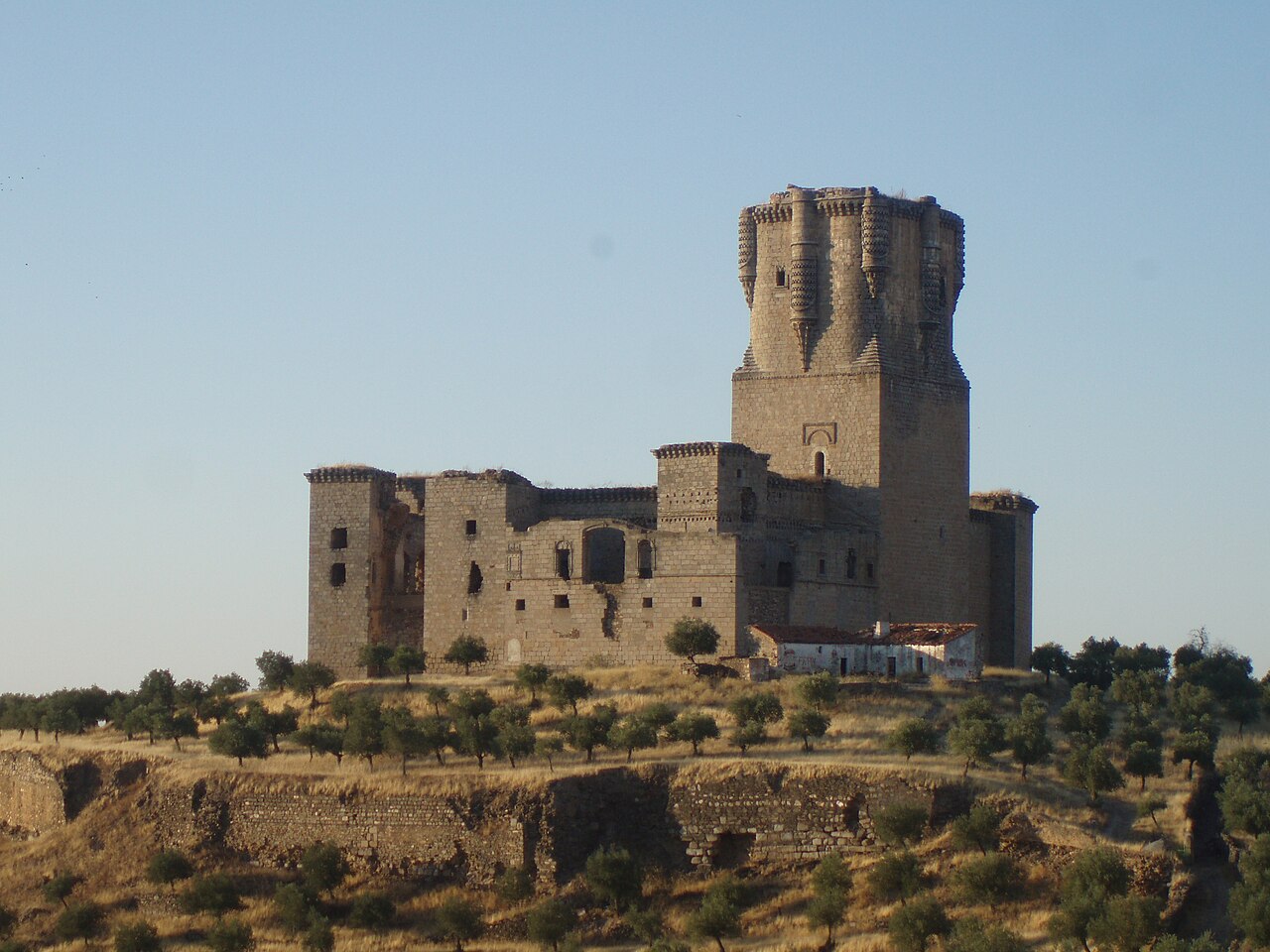
Belmez Castle
Belmez Castle is a medieval fortress perched atop a prominent limestone rocky outcrop in the town of Bélmez, located northwest of Córdoba, Spain. This strategic position grants the castle commanding views of the surrounding landscape, making it a significant military stronghold throughout its history. The castle's origins trace back to at least the mid-13th century, with documented presence around 1245. However, much of the existing fortifications, including the main tower and curtain walls, were constructed later during the 15th century, reflecting the evolving military architecture of the High Medieval period.
Historical background and strategic importance
Initially, the site belonged to the Cordoba Council before passing to the Order of Calatrava, a military and religious order instrumental in the Reconquista, the Christian reconquest of the Iberian Peninsula. During the 15th century, Belmez Castle gained prominence as a key point of control in the region, overseeing important routes and serving as a defensive bastion against Moorish forces. The castle's location on a nearly inaccessible rock, especially from the northwestern side due to a steep cliff, made it a formidable obstacle for attackers.
Architectural features and layout
The castle's elongated floor plan adapts closely to the natural contours of the rock outcrop it crowns. The defensive perimeter is reinforced by a curtain wall punctuated by six semi-cylindrical towers, which vary in thickness to enhance resistance against siege weaponry. The main entrance is reached by ascending winding stairs beginning on Calle Rafael Canalejo Canteroy, passing through an arched doorway integrated into one of the turreted towers.
The keep is a distinctive pentagonal tower rising approximately 11 meters high. It contains two floors, each covered by brick vaults, a construction technique that provided both structural strength and fire resistance. Originally, the keep was crowned with parapets and battlements, defensive features designed for archers and soldiers to repel attackers, although these elements have not survived intact to the present day.
Within the castle's bailey, there is a notable well known locally as the "horse's hoofprint". This well remains consistently filled with water, a result of the unique geological features of the terrain, which made the fortress more self-sufficient during sieges.
Role during the peninsular war and later history
Belmez Castle saw renewed military use during the Peninsular War (1810-1812) when French troops occupied the fortress. Recognizing its strategic value, the French forces undertook partial reconstruction and reinforcement of the castle to secure their hold on the area. The occupation deeply affected the local population, who viewed the castle as a symbol of foreign domination. After the French withdrawal, the people of Belmez attempted to dismantle or destroy the fortress to prevent its future use by enemies.
Access and current condition
Today, visitors approach Belmez Castle by climbing the winding stairs from the town, entering through the arched gateway set in one of the towers. The castle is classified as a High Medieval fortress and remains partially preserved, with significant portions of its walls and towers still standing. The loss of battlements and parapets is evident, but the overall layout and many architectural details allow insight into its defensive design and historical function.
Belmez Castle exemplifies the military architecture adapted to challenging natural terrain, combining natural defenses with man-made fortifications. Its history reflects the broader conflicts of medieval Spain, from the Reconquista to the Napoleonic Wars, making it an important cultural and historical landmark in the Córdoba region.
Frequently asked questions (FAQ)
- What is the historical significance of Belmez Castle?
- Belmez Castle, located in the town of Bélmez, Spain, dates back to the 13th century. It served as a strategic military stronghold during the Reconquista, showcasing the region's historical importance in the conflict between Christian and Muslim forces.
- When was Belmez Castle built?
- Belmez Castle was constructed in the early 13th century, around the same time the area was being repopulated following the Reconquista. Its architecture reflects the military styles of the period, designed to withstand sieges and provide defense.
- Is it possible to visit Belmez Castle?
- Yes, Belmez Castle is open to visitors. Guests can explore the ruins and enjoy the panoramic views from its elevated position, making it a great spot for history enthusiasts and photographers alike.
- What are the opening hours for Belmez Castle?
- Belmez Castle is generally open to the public daily, but it's advisable to check local listings for specific hours as they can vary by season. Typically, it opens in the morning and closes in the late afternoon.
- Can I buy tickets in advance for Belmez Castle?
- Tickets for Belmez Castle are usually available at the entrance, and there is often no need for advance purchase. However, during peak tourist seasons, it is a good idea to arrive early to avoid long waits.
- What is the best time to visit Belmez Castle?
- The best time to visit Belmez Castle is during the spring and fall months when the weather is mild and pleasant. Summer can be quite hot, while winter may bring cooler temperatures that could affect your experience.
- Are there any nearby attractions to visit while at Belmez Castle?
- Yes, while visiting Belmez Castle, you can also explore the charming town of Bélmez itself, known for its local cuisine and friendly atmosphere. Additionally, nearby natural parks and historical sites offer further opportunities for exploration.
- How do I get to Belmez Castle?
- Belmez Castle is accessible by car, and there are parking facilities nearby. Public transportation options may be limited, so consider checking local bus schedules or arranging for a taxi service if needed.
- Is Belmez Castle accessible for visitors with mobility issues?
- The castle's ruins and uneven terrain may pose challenges for visitors with mobility issues. It is recommended to contact local tourism offices for specific accommodations or accessibility options before planning your visit.
Information
Loading map...
Visitor reviews
No reviews yet. Been here? Write the first review and help other travelers!
Write the first reviewVisited this castle? Share your experience
Your review helps other travelers and adds first-hand knowledge to our encyclopedia.