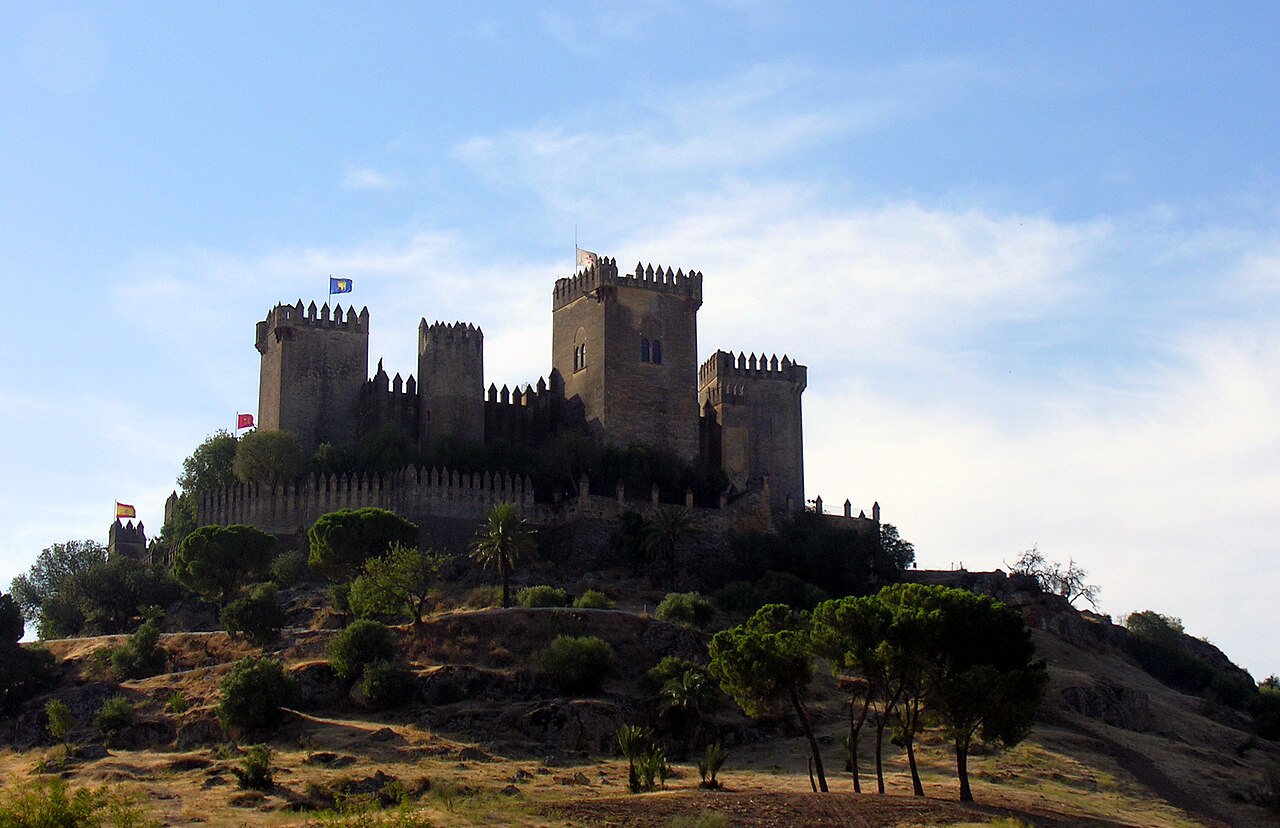
Castillo de Hornachuelos
Castillo de Hornachuelos stands as a significant example of Hispano-Muslim military architecture in Spain, with origins tracing back to the 8th and 9th centuries during the era of the Emirate of Córdoba. Situated in the town of Hornachuelos, the castle was initially constructed as part of a defensive network to protect local populations from external threats. Over centuries, its strategic importance evolved, reflecting the complex historical and political changes in the region.
Historical development and strategic importance
The castle's earliest construction phase corresponds to the period when the Emirate of Córdoba sought to consolidate control over the Iberian Peninsula. During the 10th century, as the Emirate transitioned into the Caliphate of Córdoba, the fortress underwent significant modifications to reinforce its role as a military stronghold. These enhancements included strengthening walls and towers to better withstand sieges and attacks.
Following the Reconquista and the fall of the Nasrid Kingdom of Granada in 1492, the military significance of Castillo de Hornachuelos diminished considerably. The castle's defensive walls gradually fell into disuse, and many of its stone blocks were repurposed by local inhabitants for construction within the town. By the mid-19th century, the castle was described by historian Luis María Ramírez de las Casas-Deza as abandoned and overgrown, marking a period of neglect.
Architectural features and layout
The castle is primarily constructed from stone blocks, a common material in medieval fortifications, which provided durability and defense against invaders. The surviving structures include the prominent keep tower (torre del homenaje), which served as the last line of defense and a symbol of lordly power. This tower dominates the castle's silhouette and offers insight into the defensive strategies of the period.
The main courtyard or plaza de armas measures approximately 40 by 30 meters, providing an open area essential for the movement and coordination of defenders. Within this courtyard lies a cistern, likely dating from the 14th century, which was crucial for water storage during sieges. This cistern was restored in the mid-1980s, shedding light on the castle's adaptations beyond its original medieval design.
Additional architectural elements include the reconstructed northwest tower and sections of the adarve or wall walk. The adarve allowed defenders to patrol and defend the castle walls effectively. The removal of houses built alongside the walls by 2019 has helped to reveal and preserve these features, enhancing the castle's historical integrity.
Restoration and preservation efforts
Restoration initiatives began in the late 20th century, aiming to stabilize and conserve the castle's remaining structures. A key project in the mid-1980s involved repairing the 14th-century cistern, led by Antonio Castro Escobar. From 1995 to 2019, extensive work was undertaken to remove modern constructions that had encroached upon the castle walls, allowing for more authentic restoration.
Since 2015, architect Monique Betancourt has overseen restoration activities, supported by provincial and local government funding. These efforts have focused on structural repairs and archaeological excavations, particularly around the castle's main keep tower. In 2021, plans were announced for further restoration of the keep, accompanied by archaeological investigations to better understand the site's historical layers.
The castle is protected under Spanish heritage laws as a Bien de Interés Cultural, ensuring its preservation for future generations and recognition as a cultural landmark.
Significance and visitor experience
Castillo de Hornachuelos offers visitors a tangible connection to the medieval history of southern Spain and the complex interactions between Muslim and Christian powers during the Middle Ages. The castle's hilltop position provides commanding views of the surrounding landscape, emphasizing its strategic placement.
Visitors can explore the restored areas, including the keep tower, courtyard, and sections of the defensive walls. The site serves as an educational resource, illustrating medieval military architecture and the historical evolution of fortifications in the Iberian Peninsula.
Frequently asked questions (FAQ)
- When was Castillo de Hornachuelos originally built?
- Castillo de Hornachuelos was originally constructed during the 8th and 9th centuries under the Hispano-Muslim Emirate of Córdoba.
- What are the main architectural features of Castillo de Hornachuelos?
- The castle features a prominent keep tower, a large main courtyard (plaza de armas), a 14th-century cistern, and sections of defensive walls with a wall walk (adarve).
- What restoration efforts have been made at Castillo de Hornachuelos?
- Restoration began in the late 20th century, including cistern repair in the 1980s and removal of houses from the walls between 1995 and 2019, with ongoing work led by architect Monique Betancourt since 2015.
- Is Castillo de Hornachuelos protected as a heritage site?
- Yes, the castle is protected under Spanish heritage laws as a Bien de Interés Cultural, ensuring its preservation and cultural significance.
Information
Website
Visit websiteSources & official resources
Verify the information above using these authoritative references.
Loading map...
Visitor reviews
No reviews yet. Been here? Write the first review and help other travelers!
Write the first reviewVisited this castle? Share your experience
Your review helps other travelers and adds first-hand knowledge to our encyclopedia.