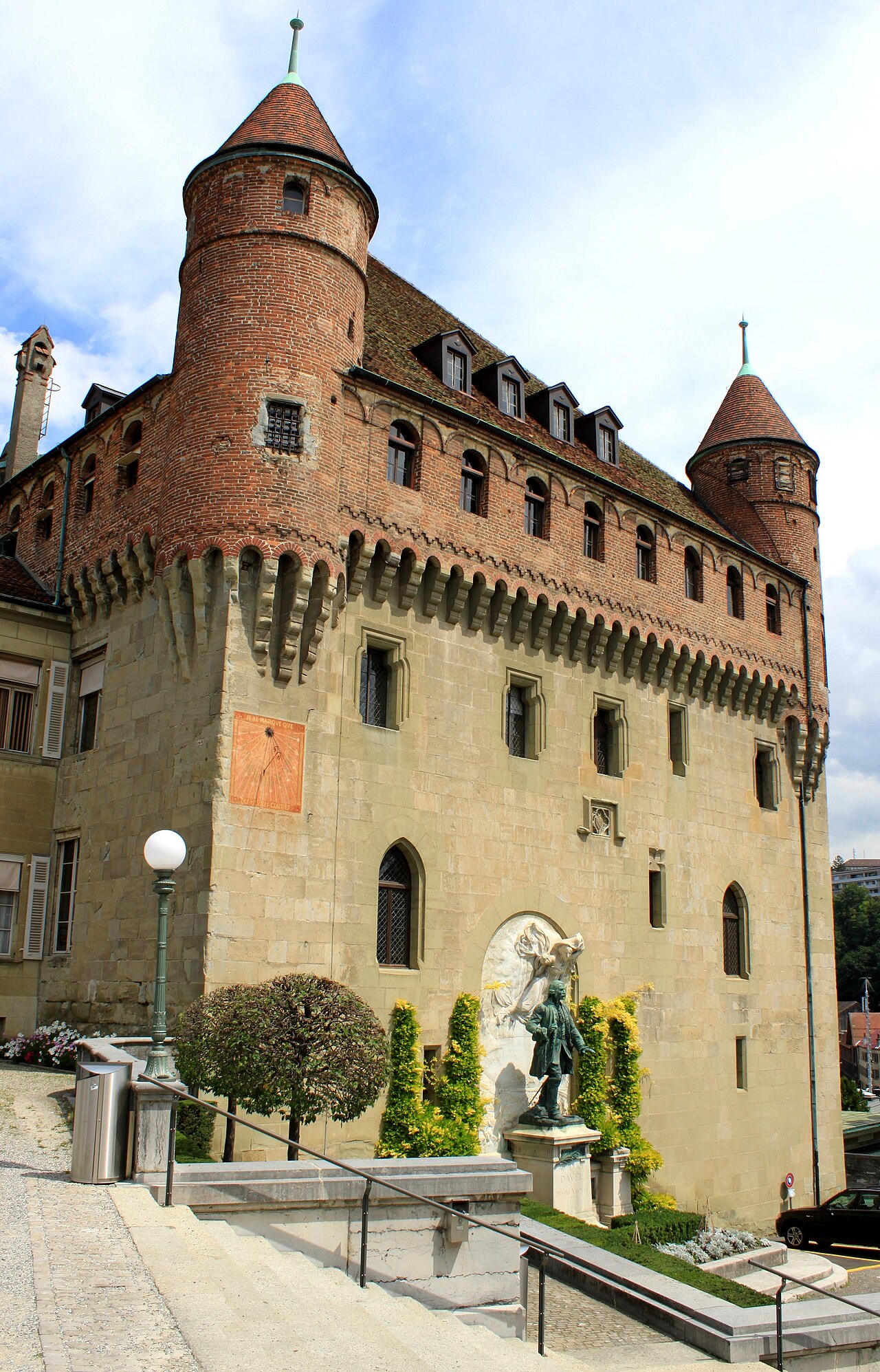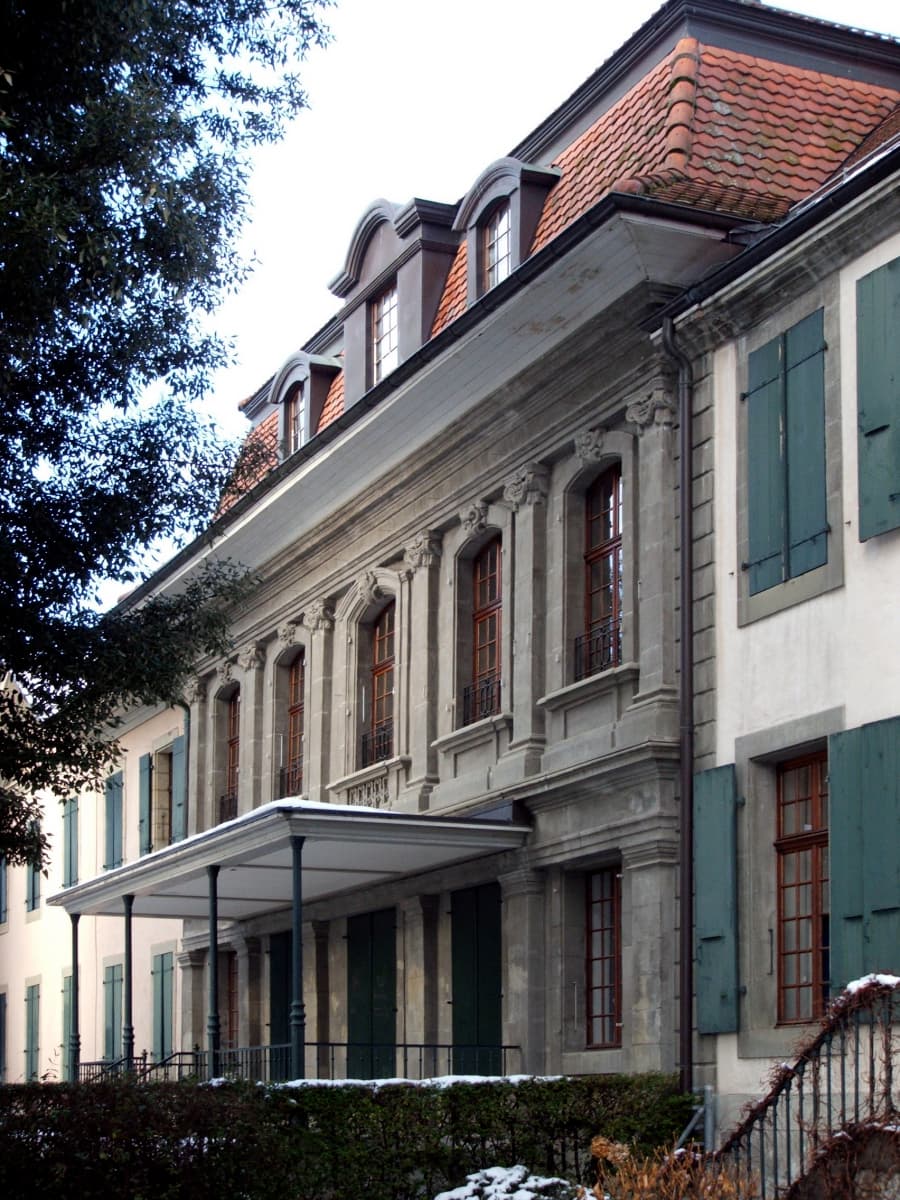
Beaulieu Castle — Switzerland castle

Beaulieu Castle

Beaulieu Castle in Lausanne, Switzerland
Post-Renaissance (17th–18th c.)

Beaulieu Castle (French: Château de Beaulieu) is a notable historic château located in the city of Lausanne, within the Canton of Vaud in Switzerland. This 18th-century hill castle stands prominently in the region and is officially recognized as a Swiss heritage site of national significance. Its location on elevated ground classifies it as a hill castle, a common type of fortification designed to provide strategic views and defense advantages.

Historical context and significance

The construction of Beaulieu Castle dates back to the 18th century, placing it in the post-Renaissance period. This era in Swiss history was marked by a transition from medieval fortifications to more residential and representational architecture, reflecting changing social and political conditions. While many castles of earlier medieval periods were built primarily for defense, Beaulieu Castle was designed more as a stately residence, embodying the architectural and cultural tastes of the time.

Situated in Lausanne, a city with a rich history dating back to Roman times, the castle contributes to the region's architectural heritage. The Canton of Vaud, known for its scenic landscapes along Lake Geneva and its historic towns, includes Beaulieu Castle among its important cultural landmarks.

Architectural features and style

Beaulieu Castle exhibits characteristics typical of post-Renaissance château architecture in Switzerland. Unlike medieval fortresses, it emphasizes comfort and aesthetic appeal alongside security. The castle likely features elegant façades, symmetrical layouts, and refined interior spaces designed for residential use rather than military defense.

The castle's placement on a hill provides commanding views of the surrounding area, a strategic choice that also enhances its visual prominence. Its construction materials and techniques reflect the local traditions of the 18th century, possibly incorporating stone masonry with detailed finishing work.

Structural elements

As a hill castle, Beaulieu includes typical defensive elements adapted for its period, such as thick walls and possibly small towers or turrets, although its primary function was residential. The grounds may include formal gardens or courtyards, common in château designs of the era, creating an integrated environment of leisure and status.

Current status and cultural importance

Today, Beaulieu Castle is preserved as a heritage site of national importance by Swiss authorities. This designation highlights its value in illustrating the architectural evolution from fortified castles to elegant châteaux in the post-Renaissance period. The castle is an important cultural asset for Lausanne and the wider Vaud region, attracting interest from historians, architects, and visitors.

While specific details about public access and current use are limited, the castle's protected status ensures ongoing conservation efforts to maintain its historical integrity. Its presence enriches the cultural landscape of Lausanne and serves as a tangible connection to the region's architectural and social history.

Beaulieu Castle in the context of Swiss heritage

Switzerland's diverse castle heritage includes numerous examples from various periods, reflecting the country's complex history of regional powers and cultural influences. Beaulieu Castle represents the shift toward residential grandeur in the 18th century, contrasting with earlier medieval fortifications.

The castle's location in Vaud, a canton with many historic sites, underscores its role in the broader narrative of Swiss architecture. Its preservation contributes to understanding the development of château architecture and the social history of the Swiss nobility and bourgeoisie during the post-Renaissance era.

Frequently asked questions (FAQ)

How do I get to Beaulieu Castle?
Beaulieu Castle is conveniently located in Switzerland, accessible by both public transportation and car. If you are traveling by train, the nearest station is a short bus ride away. For those driving, ample parking is available near the castle.
What is the historical significance of Beaulieu Castle?
Beaulieu Castle dates back to the medieval period and has a rich history involving local nobility and strategic military importance. It is renowned for its well-preserved architecture and serves as a testament to the feudal era in Switzerland. The castle also hosts various cultural events that highlight its historical legacy.
When was Beaulieu Castle built?
Construction of Beaulieu Castle began in the late 12th century and was completed in the early 13th century. Over the years, it has undergone several renovations, preserving its original medieval charm while adapting to modern needs. This long history makes it a fascinating site for history enthusiasts.
Can I take guided tours of Beaulieu Castle?
Yes, guided tours of Beaulieu Castle are available and highly recommended for visitors. These tours provide in-depth insights into the castle's history, architecture, and the stories of its past inhabitants. Be sure to check the schedule in advance, as tours may vary seasonally.
Why is Beaulieu Castle a popular tourist destination?
Beaulieu Castle is a popular destination due to its stunning architecture, rich history, and picturesque surroundings. Visitors are drawn to its beautiful gardens and panoramic views of the Swiss landscape. The castle also hosts various events and exhibitions that enhance the visitor experience.
Is it possible to host events at Beaulieu Castle?
Yes, Beaulieu Castle offers facilities for hosting private events, including weddings and corporate gatherings. The enchanting setting and historical ambiance make it a unique venue for special occasions. Interested parties should contact the castle administration for details on availability and services offered.
What are the opening hours of Beaulieu Castle?
Beaulieu Castle is typically open to visitors from 10 AM to 5 PM, with extended hours during the summer months. It is advisable to check the official website for any seasonal changes or special closures. Visitors are encouraged to arrive early to fully enjoy the castle and its surroundings.
What are the ticket prices for Beaulieu Castle?
Ticket prices for Beaulieu Castle are generally quite reasonable, with discounts available for students, seniors, and children. Family tickets are also offered for those visiting in groups. For the most up-to-date pricing, please visit the castle’s official website prior to your visit.
When is the best time to visit Beaulieu Castle?
The best time to visit Beaulieu Castle is during the spring and early autumn months when the weather is mild and the gardens are in full bloom. These seasons also see fewer tourists, allowing for a more relaxed experience. Summer can be busy, but it offers vibrant events and activities at the castle.
Are there any nearby attractions to visit?
Yes, Beaulieu Castle is surrounded by several attractions, including picturesque hiking trails and charming Swiss villages. Visitors can also explore local museums and art galleries that showcase the region's culture. A visit to the nearby lake offers opportunities for swimming and picnicking, making it a great complement to your castle experience.

Photo gallery

Beaulieu Castle
Click to view

Photo by Archipat•CC BY-SA 3.0

1 photo • Click any image to view in full screen

Information

Hill Castle

Loading map...

Visitor reviews

No reviews yet. Been here? Write the first review and help other travelers!

Write the first review

Visited this castle? Share your experience

Your review helps other travelers and adds first-hand knowledge to our encyclopedia.

Write a review

(5/5)

0/2000 characters

Your review will be visible after admin approval

Nearby castles

0.8 km

Saint Maire Castle

Lausanne, Switzerland

Saint Maire Castle in Lausanne, Switzerland, stands as a remarkable example of late medieval fortified architecture. Constructed between 1397 and 1425, this castle was originally built to serve as the fortified residence of the Bishops of Lausanne. It remains a prominent symbol of the city's historical and political heritage, currently housing the Council of State of Vaud, the cantonal government. Recognized as a Swiss heritage site of national significance, the castle encapsulates centuries of religious, military, and administrative history. Historical background and significance The construction of Saint Maire Castle was initiated under Bishop Guillaume of Menthonay and completed by his successor, Guillaume of Challant. The castle was named after Saint Marius, the first bishop of Lausanne, reflecting its ecclesiastical origins. Serving as the bishop's residence until 1536, the castle witnessed a pivotal moment when Bernese forces captured Lausanne during the Reformation period. This event led to the secularization of the bishopric, and the bishop at the time, Sébastien of Montfalcon, famously escaped through a hidden stairwell within the castle. Following the Bernese conquest, the castle's function shifted from a religious residence to a military and administrative center. The Bernese installed a bailiff and repurposed the castle as an armory. This transition marked a significant change in the castle's role within the region, reflecting the broader political and religious upheavals of the 16th century. With the establishment of the canton of Vaud in 1803, Saint Maire Castle was designated as the seat of the cantonal government, a role it continues to fulfill. This continuity underscores the castle's enduring importance in the political life of the region. Architectural features and style Saint Maire Castle was constructed as a single massive rectangular block, a common design for fortified residences of its time. The lower portion of the castle is built from sandstone, providing a sturdy foundation, while the upper portion is constructed of brick. This combination of materials was typical in the region and period, balancing durability with aesthetic considerations. One of the castle's distinctive features was its original Ghibelline merlons, a style of battlement characterized by swallowtail-shaped crenellations, which imparted an Italianate appearance to the fortress. However, due to the wet climate of Lausanne, these merlons were later filled in and the roof extended, likely during the 16th century to improve weather protection. The windows located just below the eaves fill the gaps between the merlons, with arches above them echoing the v-shaped openings typical of Ghibelline design. In 1789, the Bernese authorities added an annex on the west side of the castle, which now serves as the main entrance. This addition reflects the evolving use and adaptation of the castle over time. A tower that once stood adjacent to the castle was demolished in 1890, and around the same period, a statue of Abraham Davel, a local historical figure, was installed against the front wall, adding a commemorative element to the site. Cultural and political role through the centuries Throughout its history, Saint Maire Castle has played a multifaceted role, transitioning from a religious fortress to a military stronghold and finally to a center of civil administration. Its survival and continuous use highlight its architectural resilience and adaptability. As the seat of the Council of State of Vaud, the castle remains a vital institution in the governance of the canton. Its historical significance is celebrated locally and nationally, contributing to the cultural identity of Lausanne and the wider region. Preservation and current status Today, Saint Maire Castle is well preserved, maintaining much of its original late medieval character despite modifications over the centuries. Its designation as a Swiss heritage site of national significance ensures ongoing protection and conservation efforts. The castle is accessible to the public during certain events and offers visitors a glimpse into the rich history and architectural heritage of Lausanne. Its imposing structure and historical ambiance make it a notable landmark for tourists and scholars alike. Notable architectural elements Rectangular block structure: The castle's massive rectangular form exemplifies medieval fortress design. Ghibelline merlons: Originally featured distinctive swallowtail battlements typical of Italian medieval architecture. Material composition: Sandstone lower walls with brick upper sections, balancing strength and style. Annex addition: The 18th-century annex on the west side serves as the current entrance. Hidden stairwell: Historical escape route used by Bishop Sébastien of Montfalcon during the Bernese conquest. Statue of Abraham Davel: Installed in the late 19th century, commemorating a local hero.

Late Medieval (14th–15th c.)
Details
0.9 km
Saint Maire Castle, Lausanne — Switzerland castle

Saint Maire Castle, Lausanne

Lausanne, Switzerland

Saint Maire Castle, located in Lausanne, in the canton of Vaud, Switzerland, is a prominent example of a medieval hill castle that has evolved significantly through the centuries. Constructed between 1397 and 1431 by the bishops of Lausanne, it replaced an earlier episcopal residence that no longer fulfilled their needs. This castle stands as a testament to the religious and political authority wielded by the bishops during the Late Medieval period. The castle is named in honor of Saint Marius (Saint Maire), a 6th-century bishop who relocated the episcopal seat from Avenches to Lausanne around the year 581, a strategic move prompted by the threat of Germanic invasions. This relocation marked a significant shift in the ecclesiastical center of the region and laid the foundation for Lausanne's later prominence. Architectural features and defensive design Saint Maire Castle is a large cubic structure measuring approximately 25 by 23 meters, with formidable walls 2.8 meters thick designed for defense and durability. The castle’s south façade rises to a height of 25 meters, emphasizing its imposing presence overlooking the city. The lower sections of the walls are constructed from gray molasse sandstone, a common regional building material, while the upper story features red brick, a distinctive contrast that highlights the castle's architectural phases. One of the castle’s most notable defensive features is its machicolations—openings in the parapet used to drop projectiles or boiling liquids on attackers—which adorn the upper sections. Small corner turrets shaped like pepper pots provide additional vantage points for surveillance and defense. The roof is a four-sided pitched design standing 13.5 meters tall, with a distinctive ridge featuring two peaks. Originally, the roof was crowned with Ghibelline merlons, a battlement style characterized by swallowtail-shaped notches that were popular in northern Italy. These merlons were later filled in during the 16th century, and windows were inserted just below the eaves, filling the spaces between the original battlements. The arches of these windows echo the shape of the former merlons, preserving the castle’s medieval silhouette while adapting it for new uses. The castle was historically separated from the city by defensive walls and a dry moat on its western side. Access was controlled via a drawbridge, which has since been filled in as the castle transitioned away from military functions. In 1789, a two-story annex was added to the west side, now serving as the main entrance. A nearby tower was demolished around 1890, reflecting changes in urban development and defensive needs. Historical context and episcopal residence Saint Maire Castle served as the fortified residence of the bishops of Lausanne until 1536. This period was marked by the castle's dual role as a religious seat and a symbol of episcopal power. The bishops undertook significant renovations between 1476 and 1517 under the leadership of Benoît de Montferrand and Aymon de Montfalcon. These renovations included the addition of murals decorating the interior walls and the installation of prison cells in the lower parts of the castle, reflecting its judicial and administrative functions. The bishop’s chamber, renovated in the early 16th century, features the Montfalcon family coat of arms and motto, symbolizing the familial and political ties of the episcopal occupants. The chamber also contains 16th-century murals that some attribute to the artist Pierre Spicre, although this attribution remains a subject of scholarly debate. The castle’s religious function ended abruptly in 1536 when Bernese forces conquered the Vaud region. The last bishop, Sébastien de Montfalcon, escaped through a secret stairwell within the castle during this conquest. Following this event, the castle ceased to be a religious residence and was repurposed under Bernese rule. Bernese administration and later civic use From 1536 to 1798, under Bernese control, Saint Maire Castle served as the administrative center for the Bernese bailiff. During this time, the castle’s defensive features were modified to suit its new role. The crenellations were filled in, and the roof was extended to improve insulation, signaling a shift from military defense to administrative functionality. After the liberation of Vaud in 1798 and its establishment as a canton in 1803, the castle was adapted to serve as the seat of the cantonal government. It housed the Council of State and other executive offices, a role it continues to fulfill today. This transformation highlights the castle’s enduring importance as a center of regional governance. Throughout the 19th and 20th centuries, the castle underwent various adaptations to accommodate administrative needs. The courtyard was reconfigured, facades were repaired, and 16th-century paintings were uncovered, adding to the castle’s historical and cultural value. A monument to Major Abraham Davel, a local hero executed nearby in 1723 for his resistance against Bernese rule, stands against the castle’s southern facade, linking the site to regional history and identity. Restoration and preservation efforts Recognized as a Swiss heritage site of national importance since 1920, Saint Maire Castle has been the focus of ongoing preservation efforts. A major restoration project from 2015 to 2018 modernized the castle’s facilities while carefully preserving its historical character. This included repairing facades, replacing stonework, and installing modern amenities such as an elevator to improve accessibility. The restoration balanced the need for contemporary functionality with respect for the castle’s architectural heritage, ensuring that the structure remains a vital part of Lausanne’s civic landscape. Although the castle is generally closed to the public due to its role as the seat of the cantonal executive, its historical and architectural significance continues to attract scholarly interest and cultural appreciation. Interior features and courtyard design Inside, the castle retains elements from its medieval past alongside later modifications. The bishop’s chamber, with its heraldic decorations and murals, offers a glimpse into the castle’s ecclesiastical history. The prison cells in the lower levels reflect its judicial functions during the late 15th and early 16th centuries. The courtyard was redesigned in the mid-19th century to include a raised esplanade with a balustrade and stairs, which reveals the base of the main tower, or donjon. This redesign enhanced the castle’s appearance and functionality as a government building while preserving key architectural features.

Late Medieval (14th–15th c.)
Details
1.6 km
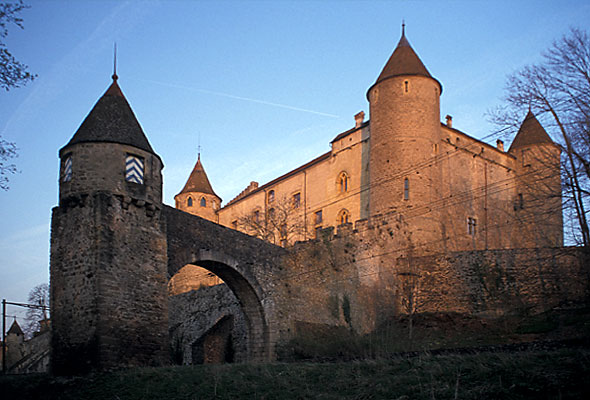
Grandson Castle — Switzerland castle

Grandson Castle

Grandson, Switzerland

Grandson Castle, perched on the shores of Lake Neuchâtel in Switzerland, stands as a remarkable example of a high medieval hill castle with a rich history spanning nearly a millennium. Constructed originally in the 11th century by the Lords of Grandson, the castle was strategically positioned to control the vital coastal road along the lake, serving as a formidable seat of power and defense in the region. The castle’s early history is closely tied to the rise of the House of Grandson, a noble family first mentioned in records from the latter half of the 11th century. This family produced influential figures, including bishops in several important dioceses such as Basel, Lausanne, Toul, and Verdun. Their expanding influence often led to conflicts with nearby religious institutions, notably the monastery of Romainmôtier. The lords of Grandson and their legacy The most prominent figure associated with the castle is Otto I of Grandson, who undertook significant rebuilding efforts in the 13th century. Otto I was a notable military leader and diplomat, closely allied with Prince Edward of England. He accompanied Edward on the Eighth Crusade in 1271 and participated in the conquest of Wales in 1283. His military career extended to commanding crusader forces at the unsuccessful siege of Acre in 1291 and leading campaigns against rebellious cities such as Lausanne in 1313. Otto I's diplomatic skills earned him the trust of powerful figures including the Pope, the Holy Roman Emperor, and the kings of France and England. After his death in 1328, his brother William moved to England and established the line of the Lords of Grandisson, while the main branch of the family remained influential in the region, closely allied with the House of Savoy. Decline and political turmoil in the late medieval period The family's fortunes declined towards the end of the 14th century. Members of the Grandson family faced serious accusations including forgery and involvement in the death of Amadeus VII, Count of Savoy. Notably, Otto III was defeated in a judicial duel in 1397, and John II was executed for sedition against the Duke of Burgundy. These events marked the end of the Grandson family's dominance, with their estates confiscated and transferred to other noble hands. Grandson Castle in the Burgundian Wars In the 15th century, Grandson Castle changed ownership several times, eventually belonging to Jacques de Savoie, an ally of Charles the Bold, Duke of Burgundy. The castle became a focal point during the Burgundian Wars when the Swiss Confederation captured it in 1475. The following year, Charles the Bold laid siege to the castle with a large mercenary army and heavy artillery. After the garrison surrendered, Charles ordered the execution of the defenders by hanging or drowning. Unaware of this atrocity, the Swiss army advanced to relieve the siege, culminating in the Battle of Grandson on 2 March 1476 near the town of Concise. The Swiss forces achieved a decisive victory, routing Charles’s army and capturing a substantial treasure, parts of which are displayed in Swiss museums today. This battle was a significant humiliation for one of Europe's most powerful dukes and a pivotal moment in Swiss military history. Architectural features and preservation Grandson Castle is recognized as one of Switzerland's best-preserved medieval fortresses. Its complex layout includes multiple towers and fortified walls that reflect construction phases from the 11th to the 15th centuries. The original early 11th-century donjon, a square main tower, no longer stands but its remnants can be discerned on the northern wall facing the Jura Mountains. This donjon was likely dismantled during the construction of the castle's western section. The castle features five tall round towers without battlements or machicolations, an unusual defensive design choice. One external tower, the Burgunder Tower, has a distinctive square base with a round upper third. Three fortified towers were added during Otto I’s reign in the late 13th century, as confirmed by dendrochronological dating. Later, around 1450, three additional towers were constructed near the lakeshore and within the town to bolster defenses against lake-based attacks. Originally, the castle was directly adjacent to Lake Neuchâtel, using the water as a natural defense on its southeast side. However, in 1875, the lake's water level was lowered as part of flood control measures, leaving the castle some distance from the water and removing this natural protection. Interior and museum collections The castle's interior includes a Renaissance-era knights’ hall furnished with period seating, a torture chamber displaying instruments from the era, and a weapons hall exhibiting arms and armor from the Burgundian Wars. The weapons collection features crossbows, artillery pieces, and experimental combat devices, offering insight into medieval warfare technology. Several museums operate within the castle complex. One museum is dedicated to the Battle of Grandson, featuring a detailed model with 2,200 lead soldiers. Another displays models of the castle and battle plans, while a regional history museum highlights the significance of Lake Neuchâtel in local culture and economy. The castle's cellar once served as a prison for the feudal court. Later history and current status After serving as the seat of bailiffs from Freiburg and Bern alternating every five years until 1798, the castle passed into private ownership. In 1875, it was acquired by Baron Gustave de Blonay and later inherited by his son Godefroy de Blonay. Today, the castle and its collections are managed by a foundation established by Bruno Stefanini, a notable Swiss patron of art and culture. The castle grounds include two hectares of vineyards on the lakeside territory of the municipality of Concise, enhancing the site's cultural landscape. Grandson Castle remains a significant heritage site, attracting visitors interested in medieval architecture, Swiss history, and the dramatic events of the Burgundian Wars.

High Medieval (11th–13th c.)
Details