Bashtovë Castle
Bashtovë Castle, locally known as Kalaja e Bashtovës, is a significant medieval fortress situated near the mouth of the Shkumbin River in central Albania. Located west of the village of Vilë-Bashtovë in Tirana County, this castle occupies a strategic position on a fertile plain close to the Adriatic Sea. The site offers insight into the region's historical importance as a trade hub, particularly for grain export during the Middle Ages.
Historical background and origins
The castle's origins are tied to the complex history of the area, which was influenced by both the Byzantine Empire and the Venetian Republic. Archaeological evidence and scholarly research suggest that the fortress was constructed by the Venetians between 1467 and 1478, likely over the remains of an earlier Byzantine fortification dating back to the 6th century during the reign of the Justinian dynasty. This earlier structure would have served as a defensive stronghold protecting the vital trade routes along the Adriatic coast.
The first documented mention of Bashtovë Castle appears on a map produced by the Ottoman admiral Piri Reis in 1521, where it is referred to as "Pastova." By this time, the fortress had come under the control of the Ottoman Empire, reflecting the shifting political landscape of the region.
Architectural features and layout
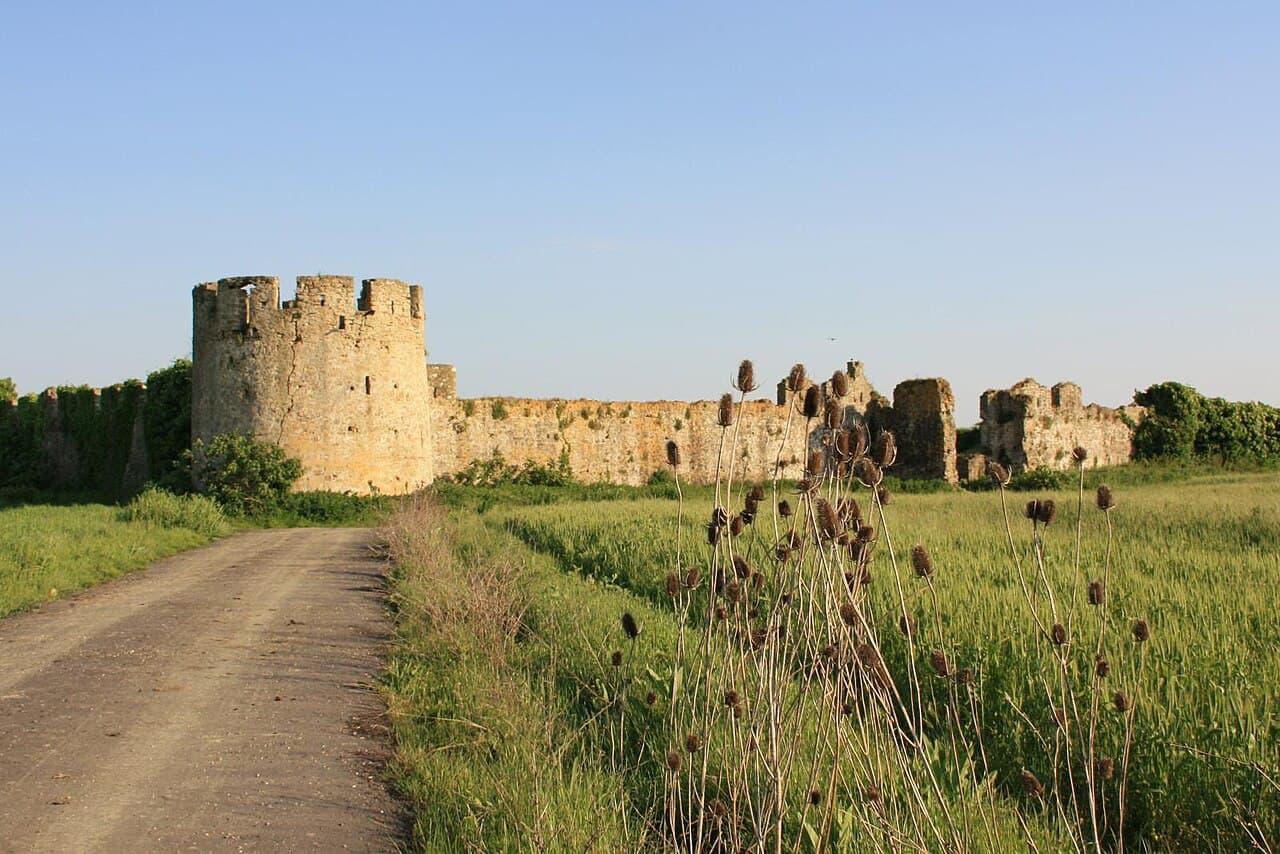
Bashtovë Castle is characterized by its rectangular plan with well-preserved corner towers and wall towers. The fortress measures approximately 60 by 90 meters internally, with walls reaching up to 9 meters in height. The structure is oriented along a north-south axis and includes three known entrances located on the northern, western, and eastern walls, as indicated by archaeological traces.
The corner towers stand about 12 meters tall and were initially designed for defensive purposes. Over time, these towers were adapted to provide housing for soldiers, demonstrating the castle's evolving military function. Notably, a mosque was constructed over the main gate during the Ottoman period, indicating the cultural and religious changes the site underwent.
Defensive elements
The fortress's design reflects typical medieval military architecture, with thick stone walls and strategic placement of towers to maximize defense. The elevated towers allowed for surveillance of the surrounding fertile plains and the river mouth, critical for monitoring trade and potential threats.
Strategic importance and economic role
Situated near the fertile plains at the mouth of the Shkumbin River, Bashtovë Castle played a vital role in protecting the region's agricultural wealth. The area was renowned for grain production, and the castle likely served to safeguard the export of this essential commodity through the nearby Adriatic trade routes.
During the Venetian period, the fortress would have been integral to controlling and securing maritime commerce. Later, under Ottoman control, it continued to hold military and administrative significance.
Current status and conservation efforts
Today, Bashtovë Castle exists as ruins that reveal much about its historical and architectural past. Archaeological work has helped clarify the castle's development phases and structural details. The site is included on Albania's tentative list for UNESCO World Heritage status, highlighting its cultural and historical value.
Visitors to the castle may find that access can be limited due to ongoing consolidation and preservation efforts. The interior of the fortress is largely empty, with much of the original structure no longer intact, but the remaining walls and towers offer a compelling glimpse into medieval fortification techniques.
Location and accessibility
Bashtovë Castle is located approximately 2 kilometers from the village of Vilë-Ballaj in Tirana County. It lies 36 kilometers north of Fier, 20 kilometers northwest of Lushnjë, 15 kilometers south of Kavajë, and 40 kilometers southwest of Tirana by air. Its position near the Adriatic coast makes it accessible for visitors interested in exploring Albania's medieval heritage and coastal landscapes.
Frequently asked questions (FAQ)
- When was Bashtovë Castle built and by whom?
- Bashtovë Castle was constructed by the Venetians between 1467 and 1478, likely over an existing Byzantine fortification dating back to the 6th century.
- What is the architectural layout of Bashtovë Castle?
- The castle has a rectangular plan with corner and wall towers, walls about 9 meters high, and three entrances on the northern, western, and eastern sides.
- Is Bashtovë Castle accessible to visitors?
- Access to Bashtovë Castle can be limited due to ongoing consolidation work, and the interior is mostly empty, but the ruins and towers remain visible.
- Why is Bashtovë Castle historically significant?
- Bashtovë Castle was strategically important for protecting grain trade near the Adriatic Sea and reflects both Byzantine and Venetian military architecture.
- Where is Bashtovë Castle located?
- The castle is located near the village of Vilë-Bashtovë in Tirana County, Albania, close to the mouth of the Shkumbin River and the Adriatic coast.
Photo gallery

Information
Loading map...
Visitor reviews
No reviews yet. Been here? Write the first review and help other travelers!
Write the first reviewVisited this castle? Share your experience
Your review helps other travelers and adds first-hand knowledge to our encyclopedia.