Ba'rin

Ba'rin castle in Syria
High Medieval (11th–13th c.)
Ruins

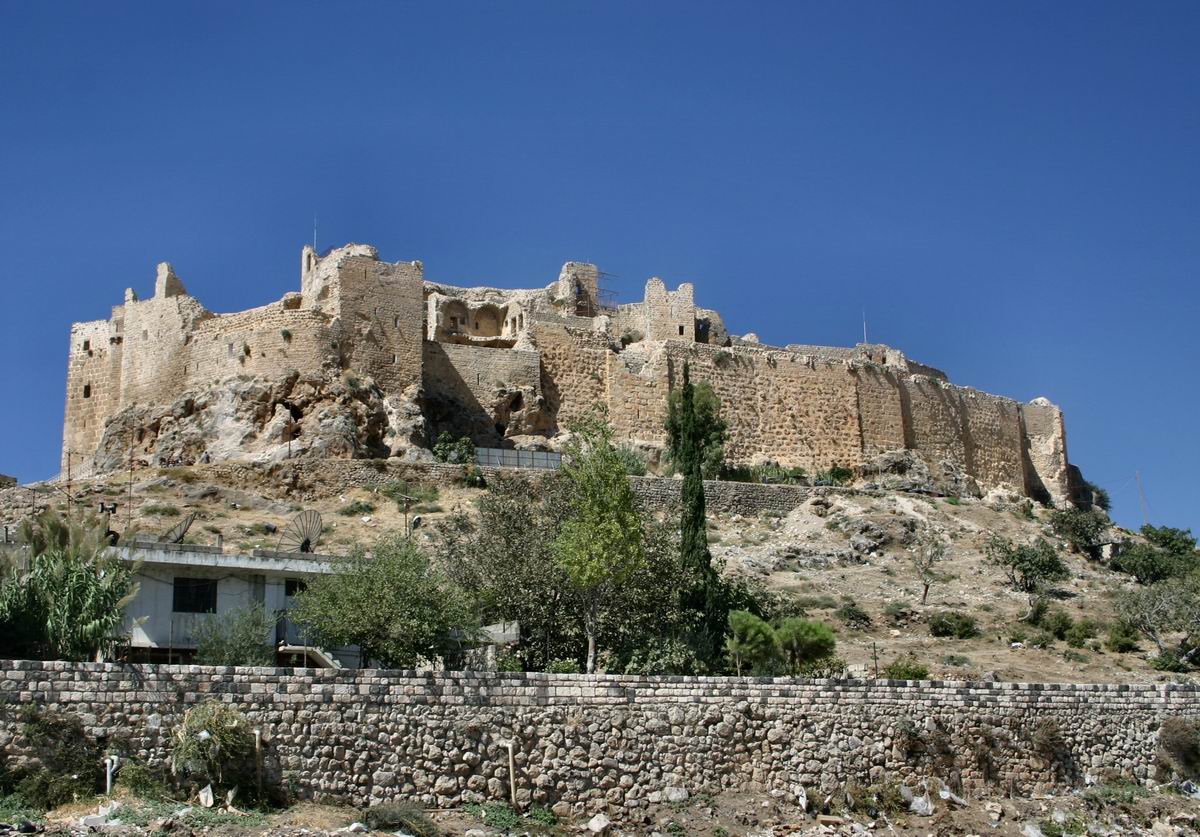
Ba'rin castle, historically known as Montferrand, is a significant high medieval fortress located in the region of the former County of Tripoli, in what is today the Syrian Arab Republic. Constructed in 1126, this castle played a crucial role during the Crusader period as a defensive stronghold in the Levant. The site corresponds to the present-day village of Baarin in Syria.

Historical context and significance

The castle was established during the early years of the Crusader states, specifically the County of Tripoli, which was one of the four major Crusader principalities formed after the First Crusade. Ba'rin castle was strategically positioned to control important routes and to defend the County's interior from Muslim forces. Its construction in the 12th century reflects the military architecture and geopolitical tensions of the high medieval period.

Ba'rin was frequently contested during the Crusades, notably enduring sieges and changing hands between Crusader and Muslim forces. Its fortified walls and elevated location made it a formidable obstacle for attackers. The castle's history is intertwined with the campaigns of notable Crusader leaders and Muslim commanders of the era.

Architectural features and layout

As a high medieval fortress, Ba'rin castle was designed primarily for military defense. The castle's ruins reveal the typical features of Crusader fortifications, including thick defensive walls, towers for archers, and a central keep or donjon that served as the last line of defense. The site likely included a courtyard, barracks, storage facilities, and cisterns for water supply.

The castle's elevated position on a hill provided extensive views of the surrounding landscape, enabling defenders to monitor enemy movements. The masonry techniques used in its construction reflect the blend of Western European and local Levantine influences common in Crusader castles.

Current condition and archaeological importance

Today, Ba'rin castle stands as archaeological ruins. The site has not been fully restored, but the remaining structures offer valuable insights into Crusader military architecture and the historical conflicts of the region. Archaeological studies have helped to document the castle's layout and construction methods.

The ruins attract historians and archaeologists interested in the Crusades and medieval fortifications in the Middle East. Preservation efforts are limited, and the site remains vulnerable to natural decay and human activity.

Visiting Ba'rin castle

Access to Ba'rin castle can be challenging due to its location and the current geopolitical situation in Syria. Visitors interested in medieval history and Crusader architecture may find the site rewarding, but travel should be planned with consideration of safety and local conditions.

Architectural legacy

Ba'rin castle exemplifies the military architectural style of the Crusader states, combining Western European castle-building techniques with adaptations to the Levantine environment. Its ruins contribute to the understanding of castle construction and defense strategies during the 12th century.

Role in regional history

The castle's history reflects the turbulent period of the Crusades, marked by frequent sieges and territorial disputes. Ba'rin's strategic importance highlights the military and political dynamics between Crusader states and Muslim powers in the Levant.

Information

Archaeological Site / Ruins

Loading map...

Visitor reviews

No reviews yet. Been here? Write the first review and help other travelers!

Write the first review

Visited this castle? Share your experience

Your review helps other travelers and adds first-hand knowledge to our encyclopedia.
Write a review

(5/5)

0/2000 characters

Your review will be visible after admin approval

Nearby castles

14.4 km
al-Sheikh Deeb Castle — Syria castle

al-Sheikh Deeb Castle

, Syria

Al-Sheikh Deeb Castle, also known as Qulay'a fortress, is a medieval citadel located in the northwestern region of the Syrian Arab Republic, within the Tartus Governorate. The castle stands prominently at an elevation of approximately 730 meters (2,400 feet) above sea level, overlooking the surrounding landscape of the Syrian coastal mountains. This strategic position provided the fortress with significant defensive advantages and a commanding view of the approaches, which was crucial during the medieval period. The village of Qulay'a itself, administratively linked to the Tartus Governorate, had a population of 1,360 as recorded in the 2004 census. The fortress is locally known as Al-Sheikh Deeb Castle (Arabic: قلعة الشيخ ديب, romanized: Qal'at Sheikh Dib), a name that reflects local historical and cultural associations. Historical significance and the Nizari Ismaili state Al-Sheikh Deeb Castle was one of several fortresses held by the Nizari Ismaili state during the medieval period in the Syrian coastal mountains. The Nizari Ismailis, a sect of Shia Islam, established a network of fortified strongholds across Syria and Persia from the 11th to the 13th centuries. These castles served as defensive bastions, administrative centers, and refuges for the community during times of conflict. The castle's role as a Nizari Ismaili fortress indicates its importance in regional power struggles and its function within the broader context of Crusader and Muslim interactions in the Levant. The Nizari Ismailis were known for their strategic use of mountain fortresses, which allowed them to maintain autonomy despite pressures from larger powers. Architectural features and layout As a hill castle, Al-Sheikh Deeb Castle is characterized by its placement on elevated terrain, which maximizes natural defenses. The fortress likely features typical medieval military architectural elements such as thick defensive walls, battlements, and towers positioned to oversee the surrounding valleys and routes. While detailed architectural surveys of the castle are limited, the design would have included a keep or donjon as the central stronghold, surrounded by curtain walls forming an enclosed courtyard. Defensive features probably included narrow arrow slits, gatehouses with fortified entrances, and possibly a moat or ditch adapted to the hillside terrain. Materials and construction techniques The construction of the fortress would have utilized locally available stone, shaped and laid to create robust walls capable of withstanding siege warfare. The use of mortar and stone masonry techniques typical of the medieval Islamic military architecture would have been employed, combining functionality with durability. Geographical and strategic context The location of Al-Sheikh Deeb Castle in the Syrian coastal mountains provided it with natural defensive advantages. The elevation at 730 meters allowed for surveillance of the surrounding area, including important trade and military routes along the Mediterranean coast. This strategic position helped the Nizari Ismailis to monitor movements of Crusader forces and other regional powers, enabling rapid communication and defense coordination among their network of castles. Current status and preservation Today, Al-Sheikh Deeb Castle stands as a partially preserved medieval fortress. The extent of preservation varies, with some sections of the walls and towers still visible, while other parts have suffered from the passage of time and lack of extensive restoration efforts. Due to its historical and cultural significance, the site attracts interest from historians and archaeologists specializing in medieval Islamic fortifications and the history of the Nizari Ismaili state in Syria. Visiting information and accessibility As the exact city or town location within the Tartus Governorate is not precisely documented, visitors interested in exploring Al-Sheikh Deeb Castle should seek local guidance for access routes. The castle's hilltop position means that reaching the site may require trekking or off-road travel. There is limited tourist infrastructure, so visitors should prepare accordingly. The site offers a unique opportunity to experience a medieval fortress within its natural mountainous setting, providing insights into the military architecture and history of the Nizari Ismaili period in Syria.

Late Medieval (14th–15th c.)
Details
14.5 km
Masyaf Castle — Syria castle

Masyaf Castle

Masyaf, Syria

Masyaf Castle stands as a monumental testament to centuries of military and cultural history in the Syrian Arab Republic. Perched on a rocky plateau approximately 20 meters above the surrounding terrain, this hill castle occupies a commanding position that has been fortified since antiquity. Its strategic location allowed control over vital trade and military routes, making it a coveted stronghold for various empires and factions throughout history. The castle's origins trace back to the Roman era, with initial fortifications established around 44 BCE. These early defenses formed part of a broader network aimed at securing the region. Over time, Masyaf evolved through successive phases of construction and renovation, reflecting the changing military technologies and architectural styles of the Byzantine, Islamic medieval, and Mamluk periods. Historical significance and ownership During the early 12th century, Masyaf Castle came under the control of the Mirdasid emir Thabit ibn Mahmud. In 1127 CE, it was sold to the notable ruler Sultan ibn Munqidh. The castle gained its most famous association when seized in 1141 by the Nizari Ismailis, also known as the Assassins, under the leadership of Rashid ad-Din Sinan. Sinan transformed Masyaf into the administrative and military center of the Nizari emirate, which flourished in the region from the mid-1100s through the late 1200s. The fortress's military resilience was notably demonstrated during the 1176 siege by Saladin, which ended in a negotiated truce rather than conquest. This event underscored Masyaf's formidable defenses and strategic importance. The castle's control shifted again during the Mongol invasions of the 13th century; briefly captured in 1260, it was soon reclaimed through alliances with the Mamluks. By 1270, Masyaf was firmly under the authority of the Mamluk Sultan Baibars. In the 19th century, the castle became a contested site during regional power struggles. In 1808, Alawite forces seized it after killing the ruling Ismaili emir. The Ismailis later regained control with Ottoman support. The fortress sustained damage during the 1830s campaign of Ibrahim Pasha. Throughout the Ottoman era, Masyaf functioned as an administrative center. During the French Mandate period (1920–1946), it housed a French garrison before falling into neglect. Architectural features and fortifications Masyaf Castle's layout is roughly square, centered on an inner citadel situated on the highest southern part of the plateau. This citadel is fortified by rectangular towers at each corner, each with two levels of defensive positions, enclosing an open courtyard at ground level. The castle's multiple defensive walls reflect its complex construction history. The outer defensive wall follows the plateau's edge, reinforced by five substantial rectangular buttress towers that provide robust support. At the hill's base, an additional outer wall with several rectangular towers equipped with small arrow slits offers layered defense. These arrow slits are designed for archers stationed on two defensive levels, enhancing the fortress's protection against siege warfare. The main entrance, located at the southwestern corner of the outer wall, exemplifies Islamic architectural design. It features two large halls connected by a long corridor with a right-angle turn, a defensive layout that complicates direct assaults. From this entrance, two primary internal routes extend: a northern 65-meter passage cut partially into bedrock, flanked by arrow slits and towers leading to a large hall; and a southern stairway and rock-cut gate ascending to the upper castle area. Construction techniques evolved over time. Early walls combined large and small stones, with later reinforcements including double walls to counter advances in siege technology. The late 12th century renovations under Rashid ad-Din Sinan introduced polygonal towers with five large arrow slits on two defensive levels, particularly along the western and northern sides, enhancing the castle's military capabilities. In the early 13th century, a palace was added within the upper inner citadel, marked by a decorated gate inscribed and dated to 1226 CE. Defensive upgrades included a smaller advanced gate reinforcing the main entrance. A fortified area housing a bathhouse was constructed by the mid-13th century and remained operational until the 1401 Mongol invasion. Under Mamluk rule, especially during Sultan Baibars' reign, restorations added defensive balconies on the southern and eastern approaches to the entrance. Residential buildings, including the house of Emir Mustafa al-Malham (1793), were built on the eastern side of the outer fortress walls in the late 18th century. The castle remained inhabited until the 20th century. Archaeological discoveries and restoration efforts Recent archaeological work during restoration uncovered a secret tunnel believed to be an escape route, ancient public baths, and a sophisticated water collection system with channels directing rainwater into subterranean cisterns, ensuring reliable water supply during sieges. Excavations revealed a diverse array of artifacts spanning multiple eras, including pottery shards, glazed vessels, and coins from pre-Islamic through Ottoman times. Notably, glassware bearing Chinese inscriptions highlights Masyaf's connections to the Silk Road trade network, while European-minted coins confirm its role in wider commerce. These finds underscore the castle's significance as a cultural and economic hub across centuries. Restoration efforts initiated in 2000 by the Aga Khan Trust for Culture have focused on preserving the castle's historic fabric. Traditional building methods and materials matching the original construction replaced earlier modern repairs. Some nearby houses were dismantled to improve access to the main gate. The ongoing work aims to safeguard Masyaf Castle's architectural heritage while revealing layers of its complex past. Cultural and strategic importance Masyaf Castle's enduring legacy lies in its role as a military fortress, administrative center, and symbol of the Nizari Ismaili emirate's power. Its successful defense against Saladin and resilience through Mongol invasions demonstrate its strategic value. The castle's architecture reflects a blend of Roman, Byzantine, Islamic, and Mamluk influences, providing insight into the region's dynamic history. Today, Masyaf Castle remains a significant cultural landmark in Syria, attracting scholars and visitors interested in medieval military architecture and the history of the Assassins. Its preservation contributes to understanding the broader historical narratives of the Levant and the complex interactions among empires, sects, and trade networks that shaped the region.

High Medieval (11th–13th c.)
Details
14.8 km

Musyaf Castle

Masyaf, Syria

Musyaf Castle stands as a monumental fortress in the historic city of Masyaf, located in the Syrian Arab Republic. This imposing stronghold is famously associated with the medieval sect known as the Hashshashin or Assassins, a group that has inspired countless legends and significantly influenced the history of the Middle East. The term "Hashshashin" has long been misunderstood in Western lore, often inaccurately linked to the consumption of hashish. However, modern scholarship suggests that this name was likely a derogatory term derived from their original name, the Asasiyun, meaning "foundation of the faith." The true legacy of the Hashshashin lies in their reputation as highly skilled and feared assassins who executed covert operations from their base at Musyaf Castle. Historical significance of Musyaf Castle Musyaf Castle was a critical military and political center during the High Medieval period, particularly in the 12th century when it served as the headquarters of the Hashshashin under the leadership of the enigmatic figure Rashid ad-Din Sinan. Sinan was instrumental in consolidating the power of the Assassins in the Levant, using Musyaf as a base for launching strategic missions against Crusader and Muslim rivals alike. The castle's strategic location atop a hill overlooking the surrounding plains provided an excellent vantage point for defense and surveillance. Its control was vital for maintaining the sect's influence in the region. The fortress witnessed numerous sieges and political intrigues, reflecting the turbulent dynamics of the Crusades and intra-Muslim conflicts. Architectural features and defensive design Musyaf Castle exemplifies the characteristics of a hill castle designed for defense and control. Built primarily during the High Medieval period, its architecture incorporates robust stone walls, towers, and gatehouses that were adapted to the rugged terrain of the Syrian mountains. The fortress includes multiple layers of fortifications, with a complex system of battlements and arrow slits allowing defenders to repel attackers effectively. The castle's layout features a central keep or donjon, which served as the last line of defense and the residence of the leader. Surrounding courtyards and chambers accommodated soldiers, servants, and storage facilities. Water supply was a critical concern for the castle's inhabitants, and Musyaf was equipped with cisterns to collect and store rainwater, ensuring sustainability during sieges. The castle's design reflects a blend of military functionality and the austere lifestyle of the Assassins. Adaptations and restorations Over the centuries, Musyaf Castle has undergone various phases of repair and modification, reflecting changes in military technology and ownership. While the fortress retains much of its original medieval structure, some areas have been restored to preserve its historical integrity. The current condition of the castle is best described as partially preserved, with significant sections accessible to visitors. Legacy of the Hashshashin and cultural impact The Hashshashin's legacy transcends their military exploits. Their methods of targeted assassination influenced both contemporary and later political tactics. The mystique surrounding their secretive operations and the fortress of Musyaf has permeated popular culture, inspiring novels, films, and video games. Musyaf Castle remains a symbol of the complex interplay between faith, power, and violence in medieval Islamic history. It attracts historians, archaeologists, and tourists interested in the enigmatic past of the Assassins and the broader context of the Crusades. Visiting Musyaf Castle today Today, Musyaf Castle is a valuable cultural heritage site. Visitors can explore its rugged battlements, climb its towers, and imagine the strategic operations that once unfolded within its walls. The castle's dramatic setting and historical significance make it a compelling destination for those fascinated by medieval military architecture and the shadowy history of the Assassins.

High Medieval (11th–13th c.)
Details