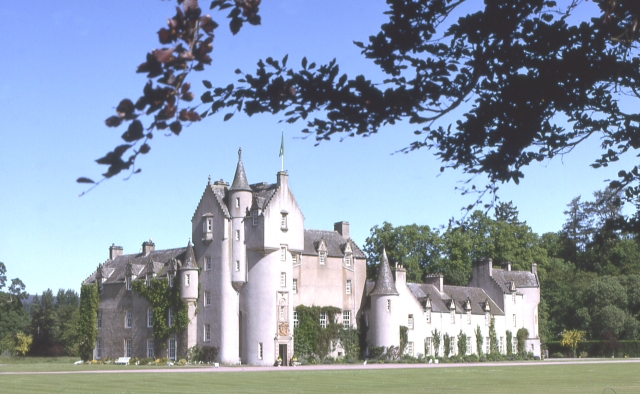
Balvenie Castle
Balvenie Castle, located near Dufftown in Scotland, is a remarkable example of a high medieval hill castle with a complex history spanning several centuries. Originally known as Mortlach, the castle was constructed in the 12th century by the powerful Comyn family, known as the Black Comyns. It was strategically positioned on a hilltop overlooking the surrounding landscape, providing both defensive advantages and control over the surrounding lands. Over time, Balvenie Castle evolved from a medieval fortress into a Renaissance residence, reflecting the changing architectural styles and political fortunes of its owners.
The castle's early history is closely tied to the Comyn family, who were influential Scottish nobles during the High Medieval period. The earliest documented record of the castle dates back to 1304, when King Edward I of England returned the "castle of Mortlach" to John Comyn, 3rd Earl of Buchan. This identification is supported by the castle's proximity to Mortlach parish church. During Scotland's Wars of Independence, the Comyns' allegiance shifted among competing rulers, including Edward I, John Balliol, and Robert the Bruce. In 1308, Robert the Bruce attacked the castle, rendering it uninhabitable and marking a turning point in its history.
Transition of ownership and medieval conflicts
Following the decline of the Comyns, Balvenie Castle passed into the hands of the Black Douglas family in the early 15th century, likely through the marriage of Joanna Murray, an heiress, to Archibald, 3rd Earl of Douglas, in 1362. The Douglases were one of the most powerful noble families in medieval Scotland, and Balvenie served as a secondary residence rather than a primary seat, with the main residence being Abercorn Castle near Edinburgh. The castle's role during this period was more of a temporary accommodation when needed.
In 1440, William Douglas, 6th Earl of Douglas, was killed in a conspiracy involving James the Gross and the guardians of the young King James II. James the Gross then became the 7th Earl and granted Balvenie Castle to his youngest son, John Douglas, Lord of Balvenie. However, the power struggle between the royal Stewarts and the Black Douglases culminated in the Battle of Arkinholm in 1455, where the Douglases were defeated, and their lands, including Balvenie, were forfeited to the Crown.
The Stewart era and Renaissance transformation
After the forfeiture, King James II awarded Balvenie Castle to Sir John Stewart, who later became the first Earl of Atholl. The Stewart family held the castle for approximately two and a half centuries. During this period, particularly under the 4th Earl of Atholl (1542–1579), Balvenie Castle underwent significant architectural enhancements. The most notable addition was the construction of the Atholl Lodging, a Renaissance-style residence featuring three stories and a distinctive large round tower at its northeast corner. This transformation reflected the shift from purely military functions towards more comfortable noble living quarters.
Mary, Queen of Scots, stayed at Balvenie Castle in September 1562 during her campaign against the Earl of Huntly, underscoring the castle's importance as a noble residence and strategic location. The castle's Renaissance features included large iron-grilled windows for light and air, latrines integrated into chambers, and heraldic panels displaying the coats of arms of the Scottish monarch and the Stewart family, linking the architecture to its prominent patrons.
Architectural features and layout
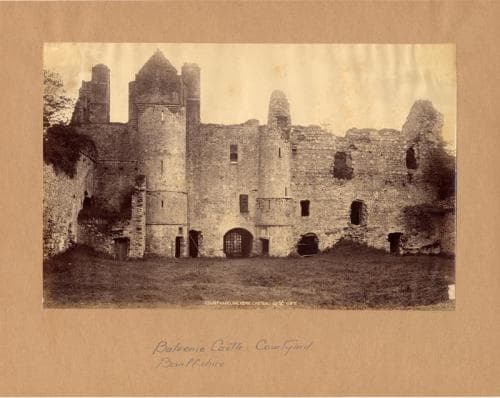
Balvenie Castle occupies an almost rectangular site approximately 40 by 50 meters, enclosed by a substantial 13th-century curtain wall about six meters high and two meters thick. This wall, aligned roughly along the cardinal points, was originally surrounded by a wide defensive ditch between nine and twelve meters across, now mostly filled in. Remnants of defensive walkways atop the walls hint at their former use for patrol and defense.
The main entrance, located on the eastern side, was remodeled in the 16th century by the 4th Earl of Atholl. Visitors would have entered through a vaulted passageway secured by an iron portcullis and reinforced wooden doors. A small guardroom adjacent to the entrance provided space for sentries to monitor access.
Inside the curtain walls, the central courtyard contains a well lined with oak, dating from the original 13th-century construction, which served as a vital water source. The western wing, likely built during the Black Douglas period in the 15th century, included a main hall and vaulted storage rooms, though only foundations remain. The southern wing housed kitchens, a large fireplace, and a brewery, illustrating the castle's capacity for self-sufficient living.
The east wing, the best-preserved section, includes the Renaissance-style Atholl Lodging with its three stories and attic. Two smaller stair towers flank the courtyard side of this wing. Ground-floor vaulted rooms served as servants' quarters, each with a fireplace and latrine. The upper floors contained the Earl's and Countess's apartments, featuring halls, chambers, latrines, and large iron-grilled windows.
The southern part of the east wing held a two-story kitchen complex with vaulted rooms and fireplaces, accessible by an external staircase. Heraldic panels on this wing display the coats of arms of the Scottish monarch, John Stewart, and Lady Elizabeth Gordon, his first wife, linking the architecture to its noble heritage. While all original wooden elements have vanished, the remaining stonework offers valuable insight into the castle's former grandeur.
Later history and decline
In the 17th century, Balvenie Castle experienced limited direct conflict during the civil wars and Jacobite uprisings but was occasionally garrisoned by government forces. After the death of William Duff, Lord Balvenie, in 1718 by suicide within the castle, it was effectively abandoned as a residence. During the 1746 Jacobite rising, Hanoverian troops used the castle as an encampment despite its ruined state.
In 1929, Alexander Duff, 6th Earl and 1st Duke of Fife, entrusted Balvenie Castle to state care. It is now a scheduled monument managed by Historic Environment Scotland, preserving the ruins for public education and heritage appreciation. The castle remains privately owned by Jeremy Duncan Nicholson, Baron of Balvenie, who resides in the United States. The site is open to visitors from April through September annually.
Balvenie Castle and cultural heritage
Balvenie Castle's legacy extends beyond its stone walls. Its proximity to Dufftown has linked it to the famous Scottish whisky industry, with the Balvenie distillery producing renowned single malt whisky nearby. This connection enriches the cultural significance of the castle, intertwining Scotland's medieval history with its celebrated modern heritage.
Visitors to Balvenie Castle today can explore the evocative ruins, which provide a tangible connection to Scotland's turbulent medieval past and the architectural evolution from fortress to noble residence. The site offers insights into defensive design, domestic arrangements, and Renaissance influences, making it a valuable destination for history enthusiasts and cultural tourists alike.
Frequently asked questions (FAQ)
- How do I visit Balvenie Castle?
- To visit Balvenie Castle, you can find it located in Dufftown, Scotland. The site is accessible by car or public transport, with parking available nearby. Guided tours are often available, providing an in-depth understanding of the castle's rich history.
- What is the historical significance of Balvenie Castle?
- Balvenie Castle dates back to the 13th century and is known for its impressive architectural evolution over the centuries. It played a crucial role in the history of the area, particularly during the Scottish Wars of Independence. The castle is a testament to medieval Scottish fortifications and noble life.
- When was Balvenie Castle built?
- Balvenie Castle was constructed in the 13th century, with significant modifications made in the 15th and 16th centuries. Its architecture reflects the changing styles and needs of its inhabitants over the years. The castle's long history adds to its charm and intrigue for visitors.
- Can I explore the interior of Balvenie Castle?
- Yes, visitors can explore the interior of Balvenie Castle, but access may vary depending on the time of year and any ongoing preservation work. Guided tours often allow for a closer look at the castle's features and history. Always check in advance for any restrictions or special events.
- Why is Balvenie Castle a popular tourist attraction?
- Balvenie Castle is popular due to its stunning architecture, rich history, and picturesque setting in the Scottish countryside. Visitors enjoy learning about its past and exploring the grounds, which offer beautiful views. It also attracts history enthusiasts and those interested in Scottish heritage.
- Is it possible to hold events at Balvenie Castle?
- Yes, Balvenie Castle can accommodate events, including private functions and weddings, subject to permissions and arrangements. Its historical ambiance and scenic views make it a unique venue. It's best to contact the management for specific details and availability.
- What are the opening hours for Balvenie Castle?
- Balvenie Castle typically opens to visitors from April to October, with specific hours varying by day. It is advisable to check the official website or contact the site directly for the most current opening hours. Seasonal variations may affect access, so planning ahead is recommended.
- What are the ticket prices for Balvenie Castle?
- Ticket prices for Balvenie Castle vary depending on age and group size, with discounts often available for children and seniors. It's best to check the official website for the most current pricing information. Advance booking may be required during peak tourist seasons.
- What are some nearby attractions to Balvenie Castle?
- Nearby attractions include the famous Glenfiddich Distillery and the scenic Speyside Way hiking trail. Visitors can also explore the charming town of Dufftown, known for its whisky heritage. These attractions make for a full day of exploration in the beautiful Moray region.
Photo gallery

Photo by George Washington Wilson•Public domain
Information
Website
Visit websiteSources & official resources
Verify the information above using these authoritative references.
Loading map...
Visitor reviews
No reviews yet. Been here? Write the first review and help other travelers!
Write the first reviewVisited this castle? Share your experience
Your review helps other travelers and adds first-hand knowledge to our encyclopedia.