Auchindoun Castle
Auchindoun Castle stands as a significant example of a late medieval Scottish fortress, located near Dufftown in Scotland. The castle's ruins today primarily reflect the structure built in the mid-15th century, though archaeological evidence suggests earlier prehistoric or Pictish earthworks once occupied the site. This strategic location in the Speyside region allowed Auchindoun to play a notable role in the turbulent clan conflicts and political upheavals of medieval Scotland.
Origins and early history
The castle is often attributed to Robert Cochrane, a favored courtier of James III of Scotland, who may have commissioned its construction around the mid-1400s. Initially, Auchindoun was held by the Clan Ogilvy from 1489, before passing to the Clan Gordon in 1535. These clans were influential in the region, and the castle served as a stronghold during periods of both alliance and conflict.
Architectural features and layout
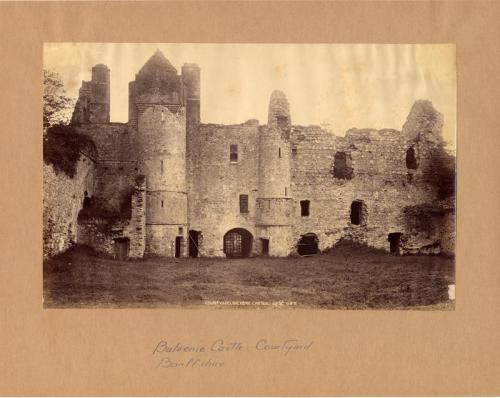
Auchindoun Castle was designed with a large central tower or keep, surrounded by a high curtain wall that enclosed the courtyard and ancillary buildings. Within the walls stood essential service buildings such as a stable, brewery, and bakery, which supported the castle's self-sufficiency. A notable defensive feature was a round tower guarding the northwest corner, enhancing the castle's fortifications.
Below the main tower, cellars and dungeons were carved directly into the bedrock, indicating a complex subterranean component to the castle's design. In the 16th century, the Gordons added an extension to the original structure, which was later reclaimed by the Ogilvys in 1594.
Defensive and residential design
The castle's layout reflects typical late medieval Scottish military architecture, combining defensive features with residential comforts. The curtain walls provided protection against siege weaponry, while the internal buildings ensured the castle could sustain its inhabitants during prolonged conflicts.
Clan conflicts and historical events
Auchindoun Castle's history is marked by clan rivalries and political strife. In 1592, the castle was damaged by the Clan MacKintosh as retaliation for the Earl of Huntly's killing of the Bonny Earl O'Moray, an ally of the MacKintoshes. This attack reflects the violent feuding characteristic of the Scottish Highlands during this period.
Following this, in March 1593, Patrick Gordon of Auchindoun was declared a rebel and forfeited his rights to the castle. It was then granted to Sir George Home, whose wife, Elizabeth Gordon, was Patrick Gordon's stepdaughter. The castle also played a role after the Battle of Glenlivet in 1594, when wounded followers of the Earl of Huntly sought refuge there.
In response to ongoing unrest, James VI ordered the slighting (deliberate demolition) of Auchindoun Castle along with other Gordon strongholds, including Slains Castle and Huntly Castle. This was part of a broader effort to curb the power of rebellious clans.
Later use and decline
During the first Jacobite rising in 1689, Auchindoun Castle served briefly as the headquarters for John Graham, 1st Viscount Dundee, and his Jacobite forces on 6–7 June. Despite this momentary military use, the castle fell into disrepair and was recorded as derelict by 1725.
Over time, stones from Auchindoun were repurposed for local farm buildings and for repairs at nearby Balvenie Castle, which contributed to the castle's ruinous state. Today, the curtain walls and some outbuildings remain standing, while the central tower is largely dilapidated.
Preservation and public access
Conservation efforts have been undertaken to stabilize the ruins of Auchindoun Castle, culminating in a reopening to the public in November 2007. Visitors can explore the remains of the curtain walls, the round tower, and the foundations of the central keep, gaining insight into the castle's architectural design and historical significance.
The site offers a tangible connection to Scotland's late medieval period and the complex history of clan alliances and conflicts that shaped the region. Auchindoun Castle remains a valuable cultural heritage site within the Speyside region, attracting historians, architecture enthusiasts, and tourists interested in Scotland's past.
Information
Loading map...
Visitor reviews
No reviews yet. Been here? Write the first review and help other travelers!
Write the first reviewVisited this castle? Share your experience
Your review helps other travelers and adds first-hand knowledge to our encyclopedia.