Baltit Fort
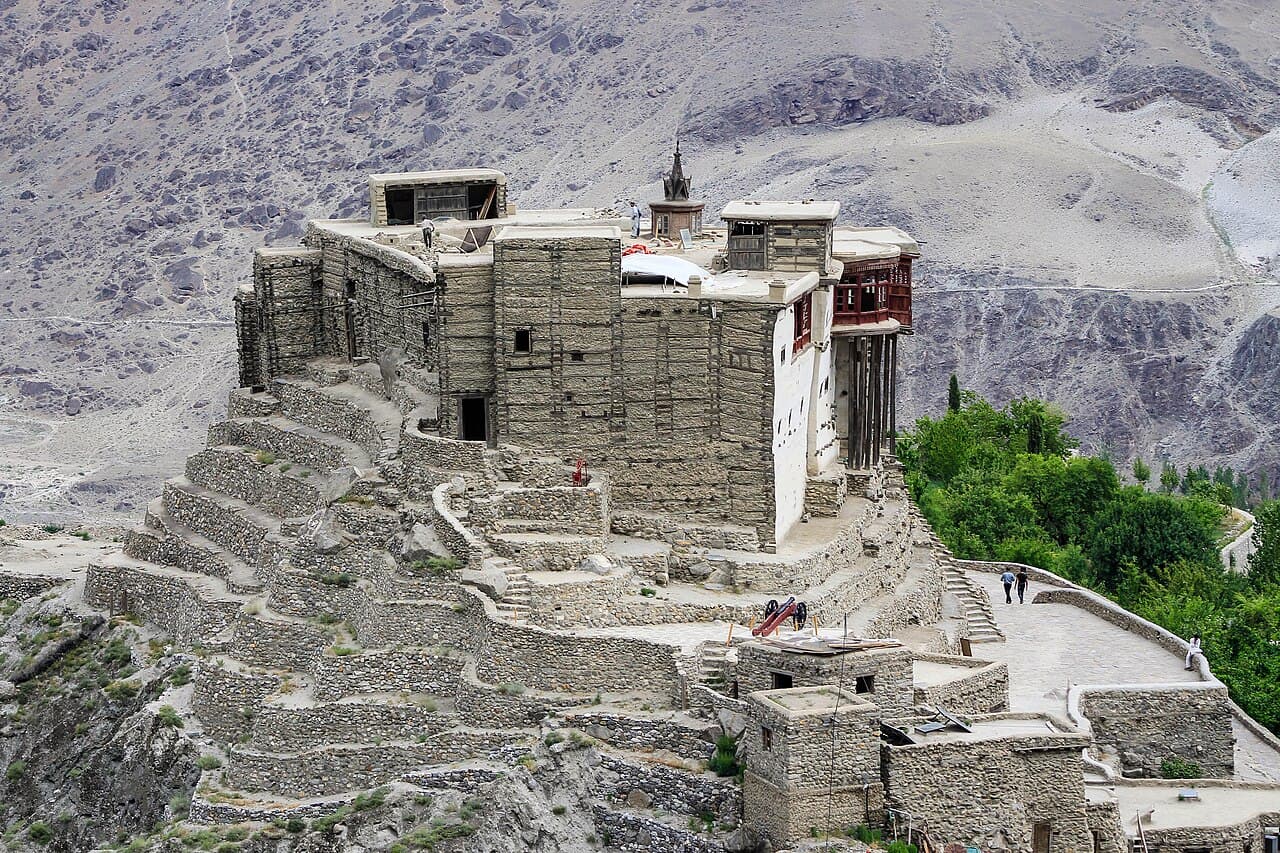
Baltit Fort is a historic bastioned fortress located in the scenic Hunza Valley, near the town of Karimabad, in the Gilgit-Baltistan region of northern Pakistan. This remarkable fortification stands as a significant cultural and architectural monument, reflecting centuries of strategic importance and regional history. It has been on the UNESCO World Heritage Tentative list since 2004, highlighting its value as a heritage site.
The origins of Baltit Fort trace back to the 8th century CE, placing it firmly in the early medieval period. Archaeological and architectural studies, including conservation work carried out in the late 20th century, revealed that the core structures of the fort, notably the defensive stone and timber tower, date from this early period. The fort's design exhibits strong Tibetan architectural influences, which is evident in its style and construction techniques, reflecting the cultural interactions in this mountainous region.
Historical significance and evolution
Throughout its history, Baltit Fort served as the seat of power for the Mirs of Hunza, the local rulers who governed the valley. In the 16th century, the fort underwent significant rebuilding. This was initiated by Abdal Khan, the father-in-law of Ayasho II, the Mir of Hunza. Ayasho II had married Shah Khatun, a princess from Skardu and granddaughter of the prominent ruler Ali Sher Khan Anchan. As part of this alliance, Abdal Khan sent skilled artisans to reconstruct the fort, enhancing its defensive and residential features. A notable artifact from this period is a cannon dated 1539 CE, which was sent as part of the dowry, symbolizing military strength and political ties.
Architectural features and style
The architecture of Baltit Fort is a blend of traditional defensive elements and palatial design, characteristic of bastioned fortresses. The fort is built primarily from local stone and timber, materials that provide both strength and resilience against the harsh mountain climate. Its structure includes prominent bastions for defense, thick walls, and a complex layout designed to protect against invaders.
The influence of Tibetan architecture is visible in the fort's multi-tiered construction, sloping walls, and intricately carved wooden balconies and windows. These features not only served aesthetic purposes but also practical functions, such as providing insulation and structural stability. The fort's elevated position on a hilltop offers commanding views of the surrounding valley, enhancing its strategic defensive role.
Restoration and current status
After the Mirs of Hunza abandoned Baltit Fort in 1945, relocating to a new palace down the hill, the fort fell into a state of decay. Concerns about the potential loss of this heritage site led to a comprehensive restoration initiative. Following a detailed survey by the Royal Geographical Society of London, a restoration programme was launched with support from the Aga Khan Trust for Culture Historic Cities Support Programme.
The restoration, completed in 1996, carefully preserved the fort's original materials and architectural integrity while stabilizing its structure. Today, Baltit Fort functions as a museum managed by the Baltit Heritage Trust, offering visitors insight into the region's history, culture, and architectural heritage. The museum displays artifacts, traditional furnishings, and exhibits about the fort's past rulers and the broader history of Hunza Valley.
Cultural and regional importance
Baltit Fort remains a symbol of the historical governance of the Hunza Valley and the cultural exchanges between Central Asia and the Indian subcontinent. Its preservation contributes to understanding the region's early medieval defensive architecture and the influence of Tibetan styles on local construction. The fort's location in the Gilgit-Baltistan region places it within a landscape of significant natural beauty and strategic mountain passes, which historically facilitated trade and cultural interaction.
Visitors to Baltit Fort can explore its courtyards, towers, and residential chambers, gaining a tangible connection to the past rulers and the architectural ingenuity of the time. The fort's survival through centuries of political change and environmental challenges underscores its resilience and importance as a heritage site.
Frequently asked questions (FAQ)
- How do I get to Baltit Fort?
- Baltit Fort is located in Karimabad, Pakistan, and can be reached by road from major cities like Gilgit. It is advisable to hire a local taxi or use public transport to navigate the mountainous terrain. Once in Karimabad, the fort is a short hike away, providing stunning views along the way.
- What is the historical significance of Baltit Fort?
- Baltit Fort dates back over 700 years and is a testament to the rich cultural heritage of the Hunza Valley. It served as the residence of the Mir of Hunza and played a crucial role in the region's history. The fort's architecture reflects a blend of Tibetan and Central Asian influences, showcasing the historical trade routes of the area.
- When was Baltit Fort renovated?
- Baltit Fort underwent significant restoration in the early 1990s, funded by the Aga Khan Trust for Culture. This renovation aimed to preserve the fort's unique architectural features while making it accessible to visitors. The careful restoration has helped maintain its historical integrity and charm.
- Can I take photographs inside Baltit Fort?
- Yes, visitors are welcome to take photographs inside Baltit Fort, but it's important to be respectful of the site's historical significance. However, some areas may have restrictions, so be sure to check for any signage or guidelines provided by the site management. Capturing the stunning views and intricate architecture can enhance your visit.
- Why is Baltit Fort considered an architectural marvel?
- Baltit Fort is renowned for its unique wooden architecture and intricate design, which combines local building techniques with influences from Tibetan and Central Asian styles. The fort's structure adapts to the harsh mountain environment, showcasing the ingenuity of its builders. Its elevated position offers breathtaking views of the surrounding landscape, adding to its architectural allure.
- Is it possible to visit Baltit Fort year-round?
- Yes, Baltit Fort is open to visitors throughout the year, but the best time to visit is between April and October when the weather is milder and more pleasant. During the winter months, heavy snowfall can make access challenging, so it's advisable to check local weather conditions before planning your trip. Regardless of the season, the fort’s historical significance and views are always captivating.
- What are the ticket prices for visiting Baltit Fort?
- As of the latest information, the ticket price for visiting Baltit Fort is quite affordable, making it accessible for most travelers. Tickets can be purchased at the entrance, and a small fee contributes to the maintenance and preservation of the fort. Be sure to check for any updates on pricing before your visit.
- What are the opening hours for Baltit Fort?
- Baltit Fort is typically open from 9:00 AM to 5:00 PM, providing ample time for visitors to explore its fascinating history and architecture. It is advisable to arrive early in the day to fully enjoy the site and the stunning views it offers. Always check local sources for any changes to opening hours, especially during holidays or special events.
- What nearby attractions should I visit while in Karimabad?
- While in Karimabad, you can explore other nearby attractions such as Altit Fort, which is also rich in history and offers beautiful views of the Hunza Valley. The stunning Baltoro Glacier and the serene Attabad Lake are also within reach, providing opportunities for adventure and relaxation amidst breathtaking scenery. Make sure to plan enough time to soak in the beauty of this remarkable region.
Photo gallery

Information
Current owner
Baltit Heritage Trust
Loading map...
Visitor reviews
No reviews yet. Been here? Write the first review and help other travelers!
Write the first reviewVisited this castle? Share your experience
Your review helps other travelers and adds first-hand knowledge to our encyclopedia.