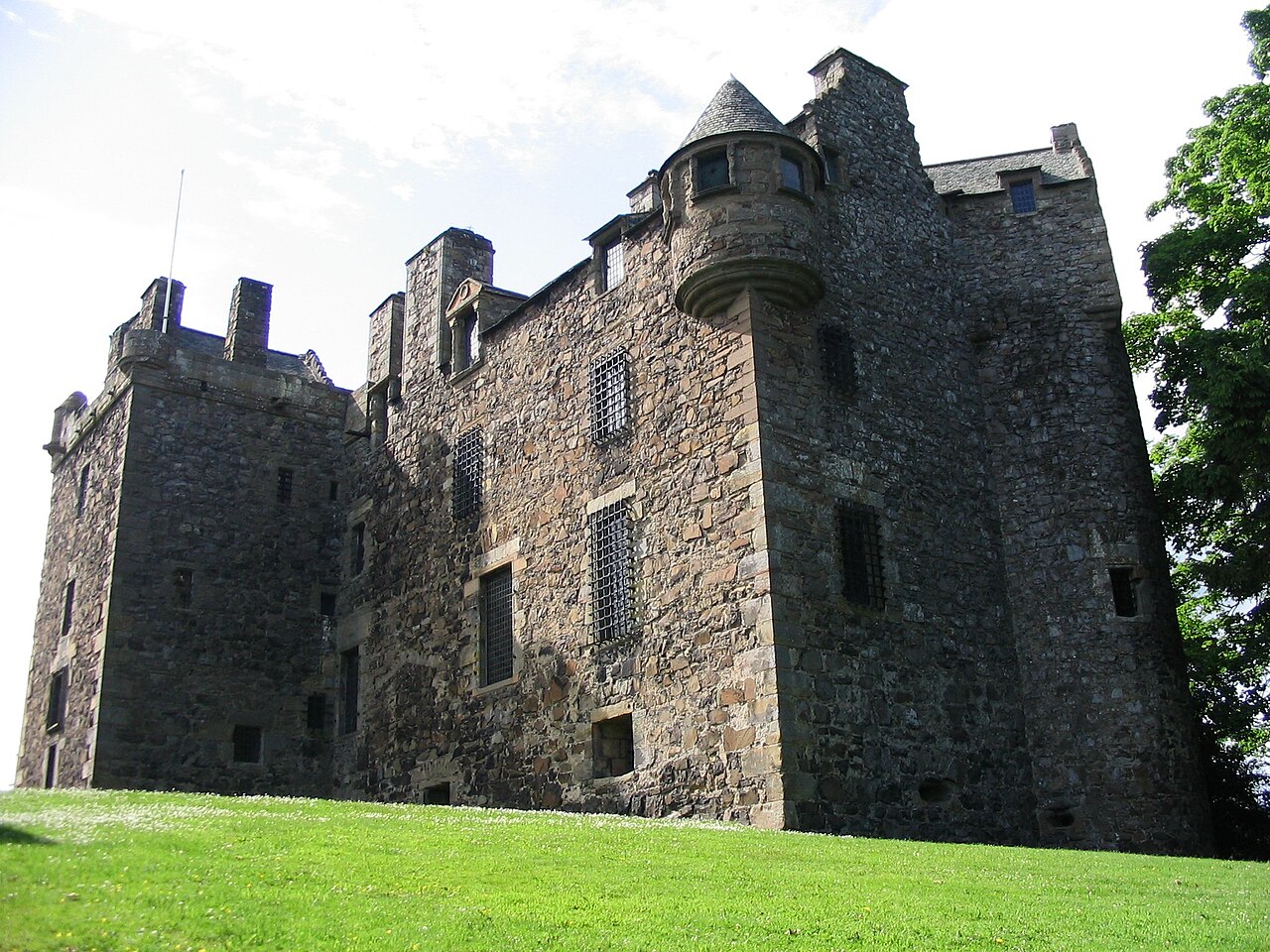
Balmanno Castle
Balmanno Castle is a distinguished example of a Renaissance moated tower house situated in the Perthshire hamlet of Dron, Scotland. Constructed between 1570 and 1580, this historic castle was originally built for George Auchinleck following his acquisition of the estate. The castle's design reflects the architectural trends of the late 16th century, combining defensive features with the domestic comforts expected of a noble residence during the Scottish Renaissance.
Architectural features and original construction
The castle is characterized by its moat, which remains partially filled with water, surrounding the main structure and providing a defensive barrier typical of tower houses of this period. The core of Balmanno Castle is a robust tower house, a common form in Scotland during the Renaissance, designed to serve both as a fortified home and a status symbol. The thick stone walls, narrow windows, and elevated entrance reflect its defensive purpose.
Built in the late 16th century, Balmanno Castle's architecture aligns with the transition from purely military fortifications to more comfortable and elegant noble dwellings. The castle's layout originally focused on verticality, with multiple floors housing living quarters, storage, and service areas, all accessible via narrow spiral staircases.
Major restoration and 20th-century modifications
In 1915, the castle underwent a significant restoration led by the renowned Scottish architect Sir Robert Lorimer. Commissioned by William Millar, a Glasgow ship-owner who used Balmanno Castle as his summer residence, Lorimer's work was meticulous and sensitive to the castle's historical character. He expanded the castle by adding extra wings, which created a courtyard that enhanced the domestic functionality and aesthetic appeal of the estate.
Lorimer's restoration incorporated elements of Gothic Revival style, while also drawing inspiration from the interiors of Holyrood Palace, notably influenced by the earlier restoration work of Sir William Bruce (1630-1710). This blend of styles resulted in a harmonious fusion of Renaissance and Gothic motifs, evident in both the exterior and interior detailing.
Beyond structural changes, Lorimer personally oversaw the furnishing of the castle, sourcing and commissioning furniture and decorative items that complemented the architectural style. His attention to detail extended to every room, ensuring a cohesive and historically informed interior design.
Later ownership and current status
After the Second World War, Balmanno Castle changed ownership and was acquired in the 1950s by Hon. James Michael Edward Bruce CBE and his wife, Jean Coats. Their family continues to reside in the castle, maintaining its legacy and preserving its condition.
Today, Balmanno Castle remains in good condition, with much of its original Renaissance character intact alongside the early 20th-century additions. The moat's partial water retention adds to the castle's historic ambiance, while the courtyard and wings reflect the thoughtful restoration efforts that have kept the property functional and visually striking.
Historical significance and cultural heritage
Balmanno Castle stands as a significant example of Scottish Renaissance architecture, illustrating the evolution of tower houses into comfortable noble residences. Its survival and restoration by a prominent architect like Sir Robert Lorimer underscore the cultural value placed on preserving Scotland's architectural heritage.
The castle's connection to notable figures such as George Auchinleck and William Millar, along with its continuous occupation by the Bruce family, highlights its role in the social and historical fabric of Perthshire. The careful restoration work ensures that Balmanno Castle remains a testament to the architectural and historical developments spanning from the 16th century to the modern era.
Information
Loading map...
Visitor reviews
No reviews yet. Been here? Write the first review and help other travelers!
Write the first reviewVisited this castle? Share your experience
Your review helps other travelers and adds first-hand knowledge to our encyclopedia.