Ballyportry Castle
Ballyportry Castle stands as a significant relic of medieval Gaelic Ireland, located in the historic province of Munster. Constructed in the 15th century by the powerful O'Brien family, who were the dominant Gaelic aristocrats in County Clare, this castle was part of a network of fortifications and ecclesiastical buildings that symbolized the O'Briens' territorial control and influence during the late medieval period.
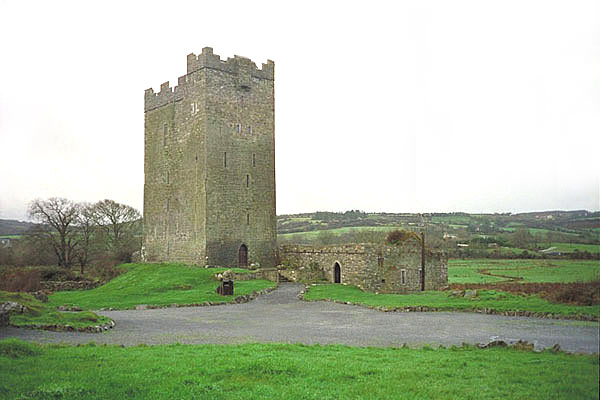
The castle's architecture reflects the typical medieval Gaelic defensive style, characterized by robust stone walls, narrow windows for archers, and strategic positioning to oversee and protect their lands. Although specific architectural details of Ballyportry Castle have not been extensively documented, it likely featured a tower house structure, which was common among Gaelic lords for both residence and defense. The castle's location in Clare, a region rich in Gaelic heritage, made it a focal point of local power and culture.
Historical significance of Ballyportry Castle
The castle was a key stronghold for the O'Brien dynasty, who held sway over much of Clare during the 15th century. The O'Briens were descendants of the High King Brian Boru and maintained their status as Gaelic nobility well into the early modern period. Ballyportry Castle was not merely a military fortification but also a symbol of Gaelic resilience and governance in a period marked by increasing Anglo-Norman influence in Ireland.
For just over a century, Ballyportry Castle served as a residence and defensive bastion for the O'Briens. However, the fortunes of Gaelic Ireland began to wane following the Battle of Kinsale in 1603, a decisive conflict that led to the collapse of Gaelic power in Ireland. The defeat at Kinsale marked the beginning of the end for many Gaelic lords, including the O'Briens, as English control expanded and Gaelic landholdings were confiscated or diminished.
The decline of Gaelic Ireland and Ballyportry's fate
Following the Battle of Kinsale, the 17th century was a period of decline for Gaelic aristocracy. The O'Brien family and other Gaelic leaders faced increasing pressure from English colonial policies, land seizures, and military campaigns. The Treaty of Limerick in 1691 symbolized the final collapse of Gaelic Ireland's political and military autonomy.
While Ballyportry Castle did not play a direct role in these later conflicts, its decline mirrored the broader fate of Gaelic fortifications across Ireland. Many such castles fell into disrepair or were abandoned as the Gaelic aristocracy lost their lands and influence. Today, Ballyportry Castle remains an important historical site, representing the legacy of Gaelic Ireland's medieval aristocracy and their architectural heritage.
Architectural features and cultural heritage
Though detailed records of Ballyportry Castle's architectural elements are scarce, it is likely that the castle included typical features of a Gaelic tower house, such as thick stone walls, a fortified entrance, battlements, and narrow slit windows designed for defense. These features were practical adaptations to the turbulent political landscape of medieval Ireland, where castles served as both homes and military strongholds.
The castle's cultural significance extends beyond its military function. As a seat of the O'Brien family, Ballyportry was a center of Gaelic governance, law, and culture. It likely hosted gatherings, legal proceedings, and served as a symbol of the O'Briens' authority in Clare.
Preservation and current status
Today, Ballyportry Castle is recognized as a site of historical importance in Munster. Its remains, though not fully intact, offer valuable insights into Gaelic castle construction and the socio-political history of medieval Ireland. Preservation efforts focus on maintaining the site for educational and cultural purposes, allowing visitors to connect with Ireland's rich Gaelic past.
Visitors to the region interested in medieval Irish history and architecture will find Ballyportry Castle a compelling destination. Its story encapsulates the rise and fall of Gaelic power and the architectural legacy left behind by one of Ireland's most storied families.
Frequently asked questions (FAQ)
- When was Ballyportry Castle built and by whom?
- Ballyportry Castle was built in the 15th century by the O'Brien family, a prominent Gaelic aristocratic dynasty in County Clare, Ireland.
- What architectural style characterizes Ballyportry Castle?
- While detailed records are limited, Ballyportry Castle likely features typical medieval Gaelic tower house characteristics, including thick stone walls and defensive battlements.
- What historical events affected Ballyportry Castle and its owners?
- The castle was significantly impacted by the Battle of Kinsale in 1603 and the Treaty of Limerick in 1691, events that marked the decline of Gaelic Ireland and the O'Brien family's power.
- Is Ballyportry Castle accessible to visitors today?
- Ballyportry Castle is a ruin today and may be accessible for visitors interested in medieval Irish history, though specific visiting hours and facilities are not well documented.
Information
Loading map...
Visitor reviews
No reviews yet. Been here? Write the first review and help other travelers!
Write the first reviewVisited this castle? Share your experience
Your review helps other travelers and adds first-hand knowledge to our encyclopedia.