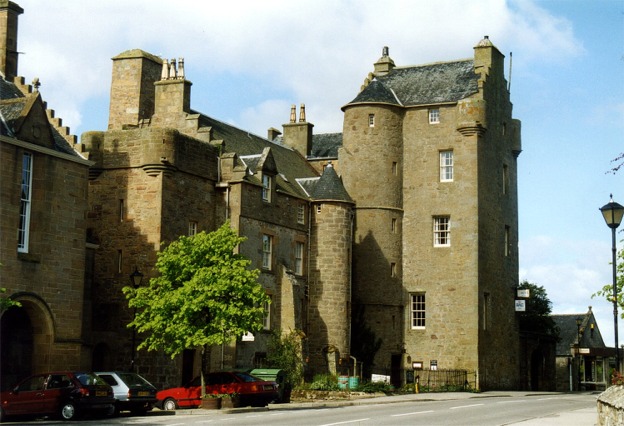
Ballone Castle
Ballone Castle stands as a notable example of a late 16th-century Z-plan tower house located in the Highland region of Scotland. This castle's architecture reflects the defensive yet domestic needs of the Scottish nobility during the Renaissance period. The design incorporates a main rectangular block of three storeys and a garret, complemented by a distinctive round tower and a square stair-tower projecting from opposite corners, a hallmark of the Z-plan layout.
Architectural features and layout
The castle's corelled-out bartizans crown the corners, featuring shot-holes and stone roofs, which provided both defensive vantage points and aesthetic appeal. These bartizans are typical of Scottish tower houses, allowing defenders to cover the castle walls with gunfire. Two stair turrets, now in ruins, originally provided access to the upper floors. The main entrance is an arched doorway at the base of the square stair-tower, leading to the main turnpike stair, which ascends only to the first floor. Access to the upper floors is by the turret stairs, indicating a layered defensive approach within the castle's design.
Within the square tower is a guardroom and small adjoining vaulted prisons, emphasizing the castle's role in security and control. The basement of the main block is vaulted and houses the kitchen, notable for its arched fireplace, and a wine cellar with a small stair connecting it to the hall above. The hall, located on the first floor, included a private chamber, reflecting the residential function of the castle alongside its defensive purpose.
The castle was originally enclosed by a courtyard that included various ranges of buildings such as a bakehouse, indicating a self-sufficient estate capable of supporting its inhabitants during sieges or isolation.
Historical context and ownership
The lands on which Ballone Castle stands were initially a property of the Earl of Ross. In 1507, ownership passed to the Dunbars of Tarbat, and later, in 1623, to the Mackenzie family. The Mackenzies were ennobled as the Earls of Cromartie in 1703 and renamed the estate Castlehaven. This lineage reflects the shifting allegiances and ownership typical of Scottish noble estates during the early modern period.
By the late 17th century, Ballone Castle was abandoned in favor of the nearby Tarbat House, a three-storey classical mansion that represented the changing architectural tastes and residential preferences of the aristocracy. Ballone Castle fell into ruin by 1680 but has since been restored, preserving its historical and architectural significance.
Restoration and current status
Although Ballone Castle remained unroofed and in a state of ruin for centuries, recent restoration efforts have stabilized and preserved the structure. The restoration has maintained the castle's characteristic features, including its vaulted basements, bartizans, and stair towers, allowing visitors to appreciate the castle's original Renaissance defensive architecture and domestic arrangements.
Significance of Ballone Castle
Ballone Castle exemplifies the Scottish Renaissance tower house tradition, combining defensive features such as shot-holes, vaulted prisons, and bartizans with domestic comforts like a well-equipped kitchen and private chambers. Its Z-plan layout is a distinctive architectural form that balanced the need for defense with the desire for status and residence. The castle's history reflects broader social and political changes in Scotland, including shifts in noble ownership and architectural trends from fortified tower houses to classical mansions.
Architectural details of the Z-plan design
The Z-plan, characterized by a main rectangular block with two towers at diagonally opposite corners, was favored in Scotland during the 16th century for its strategic defensive advantages. Ballone Castle's round tower and square stair-tower allowed defenders to cover multiple approaches and blind spots, while the bartizans provided elevated firing positions. The vaulted basements and prisons within the square tower demonstrate the castle's role in security and control over its estate.
Materials and construction techniques
The castle is constructed primarily of local stone, with robust masonry walls designed to withstand attacks and the harsh Highland climate. The vaulted ceilings in the basement and prisons are examples of skilled masonry work, providing both strength and fire resistance. The stone roofs on the bartizans and the arched fireplace in the kitchen highlight the use of durable materials and craftsmanship typical of the Renaissance period in Scotland.
Ballone Castle in the context of Scottish Renaissance castles
Ballone Castle fits within the broader category of Scottish Renaissance tower houses, which evolved from medieval fortifications to incorporate Renaissance architectural elements and increased domestic comfort. Its combination of defensive features with residential spaces illustrates the transitional nature of castle architecture in this era. The castle's abandonment in favor of Tarbat House also reflects the shift in aristocratic lifestyle preferences from fortified residences to more comfortable classical mansions.
Frequently asked questions (FAQ)
- What is the architectural style of Ballone Castle?
- Ballone Castle is a late 16th-century Z-plan tower house typical of the Scottish Renaissance period, featuring bartizans, vaulted basements, and defensive stair towers.
- When was Ballone Castle built?
- Ballone Castle was constructed in the 16th century, reflecting the architectural styles and defensive needs of that era in Scotland.
- Who were the historical owners of Ballone Castle?
- The castle's lands belonged to the Earl of Ross, then passed to the Dunbars of Tarbat in 1507, and later to the Mackenzies in 1623, who became Earls of Cromartie.
- Is Ballone Castle open to visitors?
- Visiting details for Ballone Castle are not widely publicized, so visitors should check local tourism sources for access and opening hours.
- Why was Ballone Castle abandoned?
- Ballone Castle was abandoned in the late 17th century in favor of the nearby Tarbat House, a classical mansion reflecting changing residential preferences.
Information
Loading map...
Visitor reviews
No reviews yet. Been here? Write the first review and help other travelers!
Write the first reviewVisited this castle? Share your experience
Your review helps other travelers and adds first-hand knowledge to our encyclopedia.