Balgonie Castle
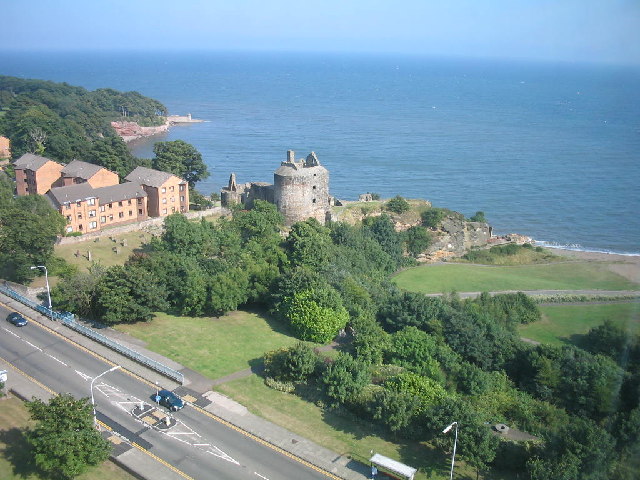
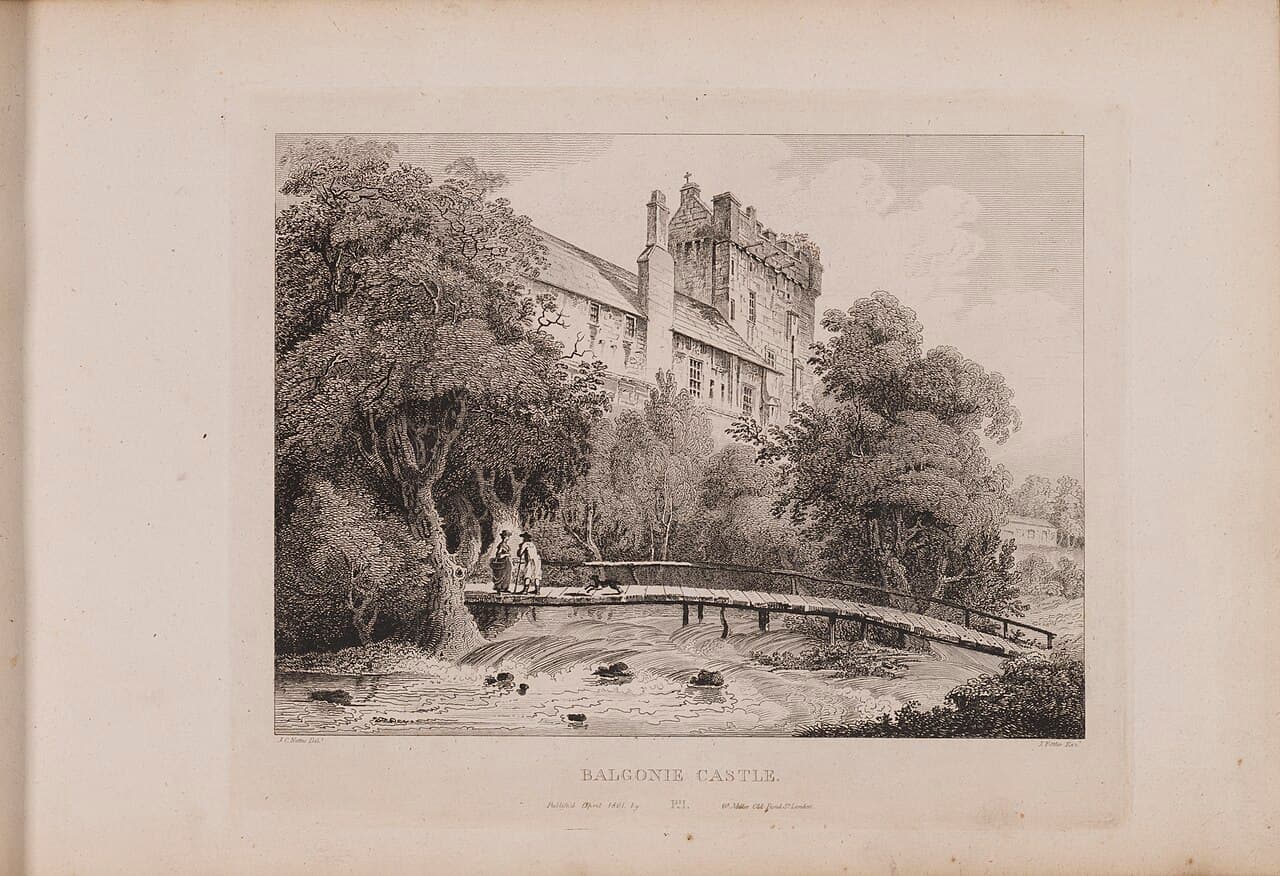
Balgonie Castle is a prominent hill castle located near Glenrothes in Fife, Scotland, with origins dating back to the 14th century. The castle's central feature, the keep, was constructed in the 1300s and stands as a remarkable example of medieval Scottish fortification. Over the centuries, the castle expanded through successive additions, reflecting architectural and historical developments from the Late Medieval period through to the 18th century.
The castle occupies a strategic position on the south bank of the River Leven, near Milton of Balgonie, approximately 3.5 kilometres east of Glenrothes. Its location on a natural rise classifies it as a hill castle, providing defensive advantages and commanding views of the surrounding landscape. The site includes a fortified courtyard known as a barmkin, originally constructed in the 1360s by the Sibbald family, who held the lands from at least 1246.
Medieval origins and early expansions
The earliest substantial construction at Balgonie Castle is the 14th-century keep, a robust tower house that served both defensive and residential purposes. The keep's vaulted basement and first floor demonstrate typical medieval masonry techniques, with the first floor housing a hall notable for its absence of a large fireplace, which was uncommon for the period. Access to the hall was originally via a movable timber stair, later replaced by a permanent stone stair.
In the late 14th century, the Sibbalds fortified the site further by building a barmkin, a defensive courtyard wall enclosing the castle's core structures, including a tower house at the northwest corner. This addition enhanced the castle's defensive capabilities against raids and sieges common in medieval Scotland.
The lundie family and 15th-century developments
The castle passed by marriage to Sir Robert Lundie in the late 15th century, who was appointed Lord High Treasurer of Scotland. In 1496, Lundie undertook significant expansions, adding a two-storey range to the east of the keep. This included a long hall and a solar (private chamber), improving the castle's residential comfort and status. This range incorporated an earlier corner tower and the original 14th-century chapel, highlighting the castle's evolving architectural complexity.
King James IV visited Balgonie Castle on 20 August 1496, a notable event that underscores the castle's importance during this period. The king's gift of 18 shillings to the masons involved in the castle's construction reflects royal patronage and the quality of the building works underway.
17th-century ownership and architectural enhancements
In 1627, the castle was sold to the Boswell family, and shortly thereafter in 1635, it passed to Sir Alexander Leslie, a distinguished Scottish soldier and commander during the Thirty Years' War. Leslie, who was created Lord Balgonie and Earl of Leven in 1641, made further improvements to the castle, including adding a two-storey building at the southeast corner of the courtyard.
The late 17th century saw additional expansions under John Leslie, 7th Earl of Rothes, who disputed the earldom of Leven and employed John Mylne junior, the king's master mason, to build a grand stair linking the keep and the north range. This replaced an earlier wooden bridge and enhanced the castle's internal connectivity and grandeur.
David Melville, who inherited the castle and earldom in 1681, continued the architectural development by adding a three-storey section in 1706 linking the north range with the southeast block. This work was completed by master mason Gilbert Smith and contributed to the castle's evolving baroque influence.
Historical events and later history
Balgonie Castle was briefly captured by the famous Scottish outlaw Rob Roy MacGregor during a raid in 1716, illustrating its ongoing strategic and symbolic significance. The castle was soon restored to the Melville family, who made minor improvements in the 1720s, including the installation of sash windows and additional courtyard buildings.
In 1824, the castle was sold to James Balfour of Whittingehame, whose grandson, Arthur Balfour, would later become British Prime Minister. Despite this prestigious connection, the castle fell into disrepair during the 19th century. Roofs were removed in the mid-1800s to avoid property taxes, accelerating decay.
20th-century restoration and current status
Following extensive vandalism in the 1960s, restoration efforts began in 1971 under the ownership of David Maxwell. Supported by European Architectural Heritage Year funding in 1975, restoration work focused on the keep and chapel, which are now fully restored and occupied. The castle remains a Scheduled Ancient Monument, except for the tower, which serves as a private residence.
Today, Balgonie Castle is open to the public, with the restored chapel and great hall available for events such as weddings. The current owner, Raymond Morris, and his family continue to pursue further restoration of the castle's remaining structures.
Architectural features and layout
Gatehouse and courtyard
Visitors enter Balgonie Castle through the 15th-century gatehouse, which is partially ruinous above ground but retains a guardroom and prison below. The gatehouse opens onto a central courtyard featuring a well and surrounded by the castle's various buildings.
The keep and defensive elements
The keep is characterized by its vaulted ground and first floors, topped by a pitched roof with crow-stepped gables. The parapet walk and cannon spouts date from the 17th century, reflecting adaptations to evolving military technology. Some original trefoil-headed windows remain, highlighting the castle's medieval origins.
Chapel and residential ranges
The vaulted basement of the north range houses the original chapel, though much of the surrounding north and east buildings are roofless ruins. Excavations in 1978 revealed remains of earlier structures within the courtyard, demolished in the early 17th century to accommodate new construction.
Landscape and deer park
Balgonie Castle is surrounded by extensive boundary walls of a historic deer park, with large mature trees dating back to the 17th century. These landscape features contribute to the castle's historic setting and reflect its role as a noble estate.
Frequently asked questions (FAQ)
- How do I get to Balgonie Castle?
- Balgonie Castle is located near Glenrothes in Fife, Scotland. You can reach it by car via the A92 road, and there is ample parking available on-site. Public transport options include buses that connect to Glenrothes from nearby towns.
- What is the historical significance of Balgonie Castle?
- Balgonie Castle dates back to the 14th century and is one of the best-preserved medieval castles in Scotland. It was originally built as a stronghold for the Clan Leslie and has a rich history that reflects the turbulent times of the Scottish Wars of Independence.
- When was Balgonie Castle last renovated?
- Balgonie Castle has undergone several renovations over the years, with significant restoration efforts taking place in the late 20th century. These restorations have helped preserve its architectural features while making it safe for visitors to explore.
- Can I visit Balgonie Castle?
- Yes, Balgonie Castle is open to the public for tours during specific months of the year. Visitors can explore the castle's grounds and learn about its history through guided tours, which are available on select days.
- Why is Balgonie Castle a popular tourist attraction?
- Balgonie Castle attracts visitors due to its stunning architecture and rich historical background. The castle's picturesque setting and well-preserved structure provide a unique glimpse into Scotland's medieval past, making it a must-see for history enthusiasts.
- Is it possible to host events at Balgonie Castle?
- Yes, Balgonie Castle is available for private events, including weddings and corporate functions. Its scenic surroundings and historic charm create a memorable backdrop for any special occasion.
- What are the opening hours for Balgonie Castle?
- Balgonie Castle typically opens to visitors from April to September, with varying hours each day. It is advisable to check the official website or contact the castle for the most current opening times before planning your visit.
- What are the ticket prices for visiting Balgonie Castle?
- Ticket prices for Balgonie Castle vary depending on the time of year and whether you are taking a guided tour. Generally, adult tickets are reasonably priced, and there may be discounts available for children and families.
- When is the best time to visit Balgonie Castle?
- The best time to visit Balgonie Castle is during the warmer months, from late spring to early autumn, when the weather is more favorable for outdoor exploration. Additionally, visiting during special events or festivals can enhance your experience.
- Are there any nearby attractions to visit?
- Yes, there are several attractions near Balgonie Castle, including the picturesque town of Falkland and the scenic Fife Coastal Path. These nearby sites offer additional opportunities for sightseeing and exploring the natural beauty of the region.
Photo gallery

Photo by John Claude Nattes / James Fittler•Public domain
Information
Loading map...
Visitor reviews
No reviews yet. Been here? Write the first review and help other travelers!
Write the first reviewVisited this castle? Share your experience
Your review helps other travelers and adds first-hand knowledge to our encyclopedia.