Baile Hill stands as a remarkable testament to the Norman conquest of England and the strategic military architecture of the 11th century. Located in York, England, this motte and bailey castle was constructed shortly after the Norman invasion, serving as a crucial defensive stronghold alongside its more famous counterpart, Clifford's Tower. Though largely overshadowed and obscured by later urban development, Baile Hill's historical and architectural significance remains profound.
The castle was established by William the Conqueror in 1068 as part of his efforts to secure control over the turbulent north of England following his victory at Hastings in 1066. After the initial construction of Clifford's Tower on the east bank of the River Ouse, the Normans faced fierce resistance from local populations and Danish forces, culminating in the destruction of both castles during the 1069 uprising. William swiftly responded by rebuilding these fortifications, reaffirming Norman dominance.
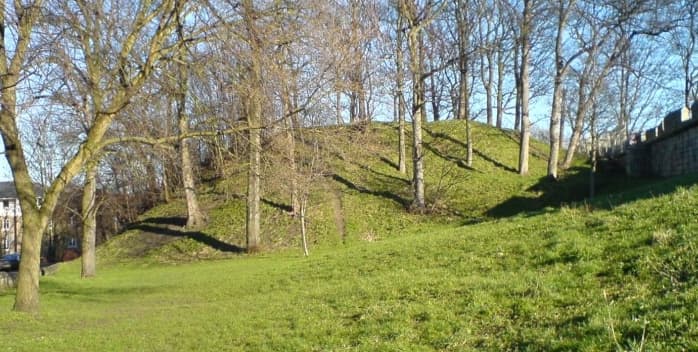
Baile Hill was strategically positioned on the west bank of the River Ouse, featuring a large artificial mound or motte approximately 12 meters high and 66 meters in diameter. This motte was surrounded by a deep defensive ditch and topped with a wooden tower accessed by a staircase, all enclosed by a wooden palisade. Adjacent to the motte was the bailey, a courtyard protected by an earthen rampart and outer ditch, which housed essential buildings and served as a base for garrison activities.
Historical context and military significance
The construction of Baile Hill must be understood within the broader context of the Norman consolidation of England. After the initial conquest, the north remained volatile, prompting William to undertake the brutal "Harrying of the North" in 1069-1070 to suppress rebellions. Baile Hill, known in its early days as the "Old Baile," played a key role in this military strategy by guarding the western approaches to York and controlling river access.
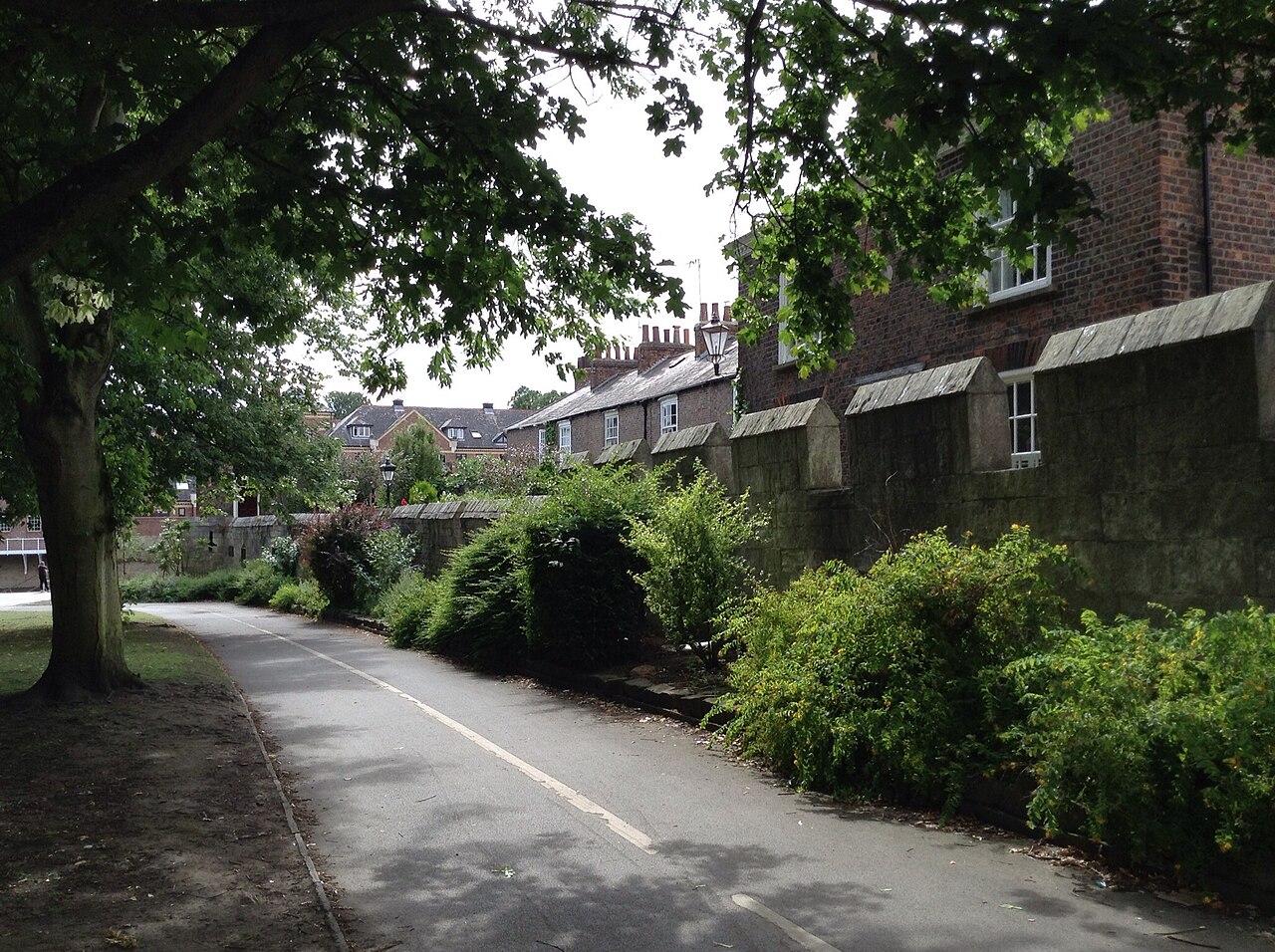
By the 13th century, the castle's military importance waned, and ownership transferred to the Archbishop of York. The site was repurposed for non-military uses, including archery practice by locals. However, its fortifications were not entirely neglected. Around 1322, the castle's defenses were incorporated into the expanding medieval city walls of York, particularly linking with the sections near Victoria Bar. This integration illustrates the adaptive reuse of Norman military architecture within later urban fortifications.
Role during the English Civil War
Baile Hill briefly regained military prominence during the English Civil War in 1644, when Royalist forces utilized the site as a gun emplacement during the siege of York. The elevated motte provided a strategic vantage point for artillery, demonstrating the enduring tactical value of the castle's original location and design despite centuries of changing warfare technology.
Architectural features and remains
The defining feature of Baile Hill is its motte, an imposing artificial mound created by piling earth to form a raised defensive platform. This motte rises about 12 meters, with a diameter of roughly 66 meters, making it a substantial earthwork visible even today. The original wooden keep atop the motte would have served as a lookout and last line of defense.
Surrounding the motte was a deep defensive ditch, designed to hinder attackers and prevent easy access to the mound. The adjacent bailey was enclosed by an earthen rampart and an outer ditch, creating a fortified courtyard for soldiers, supplies, and support buildings. This classic motte and bailey design typifies early Norman military architecture, emphasizing speed of construction and effective defense.
In the 14th century, York's stone city walls were constructed to incorporate parts of Baile Hill's defenses, particularly the southeast and southwest earthworks. These walls linked the Norman fortifications to the broader urban defense system, reflecting the evolving nature of medieval fortification strategies. Today, visible remnants include shallow depressions in the city walls near Baile Hill and Victoria Bar, marking where the defensive ditches once lay.
Despite extensive urban development in the late 19th century that obscured much of the castle's footprint, subtle earthworks and ground depressions remain visible in the modern cityscape. These surviving features offer valuable insights into the castle's original layout and construction techniques.
Baile Hill's legacy and cultural significance
Though less renowned than Clifford's Tower, Baile Hill holds an important place in York's history as a symbol of Norman authority and military ingenuity. Its construction exemplifies the rapid establishment of control by the Normans through strategic fortifications. The castle's integration into York's medieval city walls further highlights its lasting influence on the city's defensive architecture.
Today, Baile Hill is recognized as an archaeological site and a heritage landmark, offering historians and visitors a tangible connection to York's turbulent medieval past. Interpretive efforts and preservation initiatives aim to maintain the visible earthworks and educate the public about the site's significance.
Visiting Baile Hill
While Baile Hill does not feature extensive standing structures like some castles, visitors to York can observe the earthworks and appreciate the site's strategic location overlooking the River Ouse. The area around Baile Hill provides a unique perspective on Norman military architecture and the layered history of York's fortifications. Informational signage and guided tours often include Baile Hill as part of broader explorations of York's medieval defenses.
Frequently asked questions (FAQ)
- How do I get to Baile Hill?
- Baile Hill is located in the city of York, easily accessible by public transport and on foot. Visitors can reach the site via local bus services or by walking from the city center, which is just a short distance away.
- What is the historical significance of Baile Hill?
- Baile Hill dates back to the 12th century and played a crucial role in the medieval defenses of York. It is believed to be one of the earliest examples of a motte-and-bailey castle in England, providing insight into the military architecture of the time.
- When was Baile Hill constructed?
- Baile Hill was constructed around the year 1068, shortly after the Norman Conquest of England. Its strategic location allowed it to serve as an important defensive structure during the turbulent years that followed.
- Why is Baile Hill a popular attraction in York?
- Baile Hill is a popular attraction due to its rich history and stunning views of the city. The site offers a unique glimpse into York's medieval past and provides visitors with a peaceful green space to enjoy.
- Is it possible to access Baile Hill with a wheelchair?
- While Baile Hill is a public space, the terrain can be uneven and may pose challenges for wheelchair users. It is advisable to check local resources for accessibility options and assistance before visiting.
- What are the opening hours for Baile Hill?
- Baile Hill is open to visitors at all times, allowing for flexible exploration of the site. However, it's best to visit during daylight hours to fully appreciate the surroundings and views.
- What is the best time to visit Baile Hill?
- The best time to visit Baile Hill is during the spring and summer months when the weather is pleasant and the surrounding landscape is in full bloom. Early mornings or late afternoons offer a quieter experience with beautiful lighting for photography.
- Are there any nearby attractions to Baile Hill?
- Yes, Baile Hill is conveniently located near several other attractions in York, including the iconic York Minster and the historic Shambles. Visitors can easily plan a day of exploring the rich history and culture of the city.
- What are the ticket prices for visiting Baile Hill?
- There is no entrance fee to visit Baile Hill, making it a budget-friendly option for those looking to explore York's history. Visitors can enjoy the site free of charge, allowing them to appreciate its historical significance without any cost.
Photo gallery

Photo by Originally uploaded by Dbam (Transferred by H4stings)•Public domain
Information
Website
Visit websiteSources & official resources
Verify the information above using these authoritative references.
Loading map...
Visitor reviews
No reviews yet. Been here? Write the first review and help other travelers!
Write the first reviewVisited this castle? Share your experience
Your review helps other travelers and adds first-hand knowledge to our encyclopedia.