Austrått Fort
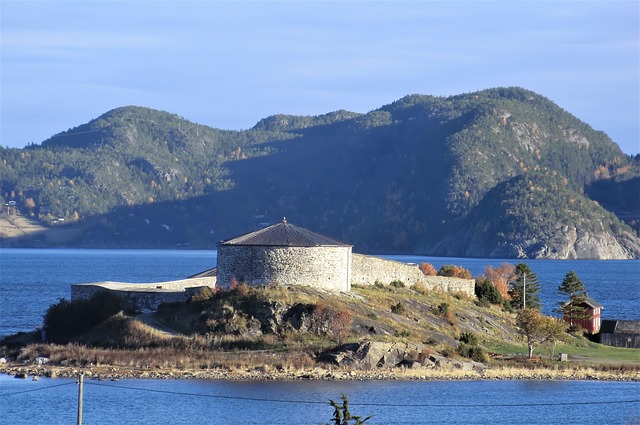
Austrått Fort is a significant World War II coastal artillery fortress located in Opphaug, Ørland Municipality, Trøndelag county, Norway. Constructed in 1942 by the German Wehrmacht during the occupation of Norway, the fort was strategically designed to protect the vital Trondheimsfjord from Allied naval incursions. It stands as one of the most complete and well-preserved examples of a German coastal battery from the era.
Strategic importance and construction
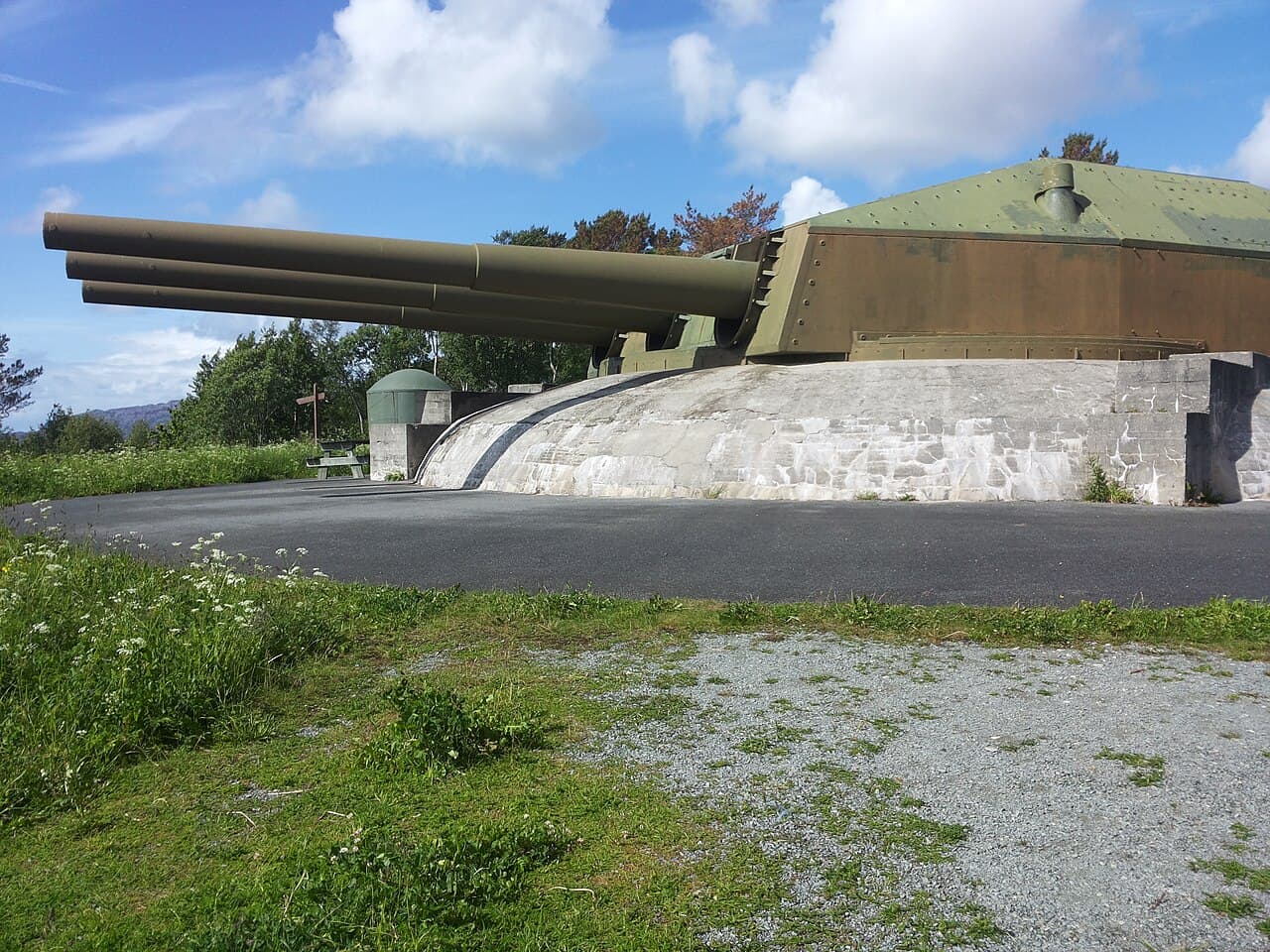
The fort was part of Germany's extensive coastal defense network along the Norwegian coast, intended to secure naval routes and prevent Allied forces from gaining a foothold in the region. The centerpiece of Austrått Fort is the triple 28 cm SK C/34 naval gun turret, originally mounted on the German battleship Gneisenau. This turret, weighing approximately 800 tonnes, was salvaged after the battleship was damaged in the British aerial attack on Kiel.
The turret's installation involved cutting a deep shaft into the rocky hillside, a challenging engineering feat that allowed the guns to be protected and concealed underground. This design is similar to the sister battery at Fjell Fortress near Bergen, which also housed a 28 cm turret from the Gneisenau. The triple gun turret was capable of firing 730-pound shells up to a range of 38 kilometres (24 miles), providing formidable coastal defense coverage.
Labor and underground facilities
The construction of the fort involved harsh conditions, with approximately 650 Yugoslavian slave laborers, primarily Serbs including Partisans and Chetniks, forced to work under brutal circumstances. They excavated extensive underground tunnels, bunkers, and ammunition rooms that supported the gun turret and housed the garrison. The underground complex was designed to protect personnel and equipment from aerial and naval attacks.
The fort's layout includes underground barracks, a turret shaft, and various supporting rooms, all of which remain accessible to visitors today. The comprehensive underground system reflects the military engineering prowess of the period and the strategic importance placed on this location.
Operational history and armament
The guns at Austrått Fort were test-fired in August 1943, but the fort did not see combat action during the remainder of World War II. After the war, the Norwegian military maintained the site in operational condition until 1968, when it was officially decommissioned. The last recorded firing occurred in 1953.
Besides the main artillery turret, the site includes well-preserved infantry defenses such as trenches and a recently renovated 4.7 cm Czech-made anti-tank gun. This anti-tank gun remains operational and was positioned to cover an anti-tank wall through the surrounding woods, designed to protect the fort's entrance from ground assault.
Preservation and museum status
Thanks to its maintenance by Norwegian forces post-war, Austrått Fort remains in an excellent state of preservation. The fort opened as a museum in 1991, allowing the public to explore the underground galleries, gun turret, and defensive positions. It offers a rare and tangible insight into the German coastal defense strategy and military engineering during the Modern period of warfare.
The museum highlights the historical significance of the fort within the broader context of the German occupation of Norway and the naval battles of the North Atlantic. Visitors can experience firsthand the scale and complexity of the artillery installation and the living conditions of the soldiers and forced laborers who built and operated it.
Architectural and military significance
Austrått Fort is classified as a bastioned fortress, featuring robust concrete fortifications designed to withstand bombardment and protect its valuable artillery. The use of a naval gun turret mounted in a fortified shaft is a distinctive architectural feature, combining naval technology with land-based defense.
The fort's design reflects the technological advancements in artillery and fortification during the Modern period, emphasizing underground construction for protection and concealment. Its preservation offers valuable insights into the adaptation of naval weapons for coastal defense and the strategic importance of Norway's fjords during World War II.
Frequently asked questions (FAQ)
- What is Austrått Fort and where is it located?
- Austrått Fort is a World War II German coastal artillery fortress located in Opphaug, Ørland Municipality, Trøndelag county, Norway. It was built to defend the Trondheimsfjord.
- Can I visit the underground tunnels and gun turret at Austrått Fort?
- Yes, the underground barracks, turret shaft, and ammunition rooms are open to the public as part of the museum experience, allowing visitors to explore the fort's interior.
- When was Austrått Fort built and by whom?
- Austrått Fort was constructed in 1942 by the German Wehrmacht during their occupation of Norway in World War II.
- What kind of armament did Austrått Fort have?
- The fort's main armament was a triple 28 cm SK C/34 naval gun turret from the German battleship Gneisenau, capable of firing shells up to 38 kilometres.
- Is Austrått Fort well preserved?
- Yes, due to maintenance by Norwegian forces until 1968, Austrått Fort remains in a well-preserved state and operates as a museum since 1991.
Photo gallery

Information
Sources & official resources
Verify the information above using these authoritative references.
Loading map...
Visitor reviews
No reviews yet. Been here? Write the first review and help other travelers!
Write the first reviewVisited this castle? Share your experience
Your review helps other travelers and adds first-hand knowledge to our encyclopedia.