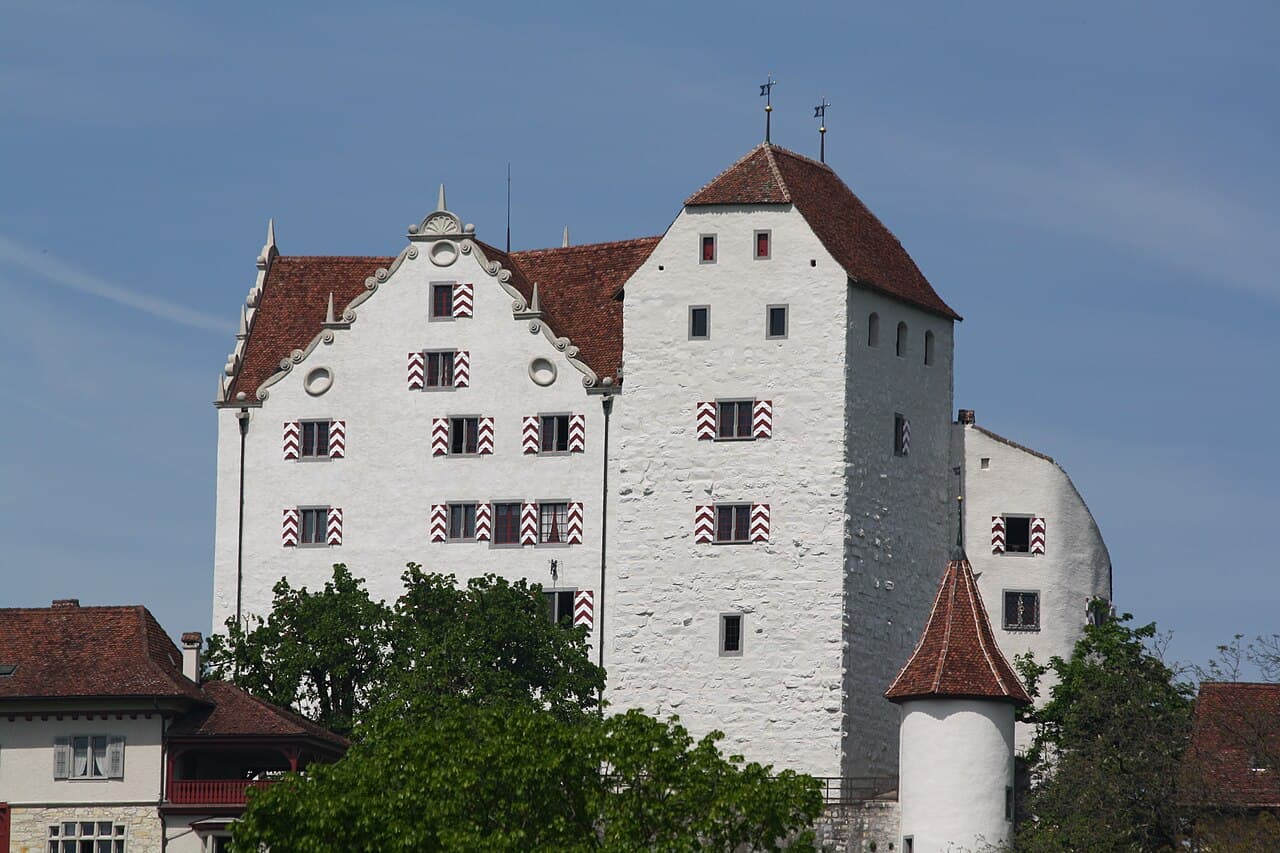
Willdegg Castle — Switzerland castle

Willdegg Castle

Willdegg Castle in Wildegg, Switzerland
Möriken-Wildegg, Aargau, Switzerland
High Medieval (11th–13th c.)
Well Preserved

Willdegg Castle stands prominently in the municipality of Möriken-Wildegg, nestled within the canton of Aargau, Switzerland. Founded in the first half of the 13th century by the powerful Habsburg family, this hill castle has witnessed centuries of architectural evolution and noble residence. It remains a remarkable example of medieval fortification combined with later Baroque residential adaptations.

Historical background and ownership

Originally constructed during the High Medieval period, Willdegg Castle was established as a strategic stronghold amidst gardens, meadows, and vineyards. The castle's ownership passed to the Effinger family, who held the estate for eleven generations. Under their stewardship, the castle underwent several expansions and modifications, reflecting changing tastes and needs over the centuries.

Architectural features and layout

The keep and palas

The castle complex prominently features a well-preserved 13th-century keep, a tall fortified tower typical of medieval defensive architecture. Adjacent to the keep is the palas, the main residential building, which was extensively remodeled at the end of the 17th century into a Baroque-style residence. This blend of medieval and Baroque architecture provides a unique insight into the castle's long history and the evolving architectural styles.

Gardens and grounds

The grounds surrounding Willdegg Castle are renowned for their seasonal beauty, offering visitors an oasis of calm amid historic gardens, meadows, and vineyards. The kitchen and pleasure gardens showcase a variety of rare garden and field plants, including berries preserved by the ProSpecieRara Foundation. The rose garden features historic and rare varieties of roses, blooming in different seasons to enhance the castle's tranquil atmosphere.

Interior and cultural significance

Visitors to Willdegg Castle can explore living and working rooms that are originally furnished, reflecting the sophisticated culture and exquisite taste of the Effinger family. The interiors display a rich collection of furniture, paintings, stoves, painted wallpaper, watches, lamps, porcelain dishes, and weapons spanning various epochs, all of high quality. This authentic presentation allows guests to experience the lifestyle of a noble family through the centuries.

Visitor experience and activities

The castle offers a variety of visitor amenities, including a bistro serving simple refreshments. Families with children can enjoy games in the castle’s barn, making it a welcoming destination for all ages. For those interested in interactive experiences, the Trail Wildegg from Schlossfoxtrail invites visitors to solve puzzles, decode secret messages, and explore the beautiful surrounding scenery in a playful and engaging way.

Significance in Swiss heritage

Willdegg Castle is a fine example of a hill castle that has retained much of its medieval character while embracing Baroque influences. Its preservation offers valuable insights into the architectural and cultural history of the region. The castle’s gardens, historic interiors, and interactive trails contribute to its status as a cherished heritage site in Switzerland.

Frequently asked questions (FAQ)

How do I visit Willdegg Castle and what are the opening hours?
Willdegg Castle is open to visitors during the warmer months, typically from spring to autumn. Opening hours may vary, so it is recommended to check the official website or local tourist information for current times before planning your visit.
What architectural styles are represented at Willdegg Castle?
The castle features a combination of <strong>High Medieval</strong> architecture with a well-preserved 13th-century keep and a <strong>Baroque-style</strong> palas remodeled in the late 17th century, showcasing the evolution of design through centuries.
Can visitors explore the castle gardens?
Yes, the historic gardens surrounding Willdegg Castle are open to visitors year-round. They include a kitchen garden with rare plants, a pleasure garden, and a rose garden with historic and rare rose varieties, providing a peaceful setting for strolls.
Is Willdegg Castle suitable for families with children?
Absolutely. The castle offers family-friendly activities, including games in the castle barn and interactive puzzle trails like the Trail Wildegg, making it an engaging destination for children and adults alike.
What can I expect to see inside the castle?
Inside, visitors will find originally furnished living and working rooms displaying fine furniture, paintings, stoves, wallpaper, porcelain, and weapons from various periods, reflecting the refined lifestyle of the Effinger family over eleven generations.

Photo gallery

Willdegg Castle
Click to view

Photo by Badener•CC BY-SA 3.0

1 photo • Click any image to view in full screen

Information

Hill Castle

Current owner

Municipality

Loading map...

Visitor reviews

No reviews yet. Been here? Write the first review and help other travelers!

Write the first review

Visited this castle? Share your experience

Your review helps other travelers and adds first-hand knowledge to our encyclopedia.

Write a review

(5/5)

0/2000 characters

Your review will be visible after admin approval

Nearby castles

1.3 km

Wildenstein Castle

Bubendorf, Switzerland

Wildenstein Castle, located near Veltheim in the municipality of Bubendorf, Switzerland, is a remarkable example of a late medieval hill castle with a rich history dating back to the 13th century. Perched strategically on a rocky spur overlooking a side valley of the river Hintere Frenke, the castle was originally constructed to assert feudal control over the surrounding lands and to serve as a fortified residence for the noble family of Heinrich von Eptingen. The castle's first recorded mention was in 1301, although its exact construction date and original builder remain uncertain. However, significant building phases are documented, including the erection of two towers around 1350 and the expansion of the palas around 1400. Medieval origins and early history The castle’s early history is closely tied to the von Eptingen family, with Heinrich von Eptingen adopting the name "von Wildenstein" in 1293, indicating his association with the fortress. His son, Gottfrid von Wildenstein, played a notable role in the castle's defense during a significant military conflict in 1334. At that time, Wildenstein Castle was besieged by combined forces from the Bernese and Solothurn armies. This attack was a punitive response to raids conducted by the castle’s garrison against Bernese subjects near the town of Thun, violating existing peace agreements. The siege underscores the castle’s strategic importance and the volatile political landscape of the region during the early 14th century. Following Gottfrid, the castle passed to his son Henmann, who sold the property in 1380 to three siblings from the von Baden family: Elsi, Götzmann, and Markwart. The castle subsequently changed hands multiple times, reflecting the shifting allegiances and political dynamics of the region, including a period under the jurisdiction of the city of Basel. Architectural development and baroque transformation Wildenstein Castle’s architecture evolved significantly over the centuries. The original medieval structure included a residential tower and a fortified tower, both of which have remarkably survived intact. Unlike many castles that fell into ruin after losing their military and residential functions, Wildenstein’s towers remained preserved. Around 1400, the palas was expanded, enhancing the castle’s residential and administrative capabilities. In 1640, the castle underwent a major transformation when Hans Thüring Effinger restored it as a Baroque residence. This restoration reflected the changing tastes and needs of the period, shifting the castle’s function from a purely defensive fortress to a more comfortable noble residence. The Baroque modifications likely introduced stylistic elements such as enlarged windows, decorative facades, and interior refinements, although specific architectural details from this phase require further documentation. Historical significance and later history Wildenstein Castle remained a significant regional landmark through the centuries. In the late 16th century, it was near the site where the "Rappenkrieg" conflict was peacefully resolved in 1594, highlighting the castle’s ongoing role in regional political affairs. Despite suffering potential damage during the 1334 siege and the devastating Basel earthquake of 1356, the castle endured and continued to be inhabited for many centuries. In 1995, the canton of Basel-Landschaft acquired Wildenstein Castle, recognizing its cultural and historical importance. Although there was an attempt to sell the property in 2011, a popular vote in 2012 ensured that the castle remained under cantonal ownership. Today, Wildenstein Castle is the only surviving hilltop castle in the Basel area and is used for cultural events, maintaining its connection to the community and heritage. Site layout and preservation The castle complex reflects a layered history of construction and remodeling. It consists primarily of two towers—a residential tower and a fortified tower—set upon a rocky outcrop that provides commanding views of the surrounding landscape. Historical engravings from 1758 by David Herrliberger and from around 1820 by Ludwig Adolf Hess provide valuable visual records of the castle’s appearance and architectural features during those periods. While detailed archaeological studies are limited, the castle’s enduring form and original components testify to its resilience through centuries of conflict and natural disasters. The site is recognized as a cultural property of national significance in Switzerland, underscoring its value as a heritage monument. Accessibility and visitor information Wildenstein Castle is accessible by a footpath from Bubendorf station, requiring approximately one hour to reach. This approach preserves the castle’s hilltop character and offers visitors an immersive experience of its medieval setting. The castle hosts regular cultural events, contributing to its role as a living monument within the region.

Late Medieval (14th–15th c.)
Details
1.4 km

Horben Castle

Beinwil, Switzerland

Horben Castle is a historic hill castle situated at an elevation of 818 meters on the Horben-Hochebene near the border of the Canton of Lucerne in Beinwil, Switzerland. This castle, with origins dating back to the 12th century, has a rich history intertwined with the nearby Muri Abbey and reflects significant architectural and artistic developments from the High Medieval period through the 18th century. Historical background and ownership The earliest known association of the site is with Muri Abbey, which owned a farm on the Horben hill in the 12th century. This establishes the castle's origins within the context of medieval monastic landholdings. The castle as it stands today is the result of several phases of construction and renovation, notably in the 18th century. In 1700, Abbot Placidus Zurlauben commissioned the construction of a rest home for the sacristan on the hill, marking the beginning of the site's transformation from a simple farmstead to a more complex estate. Subsequently, in 1730, Prince-Abbot Gerold Haimb had the Chapel of St. Wendelin and Ubaldus built near the home, adding religious significance and architectural interest to the site. Between 1752 and 1776, under the tenure of Abbot Bonaventure Bucher, the rest home and chapel were extensively rebuilt into their present form. This period saw the integration of rococo artistic elements, including interior wall paintings and statues by the notable artist Caspar Wolf in 1762. These embellishments highlight the castle’s evolution from a functional monastic retreat to a refined residence with artistic and cultural value. Following the dissolution of the monasteries in Aargau in 1841, Horben Castle was acquired by the Canton and subsequently sold in 1842 to private owners. It initially belonged to National Councilman Peter Suter from Sins, and later passed through the hands of District Officer Kaspar Weber of Muri from 1885 to 1913. Since 1913, the castle has been owned by the Borsing family. Architectural features and artistic heritage Horben Castle exemplifies a hill castle that combines medieval origins with later rococo style renovations. The castle’s structure was significantly shaped during the 18th century, reflecting the tastes and religious functions of its monastic owners. The Chapel of St. Wendelin and Ubaldus is a notable feature, constructed in 1730 and rebuilt mid-century, serving as a spiritual center for the estate. The chapel’s interior is adorned with rococo wall paintings and statues by Caspar Wolf, which contribute to the castle’s artistic heritage and demonstrate the influence of Baroque and Rococo styles in ecclesiastical architecture of the period. The castle’s restoration in 1979-80 was a comprehensive effort that preserved these artistic and architectural elements, ensuring the castle’s condition as a well-preserved monument. This restoration respected the historic fabric of the building while stabilizing and enhancing its features for future generations. Location and strategic significance Located on the Horben-Hochebene plateau, the castle’s elevation at 818 meters provided a strategic vantage point in the region. Its proximity to the Canton of Lucerne border positioned it within a historically significant area, likely contributing to its role in regional monastic administration and local governance. While not a fortress in the traditional military sense, Horben Castle’s hilltop location and monastic ownership reflect the typical medieval pattern of ecclesiastical estates serving both spiritual and administrative functions. Visiting Horben Castle today Today, Horben Castle stands as a testament to the layered history of monastic influence, medieval architecture, and rococo artistic expression in Switzerland. The castle is privately owned but remains an important cultural landmark in the region. Visitors interested in medieval and Baroque architecture, as well as Swiss monastic history, will find Horben Castle a fascinating site that illustrates the evolution of a monastic estate into a refined residence. Its restored condition allows appreciation of both its architectural and artistic heritage.

High Medieval (11th–13th c.)
Details
2.4 km
Auenstein Castle — Switzerland castle

Auenstein Castle

Auenstein, Switzerland

Auenstein Castle is a historic hill castle located above the Aare river in the municipality of Auenstein, in the Swiss canton of Aargau. Constructed originally in the 13th century for the local nobleman Gowenstein, this castle has witnessed significant historical events and transformations over the centuries, reflecting the turbulent political and social changes of the region. Medieval origins and strategic location The castle was strategically built on a rocky hill, providing commanding views over the surrounding landscape and the vital waterway of the Aare river. This location was typical of high medieval hill castles, designed both for defense and asserting control over the nearby lands. The initial construction in the high medieval period reflects architectural features common to Swiss fortifications of the time, including robust stone walls and a compact layout optimized for defense. Early ownership and political significance Originally established for the nobleman Gowenstein, the castle changed hands around 1300 when it was acquired by the Lord of Rinach. The castle's ownership ties it closely to the local feudal hierarchy and the shifting allegiances of the period. The Lords of Rinach maintained the castle through the 14th century, a time marked by increasing regional conflicts. Conflict and decline in the late medieval period In 1389, during the conflict between the Habsburgs and the Old Swiss Confederacy, a Bernese army attacked and burned Auenstein Castle. This event was part of broader military campaigns that shaped the political landscape of what is now Switzerland. Following the Bernese conquest of the Aargau in 1415, the castle became part of the Landvogtei of Lenzburg, an administrative district under Bernese control. Despite its strategic importance, the castle was never fully rebuilt by the Lords of Rinach after the destruction. In 1465, Albrecht von Rinach sold the ruined castle and its surrounding villages to Heinrich Hasfurter from Lucerne. The castle remained in ruins for centuries, passing through various owners but never regaining its former military or administrative prominence. Ownership changes and 18th-19th century developments In 1732, the castle and its territory came under direct Bernese control, remaining so until the upheavals of the late 18th century. The 1798 French invasion and the establishment of the Helvetic Republic abolished the old feudal systems, ending the rule of noble landlords over villages and estates including Auenstein. With the creation of the Canton of Aargau in 1803 under the Act of Mediation, the ruins became canton property. During the 1850s, the ruins were sold to a private owner who undertook the significant task of rebuilding the castle. By 1858, a new habitable structure had risen from the medieval ruins, marking a revival of the site as a residence rather than a fortress. 20th century renovations and current status In the early 20th century, Mrs. A. Hoffmann acquired the castle and carried out extensive renovations and expansions between 1927 and 1929. These works gave the castle much of its current appearance, blending the historical medieval elements with 20th-century restoration sensibilities. Today, Auenstein Castle remains in private ownership and is not generally open to the public. Its preservation reflects the layered history of Swiss castles that have evolved from medieval fortifications to private residences, embodying centuries of architectural and social change. Architectural features and layout Though much of the original medieval structure was lost or altered during the centuries of ruin and rebuilding, the castle retains characteristic features of a high medieval hill castle. The rocky hill foundation provided natural defense, complemented by stone walls and defensive towers typical of 13th-century construction. The 19th and 20th-century reconstructions introduced residential elements, adapting the fortress into a more comfortable dwelling while preserving the historic silhouette. The castle's layout includes a central courtyard, fortified walls, and residential wings, reflecting its transformation from military stronghold to noble residence. Location and surroundings Situated in the canton of Aargau, the castle overlooks the Aare river valley, an area rich in Swiss history and natural beauty. The site’s elevation on a rocky outcrop allowed control over river traffic and local trade routes, a key factor in its original placement. Historical significance in Swiss heritage Auenstein Castle exemplifies the trajectory of many Swiss castles that transitioned from medieval military installations to modern private estates. Its history reflects the broader political shifts in Switzerland from feudal fragmentation through Habsburg influence, Bernese conquest, and eventual integration into the modern Swiss state. The castle’s survival through destruction, ruin, and restoration offers insight into the resilience of Swiss cultural heritage and the evolving functions of castles in Swiss society.

High Medieval (11th–13th c.)
Details