Aspindza Castle

Aspindza Castle in Samtskhe–Javakheti, Georgia
Aspindza, Georgia
Partially Preserved

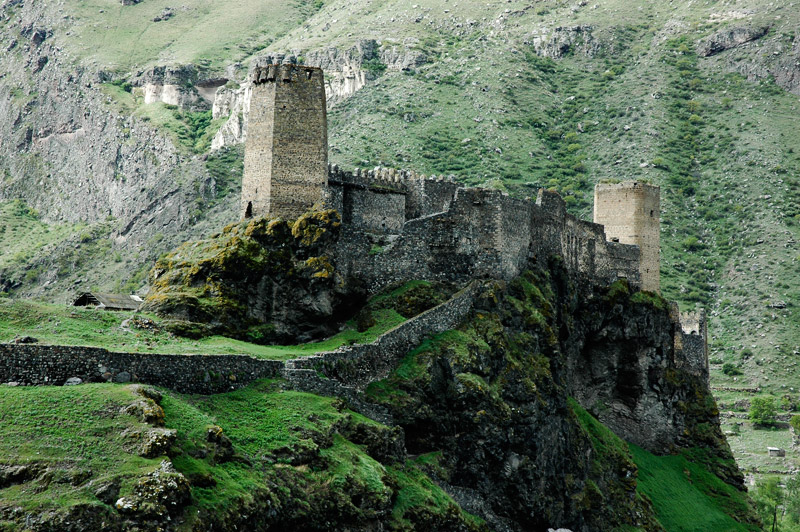
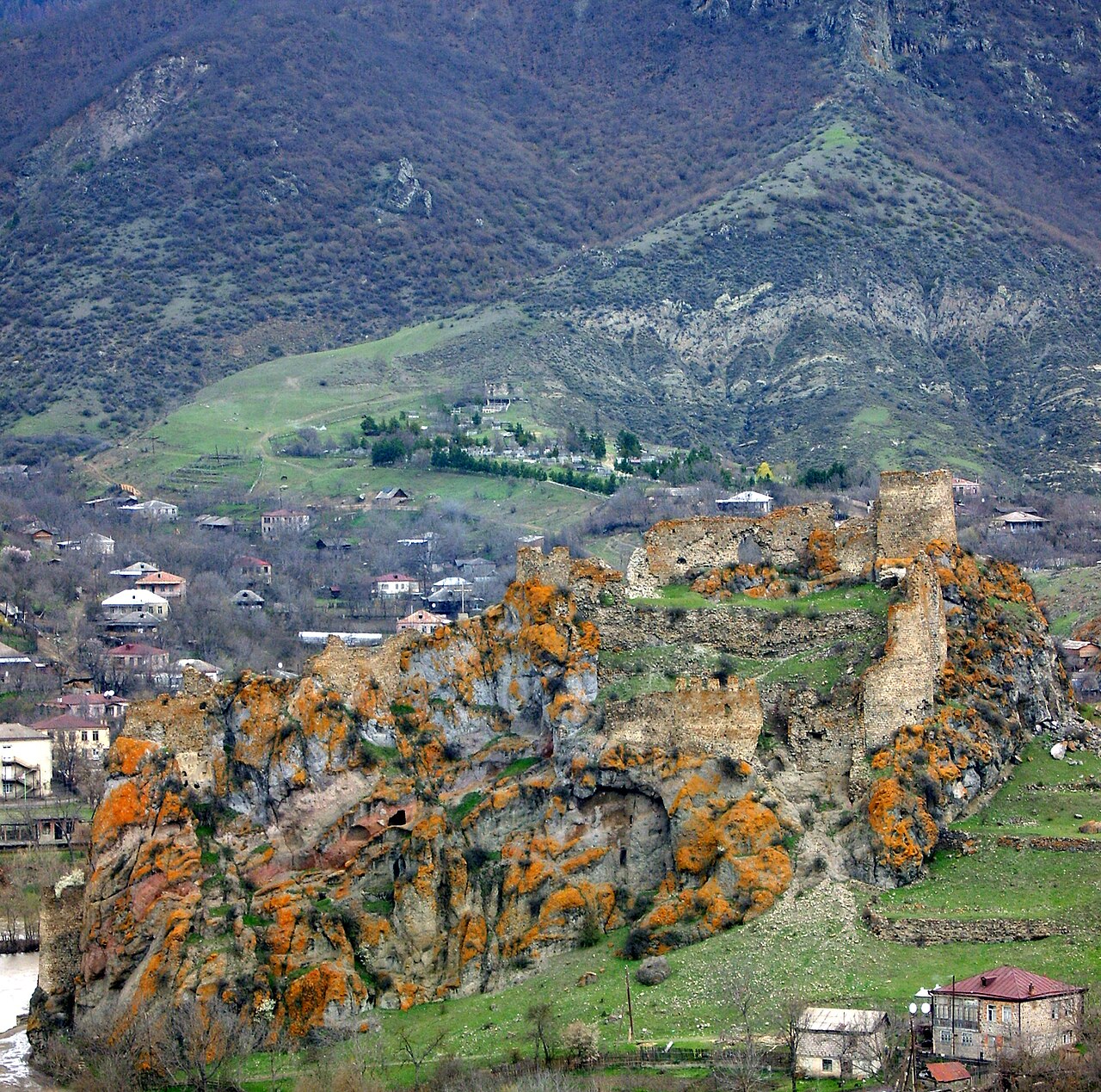
Aspindza Castle is a modest medieval fortress located in the village of Aspindza within the Samtskhe–Javakheti region of Georgia. Perched on a rocky promontory that extends into the valley of the Kura River (known locally as the Mtkvari), this castle offers commanding views of the surrounding landscape. Its strategic placement suggests a defensive purpose, controlling movement along the river valley and serving as a local stronghold in the region.

The castle's rectangular ground plan is defined by its enclosing walls, which incorporate a square tower oriented towards the adjacent mountainous terrain. This tower likely functioned as a lookout and defensive bastion, providing vantage points for surveillance and protection against incursions. A second, more slender tower is attached to the northern curtain wall, though its precise function remains uncertain. It may have served as an additional watchtower or housed facilities related to the castle's defensive operations.

While detailed historical records about Aspindza Castle are scarce, its architectural features align with typical medieval Georgian fortifications, which often utilized natural topography for defense. The use of local stone in construction and the castle's integration into the rocky outcrop exemplify practical design choices suited to the region's terrain.

Architectural features and layout

The castle's layout is relatively simple but effective for its size. The rectangular plan encloses an inner courtyard, which would have accommodated essential facilities such as storage, living quarters, and possibly a cistern for water supply. The robust curtain walls are punctuated by towers that enhance defensive coverage, allowing defenders to monitor approaches and repel attackers.

The square tower facing the mountain is the dominant feature, rising above the curtain walls to provide a commanding view. Its design suggests it was built for both defense and observation. The slender northern tower, while less prominent, adds complexity to the castle's silhouette and may have had specialized defensive or administrative roles.

Historical context and significance

Although specific historical events linked to Aspindza Castle are not well documented, the castle's location in the Samtskhe–Javakheti region places it within a historically contested area. This region of Georgia has been a crossroads of various empires and local powers, including the Georgian Kingdoms, the Ottoman Empire, and Persian influences over centuries. Castles like Aspindza would have been integral to local defense networks and control of trade routes.

The castle likely dates from the medieval period, a time when fortifications were essential for protecting settlements and asserting territorial control. Its modest size and strategic position suggest it served a primarily local function rather than acting as a major military fortress.

Current condition and visitor information

Today, Aspindza Castle is in a state that allows free public access. The structure remains largely intact, though it is best described as a partially preserved medieval fortress. Visitors can explore the castle grounds and appreciate its integration with the natural rocky promontory and views over the Kura River valley.

The castle's accessibility and picturesque setting make it an interesting destination for those interested in Georgian history and medieval architecture. While it lacks extensive visitor facilities, its authenticity and quiet location offer a genuine experience of a small rural fortress.

Exploring the surrounding area

The village of Aspindza and the wider Samtskhe–Javakheti region are rich in cultural and natural attractions. Visitors to the castle can also explore nearby historical sites, traditional Georgian villages, and the diverse landscapes of southern Georgia. The region's blend of history and nature complements a visit to Aspindza Castle, providing broader context to the area's medieval heritage.

Frequently asked questions (FAQ)

How do I get to Aspindza Castle?
Aspindza Castle is located in the town of Aspindza, Georgia. You can reach it by taking a bus or taxi from nearby cities like Akhaltsikhe or Tbilisi. The castle is situated on a hill, so be prepared for a short hike to access the site.
What is the historical significance of Aspindza Castle?
Aspindza Castle dates back to the 10th century and played a crucial role in the defense of the region during various invasions. It is a fine example of medieval Georgian military architecture and offers insights into the history of the Samtskhe-Javakheti region. The castle's strategic location allowed it to oversee important trade routes.
When was Aspindza Castle built?
Aspindza Castle was constructed in the 10th century as a fortification to protect the local population. It has undergone several renovations over the centuries, reflecting the architectural styles of different periods. The castle remains a significant monument to Georgia's rich history.
Can I explore the castle on my own?
Yes, visitors can explore Aspindza Castle independently. There are no guided tours, but the site is accessible to the public, allowing you to wander through its ancient walls and enjoy the stunning views of the surrounding landscape. Make sure to bring a camera to capture the breathtaking scenery.
Why is it recommended to visit Aspindza Castle during spring or fall?
Visiting Aspindza Castle in spring or fall offers a more pleasant climate for exploring the site. During these seasons, the weather is usually mild, making it comfortable to hike and explore the castle grounds. Additionally, the natural beauty of the surrounding area is at its peak during these times, enhancing your experience.
Is it possible to visit Aspindza Castle year-round?
Yes, Aspindza Castle is open to visitors year-round, but accessibility may vary depending on weather conditions. Winter months can bring snow and ice, making the hike more challenging. It's best to check local conditions before planning your visit during the colder months.
What are the opening hours for Aspindza Castle?
Aspindza Castle is generally open from sunrise to sunset, allowing visitors ample time to explore the site. However, it's advisable to check for any seasonal changes to the hours or specific closures before your visit. This ensures you can make the most of your time at the castle.
Are there any nearby attractions to visit?
Yes, there are several attractions near Aspindza Castle, including the historic town of Akhaltsikhe and the picturesque Vardzia cave monastery. These sites offer additional insights into Georgian history and culture, making them great additions to your itinerary. Exploring the surrounding area provides a richer understanding of the region's heritage.
What are the ticket prices for Aspindza Castle?
Admission to Aspindza Castle is typically free, allowing everyone to enjoy this historic site without any cost. However, some special events or guided tours may have associated fees. It's a good idea to check for any updates regarding ticketing before your visit.

Information

Hill Castle

Loading map...

Visitor reviews

No reviews yet. Been here? Write the first review and help other travelers!

Write the first review

Visited this castle? Share your experience

Your review helps other travelers and adds first-hand knowledge to our encyclopedia.

Write a review

(5/5)

0/2000 characters

Your review will be visible after admin approval

Nearby castles

9.1 km

Ormotsa Tower

Nijgori, Georgia

Ormotsa Tower is a medieval tower ruin located near the village of Nijgori, within the Aspindza municipality in the Samtskhe–Javakheti region of Georgia. This tower stands as a solitary remnant of a defensive structure whose origins and detailed history remain largely undocumented, yet its architectural characteristics suggest a medieval origin. Architectural features and layout The tower exhibits a distinctive D-shaped ground plan, a form often associated with defensive watchtowers designed to provide a broad field of vision and protection. The curved exterior wall would have faced outward, maximizing the defensive advantage by deflecting projectiles and offering a wider angle for surveillance. The flat side typically abutted other structures or the terrain, suggesting that Ormotsa Tower was part of a larger complex or fortification system. Traces of additional buildings attached to the tower's southern side indicate that it was not an isolated structure but rather connected to other defensive or residential buildings. The nature of these adjoining structures remains unclear due to the ruinous state of the site, but they likely supported the tower's function as a lookout or small garrison post. Historical context and possible functions While there is no direct historical documentation about Ormotsa Tower, the style of stonework and construction techniques align with medieval Georgian defensive architecture. The tower was probably built as a watchtower to monitor surrounding territories and provide early warning against invaders or raiders. Its strategic placement near Nijgori would have allowed surveillance over important routes or borders in the region. Georgian maps sometimes label the site as a castle, which may reflect local tradition or the tower's role within a broader fortified settlement. However, the limited remains and modest scale suggest it functioned primarily as a watchtower rather than a full-scale castle or fortress. Current condition and visitor information Today, Ormotsa Tower is in a ruined state, with only parts of the stone walls still standing. Despite its ruinous condition, the site is freely accessible to visitors who can explore the remains and appreciate the tower's architectural form and historical significance. The simplicity of the ruins offers a tangible glimpse into medieval Georgian military architecture and the defensive strategies employed in the region. Visitors to the tower should be prepared for a modest site without extensive facilities or interpretive signage. The surrounding landscape provides a quiet setting for those interested in history, architecture, and Georgian heritage. Significance within Georgian heritage Ormotsa Tower contributes to the rich tapestry of Georgia's medieval defensive network, reflecting the region's turbulent history and the need for vigilance against external threats. Although overshadowed by larger castles and fortresses, small watchtowers like Ormotsa played crucial roles in local security and communication. Their preservation, even as ruins, helps illuminate the broader historical landscape of medieval Georgia.

Details
11.4 km
Khertvisi Castle — Georgia castle

Khertvisi Castle

Khertvisi, Georgia

Khertvisi Castle stands as one of the oldest and most historically significant fortifications in Georgia. Located near the village of Khertvisi in the Aspindza municipality within the Samtskhe–Javakheti region, this fortress occupies a strategic position at the confluence of the Paravani and Kura rivers (known locally as the Mtkvari). The castle's location atop a rocky ridge overlooking deep river canyons allowed it to control an important medieval route connecting the Byzantine Empire with the Caucasus region. The origins of Khertvisi Castle are ancient and somewhat shrouded in legend. While the earliest surviving structures date from the 10th century, local tradition holds that a fortress or city existed here as early as the 2nd century BC. A popular legend claims that Alexander the Great passed through this area during his eastern campaigns and that the original fortress was destroyed by his forces. Although this story cannot be historically verified, it underscores the site's long-standing military importance. Historical development and significance The castle's earliest extant components, including the St. George Church, date from around 985 AD. Throughout the 10th and 11th centuries, Khertvisi served as the administrative center of the Meskheti region, a key area in medieval Georgia. By the 12th century, the fortress had evolved into a fortified town, reflecting its growing political and military role. Khertvisi endured significant destruction during the 13th century Mongol invasions, which devastated much of the Caucasus. Following this, the fortress experienced a period of decline until the mid-14th century. In 1356, the castle was substantially rebuilt under the direction of Zakaria Kamkamishvili, the Royal Treasurer, who commissioned the construction of the keep and the outer defensive walls. These fortifications enhanced the castle's defensive capabilities and are among the most prominent surviving features today. During the 15th and 16th centuries, Khertvisi was controlled by the feudal Hertvisari family. However, in 1578, it fell to the invading Ottoman Empire, marking a significant shift in regional power. The Ottomans maintained control of the fortress for nearly three centuries, integrating it into their defensive network in the Caucasus. In the late 18th century, during the Russo-Turkish War of 1768–1774, the Georgian king Erekle II briefly recaptured Khertvisi. However, due to internal betrayal, the castle was soon lost again to Ottoman forces. It remained under Ottoman control until the Russo-Turkish War of 1828–1829, when it was annexed by the Russian Empire. Subsequently, the fortress was garrisoned by Russian and Georgian troops, although its strategic importance gradually diminished in the 19th century. Architectural features and layout Khertvisi Castle is characterized by its elongated layout, adapted to the rocky ridge on which it sits. The fortress is surrounded by a restored outer defensive wall that once enclosed the complex and provided a first line of defense. Inside the walls, several notable structures remain: A five-sided watchtower that provided extensive views over the surrounding river valleys and approaching roads. A prominent square keep, built during the 14th-century reconstruction, served as the last refuge during sieges. The St. George Church, dating from the late 10th century, stands as a significant religious and architectural monument within the castle grounds. Remnants of a tunnel that once connected the fortress to the river below, likely used for secret access or water supply during sieges. The castle's construction materials primarily consist of local stone, with masonry techniques reflecting the evolving medieval Georgian architectural styles. The defensive walls feature battlements and arrow slits designed to repel attackers, while the keep's robust construction highlights its role as a stronghold. Strategic importance and military history Khertvisi's location at the junction of two rivers and along key trade and military routes made it a vital defensive site throughout its history. It guarded access to the southern Georgian region of Meskheti and served as a bulwark against invasions from the south and west. The fortress witnessed numerous military engagements, including destruction by the Mongols in the 13th century and occupation by the Ottomans in the 16th century. Its capture and recapture during the Russo-Turkish conflicts of the 18th and 19th centuries further underscore its enduring military relevance. Current state and visitor information Today, Khertvisi Castle exists as ruins, with significant portions of its walls and key structures preserved or restored. The site is freely accessible to visitors during office hours, offering a tangible connection to Georgia's medieval past. The castle's dramatic setting in a narrow canyon with river views adds to its appeal for tourists and history enthusiasts alike. Visitors can explore the remains of the keep, watchtower, and church, as well as walk along parts of the outer wall. The castle's location also provides opportunities for scenic views and photography. Recommended visiting tips Wear sturdy footwear due to uneven terrain and rocky surfaces. Plan a visit during daylight hours for safe exploration and best views. Combine a visit to Khertvisi with nearby historical sites in the Samtskhe–Javakheti region. Khertvisi Castle remains a significant cultural monument in Georgia, reflecting centuries of military architecture and regional history.

Early Medieval (5th–10th c.)
Details
18.1 km
Atskuri Castle — Georgia castle

Atskuri Castle

Atskuri, Georgia

Atskuri Castle is a significant historical fortress located in the village of Atskuri within the Akhaltsikhe municipality, part of the Samtskhe-Javakheti region in Georgia. This early medieval bastioned fortress was constructed in the 10th century on a rocky ridge overlooking the right bank of the Kura River (known locally as the Mtkvari), a strategic natural gateway leading to the Georgian heartland from the south. Strategic location and defensive role The castle's position was chosen for its commanding views and natural defensive advantages. It guarded the entrance to the Kura River gorge, a vital passageway for trade and military movements. The fortress's walls follow the natural contours of the rocky terrain, integrating the landscape into its defensive design. This location allowed the defenders to control access to the region and monitor any approaching forces effectively. Architectural features and construction Atskuri Castle exemplifies medieval military architecture adapted to its rugged environment. The fortress was built with bastioned fortifications, a style that provided enhanced defensive capabilities through projecting walls and platforms for artillery or archers. The walls are constructed to conform closely to the rocky ridge, maximizing the natural barriers against attackers. At the western end of the castle ruins, visitors can observe the remains of a tunnel leading down to the river. This feature likely served as a secret passage for water supply or escape during sieges, demonstrating the strategic foresight in the castle's design. Historical events and sieges The history of Atskuri Castle is marked by several significant military events. In 1260, the fortress endured a siege by a Mongol army commanded by Arghun Aqa. This event occurred during the rebellion of King David VII of Georgia against Mongol overlordship. The castle's resistance during this siege highlights its importance as a defensive stronghold in medieval Georgian conflicts. Later, at the end of the 13th century, the region was struck by a powerful earthquake that caused considerable damage to the castle. Despite this natural disaster, the fortress was repaired and continued to serve a military role. In the 16th century, following the Ottoman Empire's conquest of the area, Atskuri Castle was garrisoned by Ottoman troops. The castle's architecture bears marks from this period, reflecting modifications and repairs made to suit Ottoman military needs. The Ottoman occupation lasted until 1828, during which the castle remained a key defensive site. Preservation and current condition Today, Atskuri Castle stands as a partially preserved ruin. The fortress has suffered damage from multiple sieges and natural events over the centuries, with each restoration phase leaving traces of its varied history. The rocky terrain and steep surfaces around the castle make access challenging, and ongoing or unfinished consolidation efforts have impacted visitor safety. Visitors are advised to exercise caution when exploring the site due to unstable ground and rubble. Despite these challenges, the castle offers a compelling glimpse into Georgia's medieval military architecture and regional history. Cultural and historical significance Atskuri Castle is an important cultural monument within Georgia, representing the medieval feudal era and the strategic military efforts to protect the kingdom's southern borders. Its location along the Kura River corridor underscores its role in controlling one of the main routes into the country. The fortress's layered history, from its early medieval origins through Mongol sieges and Ottoman occupation, provides valuable insights into the geopolitical dynamics of the Caucasus region over several centuries.

Early Medieval (5th–10th c.)
Details